The war of words between Tekashi 6ix9ine and a New York-based attorney has escalated into a full-blown public demolition, with the rapper releasing a scathing video compilation that exposes his rival’s legal credentials—or lack thereof—while reigniting the fiery debate surrounding Lil Durk’s federal indictment. The clash erupted after the attorney, known online as “Mo Gangat,” posted a video criticizing 6ix9ine for his outspoken commentary on the Durk case, prompting a response that has left the hip-hop community picking sides.
The conflict centers on the explosive claims made by Trap Lore Ross, a popular YouTube commentator, who alleged that Lil Durk’s legal strategy involves shifting blame onto his late associate, OTF Vonski, also known as “Vonni.” Ross’s statements, which he maintains were drawn directly from court proceedings, have sparked a firestorm of speculation about Durk’s potential cooperation with federal prosecutors. 6ix9ine, never one to shy away from controversy, seized on this narrative to attack the attorney defending Durk’s reputation.
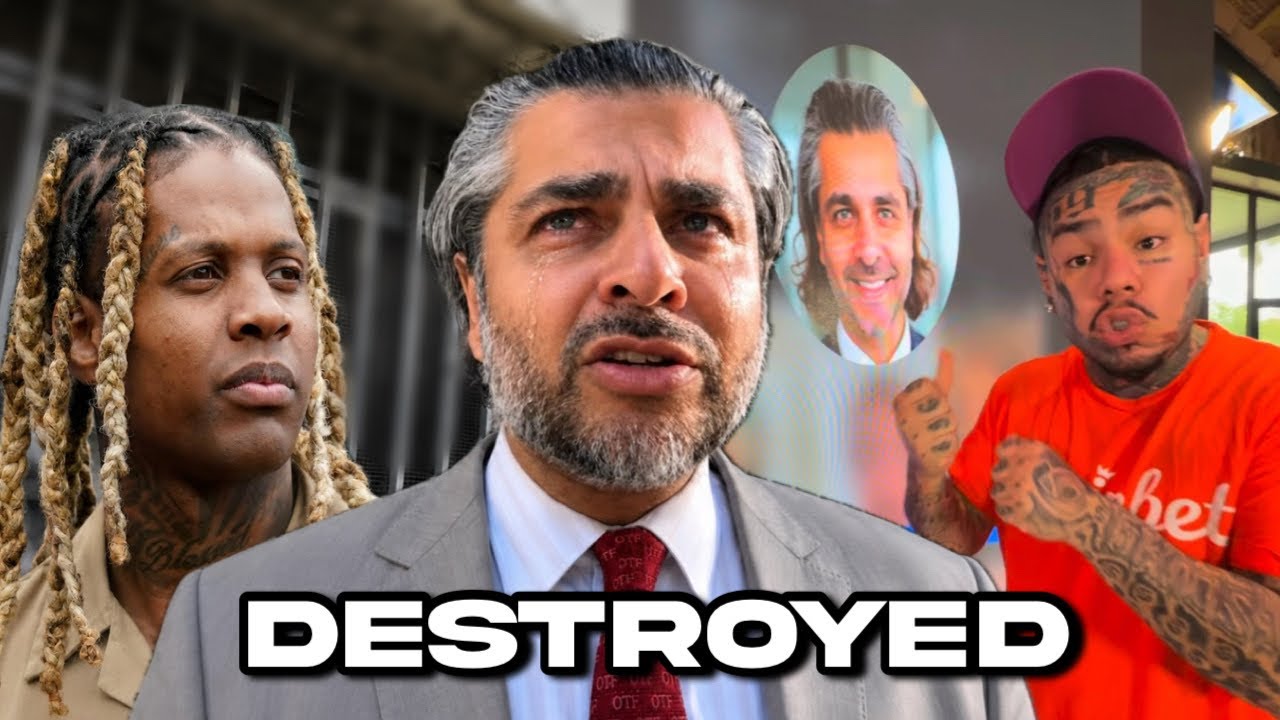 In the newly released footage, 6ix9ine methodically dismantles the attorney’s credibility, pointing out that Gangat is not a criminal defense lawyer but rather a workers’ compensation attorney from New York. The rapper highlights a damning interview where Gangat openly admits to pursuing fame through his coverage of rap cases, booking his own travel and accommodations to appear outside courthouses. This admission, 6ix9ine argues, proves that the attorney’s motives are rooted in clout-chasing rather than genuine legal analysis or a commitment to truth.
The tension began when Gangat, who has built a substantial Instagram following by commenting on high-profile rap cases, released a video suggesting that 6ix9ine was unqualified to speak on the intricacies of the Lil Durk prosecution. Gangat specifically referenced 6ix9ine’s past predictions about Tory Lanez’s case, noting that the rapper had incorrectly forecasted Lanez’s release. 6ix9ine, however, fired back with a point-by-point rebuttal, accusing Gangat of hypocrisy and intellectual dishonesty, while also questioning the attorney’s grasp of basic legal procedures.
Central to 6ix9ine’s argument is the assertion that Gangat has repeatedly made false claims about evidence in ongoing cases, including the federal prosecution of Memphis rapper Pooh Shiesty. According to 6ix9ine, Gangat previously declared that no video existed of Shiesty wielding a firearm, a statement that 6ix9ine claims has since been contradicted by emerging evidence. The rapper played clips of Gangat’s past appearances, juxtaposing them with court records and timelines to illustrate what he describes as a pattern of reckless speculation disguised as legal expertise.
The feud has also drawn in other figures, including 1090 Jake, a commentator who claims to have had direct interactions with Gangat. Jake revealed that he confronted the attorney in 2023 after Gangat labeled him a “clout chaser,” only to receive a private apology. This anecdote, shared during the video, adds another layer to the narrative that Gangat’s public persona is carefully curated for maximum engagement, often at the expense of accuracy.
Jake’s testimony aligns with 6ix9ine’s broader accusation that the attorney’s coverage is designed to ingratiate himself with rap fans rather than provide objective legal insight.
Meanwhile, the underlying subject of the dispute—Lil Durk’s legal troubles—continues to dominate headlines. Durk, the Chicago drill pioneer, faces serious federal charges related to an alleged murder-for-hire plot targeting Quando Rondo, a rival rapper. The indictment, which was unsealed in October, accuses Durk of orchestrating the scheme from Miami, where he was arrested while attempting to flee the country.
 Federal authorities have linked the plot to the 2022 killing of Quando Rondo’s cousin, Lul Pab, in Los Angeles, a crime that prosecutors believe was retaliation for the death of Durk’s close friend and collaborator, King Von.
Trap Lore Ross’s controversial statements suggest that Durk’s defense team is preparing to argue that the alleged plot was conceived and executed by OTF associates without Durk’s direct involvement. Ross claims that court documents and witness testimony point to a narrative where Durk explicitly distanced himself from any criminal activity, instructing his crew not to place assets in his name or involve him in their operations. This defense strategy, if accurate, would position Durk as a figure who was aware of his associates’ intentions but did not sanction or participate in the illegal acts.
However, 6ix9ine and others have seized on these details to suggest that Durk is attempting to throw his deceased associate under the bus, a move that would be particularly damning in the court of public opinion. The rapper’s video mocks the idea that Durk could be portrayed as an innocent bystander, given the extensive evidence allegedly linking him to the conspiracy. 6ix9ine’s commentary taps into a broader skepticism within the hip-hop community about the credibility of cooperation narratives, especially when they involve deceased individuals who cannot defend themselves.
The attorney at the center of the dispute, Mo Gangat, has yet to issue a formal response to 6ix9ine’s latest broadside. However, his previous statements suggest that he views the rapper’s attacks as a distraction from the real issues at hand. Gangat has repeatedly emphasized that his coverage is intended to educate the public about the legal system, even as he acknowledges that his primary practice area is workers’ compensation.
This admission, which 6ix9ine has weaponized, highlights the growing trend of non-specialists inserting themselves into high-stakes legal narratives for personal gain.
 Legal experts note that the intersection of social media and criminal justice has created a dangerous environment where misinformation can spread rapidly, influencing public perception and potentially impacting jury pools. The case of Lil Durk, which involves complex federal conspiracy charges, is particularly susceptible to such distortions. Attorneys involved in the case have urged the public to rely on official court documents rather than speculative commentary from online personalities, a plea that has largely gone unheeded in the echo chamber of social media.
As the feud between 6ix9ine and Gangat continues to unfold, it underscores a larger cultural phenomenon: the commodification of legal drama for entertainment purposes. Both figures, in their own ways, are leveraging the public’s fascination with celebrity justice to build their brands. 6ix9ine, who himself cooperated with federal prosecutors in 2019, leading to a reduced sentence, is no stranger to accusations of snitching.
His willingness to call out others for similar behavior has been met with both praise and derision, depending on one’s perspective.
The broader implications of this dispute extend beyond the personal animosity between two internet personalities. At its core, the debate raises fundamental questions about loyalty, accountability, and the lengths to which individuals will go to protect themselves or their associates in the face of federal scrutiny. For Lil Durk, the stakes could not be higher, as he faces the possibility of life in prison if convicted.
For the public, the case serves as a grim reminder of the consequences of street violence and the complex legal webs that ensnare those who operate within it.
 In the meantime, 6ix9ine has promised to release additional footage and commentary, signaling that he has no intention of backing down from this confrontation. His supporters have rallied behind him, praising his willingness to expose what they perceive as hypocrisy within the legal commentary space. Detractors, however, argue that 6ix9ine’s motives are equally self-serving, pointing to his own history of cooperation and his penchant for stirring controversy to remain relevant in an industry that has largely moved on from his music.
The situation remains fluid, with developments in the Lil Durk case expected to dominate headlines in the coming weeks. Pre-trial hearings are scheduled to address various motions, including potential bail reconsideration and evidentiary challenges. Legal analysts anticipate that the defense will aggressively pursue a narrative of non-involvement, while prosecutors will likely present a mosaic of evidence designed to paint Durk as the mastermind behind the alleged plot.
The outcome of these proceedings will hinge on the credibility of witnesses, the admissibility of electronic communications, and the ability of each side to craft a compelling story for the jury.
For now, the focus remains on the clash between 6ix9ine and the attorney, a battle that has captivated audiences and provided a stark illustration of how the lines between journalism, entertainment, and legal analysis have become increasingly blurred. As both men continue to trade barbs, the hip-hop community watches with bated breath, aware that the implications of this feud extend far beyond the realm of social media. The case of Lil Durk, and the surrounding discourse, serves as a cautionary tale about the power of narratives and the ease with which they can be manipulated in the digital age.


