The final hours of Christopher Anthony Young’s life were not spent in a frenzy of desperation or a last-minute scramble for legal salvation. Instead, they were measured in the quiet, agonizing ticks of a clock on a concrete wall in a Texas death row cell. At 34 years old, a man who had spent nearly half his life awaiting execution faced the state’s ultimate sanction, not as the volatile gang member who committed a murder in 2004, but as a man who insisted he had been reborn behind bars.
The state of Texas, however, was not interested in the man he had become; it was focused solely on the crime he had committed.
 The countdown began in earnest on the morning of July 16, 2018, when Young was transported to the Huntsville Unit, the state’s execution hub. He had spent the previous night at the Polunsky Unit, staring at the ceiling of his cell, replaying the decisions that had led him to this precipice. He was not the same person who had walked into that San Antonio convenience store fourteen years prior.
That man was a 21-year-old addict, a member of the Bloods, a product of a childhood shattered by violence. The man awaiting death was a mentor, a father, and a self-proclaimed peacemaker. Yet, the law does not recognize spiritual growth when the sentence is death.
Just hours before the scheduled lethal injection, Young faced the Texas Board of Pardons and Paroles. It was not a plea for mercy in the traditional sense; it was a challenge to a system he believed had failed him based on the color of his skin. He pointed to the case of Thomas Bart Whitaker, a white man convicted of orchestrating the murders of his own mother and brother, who had been granted clemency just seven months earlier.
Young argued that his own transformation was equally, if not more, profound. He had mentored other inmates, defused racial tensions within the prison, and dedicated himself to steering at-risk youth away from gang life through a curriculum he authored. The board listened, but they did not hear.
The board’s decision was swift and unanimous. There would be no commutation of his sentence to life in prison. The announcement was delivered with the cold finality that defines the Texas justice system.
For the Patel family, the victims of Young’s violence, this was a moment of closure. For Young’s three daughters, aged 17 and 13-year-old twins, it was the beginning of a permanent void. The system had made its determination: the promise of rehabilitation was irrelevant when weighed against the finality of a death sentence for capital murder.
The afternoon of July 16 brought a final, heartbreaking visit. Young was granted a contact visit with his daughters and their mother, a rare privilege on death row. The visiting room, with its harsh fluorescent lighting, seemed to mock the intimacy of the moment.
He held their hands, memorizing the lines of their faces, knowing he would never see them age, never walk them down an aisle, never hold their children. He urged them to be better than him, to stay away from the streets that had consumed his youth, and to use the gifts he knew they possessed. He told them he loved them, not as a convict, but as a father who had finally learned what love truly meant.
As the evening descended, Young was offered his final meal. He did not request a lavish feast or a taste of the outside world. He accepted the standard prison fare: meatloaf, mashed potatoes, corn, and a slice of bread.
 He ate slowly, deliberately, each bite a reminder that he would never taste food again. The mundane nature of the meal was a stark contrast to the gravity of the moment. There were no last-minute legal stays, no dramatic appeals to the Supreme Court.
The legal machinery had ground to a halt, and the only thing left was the biological process of dying.
In the final hours of his life, Young wrote letters. He wrote to his daughters, leaving them words of wisdom to carry into their futures. He wrote to Shaun Owen, the son of his victim, Hazmuk Patel, who had publicly forgiven him for the murder of his father.
That forgiveness had been a cornerstone of Young’s spiritual awakening, a grace he never expected to receive. He also wrote to the public, attempting to explain the paradox of his existence: a man who had taken a life, but who had also spent the last decade trying to save them. He wanted to be remembered for the change, not just the crime.
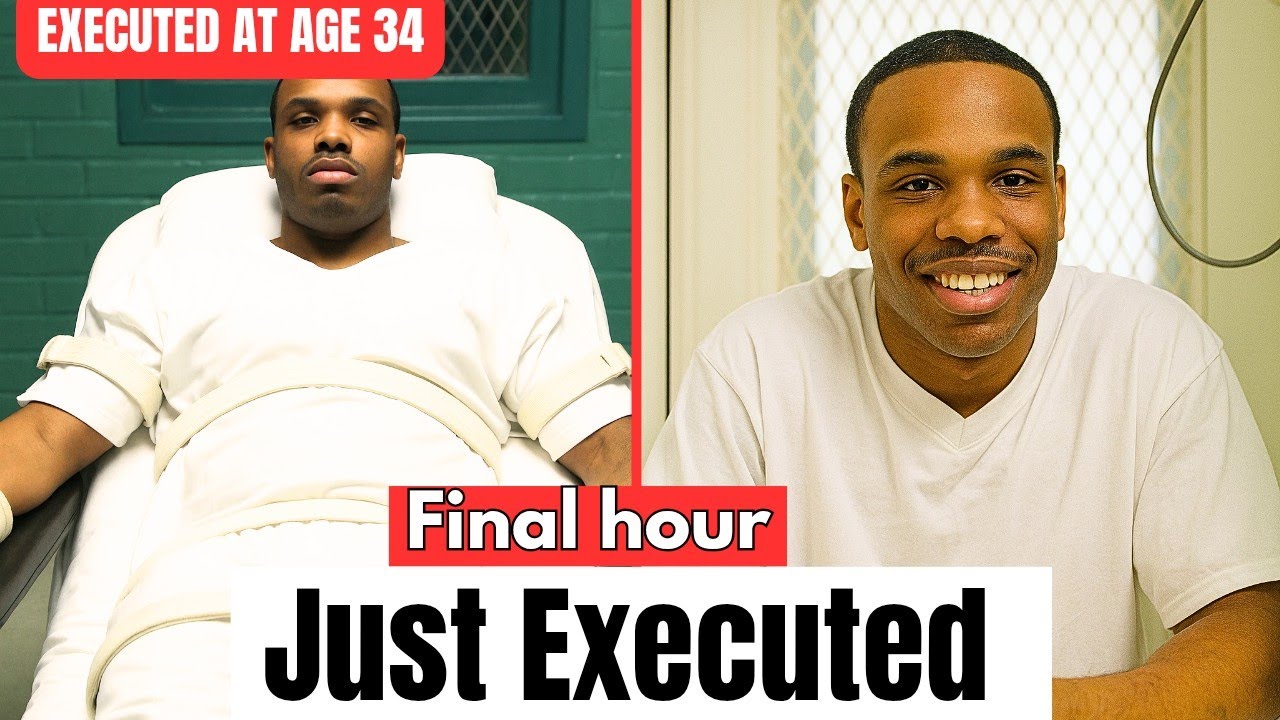
The execution was scheduled for the evening of July 17, 2018. The walk from the holding cell to the death chamber in Huntsville is a short one, but for Young, it must have felt like an eternity. He was strapped to the gurney, the leather restraints tight against his skin.
The witnesses gathered behind the glass, a silent audience to the final act of his life. He was asked if he had any last words. He turned his head, his voice steady but strained, and addressed the room.
He apologized to the Patel family for the pain he had caused, acknowledging the depth of his sin. He spoke of his transformation, hoping that his death might serve a purpose, that someone might see the futility of the path he had taken.
The lethal injection began. The first drug, a sedative, was administered. Then the paralytic agent, followed by the drug to stop his heart.
 As the chemicals entered his bloodstream, Young reportedly whispered that it was burning. Tears escaped from the corners of his eyes, not from fear, but from the physical agony of the process. His breathing became shallow, then ceased.
At 6:39 p. m. , the warden declared the sentence had been carried out.
Christopher Anthony Young was pronounced dead. The state of Texas had exacted its price for the life of Hazmuk Patel.
The tragedy of Christopher Young is not a simple narrative of good versus evil. It is a story of systemic failure, of a brilliant child lost to the trauma of his father’s murder, of a system that saw a gang member instead of a gifted violinist, and of a prison system that, ironically, provided the structure and mentorship that the free world had failed to offer. He was a man who found redemption in the very place designed to strip him of his humanity.
He became a mentor, a father, and a man of faith, but the state determined that his redemption was irrelevant to the sentence of death.
The ripple effects of this execution extend far beyond the death chamber. Three daughters are now orphans, their father taken not by an accident or an illness, but by the deliberate action of the state. They will grow up with the knowledge that their father was a killer, but also that he was a man who fought to change.
The Patel family, while receiving a measure of justice, must also live with the knowledge that the man who killed their patriarch had become someone else entirely. The cycle of violence, which Young himself acknowledged began with the murder of his own father, continues to claim victims long after the initial crime.
Young’s case highlights a glaring inconsistency in the application of capital punishment. He argued, with some merit, that racial bias played a role in his sentencing. The case of Thomas Bart Whitaker, who was granted clemency despite killing his mother and brother, stands in stark contrast to Young’s execution.
 Whitaker had a supportive family advocating for his life; Young had a criminal record and a gang affiliation. The justice system, which is supposed to be blind, often sees the color of a defendant’s skin and the weight of their past more clearly than the content of their character.
In his final hours, Young did not beg for his life. He acknowledged his crime and accepted his fate, but he wanted the world to understand the full scope of his journey. He was a man who had been on a collision course with death since childhood, a trajectory set by the murder of his father and the lure of the streets.
He believed that death row saved his life, giving him the time and space to confront his demons and become the man he was meant to be. It is a bitter irony that the system that gave him the tools to change was the same system that ultimately killed him.
The execution of Christopher Young serves as a stark reminder of the finality of the death penalty. There is no room for error, no room for redemption, and no room for the possibility that a person can change. The state of Texas looked at a man who had spent over a decade proving his transformation and decided that his past was more important than his present.
They saw the 21-year-old who pulled the trigger, not the 34-year-old who had dedicated his life to preventing others from making the same mistake.
As the witnesses filed out of the death chamber and the body was taken away, the silence that followed was deafening. The story of Christopher Young is not just a story about a killer; it is a story about a system that values punishment over rehabilitation, and a society that often refuses to believe that people can change. His last words were not a protest of innocence, but a plea for his death to mean something.
Whether it will is a question that remains unanswered. The state may have silenced his voice, but the questions his life and death raise about justice, race, and redemption will continue to echo long after the lights in the Huntsville death chamber have been dimmed.