It was 1942, and a 14-year-old boy stood near his village of Kema on the tip of Sulawesi’s northern peninsula, watching the first Japanese ships appear on the horizon. The soldiers came ashore, and within days, everything changed. The Dutch colonial government, which had ruled the islands for centuries, surrendered without a fight. Not even a thousand Japanese soldiers died in the conquest of the entire archipelago.
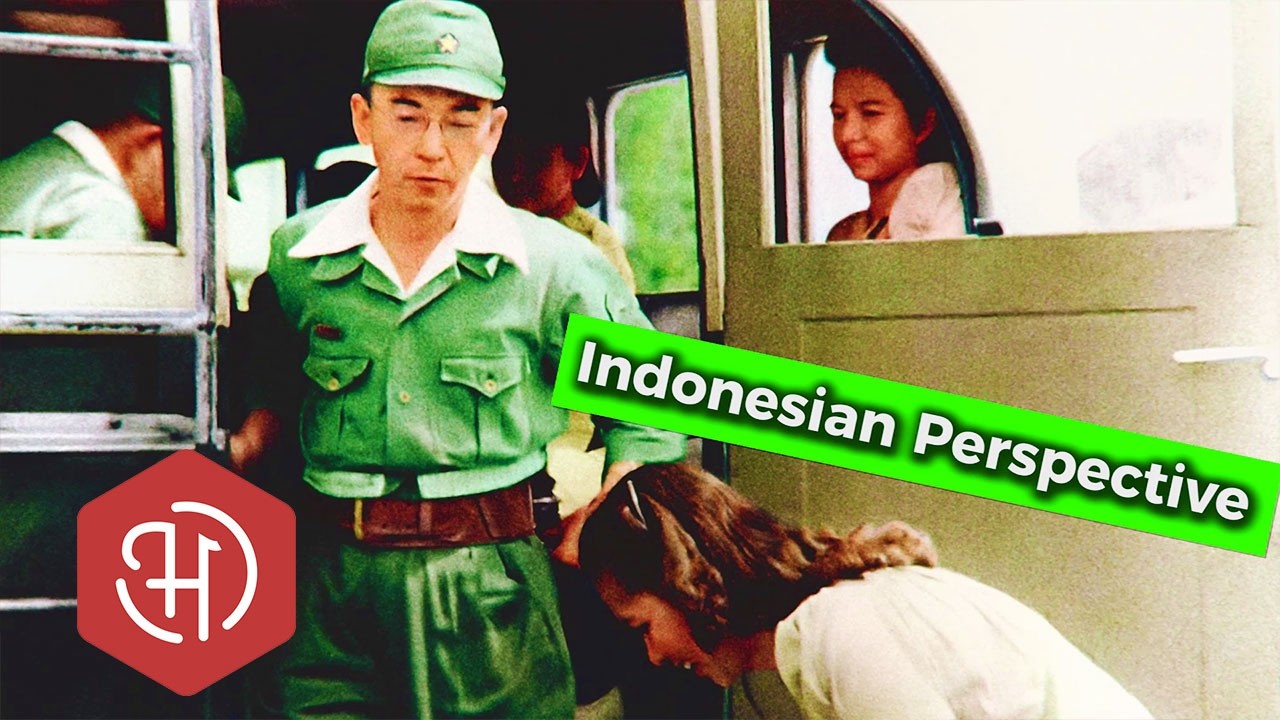
The boy’s family, like so many others, gave everything away—their vehicles, their belongings, their dignity. Anyone who encountered a Japanese soldier had to perform a deep bow. Cyclists had to dismount immediately or face a violent beating. If the blow knocked them over, the soldiers kicked them while they were down.
The goal was simple: beat Japanese reverence into the population while forcefully ripping out every trace of Western culture. I remember being a half-blood, staunchly in the Dutch camp on the inside. But we all had to learn the new rules quickly. Radios were physically locked in homes so no one could tune into anything but official Japanese stations.
Movie theaters were renamed and screened only films that glorified patriotism and traditional femininity. We were told to say “Nippon” instead of “Japan” and “Southern Territories” instead of “the Dutch East Indies. ”
Some of us were luckier than others. The Japanese invested in education, teaching both Indonesian and Japanese in schools.
If you could speak Japanese, they didn’t take liberties with you. But for those who couldn’t, life was brutal. And for the women, it was worse. Approximately 20,000 Indonesian women and girls were forced into sexual slavery, used as comfort women by the Japanese military.
Then came the forced labor. The Japanese needed supplies moved across Southeast Asia, so they built the Burma Railway. They shipped in around 62,000 Allied prisoners of war—30,000 British, 18,000 Dutch, 13,000 Australians, and several hundred Americans. The construction deadline kept shrinking, from two years to one.
Men who were already weak from hunger and disease were ordered to move over three cubic meters of earth per day. Those who slowed down were beaten with sticks, mostly on the head. One survivor recalled, “We were usually beaten with a stick, mostly on the head. ”
Out of those 62,000 prisoners, about 13,000 died.
Among the forced Asian laborers, the death rate was around 50 percent—roughly 100,000 people perished on that railway alone. Inside Indonesia, forced labor took even more lives. Estimates range from 15,000 to 60,000 deaths on various construction projects, and the true number may never be known. The famine was the worst of it.
Rice production on Java collapsed from 8. 5 million tons in 1939 to only 5. 6 million tons in 1945. The Japanese disrupted the entire economy, confiscating harvests and forcing farmers to grow crops for the war effort instead of food.
They tried to fix prices, but the system backfired—farmers stopped producing surplus rice because the official prices were too low. The result was a vicious cycle of hunger and collapse. By 1945, the price of rice had soared to astronomic levels. Survivors recalled, “We no longer had any rice and ate papaya leaves with soy sauce.
”
In absolute numbers, 2. 4 million Indonesians died during the occupation. Spontaneous uprisings broke out across the islands, but they were always local and short-lived, crushed with brute force. Entire families, educators, and former colonial officials were imprisoned, tortured, and killed on suspicion alone, even when there was no actual resistance.
By 1945, Japan was losing the war. On August 17th, just two days after Japan surrendered, Sukarno proclaimed Indonesia’s independence in Jakarta. Japanese units still controlled the cities, but their empire was gone. The Dutch were still imprisoned by the Japanese, and the Allied forces were slow to arrive.
Radical youth groups saw their chance and moved to wipe out any trace of colonial rule. The violence escalated quickly, and the true struggle for independence had only just begun. Indonesia’s total casualties ranked fifth highest in the world, behind only the Soviet Union, China, Germany, and Poland—and ahead of Japan itself. But what made it worse was this: these innocent victims fell in a war that was never theirs.
They died of starvation and deprivation in a military and economic clash between Japan and the Netherlands, fought over the mineral wealth of their own country. Not for their freedom, not for their future—but for resources they would never control.