“You must continue to fight. There will be no evacuation. ”
Those were the orders Brigadier Nicholson received on May 25th, 1940, as German tanks closed in on the port city of Calais. While the world remembers Dunkirk, the desperate stand at Calais remains a forgotten battle that may have saved thousands of Allied lives.
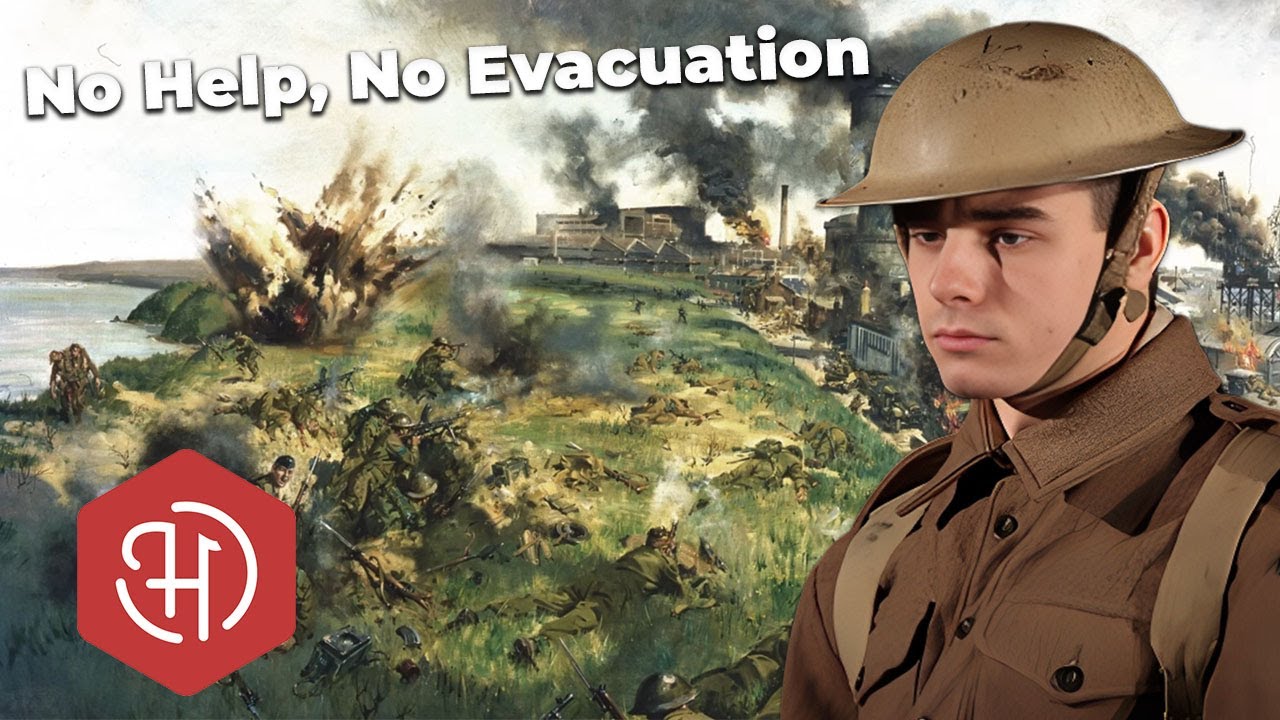
The Germans had swept through the Low Countries in days. By May 20th, they reached the English Channel, trapping the British Expeditionary Force at Dunkirk. Only one obstacle stood between the German tanks and the trapped army: Calais. The British defenders were a mixed force, hastily assembled.
Some arrived without vehicles. Others had only pistols. Yet they turned the town into a fortress, fighting street by street, using canals and narrow roads to slow the German advance. On May 24th, the Germans attacked hard.
By May 25th, they pushed deeper into the town. The defenders, exhausted and running low on supplies, refused to surrender. German attempts to force a capitulation failed. Then came the order that sealed their fate: hold at all costs.
The Germans brought up heavy artillery and bombarded the citadel relentlessly. “Shell after shell roars out of the German barrels towards the bunkers and heavy fortification,” recorded one German soldier. Machine guns hammered without pause. German storm troops advanced under fierce fire from all sides.
For three days, the defenders held. They knew there would be no evacuation, yet they fought on, buying precious time for the Dunkirk evacuation to begin. When the town finally fell, the Germans took 20,000 prisoners, including 3,000 to 4,000 British troops. Most spent years in German prison camps.
But their sacrifice delayed the German advance just long enough for the miracle of Dunkirk to unfold.


