Experts have begun to describe the Royal Navy as caught in a doom loop, a death spiral that feeds on itself. Poor recruiting numbers have led the government to scrap warships. Scrapping warships makes it even harder to recruit sailors. Fewer sailors mean more ships get decommissioned.
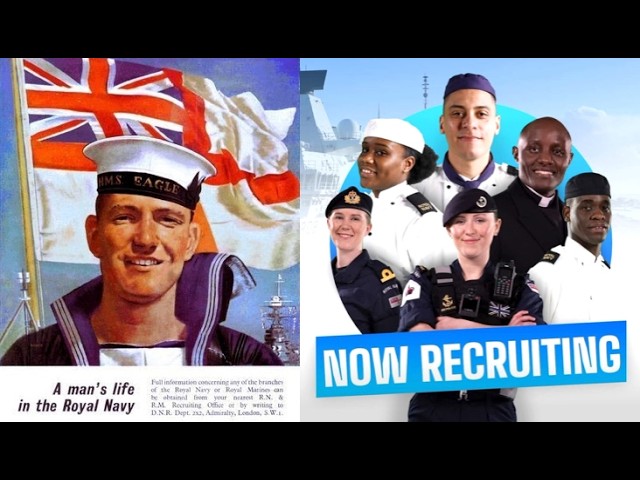
And so it continues. The Navy is now the smallest it has ever been, while Britain’s global defense commitments remain almost unchanged from twenty or even thirty years ago. If you haven’t seen my latest video on this death spiral, I’ll leave a link at the end of this one. You will be shocked.
You might be wondering why I’ve been making these Royal Navy videos at all. The answer is simple: I care about what happens to the senior service. Like most British people, my own family has a history of naval service. My brother is an officer in the Royal Marines Reserve.
I had a relative who served forty-eight years in the Royal Navy, eventually commanding a naval training school that taught new recruits, a place long since closed. We are an island nation. The Navy sits at the heart of our national story. One of the proudest moments of my life came when the Royal Navy asked me to deliver an address about a forgotten naval battle fought in Shanghai in 1941.
In 2013, I stood aboard HMS Daring, moored at the very spot where those sailors had perished. A Royal Marines bugler played the Last Post across the famous Bund for the first time since 1945. It was deeply moving, a commemoration of the British sailors who died on that river seventy years before. I had been trying to have the battle marked with an official memorial, and my project received the personal support of His Royal Highness Prince Philip, the Duke of Edinburgh, himself a World War II naval veteran, as well as the staff of the British Consulate in Shanghai and the embassy in Beijing.
My videos have generated a flood of messages from serving and retired Royal Navy personnel. They share their own experiences and their frustration and anger at what politicians have done to the service. We should all be concerned, sailor and civilian alike, because the Navy is supposed to be our first line of defense for this island kingdom. I decided to examine how Royal Navy recruiting ads have evolved since the end of the Cold War.
As the fleet has shrunk, how has the Navy tried to tempt young people to join? I look forward to your thoughts in the comments below. Let’s begin at the end of the Cold War. When I grow up, I’m going to be a racing driver.
When I grow up, I want to be an astronaut. When I grow up, I’m going to be a [music]
When you join the Navy, we know exactly how you’ll feel. Green. Not seasick.
Out of your depth. An aircraft inbound towards the ship. Not this one. Where?
What time? Wait for results, and then confirm. Pretty soon, though, you start to settle in. You learn new skills.
Discover hidden talents. See new places, make new mates, earn new qualifications. In no time, you feel different. More decisive.
More confident. Less green. You may not notice the change, but when you go home, everyone else will. Join the Navy and see the world differently.
It surprised them, so it might surprise you. In the last three years, the Royal Navy has seized illegal drugs with a street value of over one hundred and twenty million pounds. Royal Navy. The team works.
So you can fix a board, then you can fix a bike. And if you can fix a bike, then you can fix a car. And if you can fix a car, then you can learn to fix a 24C boat, a 4. 5-inch naval gun, a Sampson radar system, or a Type 45 destroyer.
And when you can fix all that, you’ll be a Royal Navy engineer. Start your journey. Search Royal Navy engineers. I wasn’t really bothered at school.
I left at sixteen and went to work as an estate agent. But I loved working with my hands. I always wanted more. So I joined the Royal Navy as a weapon engineer.
I stopped staring out the window and started getting stuck in. I traded the streets of Enfield for the wider world. The best thing about the Navy is the kit we get to work on. I always wanted to work with big guns, and now I get to do it for a living.
Then there’s my mates, and they’re always ashore. We’ve always got a story to tell. And I’ve got loads of engineering qualifications I can take with me if I leave. When something difficult used to come up, you’d think, “I can’t be bothered.
” But now I look at it differently. I just know I can do it. I was born in London, but I was made in the Royal Navy. Made in the Royal Navy.
When you’re a kid and people ask you what you want to be, they usually mean when you grow up. But I didn’t know what I wanted to be from the start. Look delicious, Bobby. Raj, dinner plans, Gina?
I’ve actually applied to join the Royal Navy. Raj, this is not what we do. In the end, finding out where I belonged helped me discover where I came from. I was born in West London, but I was made in the Royal Navy.
The thing I love most about working as a submariner is that you’re part of a close-knit family. Your crew on board rely on you heavily, and you rely on them. When you’re at sea, the camaraderie is brilliant. And when you’re alongside, there’s plenty of things to do.
Everybody gets together, and you just enjoy your life. Growing up, my life was all over the place. Turns out I craved order. And when I joined the Navy, that’s what I got.
My life is still all over the place, but now in a really good way. I was born in Southend, but I was made in the Royal Navy. The Navy introduced me to lots of things. But the best thing was this lot.
I feel at home with them, even when we’re out at sea. We’re not just mates, we’re shipmates. I was born in Basildon, but I was made in the Royal Navy. I used to hate going to work.
Now I love it. Goodbye, 224 bus. Hello, 224 patrol vessel. I swap four buses a day for four countries a month.
Best commute ever. I was born in Liverpool, but I was made in the Royal Navy. These ads span decades, and they tell a clear story. In the late Cold War era, the Navy sold adventure and personal transformation.
Join us, they said, and you will become a different person. More confident, more decisive, less green. The recruiting pitch was about the individual journey. Leave your ordinary life behind.
Travel the world. See things most people never see. The underlying promise was that the Navy would forge you into someone stronger. After the Cold War ended, the tone shifted.
The Navy began emphasizing practical skills and qualifications. Engineering became a selling point. If you can fix a bike, you can fix a car, and if you can fix a car, you can fix a Type 45 destroyer. The message was about employability, about transferable skills, about building a career.
The adventure was still there, but it was framed differently. They were selling stability and tradecraft. Then came the diversity era. Ads featured a young man of South Asian heritage telling his family he had applied to join the Royal Navy.
His dinner companions, presumably relatives, looked uncertain. “Raj, this is not what we do,” someone said. But the ad resolved with him finding belonging. In the end, discovering where he belonged helped him discover where he came from.
He was born in West London, but he was made in the Royal Navy. The personal testimonial ads followed a clear formula. Each featured a sailor describing their background before joining, followed by the transformation. I was born here, but I was made in the Royal Navy.
One had craved order after a chaotic upbringing. Another had hated her commute on the 224 bus and swapped it for a patrol vessel with the same number. A third found family in his shipmates. The stories were genuine, warm, and carefully constructed.
But here is the tension at the heart of all of this. The Navy has been shrinking for decades, and the recruiting ads have become more personal, more polished, more emotionally focused. Yet the numbers keep falling. You cannot sell a life of adventure if there are fewer ships to sail.
You cannot promise career stability if warships are being scrapped. You cannot promise a close-knit family if the fleet is so small that sailors barely spend time at sea together. The doom loop is not just about statistics. It is about the gap between the promise and the reality.
The ads promise transformation, belonging, purpose. The headlines announce another ship decommissioned. Another base closed. Another round of redundancies.
And young people notice. They hear the pitch, but they also read the news. My brother serves in the Royal Marines Reserve. My relative commanded a naval training school after forty-eight years of service.
I have stood on the deck of a warship in Shanghai and listened to the Last Post for men who died seventy years ago. I have seen the Navy from the inside, and I have watched politicians dismantle it from the outside. The recruiting ads evolve, but the problem is not the ads. The problem is the spiral.
The Navy is the smallest it has ever been. The global commitments remain the same. The ships get scrapped, the sailors leave, the recruiting numbers fall, and so more ships get scrapped. At some point, the spiral tightens to the point where there is no recovery.
No ad campaign can fix that. No heartfelt testimonial can reverse it. Sailors and civilians alike ought to care. This is not a partisan issue.
It is not about any single party or government. It is about the future of the Royal Navy and the security of an island nation that depends on the sea. The service has been at the heart of our national story for centuries. The question is whether it will still be there for the next generation.
These recruiting ads, from the Cold War to the present, represent a desperate attempt to keep pace with decline. Each campaign tries a new angle. The Navy of the 1980s promised adventure. The Navy of the 1990s promised skills.
The Navy of the 2000s promised qualification. The Navy of the 2010s promised identity and belonging. And still the spiral continues. Maybe the ads were never the problem.
Maybe the problem is that young people can see the trend. They are not naive. They know that joining the Navy means committing years of their lives, and they want to know there will be a Navy to join. They want to know their training will be used.
They want to know their ship will not be scrapped before they even board it. The men and women who share these testimonials are not exaggerating. They genuinely found purpose, family, and direction in the service. Their stories are real and worth telling.
But the politicians who decide the Navy’s future have created a system where those stories become harder to write. A smaller Navy means fewer sailors, and fewer sailors means fewer ships, and fewer ships means a smaller Navy still. I delivered that address aboard HMS Daring in Shanghai, a ship that has since been decommissioned. I wrote about the sailors who died in 1941, when the Navy was stretched across the globe, defending an empire.
I have seen the statistics. I have read the angry messages from serving and retired personnel. I have listened to their frustration. The Royal Navy is not a brand.
It is not a series of commercials. It is a shield, the first line of defense for an island that has always looked to the sea. The ads will keep coming. They will keep telling stories of transformation and belonging.
But unless the spiral is broken, the stories will grow thinner, the ships fewer, and the silence at the end of the Bugler’s call longer. I was born in this country, but like those sailors in the ads, I learned what service means. The question is whether the country remembers it too. The Navy is the smallest it has ever been.
The commitments remain. And so the spiral continues, unless we decide to break it. The decision is ours, and time is running out.


