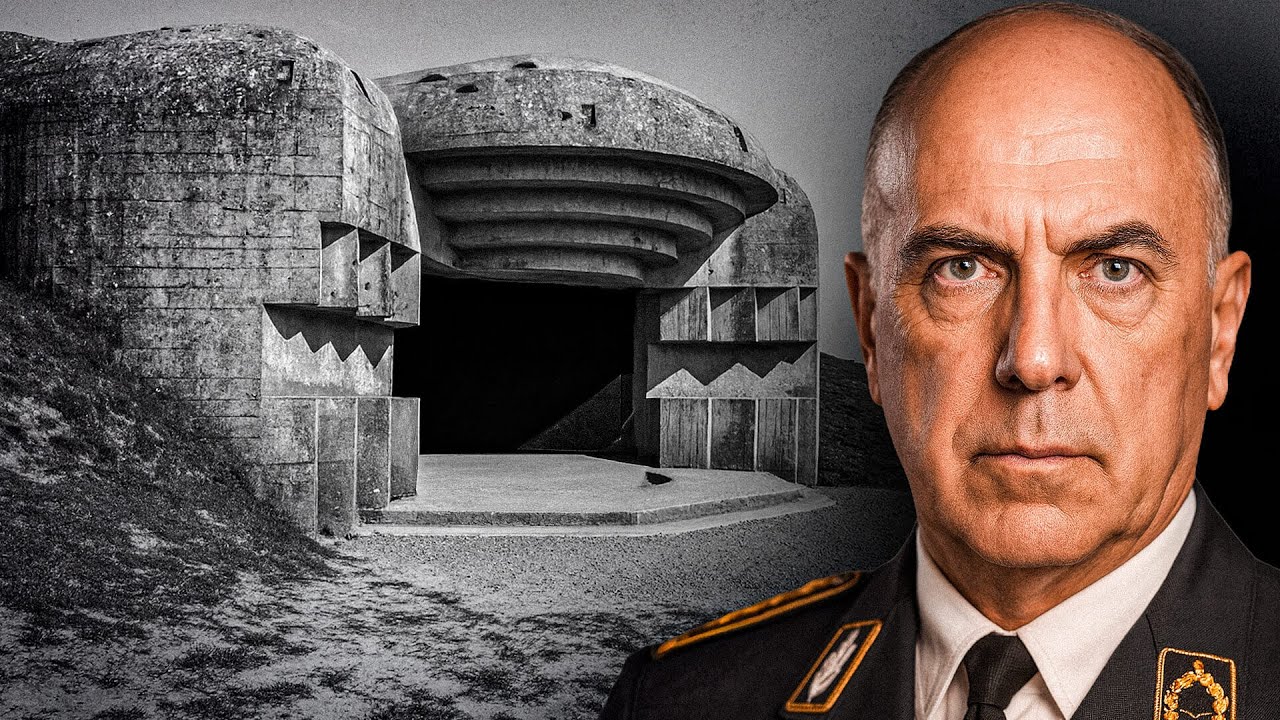
THE MYSTERIOUS DEATH OF FRITZ TODT — THE ENGINEER BEHIND HITLER’S WAR MACHINE
On the morning of February 8, 1942, one of the most powerful men in Nazi Germany climbed aboard a twin-engine aircraft near Hitler’s secret headquarters in East Prussia.
He was not a famous general.
He had not led a panzer division into France. He had not commanded armies outside Moscow. His face was not nearly as recognizable as those of Hermann Göring, Heinrich Himmler, or Joseph Goebbels.
Yet if Fritz Todt suddenly disappeared, enormous parts of Hitler’s war machine would be left without the man who had helped organize them.
Todt controlled roads.
Construction.
Fortifications.
Armaments.
Military infrastructure.
Waterways.
Energy.
And an engineering organization that was spreading across German-occupied Europe.
The aircraft took off.
Within minutes, something went catastrophically wrong.
The pilot turned back toward the airfield.
Then the plane crashed.
Everyone aboard was killed.
By nightfall, Fritz Todt was dead, Adolf Hitler had lost one of the most important technical organizers in the Reich, and another man was already moving into the vacuum Todt had left behind.
That man was Albert Speer.
And there was one detail that would haunt the story for decades.
Speer had originally been expected to travel on Todt’s aircraft.
He did not.
Todt flew.
Todt died.
And Speer inherited an empire.
What made the timing even more disturbing was what had reportedly happened shortly before the crash.
Todt had become increasingly pessimistic about Germany’s ability to win the war. After inspecting conditions connected with the Eastern Front in late 1941, he had confronted Hitler with grim assessments of German supply, armaments and resources. German historical sources confirm that Todt’s doubts about victory had grown serious enough to create arguments with Hitler.
Then he flew to Hitler’s headquarters one final time.
The next morning, he was dead.
It sounds like the beginning of a conspiracy thriller.
But the real story of Fritz Todt is more disturbing than any simple assassination theory.
Because the greatest mystery is not necessarily who—or what—killed him.
It is how an engineer who understood systems, numbers, materials and logistical reality helped construct a system whose political purpose demanded that reality eventually be ignored.
And how the machine he created became even more ruthless after he was gone.
Fritz Todt had spent much of his professional life solving practical problems.
He was born in Pforzheim in 1891, studied civil engineering, served as an officer and aerial observer during the First World War, returned to university after Germany’s defeat and built a career in construction and road engineering.
His doctoral research was not about ideology.
It was about roads.
More specifically, defects in road surfaces made from tar and asphalt.
It was the sort of subject that sounds almost aggressively ordinary.
Cracks.
Materials.
Construction errors.
Engineering standards.
But Todt was not politically neutral.
He joined the Nazi Party in the early 1920s and later entered the SA. By the early 1930s he was advising the Nazi movement on technical and employment questions. After Hitler became chancellor in 1933, Todt’s combination of engineering experience and political loyalty suddenly became extraordinarily valuable.
Hitler appointed him Inspector General for German Roadways.
The engineer now had direct access to the dictator.
And his first great public assignment would help create one of the most persistent myths of the Third Reich.
The Autobahn.
Photographs showed workers cutting enormous routes through the countryside.
Bridges rose over valleys.
Concrete lanes stretched toward the horizon.
Propaganda celebrated modernity, speed and employment.
Hitler posed with a shovel.
Todt became one of the engineers associated with what appeared to be a technological revolution.
There was only one problem.
The Nazis had not invented the Autobahn.
Plans for a large German motorway network had existed during the Weimar Republic. A Cologne–Bonn motorway had already been completed before Hitler’s takeover, and detailed planning for further routes predated the Nazi regime. The Bundesarchiv and German Historical Museum both document how Nazi propaganda deliberately presented the motorway program as something essentially created by Hitler and his government.
That is the first twist in Fritz Todt’s story.
The man remembered as one of the builders of Hitler’s futuristic Germany began his rise partly through a project whose history was itself rewritten.
Todt did not invent the Autobahn.
What he did was organize, expand and politically transform it.
Under his authority, construction accelerated on an enormous scale. By 1938, thousands of kilometers had been completed. The highways became more than transportation infrastructure. They were staged as evidence that National Socialism could turn speeches into concrete.
The photographs were perfect.
Long roads.
Massive bridges.
Workers carrying shovels.
Hitler inspecting construction.
Machines transforming landscapes.
The message was simple: this government builds.
What the images concealed was equally important.
The Autobahn was never the miracle cure for unemployment that propaganda suggested. Employment on the project peaked at roughly 120,000 direct workers in 1936, while rearmament played a far larger role in reducing unemployment.
But propaganda did not need the entire truth.
It needed a symbol.
And Todt had become the man who could manufacture symbols out of concrete.
Hitler noticed.
Soon, roads would no longer be enough.
In 1938, Europe was moving toward war.
Hitler needed Germany’s western frontier fortified.
The project became known as the Westwall—the vast defensive network later commonly associated with the name Siegfried Line.
The army had already been working on fortifications.
But Hitler wanted speed.
Enormous speed.
Todt was given the assignment.
What followed showed why Hitler trusted him.
Todt brought together government construction offices, private companies, labor organizations, engineers, transport networks and enormous quantities of material. The resulting system became known as Organisation Todt.
It did not begin as a conventional ministry.
It was something stranger.
A flexible empire of engineers, administrators, contractors, labor units and state power built around accomplishing whatever construction task the regime demanded.
The German Historical Museum describes Organisation Todt as developing rapidly into one of the most important organizations for the German war effort outside the Wehrmacht and SS.
The Westwall revealed its scale.
Concrete.
Steel.
Railway wagons.
Trucks.
Excavators.
Road crews.
Engineers.
Hundreds of thousands of workers.
The project ran for hundreds of kilometers along Germany’s western frontier.
From an engineering perspective, it was extraordinary.
From a political perspective, it served a dictatorship preparing for aggressive war.
That distinction would become increasingly impossible to ignore.
Todt’s power expanded again.
In 1938 he became General Plenipotentiary for the Regulation of the Construction Industry.
In 1940 Hitler appointed him Reich Minister for Armaments and Munitions.
In 1941 he received additional authority over water and energy.
One office accumulated on top of another until the quiet road engineer had become one of the central administrators of Germany’s war economy. Deutsche Biographie describes him as a central figure in the Reich’s wartime economic system.
He still did not command armies.
He did something armies depended upon.
He made systems function.
A tank division needed tanks.
The tanks needed factories.
Factories needed electricity.
Electricity required energy infrastructure.
Weapons needed steel.
Steel needed coal and transport.
Troops needed roads.
Submarines needed bases.
Occupied territory needed bridges, depots, fortifications and repaired railways.
Every glamorous military victory rested on invisible networks of logistics.
Todt understood those networks.
And Hitler understood Todt.
That made him dangerous in a way that medals and uniforms could not show.
But it also created a trap.
Every expansion of Todt’s engineering power tied him more tightly to the crimes and ambitions of the regime he served.
When Germany conquered much of Western Europe, Organisation Todt followed.
Its workers appeared in France, Belgium, the Netherlands, Norway and other occupied territories.
They constructed submarine bases.
Military roads.
Airfields.
Bunkers.
Coastal defenses.
Later, the name Organisation Todt would become inseparable from the Atlantic Wall, the vast network of fortifications intended to defend Nazi-controlled Europe from Allied invasion.
From a distance, these structures looked like engineering achievements.
Up close, another reality appeared.
Labor.
Not simply workers hired in the conventional sense.
Increasingly, compulsory labor.
Prisoners of war.
Civilians from occupied countries.
And eventually concentration camp prisoners.
As Germany sent more of its own men into uniform, the demand for labor became more desperate.
The solution was coercion.
Organisation Todt was one component of a much wider Nazi forced-labor system that exploited millions of people across Europe. German historical sources note that the OT increasingly relied on forced labor during the war, and postwar evidence documented compulsory recruitment for its projects.
This is where the image of Fritz Todt as merely an apolitical engineer collapses.
He was not an engineer who accidentally found himself working inside Nazi Germany.
He had joined the Nazi Party years before Hitler became chancellor.
He rose through Nazi technical organizations.
He accepted extraordinary authority from Hitler.
And the organization carrying his name became an instrument of occupation and war.
The concrete was real.
So was the human cost.
Behind fortifications that appeared almost indestructible were people whose freedom had been taken from them.
Behind roads came coercion.
Behind bunkers came forced labor.
Behind schedules and production charts were bodies.
That was the second transformation of Todt’s career.
He had once organized men and materials to build highways.
Now the same management logic was being applied across occupied Europe.
A construction system had become part of an empire.
And that empire was beginning to consume human beings as another resource.
Then came June 1941.
Operation Barbarossa.
Hitler invaded the Soviet Union.
At first, German armies advanced with terrifying speed.
Hundreds of thousands of Soviet troops were captured.
Cities fell.
German commanders believed they were watching another rapid campaign like Poland or France.
But the Soviet Union did not collapse.
Distances became enormous.
Supply lines stretched farther and farther east.
Rail systems were damaged or incompatible.
Road conditions deteriorated.
Vehicles broke down.
Fuel became harder to move.
Winter approached.
The German army had been designed to win quickly.
Now it faced the possibility of a long industrial war.
That was exactly the kind of problem Fritz Todt was qualified to understand.
Not ideology.
Arithmetic.
Germany could conquer territory on a map.
But maps did not move ammunition.
Speeches did not produce fuel.
Willpower did not manufacture steel.
And political certainty could not substitute for trucks, locomotives, replacement engines or warm clothing.
Todt inspected conditions connected with the Eastern Front in late 1941.
What he saw deeply disturbed him.
The German Historical Museum records that after an inspection trip he demanded measures to improve supplies to the Wehrmacht and increasingly doubted whether the war could be won.
This was no small change.
Todt had risen because Hitler valued him.
Now the engineer was discovering something dictators hate.
Numbers do not care who gives the orders.
A bridge either supports the load or it collapses.
A truck either has fuel or it stops.
A factory either possesses raw materials or it cannot produce.
A supply system either works or soldiers go hungry.
There is no ideological speech capable of changing the tensile strength of steel.
Todt knew this.
And increasingly, he appears to have understood what it meant.
Germany had failed to destroy the Soviet Union in a rapid campaign.
Britain remained in the war.
The United States had entered the conflict in December 1941.
The economic balance was changing catastrophically.
Germany was now fighting a coalition containing industrial and material resources far beyond its own.
Todt had spent his life calculating what structures could bear.
By late 1941, he seems to have concluded that Hitler had placed Germany on a structure that could not bear the weight.
He took that conclusion to the Führer.
Accounts from the period and later historical research indicate that Todt warned Hitler in late 1941 that the war could no longer be won militarily and continued pressing uncomfortable assessments into early 1942.
Imagine the irony.
One of the men who had helped build Hitler’s military infrastructure was now effectively telling him that the machine had reached its limits.
Not because Todt had suddenly become an opponent of Nazism.
There is no evidence of such a moral conversion.
His concern was strategic and technical.
Germany did not possess the resources required for the war Hitler had created.
That distinction matters.
Todt was not emerging as a resistance hero.
He was a committed participant in the regime who had begun to recognize that the regime’s military strategy was becoming impossible.
And that made the next few weeks extraordinary.
On February 7, 1942, Fritz Todt traveled to Hitler’s headquarters near Rastenburg in East Prussia.
The complex was called the Wolfsschanze—the Wolf’s Lair.
Hidden among forests, protected by security zones, bunkers, wire and armed guards, it was one of the most heavily controlled environments in Nazi Europe.
Todt met Hitler there.
Exactly what passed between them has never been reconstructed with absolute certainty.
But Todt was no longer bringing good news.
German historical accounts state that he had criticized inadequate armament and supply, and that he had already developed serious doubts about German victory. The discussion immediately before his death later became one reason rumors of assassination emerged.
Todt was scheduled to leave the following morning.
And Albert Speer was at the Wolf’s Lair too.
Speer was younger.
Ambitious.
An architect rather than an armaments expert.
He had risen through his personal relationship with Hitler and his ability to turn the dictator’s architectural fantasies into designs.
Todt offered him a place aboard his aircraft.
Speer did not take it.
According to Speer’s later account, he had stayed up extremely late with Hitler and decided to sleep instead.
That tiny decision would change the structure of power inside Nazi Germany.
Morning came.
Todt went to the airfield.
His aircraft, a converted Heinkel, prepared for departure.
Five men were aboard.
The engines started.
The plane accelerated.
It lifted from the runway.
For a brief period, nothing appeared wrong.
Then the pilot turned back.
Something had happened.
The aircraft was still close to the airfield when it went down.
Flames erupted.
The wreckage burned.
There were no survivors.
Fritz Todt was fifty years old.
The engineer behind Hitler’s roads, fortifications and armaments administration was gone.
One day earlier, he had been discussing the future of Germany’s war effort.
Now there was scarcely enough left of the aircraft to make the cause immediately obvious.
And almost instantly, people began asking the question that has followed his death ever since.
Was it really an accident?
The circumstances were perfect for suspicion.
Todt had been criticizing the state of German armaments.
He had increasingly doubted victory.
He had spoken with Hitler immediately before his death.
He died leaving Hitler’s headquarters.
The crash occurred only moments after takeoff.
And the man who would replace him had almost been aboard.
For anyone looking for a conspiracy, the pieces seemed to arrange themselves.
Perhaps Hitler had decided Todt had become dangerous.
Perhaps someone else in the Nazi hierarchy wanted his positions.
Perhaps the aircraft had been sabotaged.
Perhaps Todt knew too much.
Perhaps Speer’s miraculous absence meant something.
That is how conspiracy theories are born.
A chain of genuine coincidences begins to look like a design.
But there is an important problem.
Evidence.
The Reich Air Ministry investigated the crash.
According to Speer’s later memoir, investigators ruled out sabotage. Modern German biographical scholarship likewise describes the assassination rumors that arose after Todt’s criticism of the armaments situation as unsupported.
That does not tell us precisely what mechanical or operational failure caused the disaster.
It does tell us something more important.
There is no solid evidence establishing that Fritz Todt was murdered.
No proven bomb.
No documented assassination order.
No credible chain connecting Hitler, Speer, Göring, Himmler, Bormann or British intelligence to an operation against the aircraft.
Suspicion is not evidence.
And yet the rumors survived.
Why?
Because the coincidence was almost too perfect.
A powerful minister questions the direction of the war.
He visits Hitler.
He leaves the next morning.
His aircraft crashes.
The ambitious man who almost flew with him stays behind.
Within hours, the dead man’s authority begins passing to that survivor.
Even without murder, it feels scripted.
History sometimes does that.
The most unsettling events do not always require a hidden hand.
Sometimes chance produces a sequence that no novelist would dare write.
And what happened next made the story stranger still.
Hitler did not spend weeks searching for Todt’s replacement.
He turned to Albert Speer.
Almost immediately.
Speer was appointed to succeed Todt as Minister of Armaments and Munitions and inherited authority connected with Organisation Todt.
The architect who had gone to sleep rather than board the doomed aircraft woke into one of the most powerful jobs in Europe.
That was the real plot twist.
Todt’s death did not weaken the machinery he had built.
It cleared the way for someone who would expand it.
Speer inherited systems Todt had already begun creating to rationalize production and involve industrial specialists more directly in armaments management. Under Speer, those methods were enlarged as his authority expanded.
Production increased.
Administrative power grew.
Factories were reorganized.
Resources were centralized.
German armaments output continued rising even while Germany’s strategic situation deteriorated.
The Nazi regime celebrated Speer as an organizational genius.
But beneath the statistics was another number.
Labor.
Germany was running out of German workers.
Men were being sent to the front.
Factories needed bodies.
Construction sites needed bodies.
Mines needed bodies.
Underground facilities needed bodies.
The regime increasingly filled that gap with foreigners brought or held under coercion.
By 1944, Organisation Todt had become gigantic. Yad Vashem records a workforce of approximately 1.36 million people, including roughly one million foreign workers and prisoners of war, as well as concentration camp prisoners.
This was no longer merely an engineering organization.
It was an enormous mechanism for converting human beings into labor.
The Atlantic Wall was built.
Submarine pens hardened the Atlantic coast.
Military installations spread across occupied Europe.
As Allied bombing intensified, construction moved underground.
Factories were buried beneath mountains.
Tunnels were excavated.
Missile facilities appeared.
The closer Germany moved toward defeat, the more desperately the system demanded labor.
And the more brutal that system became.
Todt had died before seeing its final form.
But the foundations existed during his leadership.
The organization carried his name until the end.
Years later, when the war was over, the stage looked completely different.
The banners were gone.
The photographs of engineers and concrete gave way to photographs of prisoners and courtrooms.
Nuremberg.
Albert Speer sat among the defendants.
He had spent years presenting himself as a technocrat—an architect and administrator who claimed distance from the darkest core of Nazi crimes.
But prosecutors had documents.
Minutes.
Labor records.
Orders.
Production requirements.
The bureaucracy that had once made the Reich efficient now helped describe how the system had operated.
Organisation Todt appeared repeatedly in evidence concerning forced labor.
At Nuremberg, prosecutors documented that foreign civilians were compelled to work for the organization and that conscripted workers were used on military construction, including Atlantic Wall fortifications.
The International Military Tribunal concluded that Speer had been directly involved in the utilization of forced labor as head of Organisation Todt and had relied on compulsory service to keep it adequately staffed.
Speer was convicted of war crimes and crimes against humanity.
He received twenty years in prison.
Here, however, another historical correction matters.
It is sometimes claimed that Organisation Todt itself was formally “declared a criminal organization” at Nuremberg.
That is not accurate.
The International Military Tribunal declared several Nazi organizations criminal, but Organisation Todt was not among the organizations given that formal legal designation. Its forced-labor practices were nevertheless documented in the proceedings, and Speer’s responsibility for the use of compulsory labor—including through Organisation Todt—formed part of the case against him.
That difference may sound technical.
It is not a defense of Organisation Todt.
If anything, the record is more revealing without exaggeration.
No invented verdict is necessary.
The documented facts are sufficient.
People were compelled to work.
Occupied populations were exploited.
Prisoners of war were used.
Concentration camp prisoners eventually entered the system.
Military fortifications were constructed with coerced labor.
And the organization carrying Fritz Todt’s name became one of the physical engines of Nazi occupation.
Which leaves the most uncomfortable question.
Who exactly was Fritz Todt?
A brilliant engineer?
Yes, in the sense that he possessed genuine technical and organizational ability.
A powerful administrator?
Absolutely.
A Nazi?
Also yes.
A victim of Hitler?
The evidence does not justify such a simple description.
A secret resistance figure who realized the moral horror of the regime and turned against it?
No.
That story is tempting because people like redemption.
But history does not owe us redemption arcs.
Todt’s late pessimism about the war appears to have come primarily from material and military calculation.
He understood roads.
He understood industrial capacity.
He understood fuel.
He understood construction.
He understood what Germany could produce.
And perhaps better than many of the men around Hitler, he understood what Germany could not produce.
His argument with Hitler was not fundamentally that the war was evil.
It was that the war was becoming unwinnable.
That makes Todt more disturbing, not less.
Because he represents a type of person found in almost every powerful system.
The professional who does not write the ideology but makes the ideology operational.
The engineer who designs the infrastructure.
The administrator who turns ambitions into schedules.
The planner who transforms political orders into procurement requirements.
The manager who reduces human consequences to columns in a report.
Todt did not need to command an army.
His roads carried armies.
His bunkers protected armies.
His factories armed armies.
His construction system followed armies.
His organization helped turn conquered land into military infrastructure.
Power does not always wear a field marshal’s uniform.
Sometimes it carries blueprints.
There is a photograph from Nazi Germany that captures the illusion perfectly.
A new motorway disappears toward the horizon.
The road is smooth.
Modern.
Precise.
Order imposed upon landscape.
Nothing in the image tells you where the political system behind that road is going.
That is the danger.
Technology is extremely good at answering the question:
“How?”
How do we build the road?
How much concrete is required?
How many workers?
How many days?
How do we optimize production?
How do we increase output?
How do we move supplies faster?
How do we fortify a coastline?
How do we construct a bunker capable of surviving bombardment?
How do we complete the project before winter?
Those questions have technical answers.
But technology does not automatically answer the larger question.
“Why?”
Why are we building it?
Who benefits?
Who pays?
Who has been forced to work?
What political objective does the system serve?
What happens when efficiency is used in the service of oppression?
Todt’s career is what happens when the “how” becomes separated from the “why.”
And then, near the end, the engineer discovered something else.
Even technical reality could become unacceptable when it contradicted political faith.
Todt could calculate resources.
Hitler could reject the calculation.
Todt could report shortages.
Hitler could demand victory.
Todt could explain that the structure was overloaded.
Hitler could order more weight placed upon it.
The engineer had spent years helping build a dictatorship’s ability to act.
Then he encountered the point where dictatorship no longer wanted reality reported back to it.
February 8, 1942.
Return to the airfield.
The wreckage is burning.
Men are staring at the remains of the aircraft.
Somewhere nearby stands the headquarters from which Hitler is directing a war stretching from the Atlantic coast deep into the Soviet Union.
Todt is dead.
He will never see Stalingrad.
He will never see the destruction of the German Sixth Army.
He will never see American and British bombers devastate Germany’s industrial cities.
He will never see Allied troops land behind the Atlantic Wall.
He will never see Soviet armies enter Germany.
He will never see Berlin fall.
He will never sit in a courtroom at Nuremberg.
He will never answer questions about the labor system carrying his name.
Instead, his successor will.
Perhaps that is the final irony.
Todt died just as he seems to have realized that the numbers no longer supported Hitler’s dream.
Speer survived and spent the following years forcing the machinery to keep running anyway.
For a time, he succeeded.
Production rose.
Construction continued.
New weapons appeared.
More labor was demanded.
More people were coerced.
Germany kept fighting long after strategic victory had become virtually impossible.
Efficiency did not save the regime.
It prolonged its capacity to destroy.
And that may be the darkest plot twist of all.
The lesson of Fritz Todt is not that technology failed Nazi Germany.
In many places, technology worked exactly as intended.
The roads worked.
The factories worked.
The bunkers worked.
The administrative systems worked.
The forced-labor machinery worked.
The engineers solved problems.
The managers met deadlines.
The concrete hardened.
The weapons left the factories.
That was precisely the horror.
Because a system can be technically successful while being morally catastrophic.
So was Fritz Todt murdered?
After more than eight decades, there is no reliable evidence proving assassination.
The timing created suspicion.
The circumstances generated rumors.
The crash investigation did not provide a dramatic explanation capable of silencing every doubt.
But the historical record does not justify turning suspicion into fact. German biographical scholarship treats the assassination rumors as unsupported, while accounts of the official investigation say sabotage was ruled out.
Perhaps the aircraft suffered a failure.
Perhaps something went wrong during takeoff.
Perhaps the precise sequence will never be completely reconstructed.
But focusing only on whether somebody planted a bomb risks missing the larger story.
Fritz Todt had already built something far more consequential than an airplane.
He had helped build a model in which engineering expertise, corporate organization, state authority and political dictatorship could merge into one enormous machine.
That machine survived him.
It grew after him.
And when the war ended, the ruins it left behind were measured not only in shattered concrete and destroyed cities, but in millions of lives exploited by the system of forced labor that sustained Nazi Germany’s war economy.
Todt’s death remains surrounded by mystery.
His responsibility should not be.
He was neither merely the innocent engineer of legend nor the secret anti-Hitler martyr that a more comforting story might require.
He was a gifted technocrat who chose to place his abilities at the service of a dictatorship, rose because of that choice, helped give that dictatorship extraordinary physical power, and eventually discovered that the same regime had begun a war even his calculations could no longer make possible.
The aircraft crash ended his life.
It did not end his system.
And perhaps that is why Fritz Todt’s story still matters.
Because the most dangerous machines in history are not always invented by monsters.
Sometimes they are built, piece by piece, by highly capable people who become so focused on making the system work that they stop asking what the system is working for.


