The Ethiopian Bible: A Deep Dive Into Its Unique History and Prophetic Significance
The Ethiopian Bible is not just another Christian text; it is a distinctive treasure that holds ancient wisdom, a wealth of knowledge, and a deep connection to the roots of Christian faith. Used by the Ethiopian Orthodox Tewahedo Church, this Bible carries with it the weight of history, culture, and faith, dating back to the very early centuries of Christianity. Known for its expansive 81 books — 15 more than Protestant Bibles and 8 more than Catholic Bibles — it is often seen as the broadest canon in Christendom. But what exactly is the Ethiopian Bible, and how did it come to be so unique? Let’s explore its fascinating history, differences from Western Bibles, and the secrets it holds within.
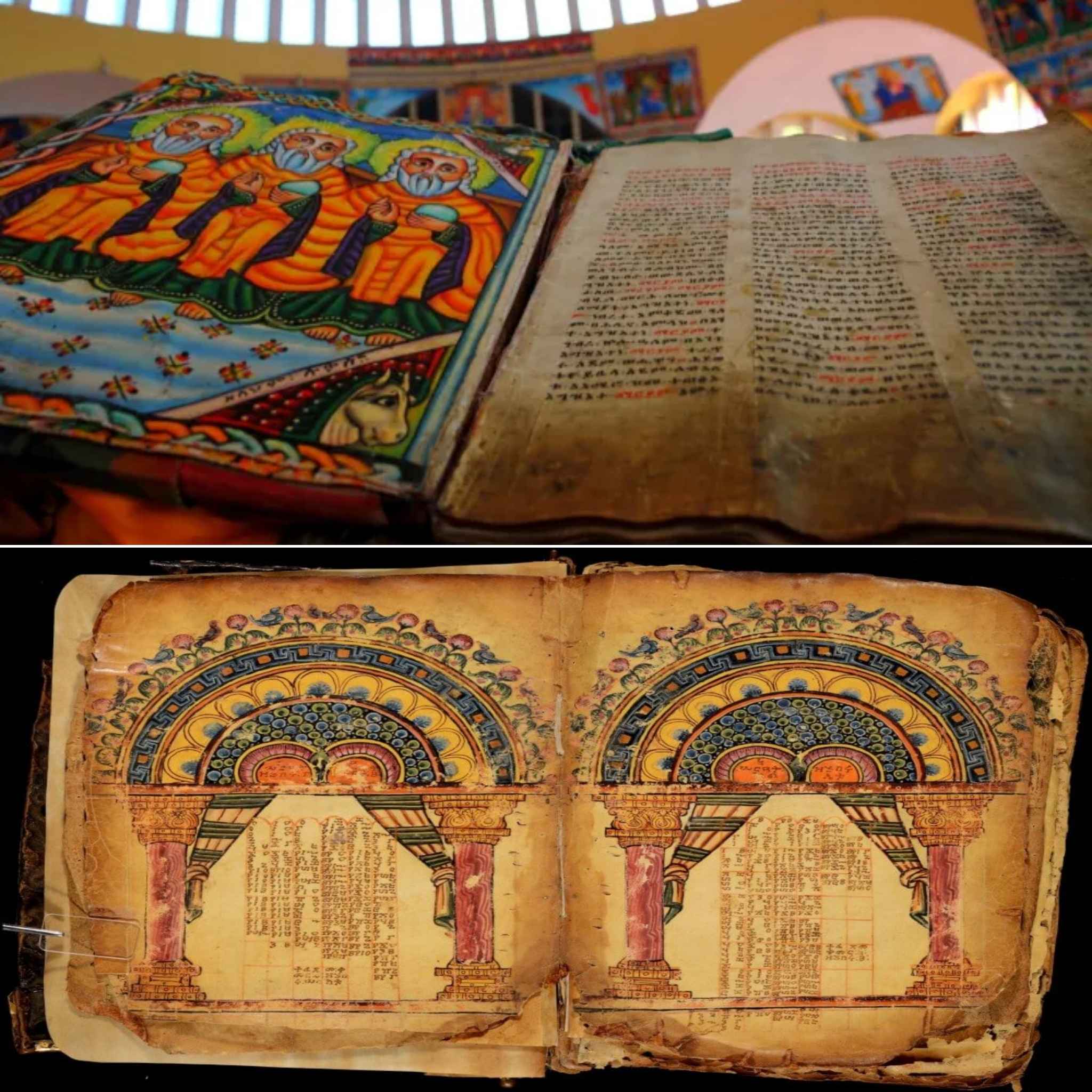
What Is the Ethiopian Bible?
The Ethiopian Bible is the official canon of the Ethiopian Orthodox Tewahedo Church, which is one of the oldest Christian denominations still in existence today. With a rich history deeply rooted in the ancient Ge’ez language, it is considered to be one of the most significant Christian texts still in use. The Ethiopian Bible contains 81 books, compared to the 66 books found in Protestant Bibles. This is significant because it includes books that are not found in the Western biblical tradition, often referred to as “Apocryphal” or “Deuterocanonical” by Catholics and Orthodox Christians.
Interestingly, some books in the Ethiopian Bible are considered by their tradition to inform doctrine but are not necessarily used in regular liturgical practices, making them akin to the Apocrypha in certain Western Christian traditions.

A Brief History of the Ethiopian Bible and Church
Ethiopia’s Christian history is as old as the Christian faith itself. Legend tells that the Apostle Matthew and Bartholomew evangelized the region shortly after Pentecost, with the eunuch from Acts 8:27–39 often cited as one of the first Ethiopian converts to Christianity. The country’s conversion to Christianity reached its pinnacle in the early 4th century AD, when King Ezana officially embraced Christianity, making it the state religion of Ethiopia—this occurred roughly 50 years before Christianity was officially legalized in the Roman Empire.
[Image: Ancient Ethiopian Orthodox church, a place where Christian traditions were deeply rooted for over 1,500 years.]
The Birth of the Ethiopian Bible
Once Ethiopia officially became a Christian state, the need to translate sacred texts into the local language — Ge’ez — became paramount. This translation process began with the Old Testament texts, followed by the New Testament writings. As early as the 5th or 6th century AD, the Ethiopian Bible was finalized as the official liturgical Bible of the Ethiopian Orthodox Church.
At its core, the Ethiopian Bible is based on the Septuagint, the Greek translation of the Old Testament, as well as the New Testament in Greek. However, the Ethiopian version includes several additional books that are not found in the canon of most Western Christian Bibles.
The Separation of the Western and Ethiopian Churches
One of the major milestones in the history of the Ethiopian Church came in 451 AD, when the Church split during the Christological controversy. The Council of Chalcedon declared that Jesus Christ possessed two distinct natures — one divine and one human. However, the Ethiopian Church disagreed, maintaining that Christ’s nature was inseparable, a view shared by other Oriental Orthodox Churches.
This disagreement led to a break between the Western and Ethiopian churches, and both groups went on to develop their separate theological positions, liturgies, and scriptural canons. As a result, the Ethiopian Orthodox Church’s canon diverged significantly from the Western Christian tradition.
How Many Books Are in the Ethiopian Bible?
The Ethiopian Bible contains 81 books, which is more than any other major Christian Bible. Here’s a breakdown:
- 66 books from the Protestant Bible, including the 39 Old Testament books and the 27 New Testament books.
- The Apocrypha or Deuterocanonical books, found in Catholic and Orthodox Bibles.
- An additional 15 books, including unique texts like the Book of Enoch, the Book of Jubilees, and 1, 2, and 3 Maccabees, which are included in the Ethiopian canon but are generally absent in Western Bibles.
Interestingly, some of these additional books are not used in regular church worship but are considered valuable for doctrinal teachings. They offer insight into early Christianity and are seen as spiritual texts that complement the core books of the Bible.
The Ethiopian Church Today: A Legacy of Perseverance
The Ethiopian Orthodox Tewahedo Church continues to thrive, making up approximately 43% of Ethiopia’s population — about 35 million people, with millions more adherents worldwide. Despite challenges and persecution, Ethiopia has remained one of the most Christian-majority countries in the world, even as many of its neighbors have shifted to Islam.
Despite the deep theological schism between the Ethiopian Church and the Western Christian churches, modern efforts to bridge the gap have begun. During the 20th century, particularly following Vatican II, there has been renewed interest in dialogue, especially with the rise of evangelical missionary movements. Yet, many doctrinal and cultural differences still remain, making full reconciliation a distant goal.
The Unique Nature of the Ethiopian Bible
In many ways, the Ethiopian Bible offers an alternative view of Christian history. It serves as a testament to a separate but parallel branch of Christianity that has retained much of its ancient roots. The inclusion of several books that are absent in Western Bibles provides an additional layer of depth to the Christian narrative.
The Book of Enoch, for instance, is one of the most famous works in the Ethiopian canon. Though not accepted as Scripture in the Western tradition, it provides a fascinating perspective on angels, the heavenly realm, and the end of the world. The Book of Jubilees, another key text, presents an expanded version of Genesis and Exodus, offering new insights into the patriarchs and the laws given to Moses.
The Ethiopian Bible’s canon serves not just as an ecclesiastical tool but also as a cultural and spiritual anchor for the Ethiopian people. It encapsulates the journey of a nation and a people who, despite centuries of isolation, have maintained an unbroken link to the earliest days of Christian history.
How to Access the Ethiopian Bible in English
For curious readers who want to explore the Ethiopian Bible in English, there are several translations available. While some of the more obscure books in the canon may not yet have full translations, major works like the Book of Enoch and the 1st, 2nd, and 3rd Maccabees have been made available through various academic and religious publishing houses.
Several online resources and libraries also provide access to these texts, either in translation or in their original Ge’ez language, for those looking to explore the deeper aspects of Ethiopian Christianity. Although it may not be as accessible as other Christian texts, the Ethiopian Bible offers an unparalleled look into the richness and diversity of early Christian thought.
Addressing Misinformation: The Myth of the “Original” Bible
Despite the Ethiopian Bible’s rich and ancient history, it is often subject to myths and misconceptions. One of the most common and persistent falsehoods is that the Ethiopian Bible represents a “secret” or “original” Bible, as if it were the only untouched version of the Holy Scriptures.
This claim is misleading. While the Ethiopian Bible does contain unique texts and represents one of the oldest Christian traditions, it is not the “original” Bible. Christianity’s early texts were diverse, and many variations of the canon existed in different parts of the world. The Ethiopian Bible’s canon is simply one version among many, each shaped by its cultural and theological context.
Conclusion: A Rich Heritage, A Living Faith
The Ethiopian Bible is far more than a religious text; it is a living part of Ethiopia’s spiritual and cultural heritage. Its deep connection to the ancient Christian world provides valuable insights into the origins of Christianity, offering a distinct perspective on faith, history, and spirituality.
For those seeking a deeper understanding of the Christian faith, especially its earliest expressions, the Ethiopian Bible offers a compelling window into a tradition that has survived centuries of hardship, isolation, and misunderstanding. By studying its contents, one not only gains a broader understanding of the Christian faith but also appreciates the enduring power of Scripture to transcend borders, cultures, and time itself.