The Magdala Stone: The 2,000-Year-Old Carving That May Preserve the Oldest Image of Jerusalem’s Sacred Menorah
Long before the destruction of Jerusalem’s Second Temple shook the ancient world, a Jewish artisan carved an image into limestone that may have preserved one of history’s last visual memories of the holy sanctuary. Buried for nearly two millennia beneath the ruins of an ancient synagogue near the Sea of Galilee, the artifact now known as the Magdala Stone has become one of the most important archaeological discoveries ever linked to early Judaism.
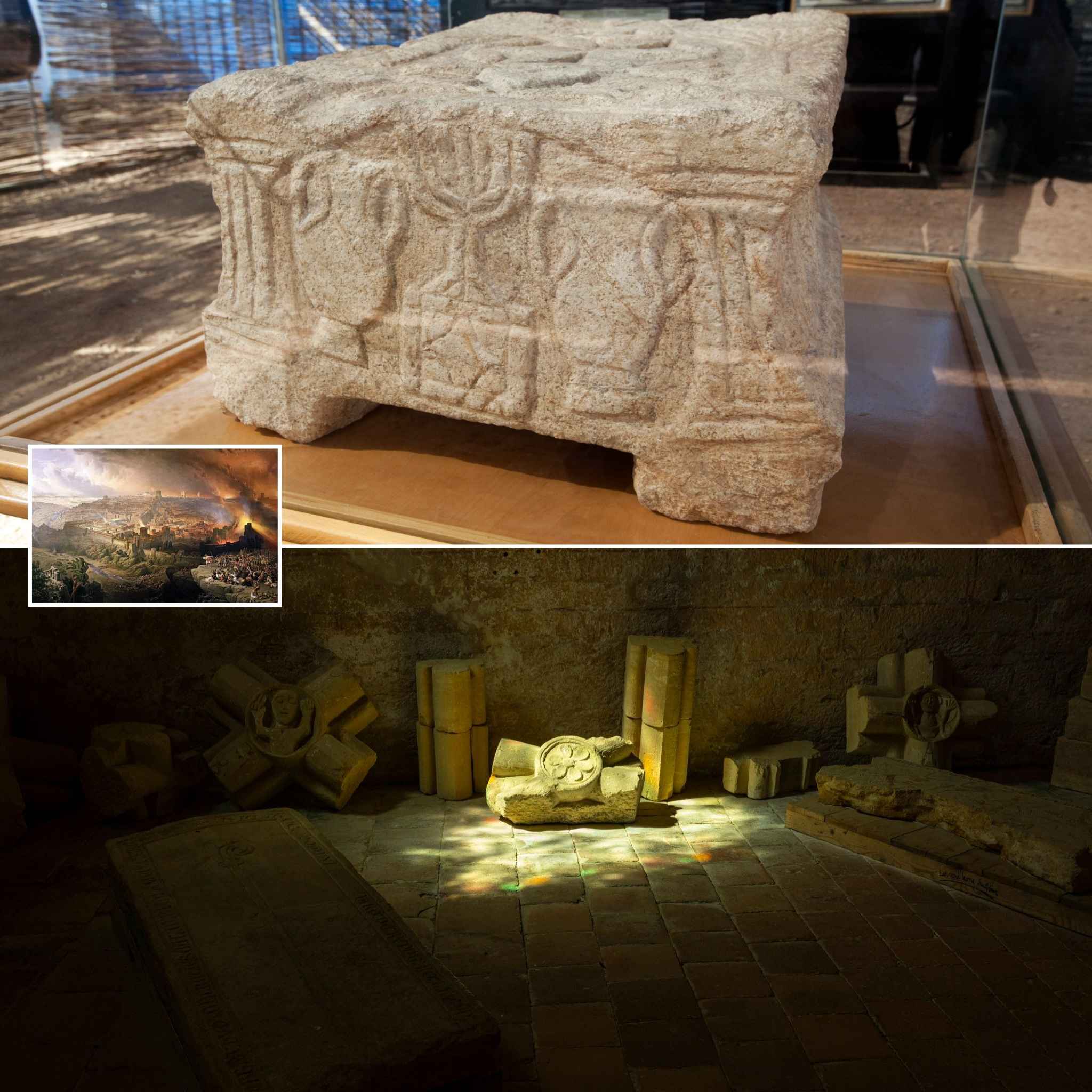
Discovered in 2009 during excavations in the ancient town of Magdala — traditionally associated with Mary Magdalene — the carved stone has captivated historians, archaeologists, and religious scholars alike. Its significance lies not only in its remarkable craftsmanship, but in what appears on one of its sides: a seven-branched menorah believed to represent the sacred lampstand that once stood inside Jerusalem’s Second Temple.
Many scholars now consider it the oldest known depiction of the Temple menorah ever discovered.
The finding offers an extraordinary glimpse into Jewish religious life during the turbulent final decades before the Romans destroyed Jerusalem in A.D. 70. More than just a decorative object, the Magdala Stone may represent a physical memory of the holiest place in Judaism — carved by someone who may have personally seen the Temple before it vanished forever.
A Discovery Beneath the Soil of Galilee


The ancient city of Magdala, also known as Migdal in Hebrew, stood along the western shore of the Sea of Galilee in what is now northern Israel. During the Roman period, the city thrived as a prosperous fishing and trading center. Ancient sources describe it as bustling and wealthy, strategically positioned along regional trade routes.
In 2009, archaeologists conducting excavations ahead of modern construction uncovered the remains of a remarkably well-preserved synagogue dating to the late Second Temple period. The building appeared to have been used from roughly A.D. 50 until around A.D. 80, shortly after the Roman destruction of Jerusalem.
Inside the synagogue, researchers found a rectangular limestone block unlike anything previously discovered.
The stone measured approximately 23.6 inches long, 19.7 inches wide, and 15.7 inches high (60 × 50 × 40 centimeters). It rested on four small stone legs and was elaborately carved on multiple sides. Archaeologists found it inside a room believed to have housed Torah scrolls, suggesting it held a central ritual or symbolic role within the synagogue.
What immediately drew attention was the intricate iconography carved into the limestone.
The stone’s long sides featured rows of arches supported by columns, while floral motifs decorated the upper surface. Yet it was one narrow side that stunned scholars most: a carefully carved seven-branched menorah standing atop what appeared to be a pedestal or altar-like base.
The image closely resembled descriptions of the sacred menorah that once stood inside the Temple in Jerusalem.
A Rare Glimpse of the Second Temple
The timing of the Magdala Stone is what makes it so extraordinary.
Very few artistic depictions of the Temple menorah survive from before the destruction of Jerusalem in A.D. 70. Most known images date to later periods, after the Temple had already become a memory.
The most famous ancient depiction of the menorah appears on the Roman Triumph of Titus memorial known as the Arch of Titus in Rome. That monument shows Roman soldiers carrying the golden Temple menorah after looting Jerusalem during the First Jewish Revolt.
But the Magdala Stone predates that monument.
Because the synagogue was abandoned shortly after the Roman destruction, scholars believe the carving was created before A.D. 70 — while the Temple still stood.
That detail transforms the artifact into something deeply personal and historically powerful.
Archaeologist Mordechai Aviam has suggested that the menorah carving may have been made by someone who had actually traveled to Jerusalem and seen the sacred Temple with their own eyes. Pilgrimage to Jerusalem during major festivals was common for Jews living throughout the region, and Magdala was well connected to wider Jewish communities.
If this interpretation is correct, then the stone preserves not an abstract symbol, but a direct visual memory of the Temple itself.
The Menorah as a Sacred Symbol


The menorah held immense religious significance in ancient Judaism.
According to biblical tradition, the original seven-branched menorah stood inside the Tabernacle before later being placed within Solomon’s Temple and eventually the rebuilt Second Temple. Crafted from gold, it symbolized divine light, wisdom, and the eternal presence of God.
Only priests were permitted to tend its flames.
Because of its sacred role, representations of the menorah during the Second Temple period appear to have been relatively uncommon. Some scholars believe Jews avoided detailed depictions of holy Temple objects out of reverence.
This rarity makes the Magdala carving even more significant.
Unlike later symbolic or stylized menorahs, the Magdala version appears highly detailed and intentional. The branches curve upward symmetrically, resting atop a distinctive square base flanked by amphora-like vessels.
Researchers continue debating whether the design reflects the actual appearance of the Temple menorah or a symbolic interpretation inspired by memory and religious tradition.
Either way, the carving reveals how central the Temple remained to Jewish identity — even hundreds of miles from Jerusalem.
More Than Decoration
The Magdala Stone was not merely a piece of religious art.
Many archaeologists believe it served a ritual function inside the synagogue itself.
One leading theory proposes that the stone acted as a base or support for Torah reading. Its central placement inside the synagogue and its carefully carved symbolism suggest it may have stood at the heart of communal worship.
The carvings themselves may represent parts of the Temple sanctuary.
The arches and columns carved on the sides could symbolize architectural elements of the Temple interior, while the floral motifs may reference sacred decoration associated with the Holy of Holies — the innermost chamber believed to contain the divine presence.
In this interpretation, the Magdala synagogue becomes a miniature symbolic reflection of Jerusalem’s Temple.
For Jewish communities living far from Jerusalem, synagogues may have served not simply as meeting halls, but as sacred spaces spiritually connected to the Temple itself.
The Magdala Stone appears to embody that connection.
A Synagogue Frozen in Time
One reason the discovery generated such excitement was the exceptional preservation of the Magdala synagogue.
Unlike many ancient synagogues altered over centuries, this building appears to have been used only during the late Second Temple period before being abandoned. That means archaeologists were effectively examining a synagogue untouched by later architectural or religious changes.
The site provides rare evidence of Jewish communal life during the exact era when Jesus of Nazareth lived in Roman Judea.
Some scholars have even suggested that figures from the New Testament could theoretically have visited Magdala’s synagogue, though no direct evidence links the site to specific biblical events.
Still, the timing is remarkable.
The synagogue existed during one of the most transformative periods in Jewish history — the decades leading to the catastrophic war against Rome that culminated in the destruction of Jerusalem and the Temple.
The Magdala Stone therefore stands at the intersection of archaeology, religion, and memory.
Rome, Revolt, and Destruction


In A.D. 66, tensions between Jewish communities and Roman authorities erupted into open revolt. Over the next four years, Roman legions crushed resistance across Judea.
In A.D. 70, Roman forces led by the future emperor Titus besieged Jerusalem and destroyed the Second Temple.
The event permanently transformed Judaism.
Without the Temple, sacrificial worship ended. Jewish religious life gradually shifted toward rabbinic teaching, synagogue worship, and sacred texts.
The menorah itself disappeared into history.
Ancient Roman accounts describe the sacred object being carried triumphantly through Rome after the conquest. What ultimately happened to it remains one of archaeology’s enduring mysteries.
Some legends claim it was hidden or destroyed. Others suggest it vanished during later invasions of Rome.
But the Magdala Stone preserves something equally important: evidence that ordinary Jewish communities cherished the image of the menorah while the Temple still stood.
The Birth of a Symbol
Today, the menorah is one of the most recognizable symbols of Judaism worldwide.
Modern Israel even adopted the seven-branched menorah as the official emblem of the state, directly inspired by the relief carved on the Arch of Titus.
Yet the Magdala Stone offers a far older and more intimate version of that symbol.
Instead of celebrating Roman conquest, it reflects Jewish memory, devotion, and spiritual identity before catastrophe struck.
It may preserve the perspective not of conquerors, but of worshippers.
That distinction gives the artifact extraordinary emotional resonance.
Hanukkah and the Legacy of the Menorah
Modern discussions of menorahs often focus on Hanukkah, the Jewish Festival of Lights.
However, the Hanukkah menorah — properly called a hanukkiah — differs from the Temple menorah represented on the Magdala Stone.
The Temple menorah had seven branches. A hanukkiah has nine: eight representing the days of Hanukkah and one auxiliary candle used to light the others.
Hanukkah commemorates the rededication of the Second Temple during the second century B.C. after Jewish rebels known as the Maccabees reclaimed Jerusalem from Seleucid rule.
According to later Jewish tradition, a small amount of consecrated oil miraculously burned for eight days inside the Temple, inspiring the holiday’s symbolism of light and endurance.
The Magdala Stone connects directly to the older Temple tradition from which these later practices emerged.
Why the Magdala Stone Matters
The importance of the Magdala Stone extends far beyond archaeology.
It provides a rare bridge between text, memory, and lived religious experience during one of history’s most consequential eras.
For historians, the artifact offers evidence about synagogue worship before the destruction of the Temple.
For archaeologists, it preserves one of the earliest surviving Jewish religious images.
For religious communities, it serves as a tangible connection to a sacred past shattered nearly 2,000 years ago.
And for the wider world, it demonstrates how a single carved block of limestone can preserve human memory across millennia.
The anonymous artisan who carved the menorah into the Magdala Stone could never have imagined that future generations would study the image so intensely. Yet through war, collapse, burial, and rediscovery, the carving survived.
Today, it remains one of the most powerful visual echoes of the lost world of the Second Temple — a silent witness to a civilization transformed forever.