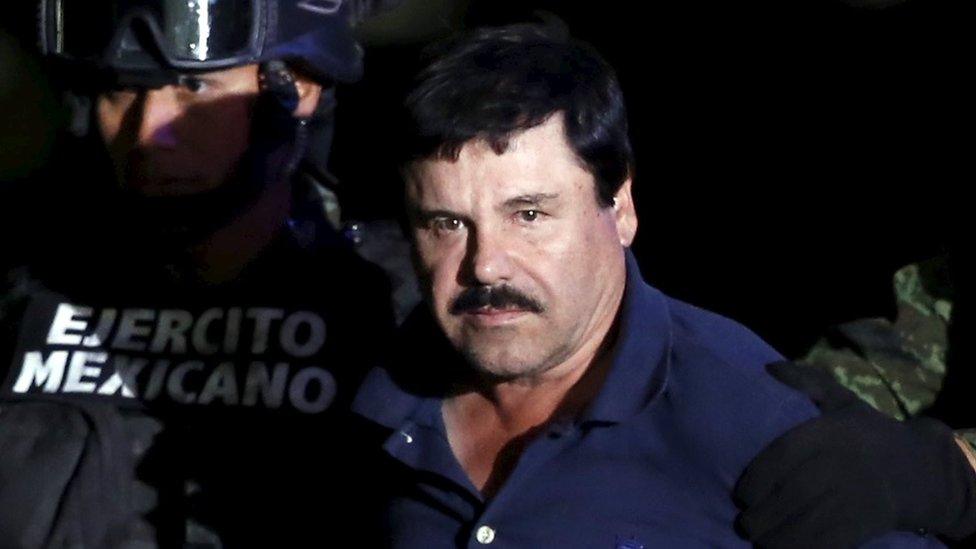
 Joaquín “El Chapo” Guzmán, once regarded as one of the most powerful drug traffickers in the world, is serving a life sentence at the United States Penitentiary Administrative Maximum Facility (ADX Florence) in Colorado, a prison widely recognized as the most secure federal correctional institution in the United States. Guzmán was sentenced in July 2019 to life imprisonment plus 30 years after being convicted in federal court in New York on multiple counts related to drug trafficking, participation in a continuing criminal enterprise, firearms offenses, and money laundering activities connected to the Sinaloa Cartel.
Federal prosecutors described Guzmán as the longtime leader of a criminal organization responsible for smuggling enormous quantities of cocaine, heroin, methamphetamine, and marijuana into the United States over several decades. His criminal career drew international attention not only because of the scale of the cartel’s operations but also because of his two highly publicized escapes from maximum-security prisons in Mexico, including a 2015 escape through a sophisticated tunnel built beneath his prison cell. Those escapes became a major factor in the security decisions made after his extradition to the United States in 2017.
Following his conviction, Guzmán was transferred to ADX Florence, a supermax prison designed to house inmates considered the highest security risks in the federal prison system. The facility is known for its extensive security measures, including reinforced concrete cells, electronically controlled movement, and highly restricted interaction between inmates. Many prisoners housed at ADX Florence spend the majority of each day inside single-occupancy cells and have very limited direct contact with other inmates.
 In addition to being housed at ADX Florence, Guzmán is subject to Special Administrative Measures, commonly known as SAMs. These restrictions were imposed by the U.S. Department of Justice based on concerns that Guzmán could continue directing criminal activity or communicating with cartel associates if granted broader access to communications. Under the SAMs, his correspondence, telephone calls, visits, and other forms of communication are tightly regulated and monitored.
Guzmán’s legal team has repeatedly challenged these restrictions in court, arguing that the conditions of confinement are excessively harsh and interfere with his ability to communicate with family members and attorneys. Court filings submitted by his lawyers have described prolonged isolation and limited human interaction, while federal authorities have maintained that the restrictions are necessary because of Guzmán’s criminal history, escape record, and former leadership role within one of the world’s most powerful drug trafficking organizations.
 The debate surrounding Guzmán’s confinement reflects a broader discussion about the role of supermax prisons in the United States. Supporters argue that facilities such as ADX Florence are essential for managing inmates who pose extraordinary security risks, while critics contend that prolonged isolation can have significant psychological consequences and raises important human rights concerns.
More than a decade after his final capture and years after the collapse of his freedom, the man who once controlled a vast criminal empire spanning multiple continents now spends his life under constant surveillance inside a highly secure prison cell, a dramatic contrast to the power and influence he once wielded as one of the most notorious crime bosses in modern history.