Submerged Megalith in Bolivia Offers New Insights Into Ancient Andean Civilizations
A massive stone monument near Lake Titicaca is helping researchers better understand the engineering, beliefs, and cultural achievements of the ancient societies that flourished in the Andes long before the rise of the Inca Empire.
High in the Andes, more than 12,500 feet (3,800 meters) above sea level, Lake Titicaca stretches across the border between Bolivia and Peru like an inland sea surrounded by towering mountains.
For centuries, its waters have inspired legends, religious traditions, and archaeological investigations. Revered by many Indigenous communities as a sacred landscape, the lake occupies a central place in Andean history and mythology.
According to Inca tradition, the first rulers of their empire emerged from this region before founding one of the largest civilizations in the Americas. Yet long before the Incas rose to power, other societies had already established ceremonial centers, built monumental architecture, and developed sophisticated cultures around the lake.
Today, Lake Titicaca continues to reveal traces of that distant past.
Recent research on a massive stone monument discovered in Bolivia has attracted renewed attention from archaeologists studying the ancient Andes. While some popular reports have suggested that the discovery “rewrites human history,” researchers take a more measured view.
Rather than overturning existing knowledge, the monument provides valuable new evidence about the technological abilities and cultural traditions of the civilizations that once thrived in this remarkable region.
And what it reveals is already impressive.
A Landscape Shaped by Ancient Civilizations
The megalith is located in a region closely associated with one of South America’s most influential pre-Columbian cultures: Tiwanaku.
For generations, the ruins of Tiwanaku have fascinated travelers and scholars alike.
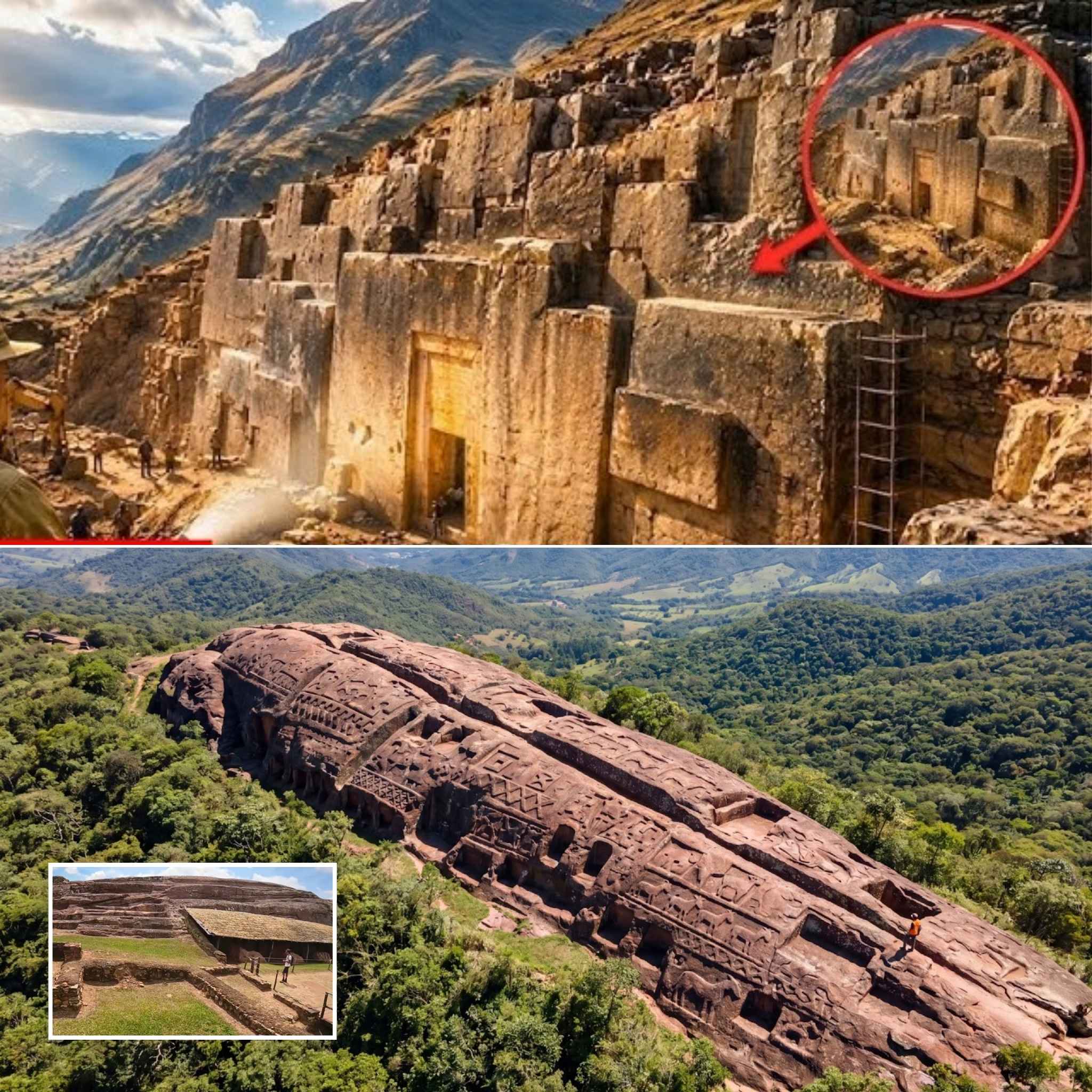
Scattered across the Bolivian highlands are enormous stone blocks, some weighing dozens of tons, cut and assembled with remarkable precision. Many appear to have been transported over considerable distances despite the absence of wheeled vehicles or large draft animals capable of hauling such immense loads.
Early European visitors often struggled to believe that Indigenous societies had constructed these monuments.
Modern archaeology has long since disproved those assumptions.
Researchers now recognize Tiwanaku as one of the great civilizations of the ancient Americas—a society that developed sophisticated engineering techniques perfectly adapted to the challenges of the Andean environment.
The newly studied megalith adds another piece to that story.
A Giant Stone Shaped by Human Hands
At first glance, the monument appears to be a massive block of stone rising from the landscape.
Closer examination, however, reveals features that suggest deliberate human modification.
Researchers have identified:
- Carefully flattened surfaces
- Distinct angular cuts
- Tool marks consistent with ancient stone-working techniques
- Architectural features that appear intentionally designed
These characteristics indicate that the stone was not simply a natural formation.
Instead, it was likely incorporated into a larger architectural or ceremonial complex.
Over the centuries, erosion, environmental changes, and shifting landscapes may have obscured much of its original context.
For archaeologists, such details are critically important.
Ancient societies rarely invested enormous effort into monumental construction without purpose.
Throughout the world, megalithic structures often served as religious centers, political symbols, astronomical markers, or gathering places for communities.
The Bolivian monument may have fulfilled one or several of these roles.

The Mystery of Tiwanaku
To appreciate the significance of the discovery, it is necessary to understand the civilization that may have created it.
The city of Tiwanaku flourished between approximately A.D. 500 and 1000 near the southern shores of Lake Titicaca.
At its height, it controlled a vast territory extending across much of the central Andes.
Its influence reached regions that are now part of Bolivia, Peru, Chile, and Argentina.
Tiwanaku’s architects produced some of the most remarkable monuments in pre-Columbian America.
Among the site’s best-known structures are:
- The Gateway of the Sun
- The Kalasasaya ceremonial complex
- The Akapana pyramid
- Monumental stone sculptures
- Sophisticated urban planning systems
These achievements reflect an advanced understanding of architecture, astronomy, and social organization.
Some stone blocks used in Tiwanaku weigh more than 100 tons.
Their transportation remains one of the most intriguing questions in Andean archaeology.
Without metal machinery, wheeled transport, or horses, Tiwanaku builders nevertheless succeeded in moving and positioning these enormous stones with extraordinary precision.
The newly studied megalith may provide further clues about how such engineering feats were accomplished.
The Andes: A Cradle of Innovation
For many years, discussions of ancient civilization often focused primarily on Egypt, Mesopotamia, Greece, and Rome.
Yet the Andes witnessed the development of equally sophisticated societies.
Cultures such as:
- Chavín
- Moche
- Nazca
- Wari
- Tiwanaku
- Inca
created complex political systems, extensive trade networks, monumental architecture, and advanced agricultural technologies.
These accomplishments are particularly remarkable given the environmental challenges they faced.
The Andean highlands are characterized by:
- Extreme altitude
- Thin air
- Steep terrain
- Harsh weather conditions
- Significant seasonal variation
Despite these obstacles, ancient Andean peoples developed sophisticated terrace agriculture, irrigation systems, and urban centers capable of supporting large populations.
The Bolivian megalith serves as another reminder that the region still holds many archaeological mysteries waiting to be explored.
Each new discovery helps researchers refine their understanding of how these civilizations developed and interacted.
Was the Monument Connected to Astronomy?
One of the most intriguing possibilities being investigated is whether the megalith had an astronomical function.
Across the world, ancient societies often used monumental stones to track celestial events.
Observations of the sun, moon, and stars played vital roles in organizing agricultural cycles, religious ceremonies, and political authority.
Andean civilizations were no exception.
Researchers have identified astronomical alignments at several Tiwanaku structures.
Some buildings appear oriented toward significant solar events, such as solstices and equinoxes.
If the newly studied megalith formed part of a similar system, it may have served as an observational marker within a ceremonial calendar.
Such a function would have helped agricultural communities determine the appropriate times for planting and harvesting crops.
At present, this hypothesis remains under investigation.
Further study will be required before researchers can determine whether the monument was intentionally aligned with celestial phenomena.
Nevertheless, the possibility highlights the sophisticated knowledge possessed by ancient Andean societies.
The Sacred Waters of Lake Titicaca
The broader landscape surrounding the monument is equally important.
Lake Titicaca occupies a central place in Andean mythology.
According to Inca tradition, the first ancestors of the imperial dynasty emerged from the lake before beginning the expansion that would eventually create the Inca Empire.
Other local legends speak of sacred islands, divine beings, and ancient settlements hidden beneath the water.
While such stories may seem mythical, archaeology has revealed that portions of the lake indeed contain submerged cultural remains.
Underwater investigations have uncovered:
- Ritual offerings
- Stone structures
- Ancient walls
- Ceremonial artifacts
- Evidence of past human activity
These discoveries suggest that water levels have fluctuated over time, submerging areas that were once dry land.
As a result, some archaeological sites that originally stood along shorelines may now lie beneath the lake’s surface.
The newly studied megalith exists within this larger cultural landscape.
Rather than representing an isolated monument, it may have been part of a broader network of ceremonial, political, and religious sites linked to Lake Titicaca.
What the Discovery Actually Changes
Sensational headlines often claim that archaeological discoveries “rewrite history.”
In reality, scientific progress usually occurs through gradual accumulation of evidence.
The Bolivian megalith does not overturn established knowledge about human civilization.
It does not prove the existence of a lost super-civilization.
Nor does it support theories involving extraterrestrial intervention, despite frequent speculation in popular media.
What it does provide is something equally valuable: new information.
The monument demonstrates the remarkable capabilities of ancient Andean societies.
It highlights their ability to organize labor, manipulate massive stones, and create structures that carried social, political, and spiritual significance.
It also reinforces a broader archaeological lesson.
Many regions of the world remain incompletely explored.
Important discoveries continue to emerge, often from places long overlooked by mainstream historical narratives.
History is not being rewritten.
It is being refined.
Modern Technology Meets Ancient Stone
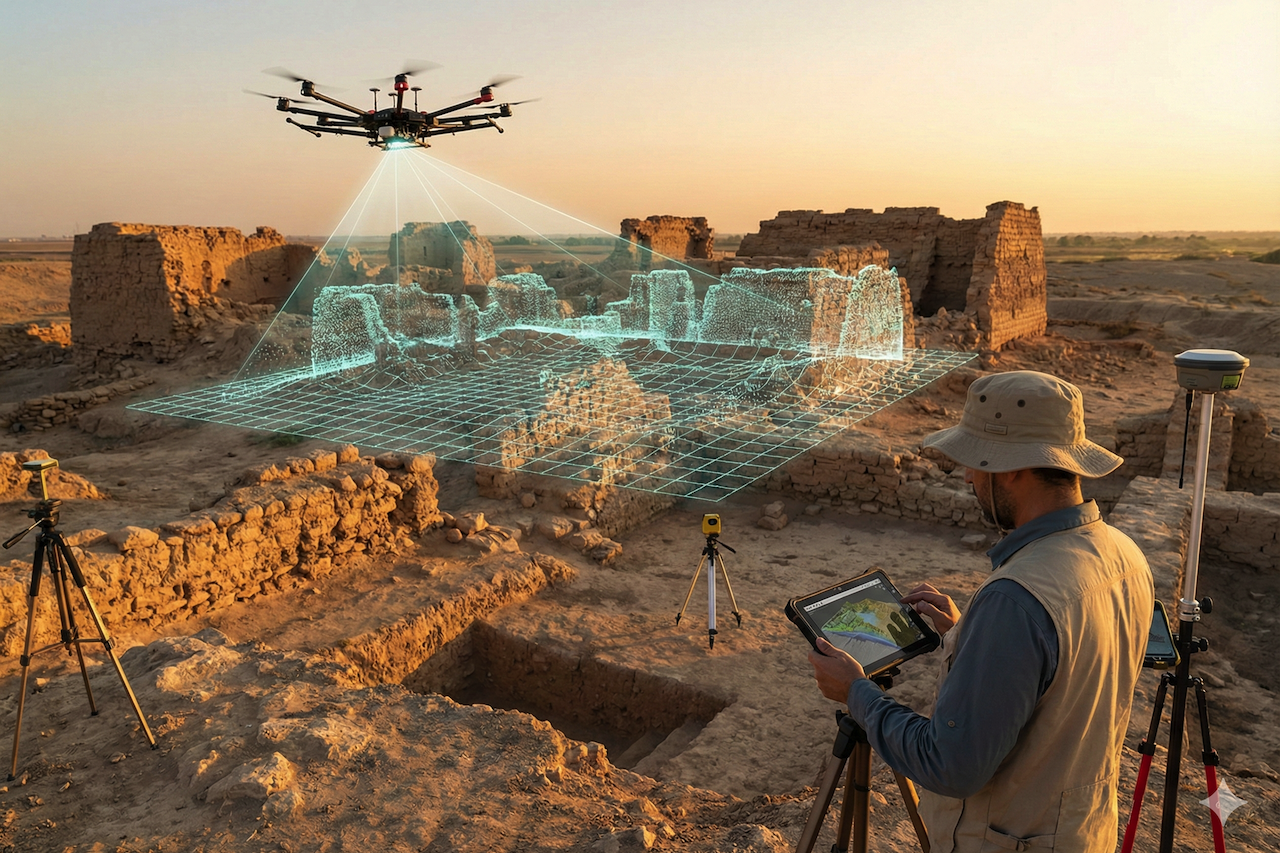
Researchers studying the megalith now have access to tools unimaginable to earlier generations of archaeologists.
These technologies are transforming the investigation of ancient sites.
Among the most important are:
- Drone mapping
- Laser scanning
- Three-dimensional modeling
- Geochemical analysis
- Satellite imagery
- Geographic information systems (GIS)
Together, these methods allow researchers to reconstruct ancient landscapes with unprecedented accuracy.
Laser scanners can record the monument’s exact dimensions down to fractions of a millimeter.
Geochemical studies can identify where the stone originated.
Satellite imagery can reveal hidden features invisible from the ground.
By combining these approaches, archaeologists hope to understand how the monument fit into its original environment and how it may have functioned within ancient society.
Questions That Remain Unanswered
Despite recent progress, many mysteries remain.
Who ordered the monument’s construction?
How many people participated in building it?
What role did it serve within society?
Was it a religious shrine, an astronomical marker, a political symbol, or part of a much larger complex?
The answers may emerge through future excavations and continued research.
As often happens in archaeology, every discovery generates new questions alongside new insights.
That uncertainty is part of what makes the field so compelling.
A Window Into an Ancient World
The Bolivian megalith serves as a reminder that the Andes remain one of the world’s great archaeological landscapes.
Its mountains, plateaus, and sacred lakes preserve traces of civilizations that achieved extraordinary things long before European contact.
Far from rewriting human history, the monument enriches a story that is already remarkable.
It reveals the ingenuity of ancient builders.
It highlights the complexity of Andean societies.
And it underscores how much remains to be learned about the people who shaped this extraordinary region.
As researchers continue to investigate the monument and its surrounding landscape, the stone giant overlooking Lake Titicaca may yet reveal additional secrets.
For now, it stands as a powerful testament to the creativity, knowledge, and ambition of the civilizations that once flourished in the heart of the Andes—a history still being uncovered, one stone at a time.