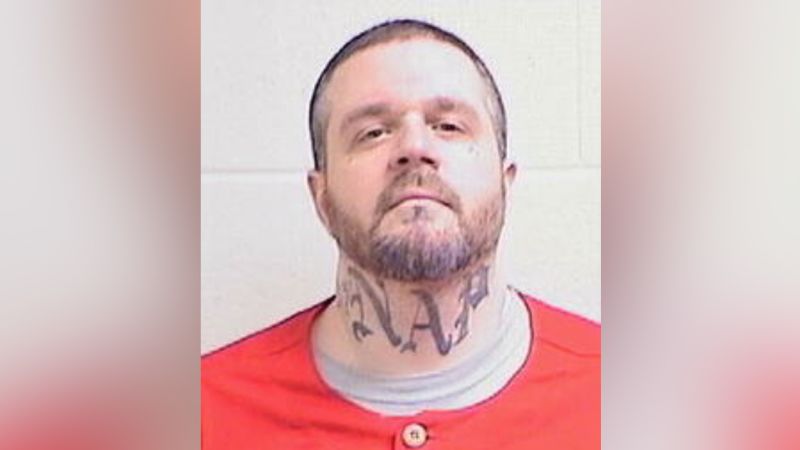
 On May 20, 2025, the State of Indiana executed Benjamin Donnie Ritchie by lethal injection at the Indiana State Prison in Michigan City, marking only the state’s second execution in more than fifteen years. Ritchie, 45, had spent over two decades on death row after being convicted of the 2000 murder of Beech Grove Police Officer William “Bill” Toney.
The case began on September 29, 2000, when Ritchie, who was on probation for a previous burglary conviction, became involved in a police pursuit after stealing a van. According to court records, Officer Bill Toney pursued Ritchie on foot after the chase ended. During the pursuit, Ritchie turned and fired multiple shots, striking Toney and killing the 31-year-old officer. Toney was a husband, father of two children, and a respected member of the Beech Grove Police Department.

A jury convicted Ritchie of murder and other related offenses in 2002. The trial court imposed a death sentence, and Ritchie was transferred to Indiana’s death row. Over the following twenty-three years, his attorneys pursued numerous appeals in both state and federal courts, challenging the conviction and sentence on multiple grounds.
In his final years on death row, Ritchie’s legal team argued that he suffered from significant cognitive impairments, including fetal alcohol spectrum disorders, childhood lead exposure, and other developmental issues that they believed should have prevented his execution. Attorneys also argued that his trial counsel failed to adequately investigate those issues before trial. Courts ultimately rejected those claims and allowed the death sentence to stand.
As the execution date approached, Ritchie sought clemency from Indiana officials. During a hearing before the Indiana Parole Board, he expressed remorse for killing Officer Toney and apologized to the officer’s family. Despite those efforts, the Parole Board denied clemency, and Indiana Governor Mike Braun declined to intervene. Subsequent appeals to the Indiana Supreme Court, federal courts, and the United States Supreme Court were also unsuccessful.
Shortly after midnight on May 20, 2025, Indiana officials began the execution procedure using a single dose of pentobarbital. According to the Indiana Department of Correction, Ritchie was pronounced dead at 12:46 a.m. Before the execution, he requested Olive Garden’s “Tour of Italy” meal, which included lasagna, chicken parmigiana, and fettuccine Alfredo. His final statement expressed love for his family and friends and a hope that they would find peace.
 The execution generated renewed debate about capital punishment in Indiana. Supporters argued that justice had finally been carried out for Officer Toney and his family after nearly twenty-five years. Opponents pointed to Ritchie’s developmental impairments and questioned whether the death penalty was an appropriate response. Anti-death-penalty groups held vigils outside the prison while family members of Officer Toney described the execution as the conclusion of a painful chapter that had lasted for decades.
Today, the Benjamin Ritchie case remains one of Indiana’s most significant modern death penalty cases. More than twenty years separated the crime and the execution, illustrating the extensive appeals process that accompanies capital punishment in the United States and the enduring debate surrounding the ultimate penalty.