On June 11, 2001, Timothy McVeigh spent his final hours awaiting execution for carrying out the deadliest act of domestic terrorism in American history—the 1995 Oklahoma City bombing that killed 168 people, including 19 children.
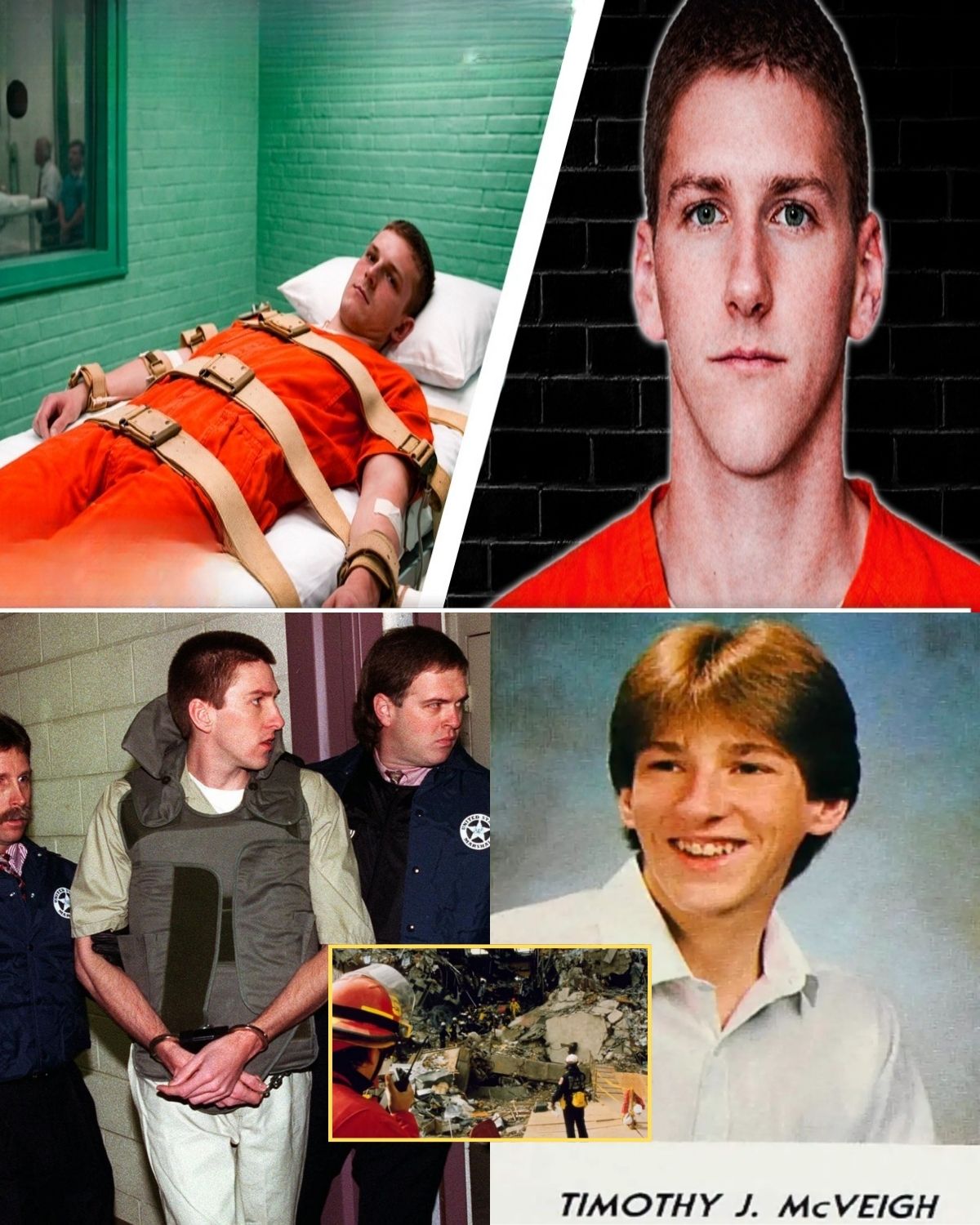
McVeigh was executed by lethal injection at the Federal Correctional Complex in Terre Haute, Indiana, becoming the first federal prisoner executed by the U.S. government in nearly four decades.
Unlike many death row inmates, McVeigh remained notably calm in his final days. He declined a traditional last meal and instead requested two pints of mint chocolate chip ice cream. Witnesses reported that he spent much of his final hours reading, writing letters, and meeting with a spiritual adviser.
When the time came for his execution, McVeigh offered no spoken final statement. Instead, he chose to leave behind a handwritten copy of the poem Invictus, a work centered on resilience and personal defiance in the face of fate.
At 7:14 a.m. local time, the lethal injection process began. McVeigh was pronounced dead several minutes later at the age of 33.
For many families of the victims, the execution marked the final chapter of a tragedy that forever changed the nation. Yet the memory of the Oklahoma City bombing—and the lives lost on April 19, 1995—continues to endure as one of the darkest moments in American history.
More than two decades later, McVeigh’s final hours remain a subject of fascination: ice cream, silence, and the end of the man responsible for America’s deadliest domestic terror attack.