The Starchild Skull: Medical Mystery, Ancient Child, and the Origins of an Alien Legend
A Discovery That Sparked Decades of Debate
Few archaeological discoveries have generated as much controversy as the so-called “Starchild Skull.”
For nearly a century, the unusual remains of a child discovered in northern Mexico have fueled speculation ranging from rare genetic disorders to extraterrestrial ancestry. Books, documentaries, television programs, and online discussions have transformed the skull into one of the most famous archaeological mysteries of modern times.
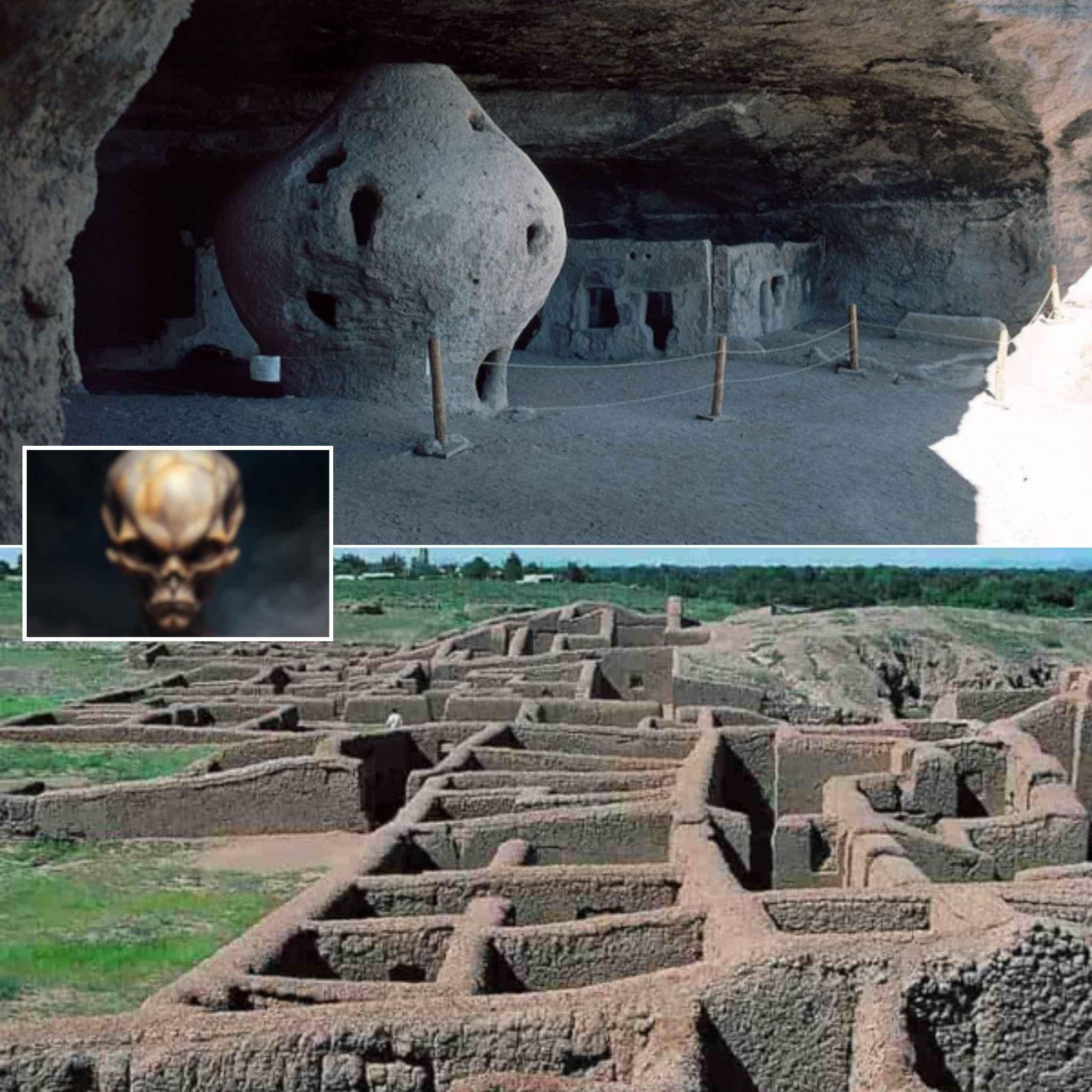
Yet behind the sensational claims lies a far more complex story—one involving ancient communities, medical science, human genetics, and the enduring appeal of the unknown.
Today, most researchers view the Starchild Skull not as evidence of alien-human hybrids, but as a rare example of severe cranial pathology preserved in the archaeological record. Nevertheless, the artifact continues to fascinate scientists and the public alike.
Its story reveals as much about modern beliefs and cultural imagination as it does about the child whose remains were buried centuries ago.
An Unusual Discovery in Northern Mexico
The origins of the Starchild Skull trace back to the early twentieth century.
According to accounts associated with the find, a teenage girl exploring a long-abandoned mine tunnel in the Copper Canyon region of Chihuahua, Mexico, discovered two skeletons buried beneath the floor of a cave-like chamber.
One skeleton appeared relatively normal and belonged to an adult female.
The second set of remains was immediately more unusual.
The skull was dramatically different from a typical human cranium. Its shape was enlarged, rounded, and unlike anything most observers had ever seen.
For decades, the remains remained largely unknown outside a small circle of collectors and researchers.
Only in the late twentieth century did the skull begin attracting international attention.
As photographs circulated, speculation exploded.
Was it evidence of a previously unknown human population?
A rare genetic disorder?
Or something far more extraordinary?
The Features That Made the Skull Famous
At first glance, the Starchild Skull appears strikingly different from a typical human skull.
Researchers identified several unusual characteristics:
- A significantly enlarged cranial vault
- A rounded, bulbous shape
- Shallow eye sockets
- Absence of prominent brow ridges
- Lack of frontal sinuses
- Thin cranial bones
- Unusual facial proportions
Measurements suggested an internal cranial volume of approximately 1,600 cubic centimeters.
For comparison, the average adult modern human skull contains roughly 1,350 to 1,400 cubic centimeters.
What made the discovery even more remarkable was that the skull belonged to a child estimated to have died around the age of five.
Such a large cranial volume in a young child appeared highly unusual.
To some observers, these features resembled popular depictions of extraterrestrial beings commonly known as “Greys.”
The combination of large cranium, reduced facial features, and unusual eye sockets quickly fueled speculation that the skull might not be entirely human.

The Rise of the Alien Hybrid Theory
The person most responsible for promoting the extraterrestrial interpretation was Lloyd Pye, an author and researcher who became deeply involved with the remains.
Pye argued that the skull could not be explained by known human medical conditions.
Instead, he proposed that it represented a hybrid between a human mother and a non-human father.
According to this theory, the child was evidence of contact between humans and extraterrestrial visitors.
Pye pointed to several anatomical features he believed distinguished the skull from known human pathologies:
- Unusual bone structure
- Different bone density
- Cranial shape
- Eye socket formation
- Claimed microscopic fibers embedded within the bone
These claims gained substantial media attention.
Television documentaries, radio programs, and books frequently presented the skull as one of the strongest pieces of physical evidence supporting extraterrestrial visitation.
For many enthusiasts, the Starchild Skull became a symbol of hidden truths allegedly ignored by mainstream science.
What Medical Science Saw Instead
While the alien theory attracted public attention, medical researchers approached the skull differently.
To bioanthropologists and forensic specialists, the skull’s unusual appearance resembled known developmental disorders.
One explanation emerged repeatedly: congenital hydrocephalus.
Hydrocephalus occurs when excess cerebrospinal fluid accumulates inside the brain’s ventricles.
In infants and young children, whose skull bones have not yet fused completely, this pressure can dramatically reshape the cranium.
Symptoms can include:
- Enlarged skull size
- Thin cranial bones
- Altered facial development
- Neurological impairment
- Distorted eye socket positioning
Many of the features cited as evidence of alien ancestry closely matched severe cases of hydrocephalus documented in medical literature.
Researchers also noted that the absence of frontal sinuses and reduced brow ridges are consistent with certain developmental abnormalities.
In other words, the skull appeared unusual not because it was non-human, but because it may have belonged to a child suffering from a severe congenital condition.
Ancient Evidence of Similar Conditions
The Starchild Skull is not the only archaeological example of cranial abnormalities.
Throughout history, archaeologists have uncovered human remains displaying significant developmental disorders.
Ancient societies often cared for individuals with physical disabilities despite limited medical knowledge.
In many cases, skeletal evidence suggests affected individuals survived far longer than would have been possible without community support.
The Starchild child appears to fit this pattern.
Although severely affected by his condition, he survived until approximately five years of age.
That survival suggests he received ongoing care from family members or community members.
Rather than being viewed as an anomaly or outcast, he may have been supported throughout his short life.
This perspective transforms the story from one of extraterrestrial speculation into one of human compassion.
The Context of Ancient Northern Mexico
Understanding the Starchild Skull also requires examining the region where it was found.
Northern Mexico was home to numerous Indigenous cultures long before European contact.
These communities developed complex trade networks, agricultural systems, and ceremonial traditions.
Archaeological sites throughout Chihuahua reveal evidence of:
- Cave settlements
- Agricultural villages
- Long-distance trade
- Ceremonial architecture
- Distinct burial practices
The Copper Canyon region contains hundreds of archaeological sites associated with ancient populations.
The child represented by the Starchild Skull likely belonged to one of these communities.
His unusual appearance may have made him distinctive within his society, but he was almost certainly part of a broader cultural world shaped by local traditions and social networks.

DNA Testing Enters the Debate
The most significant scientific investigation came through genetic analysis.
In 2003, researchers conducted mitochondrial DNA testing.
Mitochondrial DNA is inherited exclusively through the maternal line.
The results were clear.
The child belonged to Haplogroup C, one of the major Native American genetic lineages.
This finding demonstrated conclusively that the child’s mother was human.
For many scientists, this should have settled the debate.
However, proponents of the alien hypothesis shifted attention toward nuclear DNA inherited from both parents.
They argued that the paternal DNA might reveal non-human ancestry.
Additional testing was eventually performed.
Early interpretations generated excitement among supporters of the extraterrestrial theory.
Yet subsequent analyses by independent laboratories reached a different conclusion.
The genetic material was heavily degraded due to age and environmental exposure.
When properly analyzed, the DNA appeared entirely human.
Both X and Y chromosomes were identified, confirming that the individual was a human male.
No credible evidence of non-human ancestry was found.
Why the Alien Theory Persisted
Despite increasingly strong scientific evidence, belief in the alien interpretation remains widespread.
Several factors help explain why.
First, the skull genuinely looks unusual.
Humans naturally seek explanations for anomalies, particularly when they challenge familiar expectations.
Second, extraterrestrial explanations are emotionally compelling.
The possibility of discovering physical evidence of alien life is inherently fascinating.
Third, many people distrust scientific institutions and are attracted to narratives suggesting hidden truths or suppressed discoveries.
The Starchild Skull became a perfect candidate for such theories.
It occupied a space between archaeology, medicine, and popular culture.
For believers, each unanswered question became evidence of a cover-up rather than evidence of scientific uncertainty.
What the Skull Really Tells Us
Even stripped of its extraterrestrial mythology, the Starchild Skull remains scientifically valuable.
The remains provide insight into:
- Ancient health conditions
- Childhood disease
- Genetic variation
- Community care practices
- Human adaptation
Rare pathological specimens help researchers understand how diseases affected ancient populations.
They also reveal how communities responded to vulnerable individuals.
The child represented by the Starchild Skull likely experienced significant physical and neurological challenges.
Yet he survived long enough to leave behind a record of resilience and social support.
His story is ultimately human.
Archaeology, Myth, and the Power of Mystery
The enduring fascination with the Starchild Skull highlights an important aspect of archaeology.
Ancient remains often become canvases onto which modern societies project their hopes, fears, and beliefs.
For some, the skull symbolizes the possibility that humanity is not alone in the universe.
For others, it demonstrates the importance of scientific investigation and evidence-based reasoning.
Both perspectives reflect humanity’s desire to understand its place in the cosmos.
The artifact sits at the intersection of these impulses.
It is simultaneously an archaeological specimen, a medical case study, and a cultural phenomenon.

A Human Story Hidden Behind the Legend
After decades of debate, the balance of evidence strongly supports a terrestrial explanation.
The Starchild Skull was almost certainly the remains of a human child affected by a severe congenital disorder, likely hydrocephalus and related developmental abnormalities.
DNA evidence identifies him as human.
Medical analysis explains the unusual cranial features.
Archaeological context places him within the Indigenous cultures of northern Mexico.
Yet the skull’s significance has not diminished.
If anything, the real story may be more meaningful than the alien legend.
Rather than evidence of visitors from the stars, the Starchild Skull reveals the challenges faced by an ancient child and the community that cared for him.
It reminds us that behind every archaeological artifact lies a human life.
For nearly a century, the Starchild Skull has inspired wonder because it appears so different from what we expect.
Modern science suggests that its greatest mystery is not extraterrestrial at all.
It is the mystery of how ancient people lived, suffered, cared for one another, and left traces of their lives for future generations to discover.