7 September 2026
The atmosphere inside the Los Angeles federal courthouse was electric with a palpable tension that seemed to hang over every single person in the room as day six of the murder-for-hire trial against rap superstar Lil Durk unfolded. The air was thick with the weight of testimony that had already sent shockwaves through the hip-hop community, but the most damning and psychologically complex revelations came from the prosecution’s star witness, a man who once stood beside Durk as family, now sitting across from him as his potential executioner. OTF Jam, born Hester, took the stand for his second consecutive day, and his testimony painted a portrait of fear, loyalty, and ultimately, betrayal that cut to the core of the OTF organization. According to sources inside the courtroom, Jam testified that he was terrified that Lil Durk would have him killed if he did not follow through with the murder of Quando Rondo’s associate, Lil Pab. The admission, delivered while staring directly at Durk from across the room, laid bare the brutal calculus of street loyalty that had allegedly led to the fatal shooting. Jam’s testimony described a chaotic and poorly planned operation that he claims was orchestrated by Durk from a position of detached authority. He detailed how he felt pressured to participate in the hit, not out of loyalty to the cause, but out of sheer survival instinct. “I was afraid Durk would get me killed if I didn’t follow through,” Jam reportedly told the jury, his voice steady but his eyes betraying a deep-seated conflict. He described how he attempted to call off the hit at the last moment, reaching out to DeAndre Wilson in a desperate bid to stop the violence, but his pleas were ignored as the group proceeded to stalk their target through Beverly Hills before cornering him at a gas station. The prosecution played on this emotional turmoil, asking Jam directly about his relationship with Durk, whom he referred to throughout his testimony as “Blood.” Jam confessed that despite the gravity of his cooperation and the inevitable destruction of their bond, he still harbored love for his former friend and benefactor. “I still love Durk, but I don’t respect him,” Jam said, his words hanging in the air like a ghost. He recounted how Durk had supported him financially while he was incarcerated for twelve years, paying for flights and ensuring he was taken care of upon his release. This complex web of gratitude and fear made his decision to cooperate all the more devastating, both for himself and for the man he was helping to convict In a moment that seemed ripped from a Hollywood script, the courtroom’s attention was violently diverted from the grim testimony when Kanye West, the billionaire mogul and fellow Chicago native, walked through the doors. Dressed in dark attire and flanked by security, West’s presence sent a ripple through the gallery, with jurors and spectators alike craning their necks to catch a glimpse of the rap legend. West, who has faced his own public battles and controversies, took a seat in the gallery, his expression unreadable as he fixed his gaze on Durk. The show of support was unmistakable, a powerful statement from one of music’s most influential figures to a man fighting for his freedom against federal murder charges But West’s presence was not without its own drama. Observers noted that West conspicuously failed to rise when the jury entered and exited the room, a breach of courtroom protocol that did not go unnoticed. While some dismissed it as typical Kanye behavior, others saw it as a subtle act of defiance, a silent message that he answered to no one, not even the judicial system that was currently deciding the fate of his peer. Outside the courthouse, West was seen mingling with Durk’s inner circle, including Doodie Lo, who was holding up a “Free Durk” shirt, turning the scene into a veritable rally for the embattled rapper Jam’s testimony took an even more surreal turn when he recounted a FaceTime call with Durk immediately following the murder. According to Jam, he confronted Durk, furious that he had been sent on a“dummy mission” with individuals he barely knew, specifically calling out a co-conspirator he derisively referred to as“Vonnie,” calling him a“goofy.”” Jam claimed he told Durk, “Out of a million people you could have sent on this mission, I just did 12 years. Why do you have to send me on that dummy mission with a bunch of people I didn’t know? “” Durk’s response, as Jam described it, was chilling in its casualness. He smiled and said, “I love you, Jam. Y’all didn’t hit Quando, but you hit Papp. Papp counts. He was on the internet saying he was smoking on Von. He can’t say that no more.”” The implication was clear: the killing of Lil Pab, even if it was not the intended target, was considered a victory, a score settled in a blood feud that had already claimed too many lives The defense, led by the formidable Brian Steel, seized on Jam’s admissions to paint him as a self-serving liar desperate to save himself from a lifetime behind bars. Steel hammered Jam on his motivations, pointing out that Jam had already pleaded guilty to his role in not only the LA shooting but also two other murders. Jam acknowledged that he was hoping for a reduction in his sentence, though he maintained that no formal promises had been made by prosecutors. Steel also attacked the credibility of the investigation itself, highlighting the fact that out of dozens of interrogations with Jam, only a handful were recorded. Jam explained this by revealing that he had explicitly requested not to be filmed, stating, “I didn’t want to be on camera cuz a lot of people been getting exposed on their body cams.”” The remark drew a mix of laughter and disbelief in the courtroom, a moment of levity in an otherwise grim proceeding Perhaps the most explosive revelation of the day, however, was the allegation that Durk may have never actually paid any of the individuals involved in the murder-for-hire plot. Jam testified that he personally never received a dime from Durk for his role in the killing, despite expecting some form of compensation. He recounted a studio conversation where Durk allegedly promised that anyone who killed Quando Rondo or Lil Tim would be“straight,”” but when pressed on specifics, Durk was vague, simply saying they wouldn’t have to worry about nothing. The prosecution argued that this vague promise constituted the“hire” element of the murder-for-hire charge, even if no money ever changed hands. The intent, they argued, was clear, and the understanding was there, which was sufficient under federal law. This line of questioning was a direct rebuttal to Durk’s supporters, who have loudly proclaimed that there was no evidence of payment, therefore no murder-for-hire existed As Jam’s testimony wore on, he delved into the aftermath of the shooting, describing how the group immediately fled the scene only to run into police moments later, though they were unaware of the crime at that time. He also detailed a frantic FaceTime call with Durk in the immediate aftermath, where Durk allegedly asked if someone had been hit, how many times, and who did what. This call, Jam claimed, was Durk’s way of confirming the hit was successful, a cold and calculated check-in from a man orchestrating violence from the safety of his home The day’s proceedings were a masterclass in legal and emotional maneuvering, with Jam’s testimony painting him as both a victim of Durk’s manipulation and a willing participant in a brutal murder. His confession of love for Durk, juxtaposed with his damning testimony, created a tragic figure caught between loyalty and survival. As he stepped down from the stand, his future uncertain, the weight of his words hung heavy over the courtroom, leaving jurors with a complex puzzle to solve. The trial, already one of the most high-profile in hip-hop history, shows no signs of slowing down, with Kanye West’s presence ensuring that the world’s eyes remain firmly fixed on this legal saga as it continues to unfold
 James Broadnax is scheduled to be executed by the State of Texas on April 30, 2026, after spending approximately eighteen years on death row. As the execution date approaches, attention has returned to a case that has moved through the Texas court system for nearly two decades and to the reality of life inside one of America’s most restrictive death row systems.
 For most members of the public, death row is often associated with the execution itself. However, the reality is that inmates spend years or even decades living under highly restrictive conditions long before an execution date is set.
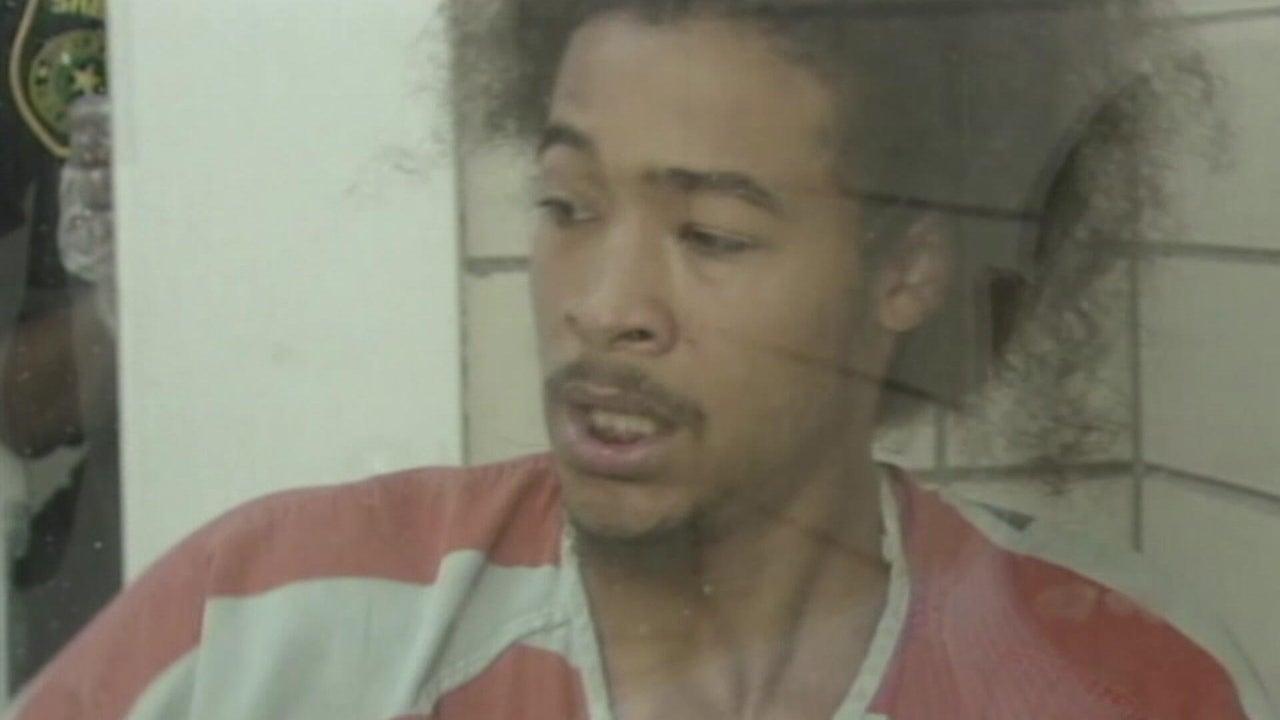 The final days on death row are often described as psychologically difficult for everyone involved. Inmates know the exact date and time the state intends to carry out the sentence. Victims’ families prepare for the conclusion of a case that may have dominated their lives for years. Prison staff are tasked with carrying out procedures that culminate in an irreversible outcome.

