EXECUTED AFTER 29 YEARS ON DEATH ROW: The Case of Richard Djerf and the Family Massacre That Haunted Arizona
For nearly three decades, the name Richard Djerf remained tied to one of the most disturbing family massacre cases in Arizona’s criminal history. A crime rooted in revenge, a prosecution built on overwhelming brutality, and a legal journey stretched across 29 years of appeals ultimately ended with his execution in October 2025.
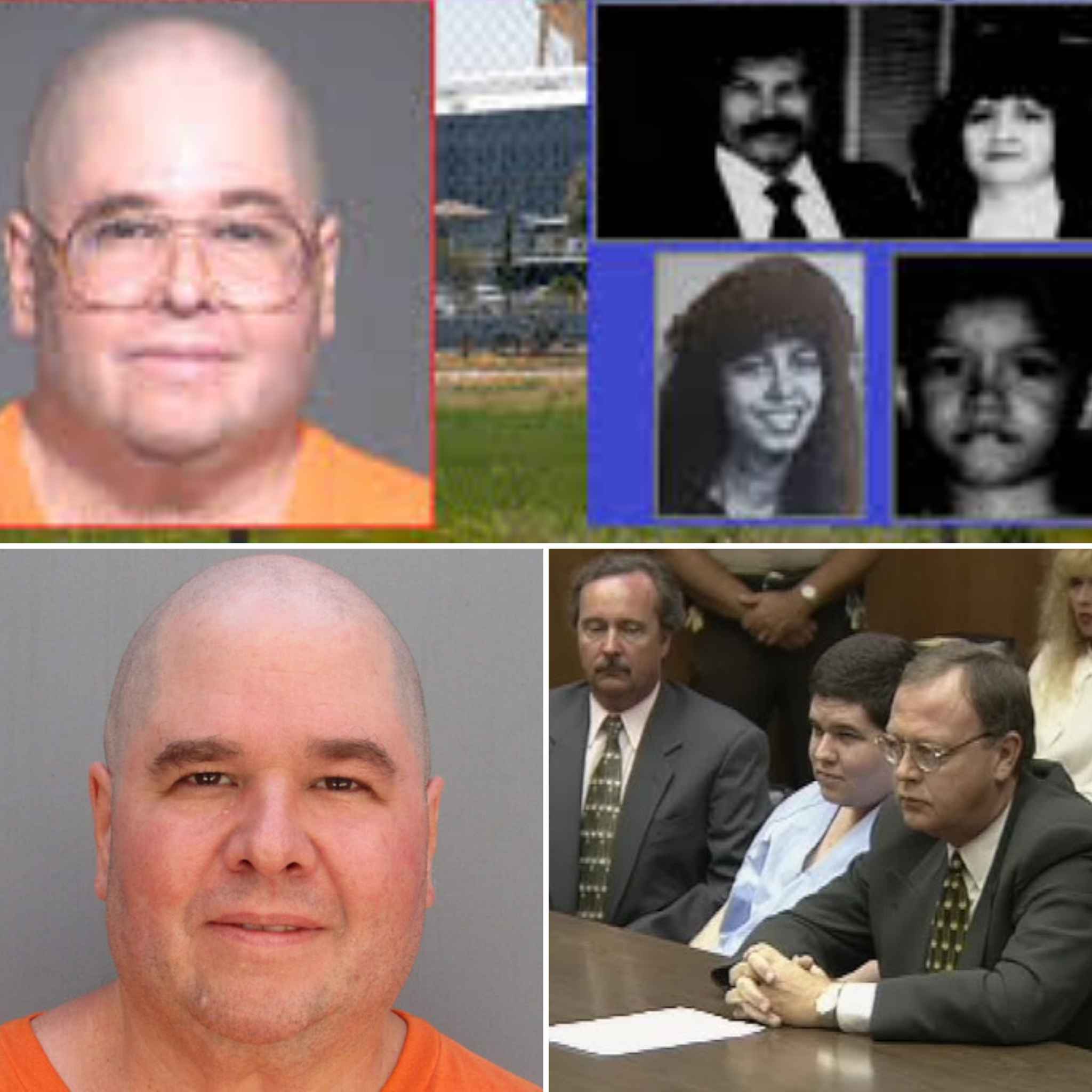
But even after the final injection was administered and the case formally closed, the questions surrounding what happened in 1993—and why it took so long to reach a conclusion—continue to echo across the American justice system.
At the heart of the case lies a chilling sequence of events: a family targeted in their own home, a young man who openly bragged about what he had done, and a legal process that stretched across decades of procedural review, appeals, and final exhaustion of legal remedies.
For some, the execution represented long-delayed justice. For others, it raised uncomfortable questions about whether justice delayed for nearly 30 years still feels like justice at all.
A NIGHT THAT SHATTERED A FAMILY FOREVER
The events that defined the case occurred in 1993, when Richard Djerf carried out a brutal attack against the Luna family in Arizona.
According to prosecutors, the motive stemmed from revenge following a prior burglary involving Djerf. Authorities argued that instead of allowing the justice system to handle the situation, he chose to take matters into his own hands in a violent and calculated manner.
What followed was a massacre that left four members of the Luna family dead.
The crime scene described by investigators was one of extreme violence, and it immediately triggered a large-scale law enforcement response. Detectives quickly realized they were dealing not with a random act of violence, but with a targeted family attack.
The brutality of the killings shocked even experienced investigators.
Within hours, the case became one of the most urgent homicide investigations in the state.
THE DAY AFTER: A CONFESSION WITHOUT REGRET
One of the most chilling aspects of the case emerged almost immediately after the murders.
According to statements presented during the investigation, Djerf reportedly told his girlfriend the next day: “You should have been there.”
That remark, prosecutors argued, reflected not remorse—but pride.
It became a defining detail of the case, frequently referenced during trial and appeals as evidence of mindset and intent.
For investigators and prosecutors, this statement helped establish a psychological profile that portrayed Djerf not as someone overwhelmed by emotion, but as someone who embraced what he had done.
It was this combination of brutality and apparent lack of remorse that shaped the public perception of the case from the very beginning.
THE INVESTIGATION AND ARREST
Law enforcement agencies moved quickly to identify and arrest the suspect.
Given the severity of the crime, multiple investigative units collaborated to reconstruct the events leading up to the killings.
Evidence collected at the scene, combined with witness testimony and statements from individuals close to Djerf, helped prosecutors build a strong case.
The arrest brought immediate relief to a community shaken by violence, but it also marked the beginning of a long legal journey that would stretch far beyond what many expected.
From the outset, prosecutors signaled their intention to pursue the harshest penalty available under Arizona law.
The case was not treated as an ordinary homicide investigation—it was prosecuted as a capital offense.
THE TRIAL THAT SHOCKED ARIZONA
During trial proceedings, prosecutors presented extensive evidence describing the murders in detail.
The state argued that the killings were intentional, premeditated, and driven by revenge. They emphasized not only the physical evidence but also statements attributed to Djerf that indicated a lack of remorse.
The defense challenged aspects of the prosecution’s case, but the evidence presented to the jury was substantial.
Ultimately, the jury found Djerf guilty of capital murder.
The conviction alone was not unexpected given the severity of the allegations, but what followed next cemented the case as one of Arizona’s most significant death penalty rulings.
The court imposed a sentence of death.
That decision placed Djerf on a path toward one of the longest death row stays in the state’s modern history.
29 YEARS ON DEATH ROW: A CASE THAT NEVER DISAPPEARED
After sentencing, Richard Djerf entered Arizona’s death row system, beginning a legal process that would span nearly three decades.
Like most capital cases in the United States, the conviction did not immediately lead to execution. Instead, it triggered a long sequence of appeals, post-conviction reviews, and legal challenges.
Over the years, attorneys argued various procedural and constitutional claims, as is common in death penalty litigation. Courts repeatedly reviewed aspects of the case, ensuring that legal standards were met at every stage.
This extended timeline reflected a broader reality of the American justice system: death penalty cases often take decades to resolve due to the irreversible nature of execution.
For victims’ families, the passage of time often meant repeatedly revisiting the same trauma through each legal filing and court hearing.
For legal experts, the case became another example of how capital punishment cases move through an exceptionally slow but highly structured appeals process.
And for the public, the case gradually faded from headlines—only to re-emerge each time a legal milestone or execution date approached.

THE VICTIMS AND THE HUMAN COST
While the legal system focused on evidence, appeals, and sentencing, the central tragedy remained the loss of four members of the Luna family.
Their deaths left a permanent void in the lives of relatives, friends, and their community.
Family members endured decades of legal proceedings, media coverage, and periodic attention as the case moved through the courts.
Victims’ advocates often emphasize that while legal systems operate on timelines measured in years or decades, grief does not follow a legal schedule.
Each appeal, hearing, or procedural update can reopen emotional wounds that never fully heal.
In cases involving mass family killings, the impact often extends beyond immediate relatives, affecting entire communities that struggle to comprehend the scale of the violence.
FINAL HOURS ON DEATH ROW
As Djerf’s execution date approached in 2025, public attention returned to a case that had largely been out of the spotlight for years.
Media coverage focused on the familiar elements of death penalty reporting: final visits, spiritual counseling, and the inmate’s final meal.
According to reports, Djerf requested a final meal that included a double cheeseburger, onion rings, and cherry pie.
Such details often draw public curiosity, even in cases involving extreme violence, because they contrast sharply with the severity of the crimes committed.
In his final moments, Djerf’s reported last words—“I do not”—were brief and left open to interpretation, as is often the case in executions where final statements are minimal or ambiguous.
For some observers, the lack of a detailed final statement reflected continued defiance. For others, it simply marked the end of a long legal and emotional process.
Regardless of interpretation, the execution proceeded as scheduled.

THE EXECUTION AND ITS AFTERMATH
On October 17, 2025, Arizona carried out the execution of Richard Djerf by lethal injection.
With that action, a legal case that had lasted 29 years officially came to an end.
For the state, the execution represented the conclusion of a conviction that had been repeatedly upheld through the appeals process.
For supporters of capital punishment, it was a moment of closure after decades of legal proceedings.
For opponents, it renewed longstanding debates about whether executions that occur decades after the crime still serve the interests of justice—or whether they simply mark the end of an already prolonged punishment process.
The execution also reopened discussions about the emotional toll on victims’ families, many of whom had lived with the case for most of their adult lives.
Some described a sense of finality. Others noted that no legal outcome could undo the events of 1993.
THE LONG SHADOW OF REVENGE CRIMES
One of the central themes of the Djerf case is revenge.
Prosecutors argued that the murders were not spontaneous acts of violence, but deliberate retaliation following a prior burglary.
This raised broader questions about how personal justice, anger, and perceived wrongdoing can escalate into irreversible consequences.
Criminologists often note that revenge-driven crimes tend to produce cycles of violence that extend far beyond the initial conflict.
In this case, what may have begun as a personal grievance escalated into a mass murder with lifelong consequences for everyone involved.
The justice system’s role, then, becomes not only punishment but also breaking the cycle of retaliation.
THE DEATH PENALTY DEBATE REVISITED
As with many high-profile executions, the case reignited broader national debates about capital punishment.
Supporters argue that certain crimes—especially those involving multiple victims and extreme brutality—justify the death penalty as the ultimate form of accountability.
They believe the sentence reflects society’s strongest condemnation of violent crime.
Opponents counter that life imprisonment without parole provides sufficient punishment while avoiding the moral and legal complexities of execution.
They also point to the decades-long delay between conviction and execution as evidence that the system is often slow and emotionally taxing for everyone involved.
The Djerf case became another example cited by both sides of the debate.
CONCLUSION: JUSTICE AFTER 29 YEARS
The execution of Richard Djerf closed one of Arizona’s longest-running death penalty cases, ending nearly three decades of legal proceedings stemming from the 1993 murder of four members of the Luna family.
For some, the case represents the justice system working exactly as intended—deliberate, careful, and ultimately final.
For others, it highlights the emotional and moral complexities of punishment delivered after such an extended passage of time.
What remains undeniable is the lasting impact of the crime itself.
A family was destroyed in an act of extreme violence.
A community was shaken.
And a legal system spent 29 years processing the consequences.
Even after the execution, the case continues to raise a difficult question that has no simple answer:
When justice takes nearly three decades to arrive, does it still feel like justice—or something else entirely?