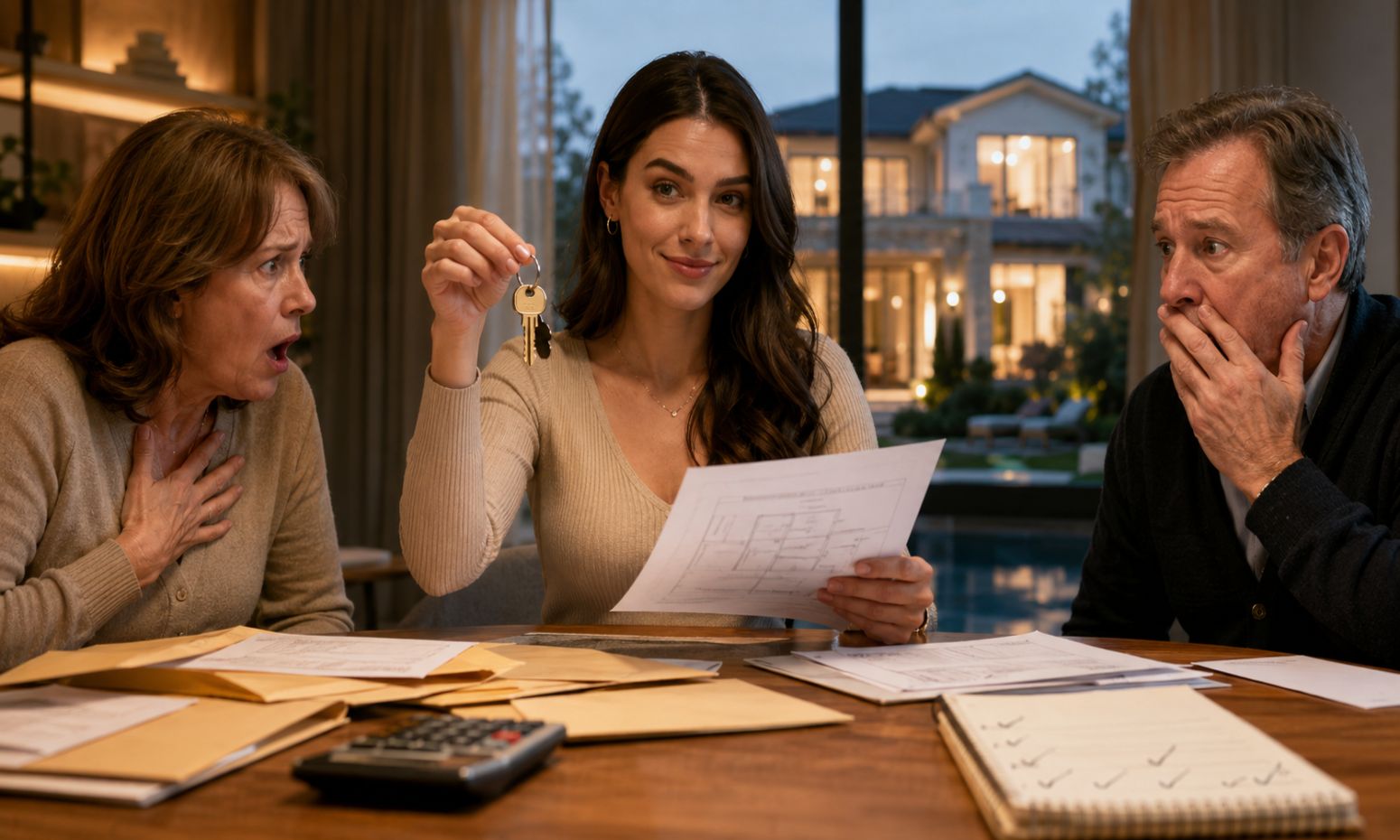
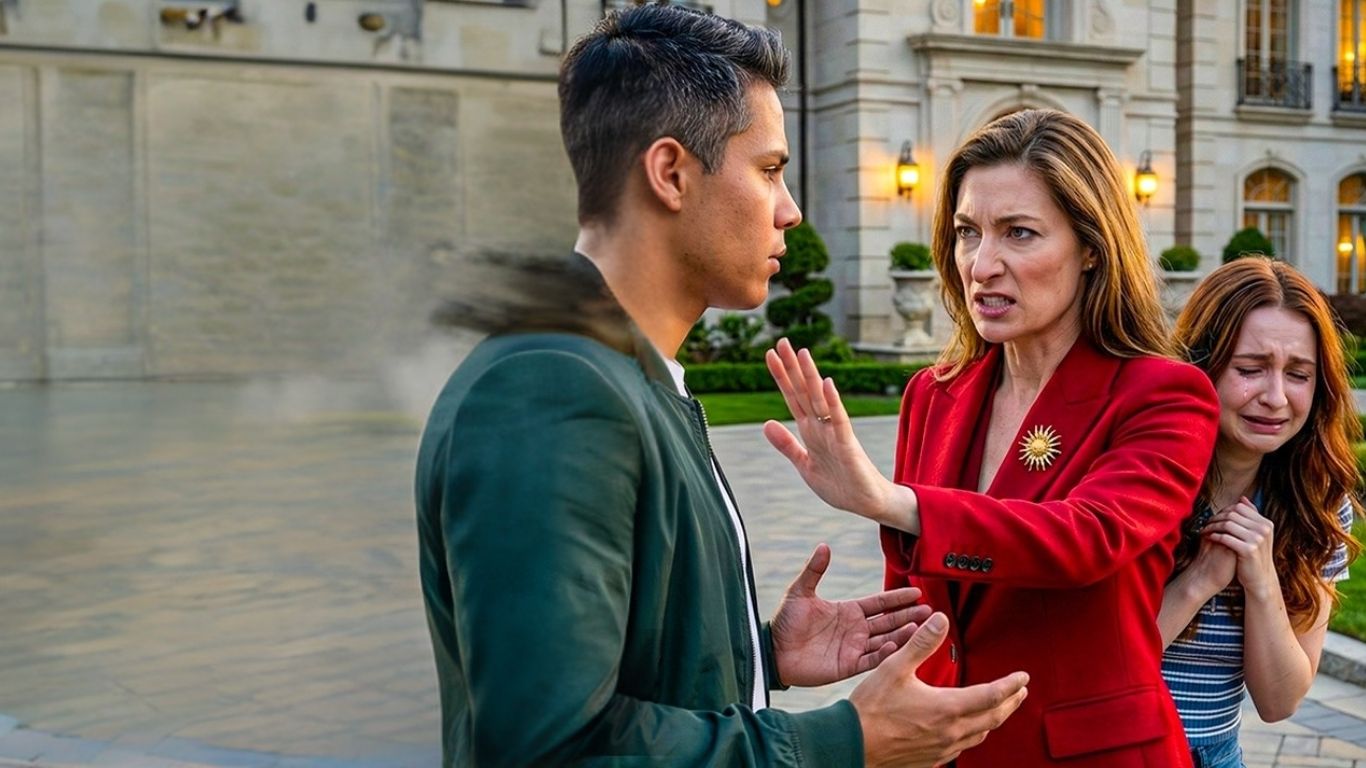
 The first time Paris Walker met Marisol Reyes, she made sure millions of viewers laughed at her.
The audience clapped.
The producers celebrated.
The ratings soared.
And Paris walked off set believing she had done her job.
Three months later, she would sit alone in her office staring at a police report, unable to stop shaking.
Because the woman she had turned into a villain for television wasn’t hiding secrets.
She was hiding bruises.
And by then, the damage had already been done.
Paris Walker was the face of one of the country’s fastest-growing reality shows.
At thirty-eight, she had built an empire out of exposing family drama, neighborhood conflicts, and emotional confrontations.
Her producers called it “telling authentic stories.”
Critics called it exploitation.
The ratings called it success.
Every week, thousands of people applied to appear on the show.
Most wanted help.
Some wanted revenge.
Others simply wanted their voices heard.
The bigger the conflict, the better.
And that was exactly how Marisol Reyes ended up sitting under the bright studio lights.
Marisol was a single mother raising her sixteen-year-old son, Marco, in a small apartment on the edge of town.
She worked two jobs.
Cleaned offices at night.
Worked the morning shift at a grocery store.
She rarely slept more than five hours.
Yet everyone who knew her described her the same way.
Kind.
Quiet.
Determined.
Marco was her entire world.
He was talented, polite, and obsessed with art.
Sketchbooks filled every corner of their apartment.
He drew on napkins.
On cardboard.
On old receipts.
Anywhere he could find space.
But there was one problem.
Marco had fallen in love.
And the girl’s family hated his.
Sophia Walker was Paris’s seventeen-year-old daughter.
Unlike Marco, she grew up surrounded by privilege.
Private schools.
Luxury vacations.
A famous mother.
Everything looked perfect from the outside.
But Sophia was different from the image people expected.
She wasn’t interested in fame.
She loved photography.
Volunteering.
Quiet afternoons away from cameras.
And somewhere during a local youth arts program, she met Marco.
What started as friendship became something deeper.
Soon they were inseparable.
There was only one problem.
Their parents couldn’t stand each other.
The conflict began when Sophia told Paris she was dating Marco.
Paris immediately started researching him.
Researching his family.
Researching Marisol.
Looking for problems.
Looking for flaws.
Looking for reasons.
She found plenty.
At least, that’s what she thought.
Single mother.
No college degree.
Multiple jobs.
No stable financial history.
An absent father.
To Paris, the story practically wrote itself.
A producer suggested featuring the families on the show.
“Viewers love forbidden romance stories.”
Paris agreed immediately.
The episode was scheduled within days.
Marisol hesitated.
She almost declined.
But producers promised it would help clear misunderstandings.
They promised fairness.
They promised respect.
So she agreed.
It would become one of the worst decisions of her life.
The filming started badly.
Every question seemed designed to embarrass her.
Why wasn’t Marco’s father involved?
Why had she changed addresses multiple times?
Why were there gaps in her employment history?
Why did she refuse to discuss certain parts of her past?
Marisol answered calmly.
As much as she could.
But each answer only seemed to create more suspicion.
The audience began turning against her.
Paris noticed.
And leaned into it.
“Are you hiding something?” Paris asked during the broadcast.
The studio fell silent.
Marisol’s hands tightened.
“No.”
“Then why won’t you answer?”
“I have reasons.”
“What reasons?”
Marisol looked down.
“I’d rather not discuss them publicly.”
A few audience members rolled their eyes.
The cameras caught everything.
Paris smiled.
She knew exactly how that moment would be edited.
When the episode aired, social media exploded.
Viewers accused Marisol of lying.
Of manipulating her son.
Of hiding criminal activity.
Memes appeared.
Comment sections became brutal.
People who had never met her suddenly had opinions about her life.
And Paris watched the ratings reach record highs.
Then she made it worse.
Much worse.
Several weeks later, a producer approached Paris with an opportunity.
Marco’s father had agreed to an interview.
An exclusive interview.
One nobody else had.
The man claimed Marisol had ruined his life.
Claimed she had stolen his son.
Claimed she was unstable.
Paris barely hesitated.
The interview was scheduled.
The ex-husband appeared charming.
Polished.
Confident.
He spoke softly.
He smiled often.
He told stories about being unfairly separated from his family.
About wanting another chance.
About being misunderstood.
The audience loved him.
The interview went viral.
Millions watched.
Millions judged.
And once again, Marisol became the villain.
Meanwhile, Marco watched everything happen.
Every comment.
Every insult.
Every accusation directed toward his mother.
He stopped posting online.
Stopped attending social events.
His grades slipped.
Teachers noticed.
Friends worried.
But he never complained.
Instead, he spent more time drawing.
Alone.
Late into the night.
Filling sketchbook after sketchbook.
Trying to escape.
Sophia stayed by his side.
Despite her mother’s growing hostility.
Despite the public pressure.
Despite constant arguments at home.
The more Paris attacked Marisol, the more Sophia defended her.
And the more that happened, the worse things became between mother and daughter.
One evening, Sophia finally snapped.
“You don’t know her.”
Paris looked up from her laptop.
“I know enough.”
“No, you don’t.”
“Sophia—”
“You’re wrong.”
The room became quiet.
Very quiet.
Then Sophia said something Paris would never forget.
“You care more about being right on television than being a decent person.”
And she walked away.
Paris told herself Sophia was being emotional.
Young.
Naive.
But the words stayed with her.
Long after the argument ended.
The truth arrived two weeks later.
In a plain envelope.
Without warning.
Without fanfare.
Without cameras.
A former producer had become uncomfortable with the show.
After reviewing documents connected to the ex-husband interview, she discovered something nobody had investigated properly.
Something buried beneath years of court records.
Police reports.
Restraining orders.
Medical documentation.
Emergency shelter records.
The envelope landed on Paris’s desk.
Inside was Marisol’s real story.
Paris opened the first page.
Then the second.
Then the third.
Her face slowly drained of color.
Marisol hadn’t destroyed her marriage.
She had escaped it.
For years she endured domestic abuse.
Physical abuse.
Psychological abuse.
Financial control.
Threats.
Isolation.
The constant fear that every day might become worse than the one before.
Every address change Paris had mocked on television?
Emergency relocations.
Every employment gap?
Time spent rebuilding after fleeing.
Every question Marisol refused to answer?
Trauma she was trying desperately to survive.
The charming ex-husband from television?
The victim everyone sympathized with?
He was the abuser.
And the evidence was overwhelming.
Documented.
Verified.
Undeniable.
Paris sat motionless.
The room suddenly felt smaller.
The studio lights she loved now felt ugly.
Harsh.
Cold.
She remembered every sarcastic question.
Every public accusation.
Every moment she encouraged viewers to doubt Marisol.
And for the first time in years, Paris felt ashamed.
Truly ashamed.
Then something unexpected happened.
A memory surfaced.
One she had spent decades burying.
Paris was twelve years old again.
Standing in a hallway.
Listening to her own mother cry behind a locked bedroom door.
Listening to arguments.
Fear.
Silence.
She remembered what it felt like to watch adults ignore obvious suffering.
To see people pretend everything was normal.
To wish someone would help.
Someone.
Anyone.
She had spent years convincing herself she had moved beyond that past.
Yet somehow she had become part of the same cycle.
Different form.
Different setting.
Same blindness.
The realization hit like a truck.
The next morning, Paris drove to Marisol’s apartment herself.
No cameras.
No producers.
No security team.
Just Paris.
When Marisol opened the door, her expression hardened immediately.
She assumed another fight was coming.
Another humiliation.
Another attack.
Instead, Paris said four words.
“I was completely wrong.”
Marisol stared at her.
Said nothing.
Paris continued.
Her voice shaking.
“I know the truth now.”
Still silence.
Then Paris handed over a folder.
Inside was a written apology.
A formal retraction.
And something else.
A contract.
Paris was launching a new project.
A platform dedicated to telling stories of resilience rather than exploitation.
And she wanted Marisol involved.
Not as a guest.
Not as a victim.
As a paid consultant and advisor.
Marisol looked stunned.
“You don’t owe me forgiveness,” Paris said.
“But I owe you accountability.”
For several seconds neither woman spoke.
Then Marisol quietly nodded.
Not because everything was fixed.
Not because trust magically returned.
But because she saw something genuine.
Remorse.
The story should have ended there.
But life had one more surprise waiting.
And it belonged to Marco.
For years, nobody knew how talented he truly was.
Not even Marisol.
Not completely.
Marco had been uploading artwork anonymously to a small online portfolio.
Digital paintings.
Character designs.
Murals.
Illustrations.
Hundreds of pieces.
He never told anyone.
Not even Sophia.
One evening, an influential artist discovered his work.
Then another.
Then another.
The portfolio spread across social media.
Within days, millions of views followed.
Art schools noticed.
Scholarship committees noticed.
Professional designers noticed.
Everyone wanted to know who created the artwork.
Then the artist’s identity became public.
Sixteen-year-old Marco Reyes.
The same teenager who had spent months watching his mother get torn apart online.
Suddenly everything changed.
News outlets requested interviews.
Universities reached out.
Mentors offered guidance.
Professional artists shared his work.
The biggest surprise arrived in an official letter.
A prestigious arts academy offered Marco a full scholarship.
Tuition.
Housing.
Materials.
Everything covered.
When Marisol opened the letter, her hands trembled.
Marco read it twice.
Then three times.
Neither could believe it.
After everything they had survived, a door was finally opening.
At the celebration ceremony, hundreds gathered.
Teachers.
Students.
Families.
Community leaders.
Sophia stood beside Marco holding his hand.
Marisol sat in the front row.
And Paris sat quietly several rows behind.
Not as a celebrity.
Not as the center of attention.
Just another witness.
When Marco stepped onto the stage, the applause seemed endless.
Then he approached the microphone.
Everyone expected him to talk about art.
Success.
Scholarships.
Talent.
Instead, he looked toward his mother.
“I wouldn’t be here without her.”
The room became silent.
“People saw headlines.”
He paused.
“They saw television episodes. Rumors. Comments. Opinions.”
Marisol lowered her head.
“But they didn’t see the woman who worked nights so I could dream during the day.”
A few people wiped away tears.
“They didn’t see the sacrifices.”
His voice cracked.
“They didn’t see the courage.”
Then he smiled.
“And they definitely didn’t see how strong she really is.”
The audience rose to their feet.
Paris looked toward Marisol.
At that exact moment, Marisol turned.
Their eyes met.
And something passed between them.
Not friendship.
Not yet.
Something quieter.
Recognition.
Understanding.
A second chance.
Then Paris noticed another face.
Marco’s father.
Standing near the back.
Watching.
Alone.
For the first time, the man who had controlled every room he entered looked powerless.
His shoulders sagged.
His smile disappeared.
Nobody surrounded him.
Nobody applauded him.
Nobody cared about his version of events anymore.
He looked toward Marisol.
Toward Marco.
Toward the standing ovation.
Then slowly lowered his eyes.
The realization appeared across his face without a single word.
He hadn’t lost because someone exposed him.
He lost because the truth survived him.
Months later, Paris officially transformed her show.
Ratings initially dropped.
Some sponsors left.
Several producers quit.
They wanted more drama.
More humiliation.
More outrage.
Paris refused.
For the first time, she wasn’t chasing attention.
She was chasing integrity.
And surprisingly, the audience returned.
Slowly.
Steadily.
People were hungry for something real.
Marisol became one of the project’s most respected advisors.
Her experience helped shape countless stories.
Stories that empowered instead of exploited.
Stories that protected vulnerable people instead of exposing them.
Marco left for art school.
Sophia pursued photography.
The two remained together despite every obstacle thrown their way.
What began as a teenage romance had survived feuding parents, public judgment, and impossible odds.
Years later, Paris would often think about the day she first met Marisol.
The day she chose ratings over compassion.
The day she confused confidence with truth.
It remained the biggest mistake of her career.
But it also became the moment that changed her life.
Because sometimes the strongest people aren’t the loudest voices in the room.
Sometimes they’re the ones quietly carrying impossible burdens while the world misunderstands them.
And sometimes the most important victory isn’t exposing someone else’s flaws—it’s having the courage to admit your own.
Because fame fades, headlines disappear, and public attention moves on.
But courage, truth, and second chances can build a future no amount of popularity ever could.