Two Intact Chamber Tombs Dating Back 3,300 Years Unearthed in Greece
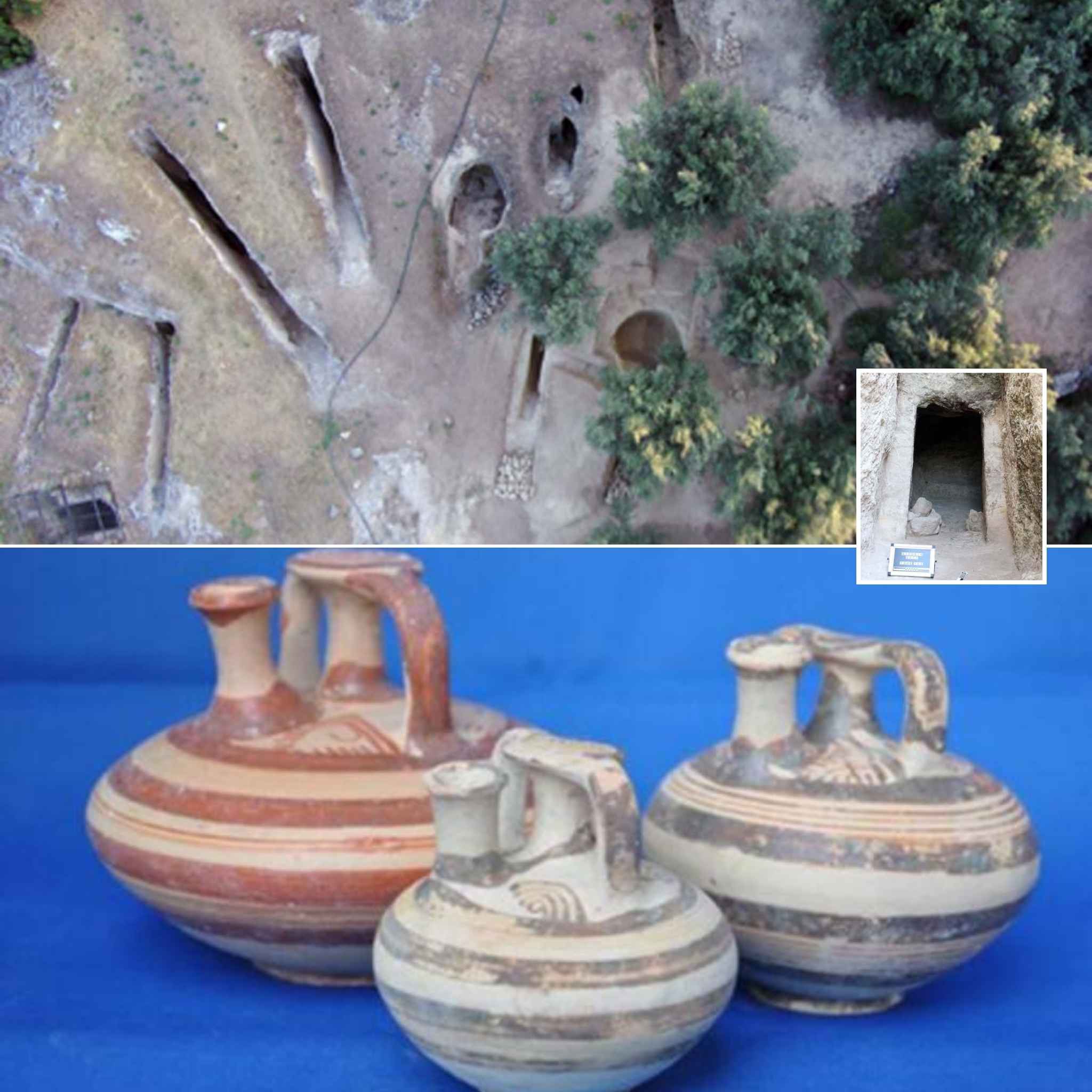
In the rolling hills of southern Greece, near the modern town of Nemea, archaeologists have made an extraordinary discovery: two intact Mycenaean chamber tombs dating back more than 3,300 years. Unlike the majority of the tombs in this historically rich area, which were looted decades ago, these tombs have remained untouched. Their remarkable state promises to shed unprecedented light on Late Bronze Age burial practices, social hierarchies, and material culture in the Mycenaean world.
Aidonia: A Forgotten Mycenaean Necropolis
The discovery took place in Aidonia, a site already known to archaeologists for its cluster of Mycenaean tombs. The area lies in the eastern Peloponnese, not far from the famed Nemea sanctuary and the ancient Temple of Zeus. During the 1970s, many of the tombs in this region were systematically looted, resulting in the loss of invaluable artifacts and historical context. The current find, therefore, represents a rare window into an intact Mycenaean burial environment.
The excavation was sponsored by the Corinthian Ephorate of Antiquities and led by Konstantinos Kissa, Assistant Professor of Archaeology at the Universities of Graz (Austria) and Trier (Germany). The team aimed to document, preserve, and analyze the tombs while respecting the fragile remains of both the deceased and the burial artifacts.
A Glimpse Into Mycenaean Life and Death
The Mycenaeans, a Late Bronze Age civilization that flourished between roughly 1600 and 1100 BC, were famed for their palaces, fortified citadels, and warrior aristocracy. Their culture, which would later inspire Homeric epics such as the Iliad and the Odyssey, is characterized by complex social hierarchies, extensive trade networks, and intricate burial practices.
These newly discovered chamber tombs date to approximately 1300 BC, a period often referred to as the Late Mycenaean era. At this time, the Mycenaean palaces, like those at Mycenae, Tiryns, and Pylos, were at their zenith, featuring monumental architecture, intricate art, and elite funerary practices that signaled status and power even in death.
The First Chamber Tomb: Preserved Roof and 14 Burials
The first tomb discovered still retained its roof and contained the remains of fourteen individuals. According to Kissa and his team, these are secondary burials—remains that had been transferred from other tombs. Secondary burials were a common practice in Mycenaean society, often reflecting a continuing relationship with the deceased or a ritualized approach to ancestor veneration.
Inside the tomb, archaeologists found a variety of over 3,300-year-old grave goods, including clay pots, false amphoras, and narrow-leaved basins. These items were likely offerings to the dead, a practice meant to ensure comfort and sustenance in the afterlife. Smaller objects such as buttons and figurines were also uncovered, providing further insights into daily life and artistic expression during the Late Bronze Age.
Image suggestion: detailed view of a burial within the intact chamber tomb, showing skeletal remains and surrounding pottery.
(Credit: Ministry of Culture and Sports, Greece)
The Second Chamber Tomb: Collapsed Roof and Three Burials
The second tomb, whose roof had collapsed, contained three burials. Despite the partial collapse, the stratigraphy and preservation allowed archaeologists to document the remains in situ. The tomb’s structure and grave goods provide valuable contrasts with the intact first tomb, revealing variations in burial practices within the same cemetery.
Artifacts included a combination of ceramics, clay utensils, and figurines, which indicate the ritual significance of the interment. Even in a partially collapsed state, the tomb provided an almost pristine view of how the Mycenaeans conducted funerary rites. The difference between the tombs—one with a roof intact, one collapsed—highlights the effects of time and environmental stress on Mycenaean architecture, as well as the variable preservation conditions of ancient burial sites.
Comparing Aidonia With Earlier Mycenaean Burials
The finds at Aidonia are being compared with earlier Mycenaean tombs in the region, dating from 1600–1400 BC. By examining changes in tomb architecture, grave goods, and burial customs, archaeologists hope to track developments in social hierarchy, material culture, and ceremonial practices across the Mycenaean period.
The cemetery at Aidonia contains tombs spanning several centuries, from 1700 to 1100 BC, providing a rich chronological framework. The comparison between older and later burials allows scholars to identify trends in burial complexity, the introduction of new artistic motifs, and the emergence of elite social classes.
Insights From Grave Goods
The intact tombs yielded an impressive array of artifacts. Among the finds were clay pots, false amphoras, narrow-leaved basins, figurines, and buttons—objects that reveal both the daily life and the ritual world of the Mycenaeans. The design, decoration, and craftsmanship of these items suggest a high level of skill and artistic sophistication.
These grave goods were not merely ornamental. They were deeply symbolic, providing for the deceased in the afterlife and reflecting the social status and identity of the buried individuals. For example, the careful placement of false amphoras—ceramic vessels shaped like wine containers—may have been intended to symbolize wealth, hospitality, and the deceased’s role in communal feasting, which was central to Mycenaean culture.

Looting and Preservation Challenges
What makes these tombs so exceptional is their intact nature. Unlike other tombs in Aidonia, which were extensively looted in the 1970s, these two have avoided disturbance for over three millennia. Looting has long been a challenge in Greek archaeology. During the 1970s, grave robbers removed precious items such as jewelry, weapons, and luxury vessels from the Aidonia cemetery. Some of these stolen items resurfaced decades later, including attempts to auction them internationally in the 1990s.
The intact tombs allow archaeologists to study burial practices in a context that has not been disrupted by human interference. This is critical, as looting often destroys stratigraphy and removes the objects from their cultural and spatial context, making it difficult to interpret social and ritual significance.
The Archaeological Team
The excavation at Aidonia was led by Konstantinos Kissa, with a multinational team including specialists in ceramics, osteology, and Bronze Age archaeology. The Ministry of Culture of Greece emphasized the collaboration between Greek and international experts, ensuring rigorous documentation and preservation of both human remains and artifacts.
Assistant archaeologists and students from Austrian and German universities participated, providing field experience while adhering to strict conservation protocols. The careful excavation process ensured that even the smallest objects—buttons, figurines, and fragments of pottery—were recovered, cataloged, and analyzed.
Implications for Mycenaean Studies
The discovery of these intact chamber tombs provides a wealth of new data for understanding Mycenaean civilization. The richness of the grave goods, the preservation of the skeletal remains, and the secondary nature of the burials together offer a rare opportunity to examine social structures, mortuary rituals, and artistic practices.
By studying the tombs in relation to other Mycenaean cemeteries, archaeologists can begin to answer fundamental questions: How did burial customs evolve over time? What do grave goods reveal about social status, gender, and age? How did the Mycenaeans conceptualize life after death?
The finds also offer insights into the Late Bronze Age’s network of trade and cultural exchange. Pottery styles, clay composition, and decorative motifs suggest that the inhabitants of Aidonia were part of a larger Mediterranean trading and cultural sphere.
The Importance of Intact Contexts
Archaeologists often emphasize that context is everything. A looted tomb may yield spectacular artifacts, but without the surrounding context—the placement of objects, the relationships between burials, and the stratigraphy of the site—many interpretive questions remain unanswered.
In the case of the Aidonia tombs, intact context allows for detailed reconstructions of burial sequence, social hierarchy, and ritual practice. Secondary burials, for example, indicate that these communities revisited tombs, rearranged remains, and maintained a long-term relationship with the dead—an insight that would have been impossible to reconstruct from looted tombs alone.
Future Plans
The Ephorate of Antiquities of Corinth plans to continue excavations at Aidonia, anticipating that more tombs and artifacts may come to light. Each new find has the potential to fill gaps in our understanding of Mycenaean society, from daily life to political organization and religious practice.
Researchers will conduct comprehensive analyses of the skeletal remains to determine age, sex, health, and ancestry. Isotopic studies may reveal diet and mobility patterns, while DNA analysis could clarify familial relationships among the buried. At the same time, the grave goods will undergo stylistic and compositional analyses, linking them to broader Mycenaean and Mediterranean trends.
The ultimate goal is to place Aidonia in its broader cultural, economic, and social context, providing a complete picture of a Mycenaean community at the height of its power.
Conclusion
The discovery of two intact chamber tombs at Aidonia represents a rare archaeological opportunity. Unlike the looted tombs that dominate the Mycenaean landscape, these graves offer a nearly complete window into the Late Bronze Age. From the skeletal remains to the pottery, figurines, and ritual offerings, the tombs provide invaluable evidence for understanding the Mycenaeans’ social structures, material culture, and mortuary practices.
As archaeologists continue their work, Aidonia promises to reshape our understanding of Mycenaean Greece, offering new insights into a civilization that has long been viewed through the lens of Homeric legend but whose human stories are now emerging from the shadows of history.