he case against Licho Escamilla began outside a Dallas nightclub during Thanksgiving weekend in 2001, when a parking-lot fight turned into a deadly shooting. Christopher Kevin James, a Dallas police officer working off-duty security in uniform with other officers, responded to the disturbance and tried to break up the brawl. According to Texas prison records, Escamilla opened fire, striking Officer James twice; James later died from his injuries.

Investigators quickly determined that the shooting was not an isolated confrontation. Court records and later reports showed that Escamilla was already wanted in connection with another killing before the nightclub shooting. During the chaos outside the club, another officer was wounded, and Escamilla himself was shot before authorities arrested him as he tried to flee the scene.
The prosecution built its case around eyewitness testimony, the sequence of gunfire, police response evidence, and Escamilla’s actions after the shooting. Reports later stated that Officer James was first knocked down by gunfire before additional shots were fired at close range. The case became a capital murder prosecution because the victim was a police officer carrying out law-enforcement duties at the time of the shooting.
Escamilla was convicted of capital murder in 2002 and sentenced to death. His defense did not center on proving he was not involved, but challenged whether the killing legally qualified for the death penalty because James was working off-duty security when the shooting occurred. Courts rejected those arguments, and the conviction and sentence remained in place through years of appeals.
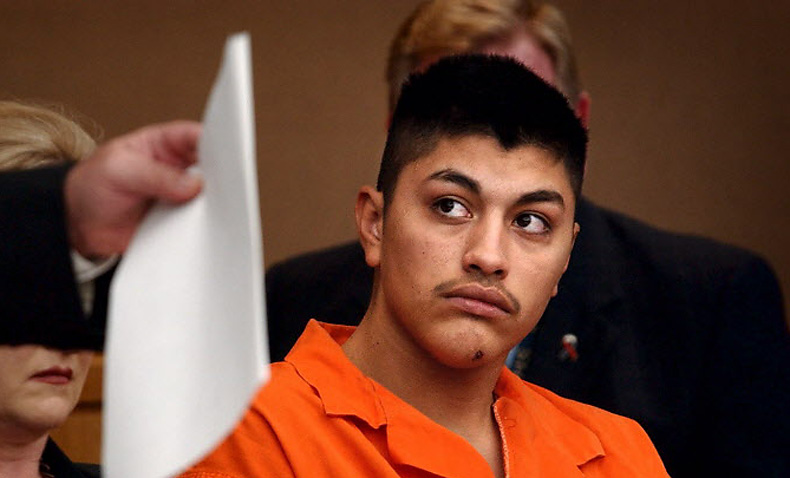
As the execution date approached in 2015, Escamilla’s attorneys asked the U.S. Supreme Court to review his case. The high court declined to do so, leaving the execution date in place. Texas officials later carried out the sentence on October 14, 2015, at the Huntsville Unit. Escamilla was pronounced dead at 6:31 p.m., 18 minutes after the lethal injection began.
During his final statement, Escamilla addressed Officer James’s daughter and members of his own family, then ended by telling the warden he was finished. Local reporting recorded part of his statement as: “They will have to take that up with God. Let everyone know that it’s not over.”
The case remains one of the better-known Texas death row cases involving the murder of a police officer. It also later intersected with another Dallas homicide investigation, after reports tied Escamilla to the earlier killing of Santos Gauna and the wrongful conviction of another man. For investigators, prosecutors, and Officer James’s family, however, the central case began with the violence outside that Dallas club and ended after more than a decade of appeals in the Texas death chamber.