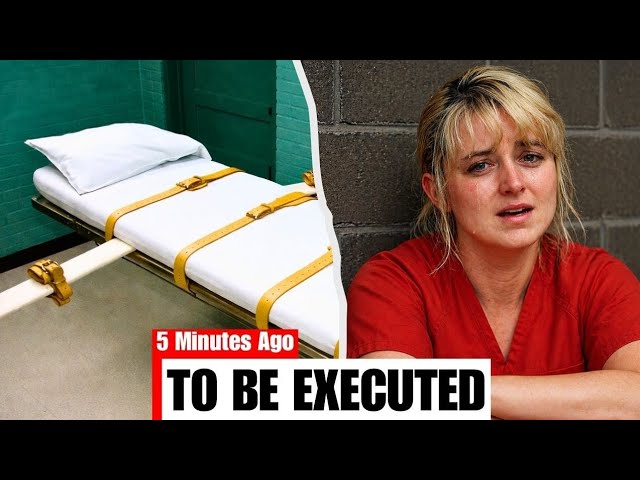
In a haunting chapter of Florida’s history, Donald David Dilbeck met his end by lethal injection on February 23, 2023, marking the state’s 100th execution since the death penalty was reinstated in 1976. After 32 years on death row, his story intertwines tragedy, violence, and a complex justice system that grappled with his fate for decades.
 Born on May 24, 1963, Dilbeck’s life was marred by hardship from the start. His father abandoned the family when he was just six, and his mother struggled with alcoholism, leading to a turbulent childhood filled with instability. By the age of 15, he had already crossed paths with the law, having reportedly stabbed a man during a robbery attempt in Indiana before fleeing to Florida.
On April 11, 1979, Dilbeck found himself in a stolen car parked in a secluded area near Fort Myers Beach. When Deputy Dwight Lynn Hall approached to investigate, a brief chase ensued, culminating in a tragic struggle that resulted in the deputy’s death. Dilbeck, then just a teenager, confessed to the murder and was sentenced to life in prison, given his age at the time of the crime.
 However, the justice system’s handling of Dilbeck’s case took a dark turn. Despite his violent history, he was placed in a minimum-security facility, where he participated in a work program. On June 24, 1990, he escaped, leading to the brutal murder of 44-year-old Faye Vann, who was waiting in her car at a shopping mall. Dilbeck attacked her, stole her vehicle, and was apprehended shortly after crashing nearby.
The legal proceedings that followed were fraught with complexity. In 1991, a jury found Dilbeck guilty of Vann’s murder, and he was sentenced to death with an 8-4 jury recommendation. Over the years, his legal team mounted several appeals, challenging the constitutionality of his sentencing and arguing that his neurological issues, stemming from his mother’s alcoholism, impaired his ability to distinguish right from wrong.

Despite these efforts, the courts consistently upheld his death sentence. In January 2023, Governor Ron DeSantis signed Dilbeck’s death warrant, and his final day began with a calm routine at Florida State Prison. He shared a last meal of fried shrimp and pecan pie before facing the inevitable.
 As the clock struck 6:00 p.m., witnesses gathered to witness the execution. When asked for his final words, Dilbeck expressed remorse for his past actions, acknowledging the pain he had caused. The execution proceeded without incident, and by 6:13 p.m., he was pronounced dead.
Dilbeck’s execution not only marked a significant moment in Florida’s capital punishment history but also reignited debates about the death penalty itself. Outside the prison, demonstrators gathered, some advocating for its abolition, while others sought justice for the victims of his violent acts.
This case raises profound questions about justice, accountability, and the complexities of a system that allowed a convicted murderer to escape and 𝓀𝒾𝓁𝓁 again. As the story of Donald Dilbeck comes to a close, it leaves us pondering the implications of his actions and the lives forever altered by his choices. What does justice truly mean in a world where the lines between punishment and redemption blur?