Arizona has carried out the execution of Richard Kenneth Djerf, bringing to a close one of the state’s longest-running capital murder cases. Djerf, 55, was executed by lethal injection for the September 1993 murders of Albert Luna Sr., Patricia Luna, their 18-year-old daughter Rochelle, and 5-year-old son Damien at the family’s Phoenix home. After spending more than 29 years on death row, Djerf declined to seek clemency, and state officials proceeded with the execution after decades of judicial review upheld his convictions and death sentence.
The investigation began on Sept. 14, 1993, when authorities discovered four members of the Luna family dead inside their residence. Detectives from the Phoenix Police Department found evidence of an exceptionally violent attack. Investigators determined that Albert Luna Sr. had been beaten, stabbed, and shot; Patricia Luna and young Damien had been restrained before being fatally shot; and Rochelle Luna had been sexually assaulted before her throat was cut. Crime scene investigators collected forensic evidence, interviewed witnesses, and worked to establish both a motive and the identity of the killer.
As detectives reconstructed the case, they focused on Richard Djerf after learning he blamed another member of the Luna family, Albert Luna Jr., for an earlier burglary in which electronics and a firearm had been stolen from his apartment. Prosecutors alleged that Djerf became consumed by revenge and spent months planning the attack. According to evidence presented at trial, he went to the Luna home posing as a flower delivery driver before forcing his way inside. Investigators relied on physical evidence, witness testimony, and statements gathered during the investigation to connect Djerf to the murders.
The Maricopa County Attorney’s Office charged Djerf with multiple counts of first-degree murder, burglary, kidnapping, sexual assault, and related offenses. During trial, prosecutors argued that the killings were deliberate acts of retaliation rather than crimes committed during a spontaneous confrontation. The jury convicted Djerf on all major counts and sentenced him to death. Over the following decades, his attorneys pursued numerous appeals challenging both the conviction and the sentence, but Arizona and federal courts consistently upheld the verdict.
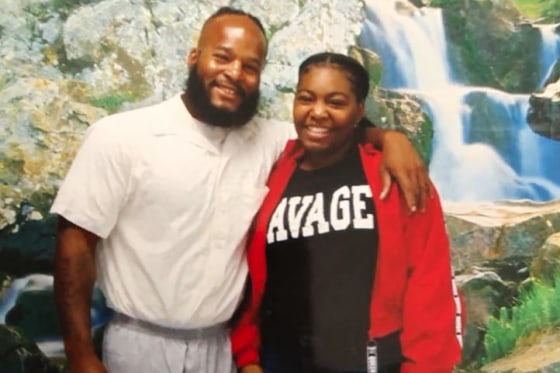
In the weeks before his execution, Djerf released a public statement acknowledging responsibility for the murders and apologizing for the pain he had caused. He did not pursue executive clemency. On the day of the execution, prison officials reported that Djerf declined to make a final verbal statement. According to the Arizona Department of Corrections, medical staff required several attempts to establish intravenous access because of difficulties with his veins, but officials stated the execution proceeded according to protocol. He was pronounced dead after receiving pentobarbital through lethal injection.
Arizona Attorney General Kris Mayes said the execution represented justice for the four victims and their surviving family members. Although no relatives of the Luna family attended the execution, prosecutors emphasized that the case had remained a priority for decades because of the severity of the crimes and their lasting impact on the community. The execution was Arizona’s second of the year and one of several carried out across the United States during the same week.
The Djerf case remains one of Arizona’s most notorious multiple-homicide investigations. For detectives, it demonstrated how motive, forensic evidence, and careful reconstruction of a suspect’s planning could establish a comprehensive picture of a premeditated revenge killing. For the Luna family, the legal process lasted more than three decades, ending only after every level of judicial review had been completed and the sentence imposed by the court was carried out.