Part 1: The War That Didn’t Just Destroy Cities—It Rebuilt Monsters
In the early 1940s, Europe was no longer recognizable.
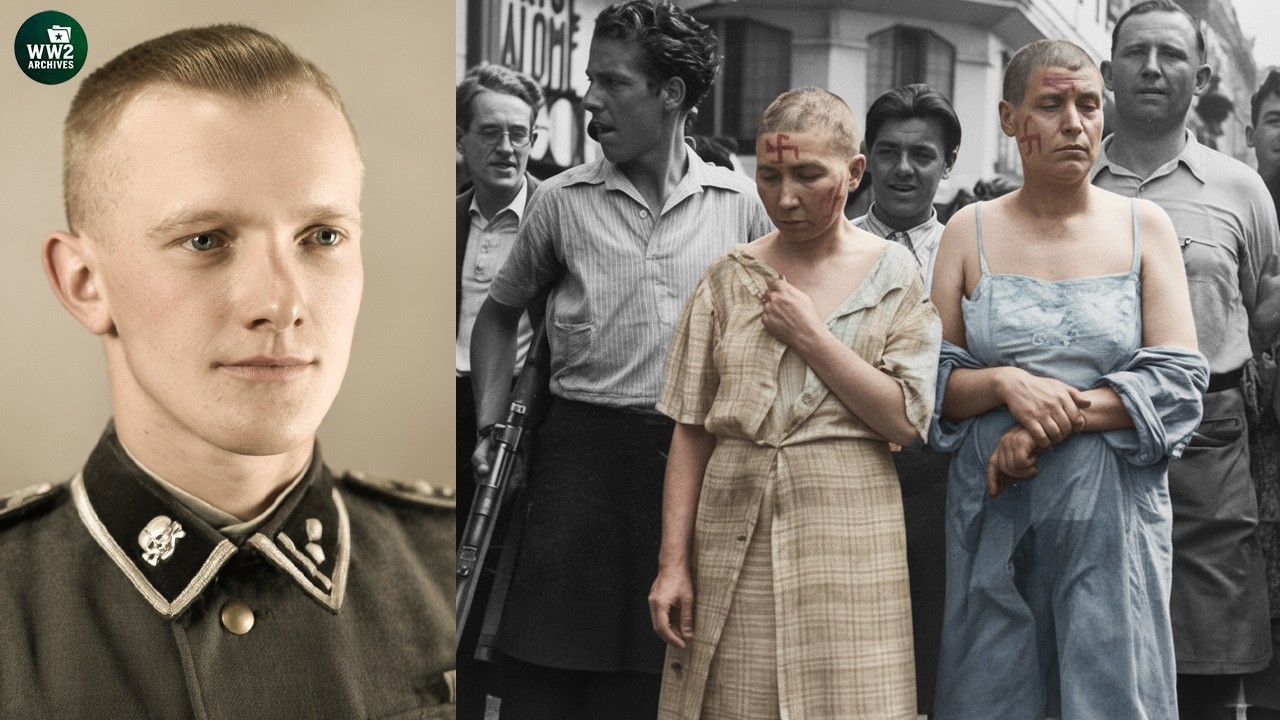
Entire capitals had been reduced to rubble. Borders disappeared almost overnight. Families vanished without explanation. Every passing train carried soldiers, refugees, prisoners—or people who would never return.
But the greatest damage inflicted by Nazi Germany was not measured in collapsed buildings or burned villages.
It was measured in the gradual destruction of ordinary human morality.
The Third Reich did not rely solely on Adolf Hitler or the famous names recorded in history books. Its machinery of terror depended on thousands of men whose names were barely known outside the places where they ruled. Behind concrete walls, watchtowers, and endless rows of barbed wire, these men exercised absolute authority over life and death.
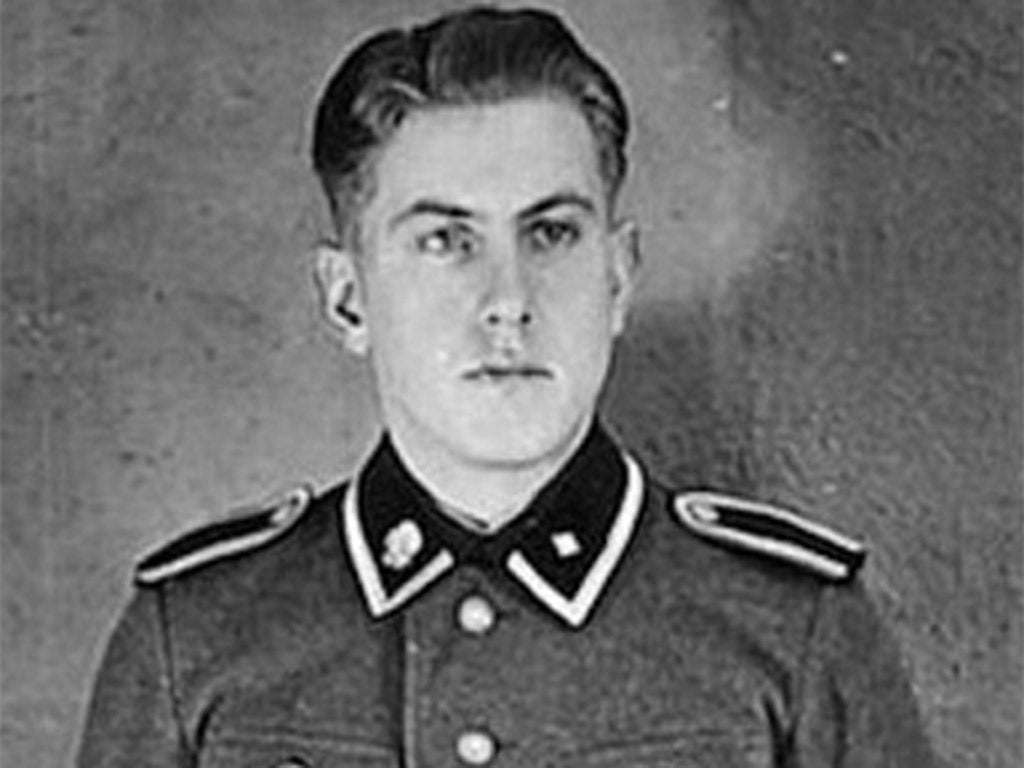
One of them was Gerhard Palitzsch.
Today, his name rarely appears alongside the architects of the Holocaust. Yet inside Auschwitz, it inspired immediate fear. Prisoners learned quickly that survival often depended less on written regulations than on the whims of men like him.
He did not command armies.
He did not deliver speeches before cheering crowds.
He rarely appeared in official photographs.
Yet countless prisoners remembered his face long after liberation—if they survived long enough to remember at all.
What makes his story especially unsettling is not simply the number of people who suffered under him.
It is the question his life forces us to confront.
How does an ordinary man become someone capable of systematic cruelty?
Was he born that way?
Or did power, ideology, and opportunity slowly erase every boundary that once separated a normal person from a willing executioner?
Those questions remain deeply uncomfortable because they challenge one of history’s most reassuring assumptions—that evil always looks different from the rest of us.
Gerhard Palitzsch was born in 1913 near Dresden, in Saxony, Germany.
His family lived modestly, earning their livelihood through farming. Nothing in his childhood suggested that history would one day remember him for violence. Like countless young men growing up in rural Germany after the First World War, his world revolved around hard physical labor, discipline, and survival during years of economic hardship.
Germany itself was changing.
The humiliation following World War I, hyperinflation, unemployment, and political instability created fertile ground for radical movements promising national renewal.
For many Germans, the Nazi Party presented itself not merely as a political organization but as a solution to chaos.
It offered certainty where there had been confusion.
Purpose where there had been despair.
Identity where many felt only humiliation.
When Adolf Hitler rose to power in 1933, thousands of young men eagerly joined the movement.

Gerhard Palitzsch was one of them.
He became a member of the Nazi Party and soon afterward entered the Schutzstaffel—the SS.
To outsiders, the decision may have appeared practical.
The SS provided stable employment, status, uniforms, and opportunities unavailable elsewhere during difficult economic times.
But membership demanded far more than loyalty.
It required ideological commitment.
Within the SS, recruits were taught that certain groups—especially Jews, political opponents, Roma, and others labeled “undesirable”—were not fellow human beings deserving compassion.
They became administrative problems.
Threats.
Numbers.
Objects to be controlled.
The transformation rarely happened overnight.
It occurred through repetition.
Training.
Routine.
Language.
Each small step made the next one easier.
Violence stopped feeling extraordinary when it became policy.
Cruelty stopped feeling personal when paperwork justified it.
This gradual erosion of moral restraint would become one of the defining characteristics of the Nazi concentration camp system.
And Palitzsch adapted quickly.
His early assignments placed him in Germany’s expanding network of concentration camps, including Oranienburg and later Lichtenburg.
These camps existed before the outbreak of World War II. Initially established to imprison political opponents, they gradually evolved into laboratories of repression where SS personnel learned techniques of domination.
New guards were not simply instructed to maintain order.
They were conditioned to establish complete psychological control.
Prisoners lost their names.
They became identification numbers.
Personal belongings disappeared.
Hair was cut.
Clothing was standardized.
Individual identity was systematically stripped away until people could be processed as units rather than human beings.
For the guards, this transformation mattered just as much.
The less human the prisoners appeared, the easier it became to justify increasingly brutal treatment.
Administrative language concealed violence behind bureaucratic routine.
Punishments became procedures.
Humiliation became discipline.
Starvation became regulation.
Everyday cruelty became another task completed before the end of a shift.
Palitzsch demonstrated unusual efficiency inside this system.
Superiors noticed his willingness to enforce rules without hesitation.
Unlike guards who occasionally displayed uncertainty, he rarely questioned instructions.
Obedience became his defining characteristic.
Within the SS hierarchy, that made him valuable.
By 1936, Palitzsch had been promoted to Block Leader at Sachsenhausen Concentration Camp.
The title sounded administrative.
Its reality was anything but.
A Block Leader exercised direct authority over prisoners assigned to specific barracks. Every aspect of daily existence—roll calls, punishments, work details, inspections, food distribution, and discipline—could pass through his hands.
This position granted something more dangerous than rank.
It granted constant proximity to absolute power.
Every morning began with prisoners wondering which version of the Block Leader they would encounter.
Would today’s inspection end with shouting?
Beatings?
Collective punishment?
Or something worse?
Fear itself became an instrument of control.
Prisoners learned to anticipate violence before it occurred.
Silence spread faster than commands.
People avoided eye contact.
Every movement became calculated.
The uncertainty exhausted minds long before physical labor exhausted bodies.
Former prisoners later described how some guards appeared to enjoy this psychological domination even more than direct physical punishment.
Control became addictive.
The ability to determine another person’s fate—whether through a gesture, a report, or a simple accusation—created a distorted sense of superiority.
Inside the concentration camp system, compassion was interpreted as weakness.
Efficiency earned promotions.
Ruthlessness earned respect.
Palitzsch fit seamlessly into that culture.
Whether driven by ideology, ambition, personal cruelty, or some combination of all three, he increasingly became exactly the type of officer the SS wanted.
His reputation within the camps grew accordingly.
Not because he inspired loyalty.
Because he inspired fear.
Outside the camps, ordinary Germans continued their daily lives.
Children attended school.
Factories expanded production.
Propaganda celebrated national revival.
Many citizens never witnessed what occurred behind barbed wire.
Others chose not to ask questions.
Distance made denial easier.
Meanwhile, inside the camps, another reality developed—one governed by arbitrary punishment, relentless intimidation, and the systematic destruction of human dignity.
Men like Palitzsch stood at the center of that reality.
They were neither anonymous cogs nor independent masterminds.
They were the indispensable middle layer that translated ideology into daily action.
Without them, orders issued from Berlin could never have become lived terror for hundreds of thousands of prisoners.
Their decisions, repeated hour after hour, transformed abstract hatred into concrete suffering.
And Palitzsch was only getting started.
The skills he refined in Oranienburg, Lichtenburg, and Sachsenhausen—absolute obedience, psychological domination, and routine violence—would soon be carried to a new assignment unlike anything Europe had yet seen.
A place where industrialized murder would reach an unprecedented scale.
Its name would become synonymous with the Holocaust itself.
Auschwitz.