CHAPTER ONE — THE ROOM WHERE HE CAME TO COLLECT
My father arrived at my uncle’s will reading wearing a black suit, a gold watch, and the expression of a man attending his own victory.
He did not look at the casket photograph in the foyer.
He did not touch the condolence book.
He did not ask if I was okay.
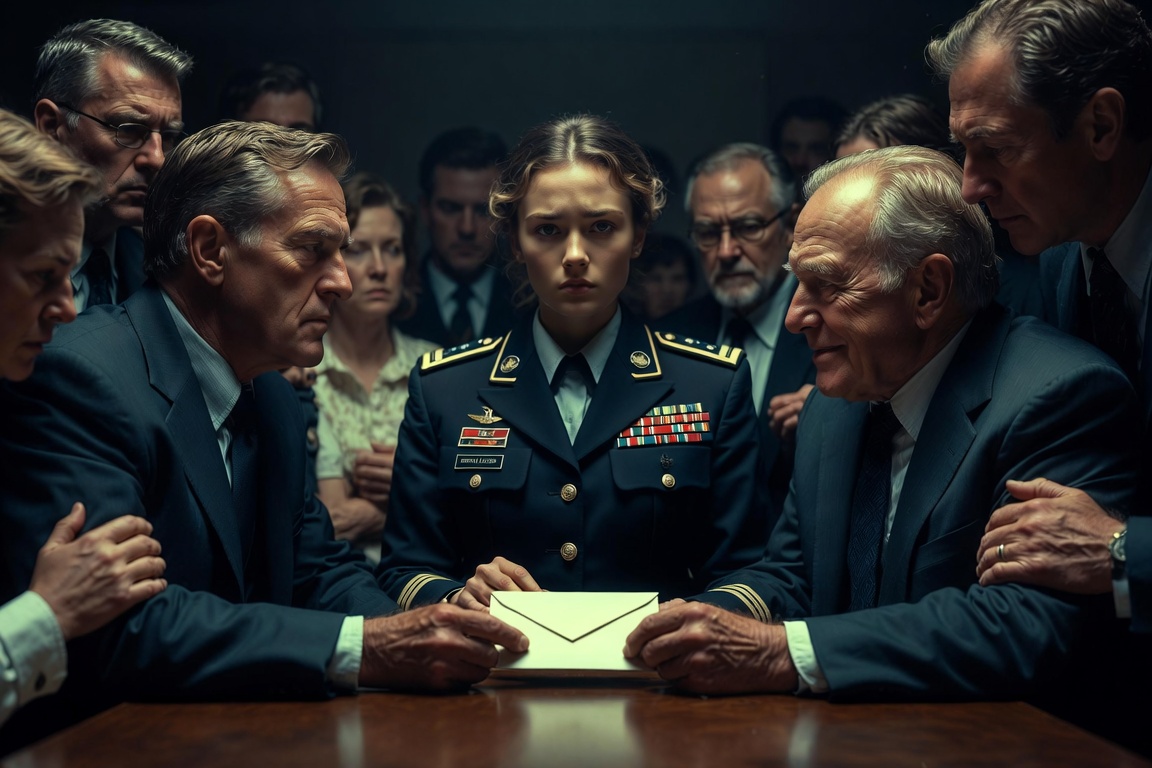
He walked into the conference room of Whitcomb & Vale Attorneys at exactly 10:03 a.m., glanced once at me, and smiled like the last fifteen years had been a clerical error.
“Grace.”
My name in his mouth still knew how to find old bruises.
I sat at the far end of the walnut table, hands folded over my black dress, my uncle’s signet ring warm on my thumb. Outside the tall windows, late autumn rain slid down the glass in crooked silver lines. The city below looked washed-out and cold, all wet pavement, headlights, and people moving quickly beneath umbrellas.
The room smelled of leather chairs, coffee, old books, and expensive grief.
My father, Leonard Ashford, smelled of cedar cologne and courtroom confidence. He had always known how to dress like truth belonged to him.
Beside him stood my mother, Helen, shoulders hunched beneath a dark wool coat. She looked older than when I last saw her. Smaller too. Her eyes touched my face for half a second before dropping to the table.
Behind them came my older brother, Wesley, with his wife, Maren. Wesley’s jaw had our father’s shape and our mother’s habit of avoiding direct fire. Maren looked curious more than sad, like she had come to a theater performance and expected good seats.
At the head of the table sat Mr. Samuel Vale, my uncle’s attorney.
He was seventy-two, thin as a paper cut, with silver hair, square glasses, and a face that had spent decades watching families become strangers over property. A sealed envelope lay beside his legal pad.
Across the room, on a side table, rested a framed photograph of my uncle.
Arthur Ashford.
Successful developer.
Private philanthropist.
Unmarried.
Childless, according to my father.
My second chance, according to me.
In the photograph, Uncle Arthur stood in front of the old textile mill he had turned into affordable artist lofts. His hands were in his pockets. His tie was crooked. His smile was tired and real.
I had not cried at the funeral.
Not because I didn’t love him.
Because the grief was too large to fit through my eyes yet.
My father pulled out the chair across from me without waiting to be invited.
“Well,” he said, settling in, “let’s begin.”
Mr. Vale looked at him over his glasses.
“We will begin when I am ready, Mr. Ashford.”
My father’s smile tightened.
“Of course.”
He placed both hands on the table.
The gold watch flashed beneath the fluorescent lights.
I knew that watch.
Uncle Arthur had given it to him when Dad turned forty.
Dad pawned it three years later during one of his failed business runs, then bought it back after Uncle Arthur quietly paid off the debt.
Dad called that “family support.”
Uncle Arthur called it “the last time.”
It was never the last time.
Mr. Vale cleared his throat.
“Before I read Mr. Arthur Ashford’s final will and testament, I am required to confirm the identities of those present.”
He looked at my father.
“Leonard Ashford. Brother of the deceased.”
My father gave a small nod.
“Helen Ashford. Sister-in-law.”
Mom’s fingers tightened around her purse.
“Wesley Ashford. Nephew.”
Wesley nodded.
“Maren Ashford. Spouse of Wesley Ashford.”
Maren smiled politely.
Then Mr. Vale looked at me.
“Grace Elizabeth Ashford.”
My father made a sound.
Not quite a laugh.
Not quite a cough.
Mr. Vale’s eyes lifted.
“Yes, Mr. Ashford?”
My father leaned back.
“I’m sorry. It’s just strange hearing her called an Ashford in a legal room.”
The table went still.
Mom closed her eyes.
Wesley looked away.
My pulse moved once in my throat.
Mr. Vale folded his hands.
“Why is that?”
My father turned toward me.
The smile vanished.
He had waited fifteen years for a room where he thought he had power again.
I saw it.
He wanted me humiliated before the money appeared.
He wanted the old order restored first.
“Because she stopped being an Ashford when she walked out on this family.”
My mouth went dry.
I was sixteen again for half a second.
Standing on the porch in the snow.
A trash bag of clothes at my feet.
My father’s voice cutting through the night.
You’re no daughter of mine.
The memory entered the room before I did anything to stop it.
Mr. Vale did not move.
“Is that your legal position?”
My father frowned.
“What?”
“You stated she stopped being an Ashford. Are you claiming she is not Leonard Ashford’s daughter?”
The question hung quietly.
Dangerously.
My father looked irritated, as if law had insulted his drama by becoming specific.
“I’m saying she forfeited the name.”
Mr. Vale picked up his pen.
“By what mechanism?”
My father’s face darkened.
“By betrayal.”
Mr. Vale wrote one word.
“Betrayal,” he repeated.
Then he looked up.
“Was there a court proceeding?”
“No.”
“A legal disownment?”
My father scoffed.
“Don’t be absurd.”
“A termination of parental rights?”
“No.”
“An adoption by another party?”
My father’s eyes flicked toward me.
“No.”
“Then, legally, she remains your daughter.”
My father leaned forward.
“Not in my house.”
The room cooled.
There it was.
The sentence behind all of it.
Not in my house.
Uncle Arthur’s house had saved me from those words once.
Now my father had brought them into Arthur’s lawyer’s office like evidence against me.
Mr. Vale’s face changed.
Only slightly.
But I saw it.
His hand stilled over the legal pad.
He looked at the sealed envelope beside him.
Then at me.
Then back to my father.
“Mr. Ashford,” he said quietly, “did you ever say to Grace, in direct terms, ‘You’re no daughter of mine’?”
My mother’s head jerked up.
Wesley stopped breathing.
My father stared.
“What kind of question is that?”
“A relevant one.”
My father’s jaw tightened.
“This is ridiculous.”
“Answer the question.”
The room heard the shift.
Mr. Vale was no longer facilitating.
He was confirming.
My father smiled coldly.
“You want the truth? Yes. I said it. She needed to hear it.”
My mother whispered, “Leonard.”
He lifted a hand.
“No. I’m done pretending. She embarrassed us. She disobeyed. She ran to Arthur and turned him against his own brother.”
I looked at the rain on the window.
Not because I was calm.
Because if I looked at him too long, I might forget the woman I had become and answer as the girl he threw away.
Mr. Vale removed his glasses.
Cleaned them slowly with a white cloth.
Put them back on.
Then he opened the sealed envelope.
My father’s smile returned.
He thought the performance was over.
He thought the money was next.
Mr. Vale unfolded a single page.
His eyes moved across the first line.
Then he froze.
Not dramatically.
Not theatrically.
The way a man freezes when a sentence changes the legal meaning of the room.
His face drained of color.
My father noticed.
“What?”
Mr. Vale did not answer.
He read the page again.
Then looked at me.
There was something in his eyes I had never seen from him before.
Pity.
And fear.
“Grace,” he said softly, “before we proceed, I need to ask you something.”
My heart began to pound.
“What?”
He swallowed.
“Did Arthur ever tell you why he took you in?”
The room disappeared around me.
Rain.
Leather.
Coffee.
My father’s breathing.
All gone.
Only the question remained.
“No,” I said.
My voice sounded far away.
“He said family doesn’t leave children in the cold.”
Mr. Vale looked down at the paper.
Then back at my father.
“And apparently,” he said, “that was not the only reason.”
CHARACTER FILES
Grace Elizabeth Ashford — 31
A nonprofit housing director raised by her uncle after being thrown out at sixteen.
Appearance: Dark auburn hair usually worn in a low bun, green eyes, slim build, careful posture, a small scar on her palm from the night she left home carrying broken glass in a trash bag.
Personality: Quiet, disciplined, deeply empathetic, slow to trust, observant under pressure.
Deep wound: Her father’s rejection taught her that love could be revoked for disobedience.
Greatest fear: Becoming dependent on someone who can abandon her again.
Secret desire: To belong somewhere without earning it through usefulness.
Moral belief: Family is proven by care, not claimed by blood.
Greatest weakness: She still wants an apology from people who may not be capable of giving one.
Greatest strength: She builds safety for others because she remembers having none.
Leonard Ashford — 59
Grace’s father, Arthur’s younger brother, a failed entrepreneur who believes he was cheated out of the Ashford legacy.
Appearance: Tall, handsome in an aging, controlled way; silver at the temples; sharp blue eyes; always well-dressed when entering rooms where money might be discussed.
Personality: Proud, charismatic, defensive, status-hungry.
Deep wound: He grew up in Arthur’s shadow and believes the world admired the wrong brother.
Greatest fear: Being exposed as someone who squandered every chance Arthur gave him.
Secret desire: To be recognized as the rightful Ashford heir.
Moral belief: Family loyalty means protecting the family image and obeying its hierarchy.
Greatest weakness: He confuses authority with love.
Greatest strength: He can persuade people when no documents are present.
Arthur Ashford — 64, deceased
Grace’s uncle, wealthy developer and quiet philanthropist.
Appearance in memory: Tall, broad-shouldered, silver hair, rolled-up sleeves, old work boots with expensive suits.
Personality: Dry humor, patient, principled, private, emotionally restrained but deeply loyal.
Deep wound: He failed to stop Leonard’s cruelty earlier and carried guilt for years.
Greatest fear: Leaving Grace vulnerable after his death.
Secret desire: To make amends for family silence by building something that outlives him.
Moral belief: Wealth should shelter people, not feed entitlement.
Weakness: He kept too many secrets trying to protect others.
Strength: He prepared carefully when he knew truth would be attacked.
Helen Ashford — 57
Grace’s mother.
Appearance: Soft brown hair streaked with gray, anxious hands, elegant but tired.
Personality: Conflict-avoidant, tender in private, weak in public.
Deep wound: Years of living under Leonard’s anger taught her survival through silence.
Greatest fear: Losing the family structure, even if it harms her children.
Secret desire: To be forgiven without having to fully confront what she allowed.
Moral belief: Keeping peace prevents collapse.
Weakness: She mistakes silence for protection.
Strength: She still has a conscience, though buried.
Wesley Ashford — 35
Grace’s older brother.
Appearance: Similar to Leonard, broad shoulders, controlled expression, restless fingers.
Personality: Passive, conflict-avoidant, secretly ashamed.
Deep wound: He watched Grace be cast out and did nothing.
Greatest fear: Becoming his father.
Secret desire: To repair things without paying the emotional cost.
Moral belief: Family should stay together, but he has never defended the person most excluded.
Weakness: Cowardice disguised as neutrality.
Strength: Capable of honesty when finally cornered.
CHAPTER TWO — THE NIGHT I STOPPED BEING HIS DAUGHTER
At sixteen, I believed cold could kill a person before morning.
Not because I had read it.
Because I stood on our front porch in January wearing a sweater, jeans, and one sock.
My other sock was somewhere inside the house.
I remembered that detail more clearly than the shouting.
The missing sock.
The porch light flickering.
The way my breath came out in small white clouds.
The trash bag at my feet holding whatever clothes my mother had managed to stuff inside before my father came upstairs.
Behind me, the front door stood open.
Inside, warmth spilled over the threshold but did not reach me.
My father stood in the doorway.
His face was red, jaw tight, one hand gripping the brass knob.
“You think you can shame this family?”
My cheek burned.
Not from being hit.
He had not hit me.
He was too proud for that in visible places.
It burned because I had been crying and wiping my face with my sleeve until my skin felt raw.
“I didn’t shame anyone,” I said.
My voice shook.
I hated that.
“You called the school counselor.”
“Because Mom was hurt.”
My mother stood behind him in the hallway, one hand pressed to her mouth.
A bruise shadowed the edge of her wrist.
She had told the emergency room nurse she slipped carrying laundry.
I told the counselor the truth.
Not all of it.
Enough.
A report was filed.
A social worker called.
My father found out before dinner.
Now I stood outside the house where every family photograph still hung straight on the walls.
My brother Wesley stood on the stairs, seventeen and silent, knuckles white around the banister.
“Dad,” he said once.
One word.
Not enough to save me.
My father turned on him.
“Stay out of it.”
Wesley did.
That too became part of the night.
My mother stepped forward.
“Leonard, please. She’s a child.”
He looked back at her.
“She is old enough to lie.”
“I didn’t lie,” I said.
His eyes snapped to me.
The cold moved under my sweater.
“You think Arthur will applaud this?”
I did not answer.
Uncle Arthur.
Dad’s older brother.
The man who came to family dinners twice a year, brought books instead of toys, and listened when I spoke. The man whose number I had written inside my chemistry notebook because he once said, “Call me if the house ever stops feeling safe.”
I had called him that afternoon.
No answer.
I left a message.
Dad knew.
Of course he knew.
“You want to run to him?” Dad said. “Fine.”
He kicked the trash bag down the porch step.
It split slightly at the seam.
A blue shirt sleeve slipped out.
“Go.”
My mother made a sound like something breaking inside her chest.
“Leonard.”
He pointed at me.
“You walk out now, you don’t come back.”
“I’m not walking out,” I whispered.
He leaned closer.
The porch light flickered over his face.
“Then hear me clearly.”
His voice lowered.
That was when he was most dangerous.
“You’re no daughter of mine.”
The world went very still.
Not silent.
The wind moved through the bare trees.
A car passed at the end of the street.
Somewhere a dog barked.
But inside me, every sound stopped.
My mother’s knees buckled slightly.
Wesley said, “Dad,” again.
Still not enough.
My father slammed the door.
The lock turned.
Click.
That was the sound of my childhood ending.
For seven minutes, I stood on the porch because part of me believed someone would open the door.
Mom.
Wesley.
Dad, after cooling down.
Someone.
No one did.
So I picked up the torn trash bag.
Walked down the steps.
And started toward the bus stop with one sock and no plan.
Uncle Arthur found me forty minutes later outside a closed pharmacy, sitting beneath a streetlight with my knees pulled to my chest.
His black car stopped so suddenly the tires slid on ice.
He got out without a coat.
“Grace.”
I tried to stand.
My legs would not cooperate.
He knelt on the frozen sidewalk in his suit pants and took my face in both hands.
He smelled like cold air, tobacco, and the peppermint gum he chewed when stressed.
“Look at me.”
I did.
His eyes were furious.
Not at me.
That was new.
“Did he put you out?”
I could not speak.
Uncle Arthur looked at the trash bag.
At my missing sock.
At my shaking hands.
He removed his coat and wrapped it around me.
Then he lifted me like I was little enough to carry.
I was not.
He carried me anyway.
In the car, the heat blasted over my feet.
He drove one-handed and called someone with the other.
“Samuel,” he said into the phone. “Wake up. I need emergency guardianship advice. Tonight.”
A pause.
“No, I am not asking tomorrow.”
Another pause.
“Because my brother has lost the right to be trusted with a child.”
I turned my face toward the window and cried so quietly I almost disappeared into it.
Uncle Arthur reached over and placed his hand on top of my head.
Not patting.
Not shushing.
Just there.
“Sleep if you can,” he said.
“I’m sorry.”
His hand stilled.
“For what?”
“I caused trouble.”
He pulled the car to the side of the road so fast my seat belt caught.
Then he turned toward me.
Snow moved across the windshield.
“Grace, listen to me very carefully.”
His voice shook.
I had never heard Arthur Ashford’s voice shake.
“Children do not cause trouble by telling the truth about harm.”
My throat closed.
He swallowed hard.
“And if anyone in this family tells you otherwise, they will answer to me.”
I believed him.
For the first time that night, I was warm.
CHAPTER THREE — ARTHUR’S HOUSE
Uncle Arthur’s house did not look like a place where children lived.
That was my first thought.
It sat on a hill above the river, all stone, glass, and careful landscaping. The driveway curved through bare winter trees. The windows glowed gold against the snow. Inside, the foyer smelled of cedar, paper, coffee, and leather—grown-up smells, expensive smells, the kind of smells that made a sixteen-year-old girl with a torn trash bag feel like a stain.
Arthur noticed.
Of course he did.
“Shoes off if they’re wet,” he said, unlocking the door. “Everything else can be cleaned.”
That sentence settled over me like another coat.
Everything else can be cleaned.
He gave me the guest room at the end of the hall.
The bed was too large.
The sheets were white.
A watercolor of the river hung above the dresser.
I stood in the doorway, afraid to touch anything.
Arthur appeared behind me with a stack of folded clothes.
“Sweatpants. T-shirt. Socks.”
I looked at the socks.
Both of them.
My eyes filled.
He cleared his throat.
“They’re mine. They’ll look ridiculous.”
I laughed.
It came out broken.
He placed the clothes on the bed.
“Bathroom through there. Towels in the cabinet. I’ll make soup.”
“You don’t have to.”
“I know.”
He left before I could argue.
That became our rhythm.
He did not ask me to be grateful.
He did not ask me to explain before I was ready.
He did not tell me my father loved me in his own way.
Adults love that sentence.
It lets other adults remain unexamined.
Arthur did something better.
He made soup.
Chicken, rice, too much pepper.
I ate at his kitchen island wearing his sweatpants and socks that bunched around my ankles.
He sat across from me reading emails, pretending not to watch every spoonful.
After half the bowl, I said, “Is Mom okay?”
His jaw tightened.
“I called a doctor friend. She is physically stable.”
Physically.
The word mattered.
“And Wesley?”
“He texted me.”
I looked up.
“What did he say?”
Arthur’s face changed.
“He asked if you were safe.”
That was not nothing.
It was not enough.
But it was not nothing.
I nodded and looked back at the soup.
Arthur slid a glass of water toward me.
“Tomorrow, we meet Samuel Vale.”
“Am I in trouble?”
His expression hardened.
“No.”
“My dad said—”
“Your father lost the privilege of defining this moment.”
I stared at him.
He said it like a legal ruling.
Like weather.
Like something already decided.
The next morning, Mr. Vale came to the house with emergency paperwork, tired eyes, and a briefcase older than me. He spoke to me gently, but not like I was fragile.
“Grace, do you want to return home?”
The question seemed impossible.
Did I want my room?
My books?
My mother?
My brother?
The version of my father I kept trying to assemble from good memories?
Yes.
Did I want to return to a house where truth got you locked outside?
No.
“I don’t know,” I whispered.
Arthur sat beside me but did not answer for me.
Mr. Vale nodded.
“That is acceptable.”
No one had ever told me uncertainty was acceptable.
Within days, Arthur became my temporary guardian.
Within months, permanent enough.
My father fought it publicly and surrendered privately. He told relatives I had been poisoned against him. He told church friends Arthur had always wanted to prove he was better. He told Wesley I would come crawling back.
I did not.
Arthur enrolled me in a new school.
Therapy.
Math tutoring.
A summer internship at one of his housing developments where I learned that buildings could either hide people or shelter them, depending on who designed the doors.
He was not perfect.
He worked too much.
He forgot dinner.
He became uncomfortable when I cried and sometimes offered coffee to a teenager at midnight because emotion made him practical.
But he stayed.
Every day, he stayed.
When I graduated high school, he stood in the front row and cried without apology.
When I graduated college, he gave me a keychain shaped like a tiny house.
When I finished my master’s degree in urban planning, he said, “Now build something better than what men like me built first.”
When I became director of a nonprofit housing organization, he came to the opening of our first shelter for displaced teens and stood in the back with both hands folded over his cane.
Afterward, he touched the wall near the entrance.
“Good doors,” he said.
That was Arthur’s highest praise.
Good doors.
Doors that opened.
Doors that locked only against danger.
Doors that did not decide a child was no longer family because she told the truth.
CHAPTER FOUR — THE WILL
Mr. Vale did not read Arthur’s letter immediately.
He placed it face down on the table as if it had become hot.
My father grew impatient.
“Samuel, what is going on?”
Mr. Vale ignored him.
He looked at me.
“Grace, did Arthur ever mention a private investigation?”
My stomach tightened.
“No.”
“Did he ever discuss your birth certificate?”
The room changed.
Slowly.
Like a storm entering through sealed windows.
My mother made a small sound.
My father’s head turned toward her.
Wesley frowned.
“My birth certificate?” I repeated.
Mr. Vale’s eyes stayed on me.
“Yes.”
My father slammed one palm on the table.
“Enough. We are here for Arthur’s estate, not some dramatic detour.”
Mr. Vale’s voice sharpened.
“This detour may determine who has standing in this room.”
My father froze.
Standing.
That word did what emotion could not.
It threatened his access.
“What are you talking about?”
Mr. Vale picked up another folder from his briefcase.
Not the will.
A red folder.
I had never seen it before.
He opened it carefully.
“Arthur’s will is straightforward in many respects. But before distribution, he instructed me to verify a matter if Leonard Ashford made any claim that Grace was not his daughter, morally or otherwise.”
My father’s face went pale.
“I said no such thing legally.”
“You confirmed saying, ‘You’re no daughter of mine.’”
“That was discipline.”
“No,” Mr. Vale said. “That was abandonment.”
The words landed with a force no one in my family had ever allowed.
Abandonment.
Not conflict.
Not misunderstanding.
Not a difficult season.
Abandonment.
My mother began crying silently.
Wesley stared at the table.
Mr. Vale turned a page.
“Arthur believed for many years that Leonard’s rejection of Grace was rooted in anger over the school report. However, shortly after taking Grace in, Arthur discovered old medical records suggesting Leonard had questioned Grace’s paternity when she was an infant.”
The room blurred.
I gripped the edge of the table.
“What?”
My father stood.
“This is outrageous.”
Mr. Vale did not raise his voice.
“Sit down.”
My father laughed.
“Who do you think you’re talking to?”
“A man who may have lied to a court-appointed guardian, misrepresented family history, and attempted to claim an estate from the brother who protected the child he discarded.”
The sentence silenced even the rain.
My father sat.
Slowly.
Mr. Vale looked at my mother.
“Helen.”
She pressed a hand to her mouth.
“Please,” she whispered.
Mr. Vale’s face softened, but only a little.
“Arthur asked you more than once, didn’t he?”
She closed her eyes.
“Yes.”
My father turned on her.
“Helen.”
She flinched.
Fifteen years disappeared.
I saw the hallway again.
The bruise.
The door.
The lock.
But this time, something changed.
My mother did not lower her head.
She looked at me.
“I’m sorry.”
The words came too late.
But they came.
My voice was barely there.
“Sorry for what?”
She wiped her face with trembling fingers.
“Leonard always wondered if you were his.”
Wesley whispered, “What?”
Mom’s shoulders shook.
“There was a man. Before Leonard and I fully reconciled. It was brief. I told Leonard everything before we married. When I got pregnant, he said it didn’t matter.”
My father’s face twisted.
“I said I would not be humiliated.”
Mom looked at him.
“No. You said you would raise her if she never gave you reason to doubt your authority.”
My chest ached.
Not daughter.
Condition.
I had not been loved.
I had been tolerated under terms I never saw.
Mr. Vale continued gently.
“Arthur suspected Leonard’s rejection that night was not merely anger. He suspected Leonard had used the school report as permission to discard a child he had privately resented.”
I looked at my father.
He did not deny it.
That was the worst part.
Mr. Vale opened the red folder fully.
“Arthur hired an investigator. Later, after Grace turned eighteen, he commissioned legal research and preserved options. He did not pursue paternity testing without Grace’s consent, believing her identity should not be reduced to Leonard’s insecurity.”
My lungs felt too small.
“Did he know?”
Mr. Vale looked at the page before him.
“He knew enough to prepare.”
“Prepare what?”
Mr. Vale turned back to the sealed letter.
His voice changed.
“Arthur adopted you.”
No one moved.
I heard my own heartbeat.
“What?”
My father surged upright.
“That is impossible.”
Mr. Vale looked at him.
“It was finalized when Grace was twenty-one. Adult adoption. Fully legal. Sealed by request. Arthur did not announce it because Grace asked him never to turn family into a courtroom spectacle.”
I stared at him.
My mouth opened.
Closed.
Arthur adopted me?
I tried to find the memory.
Twenty-one.
A courthouse.
No.
Not courthouse.
Mr. Vale’s office.
Arthur had asked me to sign estate planning documents before I studied abroad for a housing research program. Medical proxy. Emergency contact. Name authorization. I trusted him. He explained some things. Maybe not all.
No.
I shook my head.
“He would have told me.”
Mr. Vale’s eyes filled.
“He intended to. Many times. He wrote several letters. He was afraid you would feel he had made a claim over you instead of giving you protection.”
My throat closed.
Protection.
Arthur’s love language.
Documents hidden inside doors.
Mr. Vale slid a copy across the table.
Petition for Adult Adoption.
Petitioner: Arthur James Ashford.
Adoptee: Grace Elizabeth Ashford.
Approved.
I touched the paper.
The room vanished.
I saw Arthur at my college graduation.
Arthur giving me the house keychain.
Arthur telling me good doors.
Arthur saying, “You do not owe anyone access to the parts of you they refused to protect.”
He had become my father legally and never demanded I call him that.
My father—Leonard—stared at the document like it was an animal.
Wesley whispered, “Grace.”
I did not look at him.
Mr. Vale’s voice was quiet now.
“Arthur’s will names Grace Elizabeth Ashford, his legally adopted daughter, as primary heir to the Ashford Foundation, the River House, controlling interest in Ashford Urban Holdings, and the majority of personal assets.”
My father made a strangled sound.
Mr. Vale continued.
“Leonard Ashford is specifically disinherited.”
Leonard’s chair scraped backward.
“You son of a—”
“Sit down,” Mr. Vale said.
Leonard pointed at me.
“She manipulated him.”
My voice came before I expected it.
“No.”
Everyone looked at me.
I stood.
My legs shook, but I stood.
“You threw me away before he picked me up.”
Leonard’s mouth opened.
Nothing came.
Not yet.
So I continued.
“You do not get to call rescue manipulation because abandonment became inconvenient.”
My mother sobbed once.
Leonard’s face turned red.
“That fortune belongs to family.”
I looked at the adoption decree under my fingers.
Then at him.
“I know.”
The room went silent.
Mr. Vale lowered his eyes.
And for the first time since I was sixteen, my father had no door to slam.
CHAPTER FIVE — WHAT ARTHUR BUILT
Arthur’s estate was larger than anyone expected.
Even me.
Especially me.
He had always lived below his means, if a man with a river house and tailored suits could be described that way. But Arthur did not collect yachts, horses, or headlines. He collected buildings people had given up on.
Old mills.
Abandoned schools.
Boarded-up hotels.
Vacant lots where weeds grew taller than children.
He turned them into housing.
Not luxury towers with rooftop pools named after seasons.
Housing.
Affordable apartments.
Transitional shelters.
Studios for artists.
Mixed-income buildings with community kitchens and legal aid offices on the ground floor.
He built places for people who had been told, directly or indirectly, that they no longer belonged anywhere respectable.
I should have seen the pattern sooner.
Maybe I had.
Maybe I just could not bear to name it.
After the will reading, Mr. Vale asked everyone except me to leave.
Leonard refused.
Security entered without drama.
That was the thing about old law offices in wealthy districts. They knew how to remove powerful men quietly.
Leonard stood, trembling with fury.
“This isn’t over.”
Mr. Vale looked at him.
“It rarely is when entitlement meets paperwork.”
Wesley touched my arm on the way out.
I pulled away before I thought.
His face fell.
“Grace, I—”
“Not now.”
He nodded.
For once, he did not ask for more than I gave.
My mother stopped at the door.
Her face looked collapsed, as if the bones of her old life had finally given way.
“I wanted to open the door,” she whispered.
I looked at her.
“You didn’t.”
She flinched.
“No.”
Then she left.
When the door closed, the conference room seemed too large.
Mr. Vale sat slowly.
For the first time, he looked his age.
“There is more.”
I laughed once.
Not because it was funny.
Because my body had run out of appropriate reactions.
“Of course there is.”
He opened Arthur’s personal letter.
“Would you like to read it alone?”
I looked at the page.
At Arthur’s handwriting.
Strong.
Slanted.
A little impatient.
“No.”
Mr. Vale nodded and read.
Grace,
If Samuel is reading this, then Leonard came into the room believing blood and volume would do what love and decency did not.
I am sorry.
Not for leaving you what I built.
For failing to tell you sooner how completely you belonged to me.
You were sixteen when you came into my house with one sock, a torn trash bag, and eyes that kept apologizing for needing warmth. I had spent years telling myself Leonard was difficult, proud, damaged, but not dangerous. That was cowardice wearing brotherhood as a coat.
When he put you out, he did not only reveal himself. He revealed all of us who had stayed polite too long.
My eyes blurred.
Mr. Vale paused.
I nodded.
He continued.
I adopted you when you were twenty-one because I wanted the law to know what my heart already did. I did not tell you clearly because I feared you would think I was replacing something instead of recognizing what had already grown.
That was my mistake.
You were not a substitute daughter.
You were my daughter.
The word hit me so hard I bent forward, one hand over my mouth.
My daughter.
Not rescued child.
Not niece.
Not obligation.
Daughter.
Mr. Vale’s voice softened further.
The estate is yours not because Leonard failed, though he did.
It is yours because you understand what shelter means.
The final secret is not about money.
It is about purpose.
Ashford Urban Holdings has been restructured into the Good Doors Trust. You are its first chair. Samuel will explain. The mission is simple: no child should stand outside a locked door believing exile is the price of truth.
Make better doors, Grace.
All my love,
Arthur
Mr. Vale set the letter down.
For several minutes, I could not speak.
Rain slid down the windows.
The city moved below.
Somewhere in the office, a phone rang and was quickly silenced.
Good Doors Trust.
Arthur had turned my worst night into an institution.
I did not know whether to feel honored or devastated.
Both arrived.
They sat beside each other.
Mr. Vale pushed a second folder toward me.
“The trust includes a housing initiative, legal aid fund, emergency youth shelter network, and scholarships for students aging out of unstable family situations.”
I touched the folder.
My hands still trembled.
“He did all this without telling me.”
“Yes.”
“Why?”
Mr. Vale looked toward Arthur’s photograph.
“Because he knew Leonard would come for the fortune. Arthur wanted the money to have a purpose before anyone could reduce it to inheritance.”
I stared at the name.
Good Doors.
My uncle’s voice filled my memory.
Build something better than what men like me built first.
I wiped my face.
“I don’t know how to run something this large.”
“Arthur anticipated that too.”
“Of course he did.”
“He assembled a board. You are not alone.”
The sentence almost broke me.
Not alone.
That had been Arthur’s greatest gift before any estate.
Mr. Vale removed a final envelope.
“This is not legal. It is personal. He asked that I give it to you after the first meeting, not during.”
I took it.
On the front:
For the day you wonder if you deserved it.
Inside was a small card.
Grace,
You did.
A.
I laughed then.
A terrible, broken laugh.
Mr. Vale smiled through wet eyes.
“That sounds like him.”
“Yes,” I whispered.
“It does.”
CHAPTER SIX — LEONARD’S CLAIM
Leonard filed a challenge within nine days.
Of course he did.
Men like my father do not mistake defeat for instruction.
His petition claimed undue influence, lack of capacity, fraud, elder manipulation, and improper adult adoption. He described me as “emotionally unstable,” “financially motivated,” and “estranged from the Ashford family for many years.”
The phrase Ashford family almost made me laugh.
He had spent fifteen years telling anyone who listened that I had abandoned the family. Now I was so deeply Ashford that I could be accused of stealing it.
Mr. Vale and Denise Okafor, the litigation attorney he brought in, responded with documents.
Arthur’s medical evaluations.
The adult adoption decree.
Years of correspondence.
Board minutes.
Trust restructuring records.
Letters Arthur sent to Leonard that Leonard had ignored.
The emergency guardianship file from the night I was thrown out.
Photographs.
Police welfare notes.
School counselor reports.
My father’s old words became paper.
Paper is harder to shout down.
The hearing took place in December.
Snow threatened but did not fall. The courthouse smelled of wet coats, old wood, and coffee from vending machines. People moved through the halls carrying folders and dread.
Leonard arrived with two attorneys.
He wore a navy suit and the gold watch.
Again.
My mother came too, though she sat behind Wesley, not beside Leonard.
That mattered.
Maybe.
Wesley sat alone in the row behind me.
Maren was not there.
Also interesting.
I wore a black suit Arthur had once told me made me look “like someone about to deny a permit for moral reasons.” I wore his signet ring on a chain beneath my blouse.
Denise leaned toward me.
“Remember. You do not have to react to theater.”
“I know.”
“Knowing and doing are cousins, not twins.”
I almost smiled.
Judge Marianne Keller entered at 9:30.
Silver hair.
Sharp eyes.
No tolerance for inheritance melodrama.
Leonard’s attorney began by painting Arthur as lonely, aging, vulnerable to emotional manipulation by the niece he had “rescued” and later “elevated beyond reason.”
Denise took notes.
Occasionally, she underlined something.
That was the only sign of danger.
Then Leonard testified.
He described me as troubled.
Defiant.
Manipulated.
He said Arthur had always wanted to punish him.
He said I had called social services as a teenager because I “resented household discipline.”
He said he never meant “no daughter of mine” literally.
Denise stood for cross-examination.
She approached with one folder.
Just one.
That frightened Leonard more than a stack would have.
“Mr. Ashford,” she said, “you stated you did not mean the phrase literally.”
“Correct.”
“But you put Grace outside your home.”
“It was a disciplinary matter.”
“In January?”
His jaw tightened.
“Yes.”
“At night?”
“She had somewhere to go.”
“Did she?”
“She called Arthur.”
“Before or after you put her out?”
He looked toward his attorney.
The judge said, “Answer.”
“Before.”
“Did Arthur answer before you removed her from the home?”
Leonard’s mouth tightened.
“I don’t recall.”
Denise opened the folder.
“Phone records indicate Arthur returned Grace’s voicemail after she had already been outside for thirty-seven minutes. Does that refresh your memory?”
My father said nothing.
Denise waited.
“Yes,” he said.
“You put a sixteen-year-old outside in January without confirming she had shelter.”
“She was not helpless.”
A sound moved through the courtroom.
Small.
Human.
The judge’s eyes sharpened.
Denise continued.
“Did you later seek counseling to repair the relationship?”
“No.”
“Did you pay child support to Arthur after guardianship changed?”
Leonard flushed.
“That was not required.”
“Did you send birthday cards?”
No answer.
“Attend her high school graduation?”
No.
“College graduation?”
No.
“Any medical emergency?”
No.
“Any evidence at all that you treated Grace as your daughter after telling her she was not one?”
Leonard’s face reddened.
“She chose Arthur.”
Denise stepped closer.
“No, Mr. Ashford. You chose the door.”
The courtroom went silent.
I looked down.
My hands were shaking.
Denise turned a page.
“Now, regarding your claim that Arthur lacked capacity. Are you aware he underwent independent competency evaluations every six months during the trust restructuring?”
“My brother had doctors who would say anything.”
“Do you have evidence?”
“I know my brother.”
“That is not evidence.”
He glared.
Denise placed one document on the screen.
“Is this your signature?”
Leonard squinted.
“Yes.”
“This is a letter Arthur sent you two years ago offering mediated reconciliation with Grace, including an opportunity to provide a written acknowledgment of what happened when she was sixteen.”
His jaw hardened.
“I did not participate in theatrics.”
“You wrote at the bottom, ‘I will not apologize to a liar.’ Correct?”
His face lost color.
The words appeared on the screen.
His handwriting.
His cruelty.
Large enough for the whole courtroom to read.
My mother began crying behind me.
Wesley whispered something under his breath.
Denise let the screen stay lit.
Then she said, “Mr. Ashford, isn’t it true your objection to the adult adoption is not that Arthur lacked capacity, but that he gave Grace a legal status you spent fifteen years trying to deny her?”
Leonard’s eyes flashed.
“That fortune belongs to my bloodline.”
Denise tilted her head.
“Grace is your bloodline, according to your own testimony.”
He froze.
The trap closed gently.
So gently it almost looked merciful.
Denise waited.
Leonard looked at me.
Really looked.
Not like a daughter.
Like a door he had locked that somehow opened into a vault.
“You don’t deserve Arthur’s life,” he said.
The judge leaned forward.
“Mr. Ashford.”
But I raised my eyes.
For once, his words did not enter me.
They hit the glass Arthur had spent fifteen years helping me build.
Denise turned to the judge.
“No further questions.”
Leonard stepped down diminished.
Not ruined.
That would be too simple.
Diminished.
A man shrinking under the weight of his own record.
CHAPTER SEVEN — MY MOTHER’S TESTIMONY
My mother asked to testify.
No one expected that.
Not Leonard.
Not Wesley.
Not me.
Her name was not on the witness list that morning. During the lunch recess, she approached Denise with both hands clasped and asked whether it was too late to tell the truth.
Denise looked at me.
My first instinct was no.
Not because I feared what Mom would say.
Because part of me did not want her truth if it only arrived after documents had made silence impossible.
Dr. Patel, my therapist, once told me delayed honesty is still honesty, but it carries different consequences.
I hated that.
Useful truths are rarely satisfying.
“Let her,” I said.
My mother took the stand at 2:15 p.m.
She wore a gray dress and no jewelry except her wedding ring. Leonard stared at the ring like it had betrayed him too.
Denise approached carefully.
“Helen, do you remember the night Grace left your home?”
Mom closed her eyes.
“Yes.”
“Did Grace leave voluntarily?”
“No.”
Leonard’s attorney objected.
Overruled.
Denise continued.
“Tell the court what happened.”
My mother opened her eyes.
She looked at me, not the judge.
“Grace told the truth about violence in our home.”
The word violence entered the courtroom like a chair breaking.
Leonard stiffened.
Wesley covered his mouth.
Mom’s voice trembled, but she did not stop.
“I had bruises. More than once. Leonard never… he didn’t beat me the way people imagine. It was grabbing. Shoving. Blocking doors. Throwing things near me. Enough to make me careful. Enough that Grace noticed.”
My throat tightened.
“She told a school counselor. A report was made. Leonard was furious.”
Denise asked, “Did Grace lie?”
Mom shook her head.
“No.”
“Did Leonard put her out?”
“Yes.”
“Did you stop him?”
Mom’s face crumpled.
“No.”
The single word broke more than any explanation.
Denise’s voice softened.
“Why not?”
Mom swallowed.
“Because I was afraid.”
Of him.
Of being alone.
Of the family falling apart.
Of money.
Of shame.
Of everything except the child on the porch.
She did not say all that.
She didn’t have to.
Denise asked, “Did you later ask Arthur to return Grace?”
“Yes.”
“Why?”
“Because I missed her.”
“And?”
Mom’s hands twisted in her lap.
“Because Leonard was angry that Arthur had control over the story.”
There.
A truth with teeth.
Denise walked back to the table and picked up one document.
“Helen, did Arthur ever ask you about Grace’s paternity?”
My father’s attorney stood.
“Objection.”
The judge narrowed her eyes.
“Grounds?”
“Relevance.”
Denise said, “Your Honor, opposing party has repeatedly framed this dispute around bloodline entitlement. This testimony addresses Mr. Ashford’s knowledge, motive, and inconsistent positions regarding Grace’s status in the family.”
The judge considered.
“Allowed, limited scope.”
Mom took a breath.
“Yes. Arthur asked.”
“What did you tell him?”
“That I did not know with certainty.”
The words should have struck harder.
They did not.
Maybe because Arthur’s adoption had already shifted the ground.
Maybe because Leonard’s blood had never protected me anyway.
Denise asked, “Did Leonard know there was uncertainty?”
“Yes.”
“Did he agree to raise Grace?”
Mom looked at Leonard.
“He agreed to claim her. I don’t know if he agreed to love her.”
Leonard looked away first.
That was the closest thing to a confession I had ever seen from him.
Denise nodded.
“No further questions.”
Leonard’s attorney declined cross-examination after a whispered argument with his client.
My mother stepped down.
As she passed me, she stopped.
“I am sorry,” she whispered.
I looked at her.
The courtroom waited around us.
“I believe you,” I said.
Hope flickered across her face.
Then I added, “I don’t know what that changes.”
Her eyes filled.
“Neither do I.”
That was honest.
So I let it stand.
CHAPTER EIGHT — GOOD DOORS
Judge Keller dismissed Leonard’s challenge six weeks later.
Her written order was precise, almost surgical.
Arthur had capacity.
The adult adoption was valid.
The trust was properly structured.
Leonard lacked evidence to support undue influence.
The disinheritance clause stood.
Good Doors Trust would proceed.
Leonard appealed the same day.
Lost again nine months later.
By then, his fury had become expensive.
His attorneys withdrew after unpaid invoices.
His reputation suffered not because I spoke publicly, but because court records have their own voice when reporters become curious.
Former developer’s estate fight reveals family abandonment dispute.
Arthur Ashford’s Good Doors Trust launches youth housing initiative after contentious probate battle.
Leonard called it humiliation.
I called it weather.
You cannot control what the sky does after you seed clouds for fifteen years.
I moved into Arthur’s river house in spring.
Not immediately.
For months, I used only the office and kitchen. The bedroom felt too personal. His study remained untouched until Mr. Vale came over one Saturday with boxes, coffee, and a refusal to let grief become interior design.
The house overlooked the river through walls of glass. In the mornings, fog rose from the water and wrapped the trees. At night, city lights trembled on the surface. The floors creaked in winter. The library smelled like cedar and dust and Arthur’s old pipe tobacco, though he had pretended for years he had quit.
Inside his desk, I found letters.
Dozens.
Some to me.
Some never sent to Leonard.
Some to my mother.
One began:
Helen, silence is not neutral when a child is outside.
I sat in Arthur’s chair and read until the light changed.
He had tried more than I knew.
Not always well.
Not always soon enough.
But he had tried.
One letter to Leonard ended with:
You keep insisting Grace betrayed the family. I keep wondering when you will admit she was the only one brave enough to tell the truth about it.
I folded that one carefully.
Not because it healed me.
Because it named me.
The Good Doors Trust opened its first emergency youth shelter in September.
We converted an old school building Arthur had purchased years earlier. Red brick. Tall windows. Wide halls. Classrooms turned into bedrooms, counseling rooms, a legal aid office, and a kitchen that smelled of soup by 5 p.m. every day.
Above the entrance, we installed a sign:
GOOD DOORS HOUSE
No Child Exiled for Telling the Truth
I stood outside on opening morning with Mr. Vale, Denise, the board, local partners, and twenty volunteers in matching blue jackets.
The air smelled of rain and fresh paint.
A teenage girl arrived before the ribbon cutting.
Seventeen.
Hood up.
Backpack torn.
One sock visible above a cracked sneaker.
The universe is not subtle when it wants to break you open.
She stood across the sidewalk, pretending not to look scared.
I walked over.
Not quickly.
Not with pity.
Just enough.
“Hi,” I said. “I’m Grace.”
She looked at the building.
“Is this where people can stay?”
“Yes.”
“How long?”
“As long as it takes to make a plan.”
Her chin trembled.
“I don’t have money.”
“You don’t need money to come inside.”
She looked at me then.
Suspicious.
Hopeful.
Familiar.
I opened the door and held it.
Warm air moved out.
Soup.
Paint.
Coffee.
Safety under construction.
She stepped inside.
The ribbon cutting happened ten minutes later without me.
Nobody cared.
Arthur would have approved.
Good doors were for using, not photographing.
CHAPTER NINE — WESLEY
Wesley came to Good Doors House in November.
He did not call first.
He stood in the lobby wearing a brown coat, holding two boxes of donated books and looking like a man who had rehearsed three speeches and trusted none of them.
I saw him from the hallway.
For a second, he was seventeen again, standing on the stairs while our father locked me out.
Then he was thirty-five.
Tired.
Ashamed.
Still my brother.
Maybe.
“Hi,” he said.
“Hi.”
He lifted the boxes slightly.
“Donations.”
“You can leave them at the desk.”
He looked toward the reception desk.
Then back at me.
“Grace.”
“No.”
He stopped.
“I didn’t say anything yet.”
“I know the category.”
His mouth pressed together.
Fair.
He nodded.
“I deserve that.”
Something about those words softened the air by one degree.
Not enough.
But one degree.
We moved to the small courtyard behind the building. The November sky was pale. Leaves gathered in corners. A mural of open doors covered one brick wall, painted by residents and local artists. Some doors were bright. Some dark. One had flames behind it. One opened to stars.
Wesley stood with his hands in his coat pockets.
“I was afraid of him,” he said.
I looked at the mural.
“I know.”
“I told myself because he wasn’t throwing me out, I didn’t have power to stop him.”
My jaw tightened.
“You were seventeen.”
“Yes.”
That surprised me.
I looked at him.
He continued.
“I was seventeen that night. I have been an adult for a long time since.”
The honesty landed quietly.
He looked at the ground.
“I’m sorry I didn’t open the door.”
The courtyard seemed to hold still around us.
That was the apology.
Not “sorry for everything.”
Not “sorry you felt.”
Not “Dad was difficult.”
I’m sorry I didn’t open the door.
Specific.
True.
Late.
I folded my arms against the cold.
“I waited.”
His face crumpled.
“I know.”
“No,” I said. “I need you to hear it. I waited on that porch because I thought someone would come.”
He covered his mouth.
Tears filled his eyes.
“I know.”
“Mom. You. Even Dad. I thought someone would come.”
Wesley cried silently.
I had never seen him cry.
Not at Dad’s anger.
Not at Arthur’s funeral.
Not in court.
“I’m sorry,” he whispered again.
This time, I believed he understood the shape of it.
I did not hug him.
Not then.
But I said, “You can volunteer Saturday mornings. Intake library. Background check required. No family shortcuts.”
He laughed once through tears.
“Okay.”
“And Wesley?”
“Yeah?”
“If you come here to feel better about yourself, don’t.”
He nodded.
“If I come to be useful?”
I looked at the mural.
“Start there.”
He did.
Every Saturday, he sorted books, assembled shelves, painted walls, fixed donated bikes, and learned that repair is less dramatic than apology and more convincing.
Months later, one of the residents called him “Mr. Wes” and asked him to show her how to patch drywall.
He cried in the storage closet.
I pretended not to know.
CHAPTER TEN — LEONARD AT THE DOOR
My father came to the shelter in winter.
Not to volunteer.
Not to apologize.
To demand.
It was snowing lightly when he arrived, flakes melting on his black coat. He stood in the lobby beneath the Good Doors sign, face red from cold or anger.
The receptionist called me from upstairs.
“There is a Leonard Ashford here to see you.”
I nearly said no.
Then I looked through the interior window down into the lobby.
He was standing beside a teenage boy filling out intake paperwork.
The boy’s shoulders were hunched.
His backpack sat between his feet.
My father glanced at him with irritation, as if other people’s emergencies were clutter.
That decided it.
I went downstairs.
Leonard looked up when he saw me.
For a moment, his face shifted.
Not into love.
Recognition maybe.
Or shock at seeing me where Arthur’s money had become walls.
“Grace.”
“Leonard.”
His mouth tightened.
“You call me by my name now?”
“Yes.”
The receptionist suddenly became very interested in her computer.
“What do you want?”
He glanced around.
“Private conversation.”
“No.”
“This is family business.”
“No,” I said. “This is my workplace. Say what you came to say.”
His jaw worked.
The teenage boy looked up briefly, then back down.
Leonard lowered his voice.
“You have made your point.”
I said nothing.
“The appeals are done. Fine. Arthur won. You won. Congratulations.”
“Still waiting for the ask.”
His eyes flashed.
“There are items from Arthur’s estate that belong to me.”
“No.”
“You don’t even know what I mean.”
“I know the category.”
He stepped closer.
I did not move.
“There were letters. Watches. Family pieces.”
“Mr. Vale inventoried personal items.”
“Samuel is your dog now.”
The receptionist looked up.
I raised one hand.
“It’s fine.”
Leonard looked past me toward the hallway.
“Arthur turned you against me.”
“No,” I said. “You keep giving other people credit for your work.”
His face reddened.
“You think that sign makes you righteous?”
I looked up at Good Doors House.
“No.”
“Then what?”
“It makes me busy.”
That annoyed him more than anger would have.
He wanted an emotional duel.
I had schedules.
He leaned in.
“You were never mine.”
The lobby went still.
The teenage boy froze over his intake form.
The receptionist’s hands stopped typing.
There it was.
The final bullet.
The old bullet.
The one he had saved in case paperwork failed.
I looked at him.
At the man whose blood might or might not have been mine.
At the man who raised me under suspicion.
At the man who made love conditional on obedience and then called my survival betrayal.
For fifteen years, that sentence would have gutted me.
Now it only clarified him.
“No,” I said softly.
His eyes narrowed.
I continued.
“I was never yours.”
He blinked.
“But I was a child in your house. That was enough to make you responsible.”
His mouth opened.
Nothing came.
The teenage boy looked at me now.
Fully.
Listening like the words were not only for us.
Maybe they weren’t.
“You don’t get to use biology as an exit ramp after choosing the road,” I said.
Leonard’s face changed.
Not remorse.
Not yet.
Maybe never.
But something.
A man hearing a language his power did not speak.
The security guard stepped from the side hallway.
“Ms. Ashford?”
I looked at Leonard.
“We’re done.”
My father looked around the lobby.
At the sign.
At the boy.
At the receptionist.
At the security guard.
At me.
He had no door here.
No porch.
No lock.
No child dependent on his roof.
He turned and walked out into the snow.
The teenage boy watched him leave.
Then looked at me.
“My dad says that too sometimes,” he said quietly.
The sentence nearly took my knees.
I sat beside him.
“What does he say?”
He shrugged, trying not to care.
“That I’m not his problem.”
The lobby blurred.
I heard Arthur’s voice.
Make better doors, Grace.
I picked up a pen and slid it toward him.
“What’s your name?”
“Malik.”
“Malik,” I said, “you can be safe here while we figure out what happens next.”
His fingers closed around the pen.
“You promise?”
Promises are dangerous.
Arthur taught me that.
But some must be made carefully, then kept with paperwork, staff, funding, policy, and people who show up for night shifts.
“Yes,” I said.
“I promise.”
CHAPTER ELEVEN — HELEN
My mother moved out of Leonard’s house six months after the lobby incident.
She did not tell me first.
Wesley did.
He called on a Tuesday evening while I was painting my kitchen cabinets a shade of blue Arthur would have called “optimistic without evidence.”
“Mom left.”
I stood on a drop cloth, paintbrush in hand.
“Is she safe?”
“Yes. She’s at my place.”
“Good.”
Silence.
Then he said, “She wants to talk to you eventually.”
“Eventually is a useful word.”
“I told her that.”
I almost smiled.
Helen stayed with Wesley for three weeks, then moved into a small apartment near the library. She got a part-time job at a historical society gift shop, which was either healing or very on-brand.
She wrote me letters.
Not texts.
Letters.
I did not answer the first six.
The seventh was different.
Grace,
I keep trying to write why I stayed, but every explanation starts sounding like a request for mercy.
So I will write what I did instead.
I stayed when I should have left.
I lowered my voice when I should have raised it.
I let your father call control protection.
I let fear make me a witness instead of a mother.
You do not owe me a meeting.
But I am trying to become someone who tells the truth even when no one rewards me for it.
Helen
Not Mom.
Helen.
That mattered.
I agreed to meet her at a café on a rainy Thursday.
Not Arthur’s house.
Not Good Doors.
Neutral ground.
The café smelled of espresso, cinnamon, and wet wool. Students typed at small tables. An older couple shared soup by the window. Rain softened the street outside.
Helen arrived early.
She stood when I entered, then stopped herself from reaching for me.
Good.
She wore a blue sweater and no wedding ring.
I noticed.
She noticed me noticing.
“I sold it,” she said.
“The ring?”
“Yes.”
I sat.
“What did you do with the money?”
Her hands wrapped around her coffee cup.
“Donated half to Good Doors anonymously. Kept half for rent.”
“Not anonymous now.”
A small smile.
“No. I suppose not.”
We sat in awkward silence.
Then she took a breath.
“Your father used to say you looked at him like you knew.”
“I did.”
She nodded.
“He hated that.”
“I know.”
Her eyes filled.
“I hated it too sometimes.”
That hurt.
She did not look away.
“Because if you knew, then I had to know too.”
The honesty was late.
But clean.
I looked out at the rain.
“Did you ever love me?”
The question left my mouth before I could stop it.
Helen’s face collapsed.
“Yes.”
“No,” I said. “Not the answer you want to give. The true one.”
She bowed her head.
“I loved you. I did not protect you. I have learned those are not the same.”
I closed my eyes.
There it was.
The sentence I had needed at sixteen.
At twenty-one.
At thirty-one.
Late.
But alive.
When I opened my eyes, she was crying silently.
I did not reach across the table.
But I did not leave.
That was enough for the first meeting.
Maybe for many.
CHAPTER TWELVE — ARTHUR’S BIRTHDAY
On Arthur’s sixty-sixth birthday, we opened the second Good Doors shelter.
This one was in the old textile mill from his photograph.
The building smelled of fresh paint, old brick, coffee, and rain drying off coats. Sunlight poured through huge industrial windows. We had kept the original wooden beams and polished the concrete floors. The ground floor held intake offices, a clinic room, counseling suites, laundry facilities, and a kitchen large enough to feed thirty people at once.
Above the entrance hung a photograph of Arthur in his crooked tie.
Beneath it, his words:
Everything else can be cleaned.
Mr. Vale cried when he saw that.
He pretended allergies.
No one believed him.
Wesley built the bookshelves for the common room. Malik, now in transitional housing and finishing high school, helped paint one wall dark green because he said “white walls feel like hospitals and surrender.”
Denise brought cake.
Helen came and stood near the back, hands folded, eyes wide as she watched teenagers move through the space without asking whether they deserved warmth.
Leonard did not come.
But a letter arrived.
No return address.
My name written in his hand.
I stared at it in my office for ten minutes before opening it.
Grace,
I am told Arthur’s buildings are being used for runaways now. I suppose that makes sense.
I do not know how to write what people expect me to write.
I still believe you betrayed me by taking family matters outside the family.
I also know I put you outside in winter.
Both cannot make me innocent.
Your mother left. Wesley barely speaks to me. Arthur is gone. You have everything he built.
Maybe this is justice.
Maybe it is theft dressed up as morality.
I do not know anymore.
Leonard
No apology.
Not really.
But not denial either.
I folded the letter and placed it in a file labeled:
Unresolved.
Some truths do not become healing.
Some only stop lying.
At the opening ceremony, I spoke briefly.
Arthur would have hated long speeches unless he was giving them.
I stood beneath the Good Doors sign and looked at the crowd.
Board members.
Volunteers.
Residents.
Reporters.
My mother.
My brother.
The people Arthur gathered.
The people I chose.
“When I was sixteen,” I said, “I stood outside a locked door and believed my life had narrowed to that porch.”
The room quieted.
“But one person opened another door. He did not do it perfectly. He did not do it loudly. He did it with soup, legal papers, socks, tuition forms, hard conversations, and stubborn love.”
Mr. Vale removed his glasses.
I kept going.
“Good Doors exists because shelter is not charity. It is a foundation. People cannot heal while begging for permission to be safe.”
I looked at Malik.
He nodded once.
“Arthur Ashford believed wealth should answer the door when harm knocks. Today, we keep answering.”
The applause rose.
Not thunder.
Not triumph.
Something better.
Commitment.
Afterward, Helen approached me.
“You sounded like him,” she said.
I almost rejected that.
Then I let it in.
“Thank you.”
Her eyes filled.
“He would be proud.”
“I know.”
That was new too.
Knowing without needing anyone else to confirm.
CHAPTER THIRTEEN — WHAT INHERITANCE MEANS
Years later, people would call the story dramatic.
They liked the clean version.
Girl thrown out.
Rich uncle saves her.
Cruel father returns for fortune.
Lawyer reveals secret adoption.
Girl inherits everything.
Justice.
But real life is rarely clean.
The fortune was not a treasure chest. It was responsibility with legal staff.
The trust was not revenge. It was work.
My father was not a monster in every memory. That made healing harder, not easier.
My mother was not innocent because she was afraid.
My brother was not forgiven because he volunteered.
Arthur was not perfect because he saved me.
And I was not whole because a judge said the estate was mine.
Wholeness came slowly.
In small, unglamorous ways.
Sleeping through winter storms without checking locks.
Letting Wesley repair a shelf without feeling sixteen.
Meeting Helen for coffee and leaving when I felt done.
Reading Leonard’s letter without shaking.
Watching Malik graduate high school in a borrowed suit while Mr. Vale cried openly this time.
Turning Arthur’s bedroom into a library because grief needs rooms with light.
One spring morning, I found the keychain Arthur gave me after graduate school.
The tiny house.
Good doors.
I had thrown it in a drawer years earlier, unable to look at it after his death.
Now I held it in my palm and smiled.
Not because grief had ended.
Because it had changed shape.
That afternoon, I drove to the first Good Doors House.
A storm had passed. The sidewalks smelled like rain and warm brick. Sunlight broke through clouds, turning every window gold. Inside, the kitchen was loud with teenagers arguing about pasta, staff laughing, someone playing music too softly from a phone.
A new girl sat in the lobby.
Fourteen maybe.
Hood up.
Backpack hugged to her chest.
The receptionist looked at me.
I walked over and sat across from the girl, leaving enough space for her to decide whether I was safe.
“Hi,” I said. “I’m Grace.”
She looked at me through strands of dark hair.
“Are you the owner?”
The word made me think.
Owner.
Heir.
Daughter.
None of them fully right.
“No,” I said.
She frowned.
“Then what are you?”
I looked around.
At the doors.
At the warm hallways.
At the shelter Arthur built through me and beyond me.
At the life that came after the lock.
“I’m someone who knows how it feels to need a door opened.”
She stared at me for a long moment.
Then whispered, “Can I stay tonight?”
“Yes.”
“For real?”
“For real.”
Her grip on the backpack loosened.
Just a little.
Enough.
I stood and held out one hand, not touching her, just offering direction.
“This way.”
She followed.
Behind us, the front door closed softly.
Not locking anyone out.
Keeping the warmth in.
And for the first time in a long time, I thought of my father’s old words without bleeding.
You’re no daughter of mine.
Maybe he had meant to erase me.
Maybe he had meant to free himself from responsibility.
Maybe he had meant to make me small enough that the family story could survive.
But Arthur had answered years later in paper, ink, shelter, and love.
You were my daughter.
The law recognized it.
The trust carried it.
The doors proved it.
And I finally understood the true meaning of inheritance.
It was not money.
Not blood.
Not a name men shouted across tables.
Inheritance was what someone protected long enough for you to become.
Arthur left me buildings.
But more than that, he left me the courage to open them.
So I did.
Again.
And again.
And again.