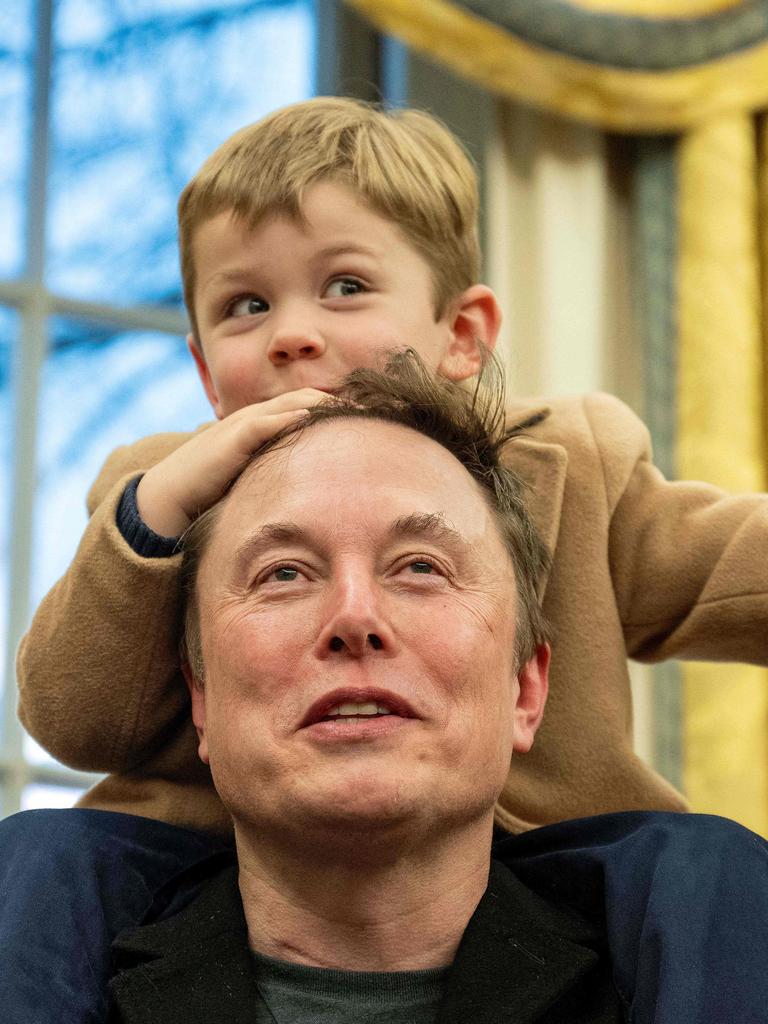
A seemingly cute photograph of Elon Musk’s young son has sparked a much larger conversation about childhood, power, politics, and the strange way public life now turns even private family moments into viral images.
At first glance, the images appear harmless. Musk’s son, X Æ A-Xii, often called Lil X, has been seen beside his father in high-profile settings — sitting in official rooms, appearing near political figures, joining public events, and standing close to cameras while adults discuss government, technology, and power. For many supporters, the sight is sweet: a young child spending time with his father, tagging along in a world most people will never see.
But for critics, the pattern feels increasingly uncomfortable.
The concern is not simply that Musk is a father bringing his child to work. Many parents do that in ordinary ways. The issue is the type of spaces Lil X is being brought into. These are not quiet offices or private family rooms. They are political environments, media events, government-adjacent meetings, and highly visible public stages where every photograph becomes content and every small gesture can be dissected online.
Because Elon Musk is not just any parent. He is one of the most powerful businessmen in the world, deeply involved in technology, social media, artificial intelligence, space infrastructure, and political debate. When his child appears beside him in elite political spaces, the image immediately takes on meaning far beyond a normal father-son moment.
Lil X, whose mother is musician Grimes, has appeared with Musk in settings involving influential political and public figures. He has been seen around major media personalities, government-connected events, and powerful leaders. In some cases, he has appeared in environments where the discussions are serious, ideological, or deeply political — far removed from what most people would consider a normal childhood setting.
That contrast is what makes the public reaction so divided. On one side, there is the emotional appeal of a father keeping his child close. Musk has often shown that he likes bringing his children into his world, whether at company offices, public interviews, or major events. Supporters see this as evidence that he wants his son to experience life with him rather than being hidden away from his work.
On the other side, there is a more complicated question: when does a child’s presence become part of a public image strategy, whether intentional or not?
Children of powerful people have always attracted attention. American presidents, royal families, celebrities, and billionaire founders all face public curiosity about their families. But there is a difference between occasional family visibility and repeated appearances in politically charged environments. A child may not understand the meaning of the setting, the people in the room, or how their image will be used online.
That is why some observers describe the situation as “weird” or “uncomfortable.” Not because the child has done anything wrong, but because he is being placed inside adult power spaces before he is old enough to understand them. A preschool-aged child cannot consent to becoming part of a political image, a viral clip, or a symbolic moment in a billionaire’s public narrative.
The situation also reflects a broader change in modern media culture. In earlier generations, public figures had more control over which family moments became public. Today, every image can be reposted instantly, turned into memes, interpreted politically, and used by supporters or critics to make a point. A child standing quietly beside a famous parent can become a headline within minutes.
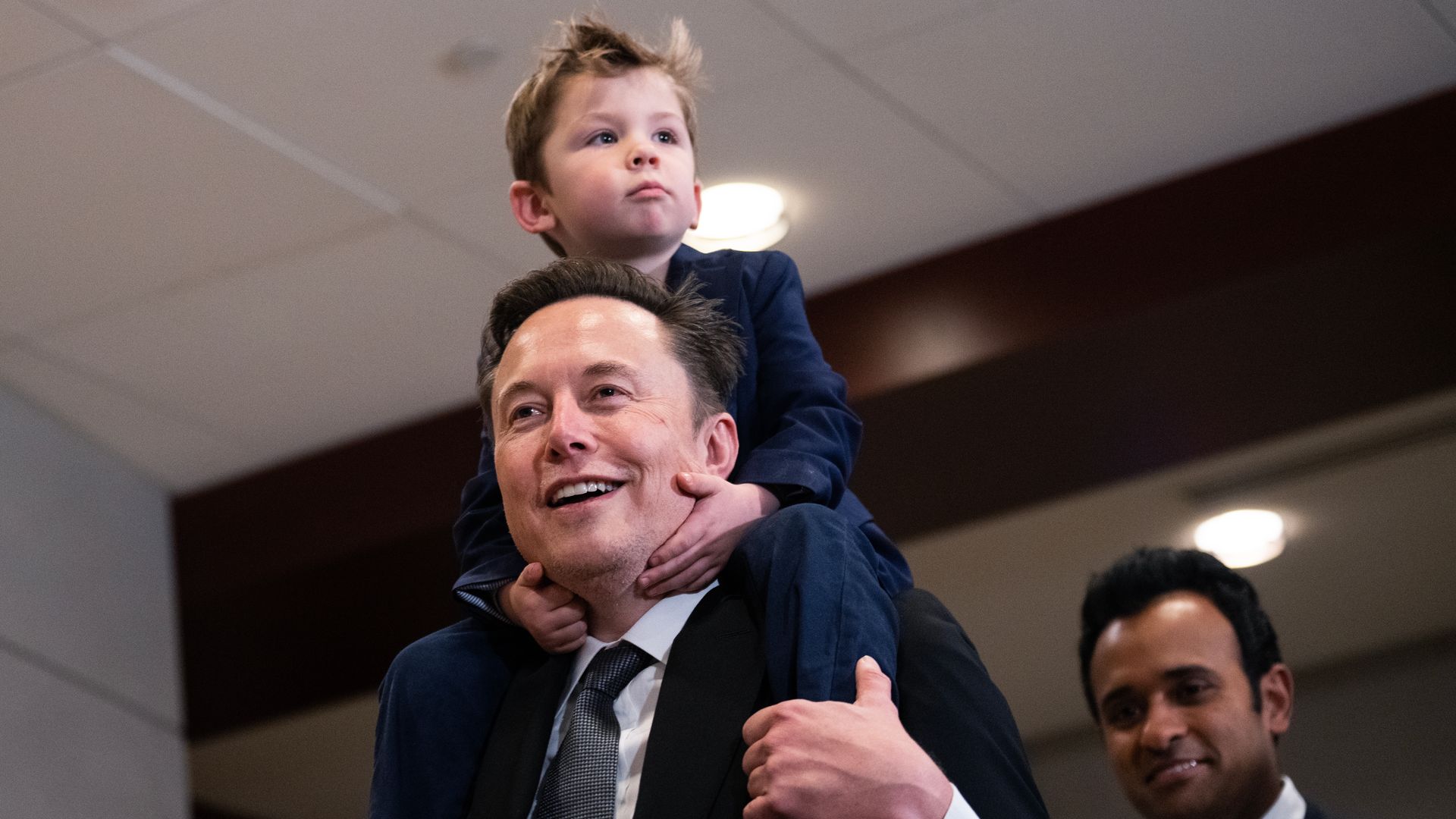
With Musk, that effect is even stronger. His every move is watched by fans, critics, investors, journalists, and political commentators. If his son appears beside him, the child becomes part of that attention cycle, whether anyone intended it or not.
There is also the question of what kind of environment is appropriate for a young child. Political gatherings, high-pressure interviews, government offices, and ideological events are not neutral spaces. They are filled with adults trying to influence policy, shape public opinion, and project power. When a child appears in those settings repeatedly, people naturally begin to ask whether childhood is being protected or absorbed into the machinery of public life.
For Musk’s defenders, the criticism may seem unfair. They might argue that plenty of parents bring children to work, and that Musk simply wants to remain close to his son despite an intense schedule. In that view, the photos show affection, not exploitation. A busy father spending time with his child should not automatically be treated as suspicious.
But critics would respond that context matters. A child at a parent’s workplace is one thing. A child appearing in politically loaded, globally photographed spaces is another. The more often it happens, the harder it becomes to see it as accidental or purely private.
At the heart of the debate is a simple question: should children of powerful public figures be kept away from political spectacle until they are old enough to choose visibility for themselves?
There may be no easy answer. Musk has the right to parent as he sees fit, and public figures have always struggled to balance family life with visibility. But the discomfort many people feel comes from the sense that Lil X is being pulled into a world of power, branding, and politics long before he can understand what it means.
What began as a cute father-son photo has therefore become something larger. It is now part of a broader conversation about children in public life, the boundaries of parental visibility, and how modern celebrity politics turns even family moments into strategic images.
In the end, the photograph may still look sweet to some people. A small child beside his father will always carry emotional appeal. But when that father is Elon Musk, and the backdrop is not a playground or a family home but the center of political influence, the image becomes much harder to read as innocent.
That is the real problem. The child may simply be being a child. But the adults around him are standing in rooms where every image has power — and that is why so many people are no longer sure whether these moments are adorable, uncomfortable, or both.