The first thing Malcolm Reed noticed was not the firewood.

It was the boy’s smile.
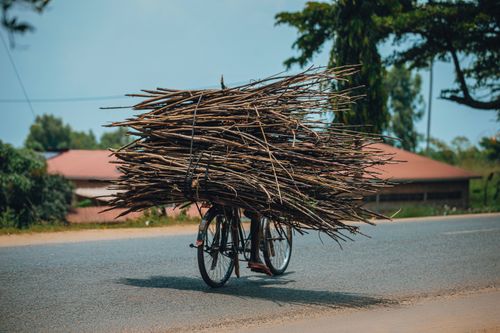
From the second-floor balcony of Hollow Creek Farm Mansion, Malcolm watched a rusted bicycle wobble up the long gravel road that cut through the estate. The bicycle was so overloaded with chopped wood that the back tire looked nearly flat. A rope held the pile together, though several logs bounced dangerously with every turn of the wheel.
The boy pushing it could not have been older than twelve.
His shirt was dark with sweat. His shoes were covered in mud. His thin arms trembled each time the bicycle rolled backward on the hill.
And yet he was smiling.
Not the carefree smile of a child enjoying a summer afternoon.
It was the determined smile of someone pretending the weight was not crushing him.
Malcolm lowered the coffee cup in his hand.
“Who is that?” he asked.
Beside him, the farm foreman, Walter Briggs, leaned over the balcony rail.
“That’s Isaiah Brooks,” Walter said. “Denise’s boy.”
Malcolm turned.
“Denise Brooks?”
“The housekeeper.”
Malcolm looked back toward the road.
Denise had worked for the Reed family for as long as he could remember. She had cleaned the mansion when Malcolm was a child, packed his lunches when his mother was sick, and stayed late after Christmas parties without ever complaining.
But Malcolm had never seen her son before.
Isaiah reached the top of the hill, swung one leg over the bicycle, and tried to steady the load.
The rope shifted.
Half the firewood spilled across the gravel.
The smile disappeared instantly.
The boy dropped to his knees and began gathering the logs with frantic speed, glancing toward the mansion as though he expected someone to come outside and punish him.
Something about that frightened Malcolm more than the sight of the boy struggling up the hill.
He set down his coffee and walked downstairs.
By the time Malcolm reached the front porch, Isaiah had already restacked most of the wood. He was pulling the rope tight with both hands when Malcolm approached.
“You need help?”
Isaiah spun around.
His eyes widened.
“Mr. Reed.”
Malcolm stopped.
“You know who I am?”
“Everybody knows who you are, sir.”
The answer was respectful, but not impressed.
Isaiah looked past Malcolm toward the house.
“Is my mom inside?”
“She is. I think she’s working in the laundry room.”
The boy’s shoulders loosened slightly.
Then Malcolm noticed the small metal box attached to the front of the bicycle. It was dented and covered in scratches. The lid had been secured with a rubber band.
“What are you doing with all this wood?” Malcolm asked.
“Selling it.”
“To whom?”
“People around town. Some buy a bundle for fireplaces. Mr. Collins buys more for his smokehouse.”
“You cut it yourself?”
Isaiah nodded.
“After school.”
Malcolm glanced at the pile. “That’s a lot of work.”
“It’s okay.”
The smile returned, but now Malcolm could see what it was hiding.
Exhaustion.
Isaiah opened the metal box and took out a folded stack of dollar bills, along with several quarters and dimes.
“I made forty-three dollars today,” he said. “That’s more than yesterday.”
Malcolm looked at the money.
“What are you saving for?”
The boy hesitated.
Then he reached into his backpack and removed a white envelope. The corner bore the blue logo of St. Matthew Regional Hospital.
Isaiah handed it to him.
“My mom needs medicine for her heart.”
The words were simple.
Too simple.
Malcolm opened the envelope.
Inside was a treatment summary, a list of prescriptions, and a notice marked PAST DUE. The amount owed was several thousand dollars. Another page referred to additional testing and a possible surgical consultation.
Malcolm read it twice.
“Does Denise know you have this?”
Isaiah looked down.
“She thinks I found it by accident.”
“Did you?”
“No, sir.”
Malcolm folded the papers carefully.
“Why didn’t she ask me for help?”
“She doesn’t ask people for things.”
The answer came quickly, almost defensively.
“She said everybody has their own problems. She said we just have to work harder.”
Malcolm glanced again at the bicycle, the mud on the boy’s knees, and the coins in his hand.
“How long have you been selling firewood?”
“Three months.”
“And how much have you saved?”
Isaiah opened the metal box wider.
There were more folded bills beneath the loose change.
“Two hundred and eighty-six dollars.”
Malcolm’s chest tightened.
The prescription alone cost more than that each month.
Isaiah studied Malcolm’s face.
“Is it enough for some of it?”
Malcolm did not answer.
The boy’s fingers closed around the coins.
“I can work more on weekends,” he said quickly. “And Mr. Collins said he might pay extra if I split the logs smaller. I’m good at it now.”
Malcolm looked at the hospital documents again.
Isaiah’s voice dropped.
“Mr. Reed?”
“Yes?”
“Do you think she’ll live long enough for me to save the rest?”
Before Malcolm could respond, the front door burst open.
One of the kitchen employees stood there, pale and breathless.
“Mr. Reed,” she said. “It’s Denise.”
Isaiah dropped the metal box.
Coins scattered across the porch.
“She collapsed.”
Isaiah ran before anyone else moved.
Malcolm followed him through the house, past the dining room and down the service corridor toward the laundry room.
Denise lay on the tile floor beside an overturned basket. Wet sheets were tangled around her legs. A bottle of detergent had spilled beside her, creating a blue puddle that slowly spread beneath the washing machine.
Her face had gone gray.
“Mom!”
Isaiah slid to his knees and grabbed her hand.
“Mom, wake up. Please wake up.”
Malcolm reached for his phone.
Denise’s pulse was weak and irregular.
Isaiah pressed his forehead against her arm.
“I told you to rest,” he whispered. “I told you I could finish the clothes.”
Malcolm called for an ambulance, but Isaiah seemed unable to hear anything around him. He kept repeating the same words, each time more desperately.
“I told you to rest.”
When the paramedics arrived, they placed oxygen over Denise’s face and lifted her onto a stretcher.
Isaiah climbed into the ambulance without asking permission.
Malcolm followed in his car.
At St. Matthew Regional Hospital, Isaiah sat in the waiting room with his elbows on his knees and both hands clenched beneath his chin.
Malcolm sat across from him.
For the first time in years, Malcolm had no idea what to say.
He was used to solving problems with money.
A broken fence was replaced.
A failed crop was insured.
A damaged roof was repaired.
But looking at Isaiah, Malcolm understood that some problems became bigger when money arrived too late.
A doctor entered the waiting room nearly an hour later.
“Family of Denise Brooks?”
Isaiah stood so fast that the chair scraped across the floor.
“I’m her son.”
The doctor looked at Malcolm.
“I’m her employer,” Malcolm said.
The doctor crouched slightly so he could speak directly to Isaiah.
“Your mother is stable right now. But her heart is very weak. She has a condition that requires regular medication and close monitoring.”
Isaiah nodded slowly.
“She has medicine.”
The doctor’s expression changed.
“When was the last time she took the full prescribed dose?”
Isaiah stared at the floor.
“I don’t know.”
“Isaiah,” Malcolm said gently.
The boy swallowed.
“She breaks the pills in half.”
The waiting room became very quiet.
“She said they would last longer that way,” Isaiah continued. “Sometimes she skips them. She tells me she already took one, but I check the bottle.”
The doctor stood.
“That is extremely dangerous.”
“I know,” Isaiah whispered.
Malcolm looked at the physician.
“Why would she do that?”
Isaiah answered before the doctor could.
“Because of my school.”
Malcolm turned toward him.
The boy rubbed his sleeve across his eyes.
“My school raised the fees this year. Mom said I couldn’t leave because I won a scholarship for part of it. She said if I stayed there, I could get into a good college.”
He took a breath that shook in his chest.
“She said medicine only keeps her alive. School gives me a life.”
Malcolm looked away.
Two weeks earlier, he had approved a thirty-eight-thousand-dollar renovation to the horse stable because he disliked the old brass fixtures.
Denise had been cutting heart medication in half.
The realization landed with the force of an accusation.
Several hours later, Denise regained consciousness.
When Isaiah was allowed into her room, he rushed to the bedside.
Denise opened her eyes slowly.
Her first words were barely audible.
“Why aren’t you in school?”
Isaiah froze.
Then his face crumpled.
“Mom, you almost died.”
Denise tried to lift her hand. Isaiah caught it and held it against his cheek.
“You can’t keep doing this,” he said. “You can’t keep saying you’re fine.”
“I am fine.”
“No, you’re not.”
Malcolm stood near the door, listening.
Isaiah reached into his backpack and pulled out the hospital envelope.
“I know about the medicine. I know about everything.”
Denise stared at the papers.
Then she looked at Malcolm.
Shame moved across her face.
Not shame about being sick.
Shame about being seen.
“I’m sorry, Mr. Reed,” she said. “I’ll return to work as soon as the doctor allows.”
Malcolm could hardly believe what he had heard.
“You collapsed on my floor, and you’re apologizing for missing work?”
Denise looked toward the window.
“I need the hours.”
Malcolm stepped closer.
“Why didn’t you tell me?”
Her eyes stayed on the window.
“Because I wasn’t hired to bring my troubles into your house.”
“You’ve worked for my family for twenty-six years.”
“That doesn’t make my bills your responsibility.”
Isaiah gripped her hand harder.
“Mom.”
Denise finally looked at her son.
The strength left her expression.
“I just wanted you to finish school.”
Isaiah bowed his head over the hospital bed and cried.
Denise was discharged two days later with strict instructions to rest and return for further testing.
Malcolm insisted on driving them home.
When he asked for the address, Isaiah said he could give directions instead.
Denise quietly told him the truth.
They lived eleven miles beyond the south edge of town, where the paved road ended and the ground turned to dirt.
Their house was smaller than Malcolm’s equipment garage.
A blue tarp covered half the roof. The porch leaned away from the front door. One window had been patched with cardboard and clear tape.
Inside, the refrigerator held a carton of eggs, half a loaf of bread, and a bottle of water.
Past-due notices were stacked beneath a chipped ceramic bowl on the kitchen table.
Yet in the corner of the living room stood a small desk.
It was spotless.
Textbooks were arranged by subject. Pencils were sharpened and lined up inside a tin cup. Above the desk, Isaiah had taped handwritten notes about engineering schools, scholarship deadlines, and entrance exams.
Malcolm picked up a notebook.
The pages were filled with drawings of bridges, water systems, and machines.
“You made these?” he asked.
Isaiah nodded.
“I want to build things that last.”
Malcolm closed the notebook carefully.
On the shelf beside him stood an old framed photograph.
His parents were in it.
They looked young, sunburned, and tired. Denise stood between them, wearing work gloves and holding a tray of sandwiches. Behind them was Hollow Creek Farm during one of its worst years.
Malcolm lifted the frame.
“I’ve never seen this picture.”
Denise sat slowly in a chair.
“That was during the drought.”
Malcolm remembered hearing about it. His father had nearly lost the farm before Malcolm was old enough to understand money.
“We were close to bankruptcy,” Malcolm said.
“Closer than anyone knew,” Denise replied.
She looked at the photograph.
“Your father stopped paying himself. Your mother sold jewelry. Several workers left when their wages came late.”
“But you stayed.”
Denise gave a faint smile.
“My husband and I had nowhere else to go.”
“That’s not what my father told me. He said the workers stayed because they believed in him.”
“Some did.”
“And you?”
Denise was silent for a moment.
“Your father had enough money one month to pay either the seasonal workers or the household staff. Most of those workers had children.”
Malcolm waited.
“I told him to pay them first.”
“You worked without pay?”
“For a while.”
“How long?”
“Nearly five months.”
Malcolm stared at her.
Denise spoke as if she were describing ordinary weather.
“My husband repaired fences in exchange for food. Your mother watched Isaiah’s older sister when I worked late. We helped each other. That was how people survived then.”
Malcolm looked again at the photograph.
“My father never told me.”
“He was proud. And ashamed.”
Denise’s eyes moved toward Malcolm.
“When the farm recovered, he promised I would always be treated like family.”
The room fell silent.
Malcolm felt the weight of the words.
His parents had died within three years of each other. After Malcolm inherited Hollow Creek, he modernized the business, hired managers, expanded the estate, and moved most employee matters into payroll systems and administrative reports.
Denise had become a name on a spreadsheet.
A person who had worked without pay to keep his family’s farm alive had been left to choose between heart medicine and her son’s education.
Malcolm set the photograph down.
“Why didn’t you remind me?”
Denise’s voice remained calm.
“Promises only mean something when people remember them on their own.”
There was no anger in her tone.
That made it worse.
The following morning, Malcolm received a call from Denise’s cardiologist.
The new test results showed significant deterioration. Medication was no longer enough.
She needed surgery.
Soon.
Malcolm returned to the house that afternoon. Denise was at the table sorting bills. Isaiah sat beside her, pretending to study while watching every movement she made.
Malcolm placed the medical report in front of her.
“The doctor says you need the operation.”
Denise did not touch the paper.
“No.”
Isaiah looked up.
“Mom.”
“No,” she repeated.
Malcolm pulled out a chair.
“The hospital can schedule it this week.”
“I said no.”
“The doctor says waiting could be fatal.”
Denise’s hands trembled slightly as she folded one of the bills.
“And the operation could be fatal.”
Isaiah closed his textbook.
“The doctor said it gives you a chance.”
“A chance is not a promise.”
“It’s better than doing nothing.”
Denise turned toward him.
“And if I don’t wake up?”
Isaiah opened his mouth, but no words came.
Denise’s voice broke for the first time.
“Who takes care of you then?”
“I can take care of myself.”
“You’re twelve.”
“I sell wood. I cook. I know how to pay bills.”
“You are twelve.”
The words came out sharper this time.
Isaiah looked down.
Denise reached for him, but he pulled his hand away and began crying silently.
Malcolm understood then.
Denise was not afraid of dying.
She was afraid of leaving Isaiah alive and alone.
He leaned forward.
“If something happens during the surgery, Isaiah will not be alone.”
Denise looked at him.
Malcolm continued.
“He will have a home. He will remain in school. His education will be paid for. He will have someone at every meeting, every graduation, every decision that matters.”
Denise’s eyes narrowed.
“You don’t have to say that.”
“I’m not saying it to make you feel better.”
Malcolm placed the old photograph on the table. He had taken it from the shelf earlier and put it in a new frame.
“My family made you a promise.”
Denise stared at the picture.
“I’m making another one.”
Isaiah stopped crying.
Malcolm looked directly at Denise.
“You protected my family when we were too proud to admit we needed help. You carried this place when it could not carry itself. And while I lived comfortably in the house you helped save, your son was pulling firewood uphill to keep you alive.”
Denise covered her mouth with one hand.
Malcolm’s voice lowered.
“I cannot change what I failed to notice. But I can decide what happens now.”
For a long time, Denise said nothing.
Then she looked at Isaiah.
He was watching her with red eyes and clenched fists.
“I need you to try,” he whispered.
Denise reached for him again.
This time he took her hand.
She nodded.
The surgery lasted nearly seven hours.
Isaiah sat beside Malcolm in the hospital waiting room, wearing the same mud-stained shoes he had worn on the day they met.
He did not speak.
Neither did Malcolm.
When the surgeon finally entered, Isaiah stood but seemed unable to breathe.
“The surgery went well,” the doctor said. “She is stable.”
Isaiah made a sound somewhere between a laugh and a sob.
Then he turned and threw his arms around Malcolm.
Malcolm held him without hesitation.
Across the waiting room, several nurses watched quietly.
No one there would have guessed that a week earlier, these two had been strangers separated by wealth, age, and the walls of a mansion.
Now they waited for the same woman to wake up.
Denise’s recovery took time, but it was steady.
Six weeks later, Malcolm drove her and Isaiah along a newly repaired road near the eastern edge of Hollow Creek Farm.
He stopped in front of a small white cottage.
The roof was new. The porch was level. Yellow flowers grew beneath the windows. Inside were two bedrooms, a bright kitchen, and a study desk placed beside a window overlooking the fields.
Isaiah stood in the doorway.
“Who lives here?”
Malcolm handed Denise a key.
“You do.”
She looked at him in disbelief.
“Malcolm—”
“It belongs to you. No rent. No debt.”
Denise stared at the key in her palm.
Isaiah ran to the second bedroom.
A moment later, he called out.
“Mom!”
They found him standing beside the new desk. His old engineering notebooks had been placed on the shelf. Above them hung a framed photograph of Denise with Malcolm’s parents.
Malcolm handed Isaiah an envelope.
The boy looked suddenly nervous.
“What is it?”
“A trust.”
Isaiah frowned.
“It means your school is covered,” Malcolm said. “All of it. Through college.”
Isaiah looked at his mother.
Denise sat down on the edge of the bed.
Tears slipped down her face.
Malcolm placed a hand on Isaiah’s shoulder.
“Your mother gave up almost everything to protect your future.”
He nodded toward the notebooks.
“Now your job is to use it.”
Isaiah looked at the envelope, then at Malcolm.
“I don’t know how to thank you.”
“You don’t have to.”
Isaiah stepped forward and hugged him.
This time Malcolm was ready.
Denise watched from the bed, holding the cottage key in one hand and the old photograph in the other.
Later that evening, Malcolm stood outside as the lights came on inside the cottage.
Through the window, he saw Isaiah arranging his books while Denise prepared dinner in a kitchen with a full refrigerator.
For years, Malcolm had believed wealth was measured by land, buildings, investments, and the number printed at the bottom of a financial statement.
But a twelve-year-old boy with a broken bicycle had shown him the truth.
Money could build bigger houses.
It could buy faster cars.
It could renovate a stable no horse had complained about.
But wealth became meaningful only when it lifted a burden from someone who had been carrying it alone.
And sometimes, the poorest person in the room is the one who has spent years giving more than anyone ever noticed.
Never wait until someone collapses before you finally see how much they have been carrying.