My Daughter-in-Law Said Old People Should Stay Quiet — So I Revealed Her Secret at Dinner
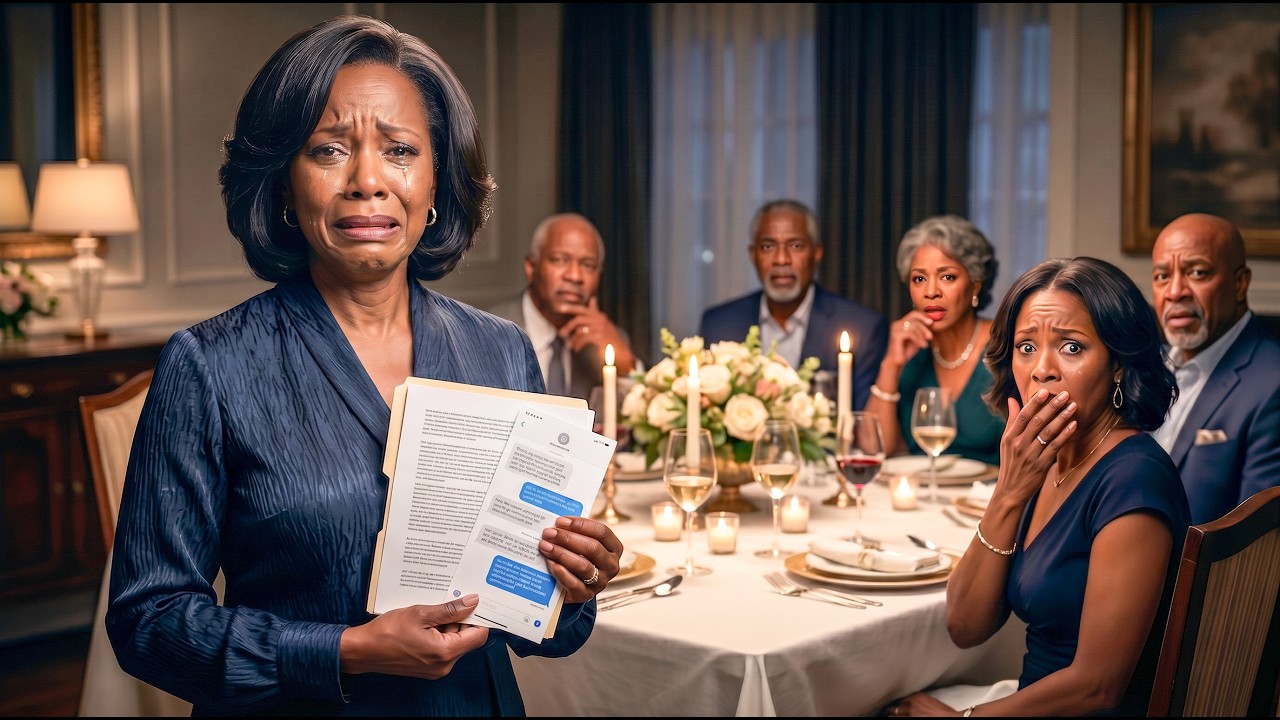
The room went silent when my daughter-in-law put down her fork and said it.
“Honestly, Sherry, sometimes old people should just learn to stay quiet.”
She didn’t whisper it.
She didn’t say it as a joke.
She said it in front of everyone.
The dinner table was full. My son Ethan was sitting beside her. My granddaughter Ava was across from me, still holding the glass of lemonade she had been drinking. Brittany’s parents were there too, along with her younger sister.
Six pairs of eyes turned toward me.
For a few seconds, I could hear nothing except the ticking clock on the wall.
Then someone gave a small, uncomfortable laugh.
The kind of laugh people make when they know something wrong has happened but they don’t want to be the one who admits it.
Ethan looked down at his plate.
That hurt more than Brittany’s words.
Because Brittany had been cruel to me before.
But Ethan had always been the person I believed would notice.
The person I believed would protect me.
I was 68 years old. I had buried my husband three years earlier, and since then, I had learned something important about people.
Sometimes the deepest wounds don’t come from strangers.
They come from the people you keep making excuses for.
My name is Sherry Chapman.
And for years, I convinced myself that keeping peace in my family was more important than defending my own dignity.
That night, I finally realized I had been wrong.
The Sunday dinner started like many family dinners before it.
I arrived at Ethan and Brittany’s house carrying the same apple-cinnamon bread I had made for years.
It was my husband Daniel’s favorite recipe.
After he passed away, I kept making it because it reminded me that some traditions could survive even after someone was gone.
Ava always waited for it.
The moment she saw me walking through the front door, she ran across the living room.
“Grandma!”
She wrapped her arms around me so tightly that I almost dropped the bread.
“You made the cinnamon one, right?”
I smiled.
“Of course I did.”
“That’s the best one.”
Those little moments were why I kept coming.
Because Ava was my heart.
She was ten years old, curious, kind, and still young enough to believe that family meant showing up for each other.
Unfortunately, not everyone in the house saw it that way.
Brittany stood near the kitchen island with a polite smile that never reached her eyes.
“Oh, you brought something again,” she said.
I looked down at the bread.
“I thought everyone would enjoy it.”
She nodded slowly.
“That’s nice. Although we’re trying to cut back on old-fashioned things around here.”
I knew exactly what she meant.
She didn’t mean the recipe.

She meant me.
For years, Brittany had made small comments that were easy to dismiss individually.
She would interrupt my stories halfway through.
She would roll her eyes when I offered advice.
She stopped asking about my life but expected me to know everything happening in hers.
If I called Ethan, she would sometimes answer and say, “He’s busy.”
But somehow, she always had time to tell me about the latest expensive purchase, vacation plan, or achievement she wanted everyone to admire.
At first, I told myself she was just different from me.
Not everyone expresses love the same way.
I told myself not to be sensitive.
I told myself family was worth patience.
But patience becomes dangerous when only one person is expected to practice it.
That evening, I noticed something different.
Brittany seemed unusually confident.
She was louder than usual.
She interrupted Ethan several times.
She corrected Ava when Ava spoke.
And every time I tried to join the conversation, Brittany found a way to move past me.
At one point, I mentioned how proud I was that Ava had started reading more books.
Before Ava could answer, Brittany sighed.
“Sherry, kids today don’t need advice from every generation.”
I smiled politely.
“I wasn’t giving advice. I was just saying I was proud of her.”
“I know,” Brittany replied.
Then she looked around the table.
“But sometimes older people don’t realize when they’re talking too much.”
That was when everyone became uncomfortable.
I looked at Ethan.
He heard it.
I know he heard it.
But he just picked up his glass and took a drink.
And that was the moment something inside me changed.
Not anger.
Not revenge.
Something quieter.
Something stronger.
I stopped trying to convince people to respect me.
I decided I would simply show them why they should have.
Because there was something Brittany didn’t know.
Something Ethan had never told her.
Something I had kept private for years.
The dinner continued.
Brittany talked about her new business idea.
She talked about how difficult it was managing people who “didn’t understand modern standards.”
She talked about how important success was.
Then she turned to me.
“So, Sherry, what have you been doing lately?”
The question sounded polite.
But everyone at the table knew it wasn’t.
It was the kind of question people ask when they expect the answer to be “nothing.”
I placed my fork down.
“I’ve been working on something.”
Brittany raised an eyebrow.
“Oh?”
“Yes.”
The room became slightly quieter.
I looked around the table.
“I’ve been organizing some old documents.”
Ethan suddenly looked up.
Because he knew what documents I meant.
Brittany smiled.
“Well, that sounds exciting.”
Her tone said the opposite.
I nodded.
“It actually is.”
Then I reached into my purse.
And placed a folder on the table.
The smile disappeared from Brittany’s face.
Not because she knew what was inside.
But because Ethan did.
“Mom,” Ethan said quietly.
I looked at him.
“You remember this, don’t you?”
He swallowed.
Brittany looked between us.
“What is that?”
I opened the folder.
Inside were copies of emails, financial records, and documents from six years earlier.
Before Brittany ever met Ethan.
Before their wedding.
Before anyone at that table knew the full story.
I looked directly at my daughter-in-law.
“You’ve spent a long time telling everyone that people like me don’t understand success.”
Brittany’s expression hardened.
“Sherry, I don’t know what you’re doing.”
“I’m reminding everyone of something.”
I turned the first page around.
“Six years ago, when Ethan lost his job and was struggling to pay his mortgage, he didn’t tell anyone because he was embarrassed.”
Ethan looked down.
“But I knew.”
The room was completely silent.
“I knew because I was his mother.”
Brittany’s face changed slightly.
“I used my retirement savings to help him.”
Ethan closed his eyes.
Because he remembered.
“I sold the house your father and I had lived in for 30 years,” I continued.
“I gave Ethan enough money to keep his home.”
Brittany looked confused.
“I thought the bank approved his loan.”
I nodded.
“They did.”
A pause.
“Because I paid the remaining balance.”
Nobody spoke.
Ava looked at me with wide eyes.
Ethan whispered, “Mom…”
I kept my voice calm.
“I never told anyone because I didn’t want gratitude. I didn’t want praise. I didn’t want my son to feel like he owed me something.”
I looked at Brittany.
“I just wanted my family to be happy.”
The silence that followed felt heavier than any argument.
Because the truth was no longer something anyone could ignore.
Brittany had spent years treating me like I was someone who had nothing to offer.
Like I was outdated.
Like my opinions had no value.
But the entire foundation of the life she enjoyed had once been held up by someone she considered insignificant.
Her confidence disappeared.
She stared at the papers.
Then at Ethan.
“Is this true?”
Ethan nodded slowly.
“Yes.”
His voice was barely above a whisper.
“Mom never wanted anyone to know.”
For the first time all evening, Brittany had nothing to say.
And everyone saw it.
Not just what she had done to me.
But what she had failed to recognize.
The woman she dismissed had quietly been the person who helped build the life she was so proud of.
Ava reached across the table and grabbed my hand.
“Grandma helped Dad?”
I smiled at her.
“Families help each other.”
She looked at Brittany.
“Then why was she not allowed to talk?”
Nobody expected that question.
But children have a way of saying what adults are too uncomfortable to admit.
Brittany’s face changed.
Her shoulders dropped.
The confidence she had walked into the room with was gone.
She looked around the table and realized nobody was defending her.
Not her parents.
Not Ethan.
Not even herself.
She finally looked at me.
And for a moment, I saw something I had never seen before.
Regret.
Not the fake apology people give when they are caught.
Real regret.
Her eyes moved to the bread sitting in the center of the table.
The same bread she had barely acknowledged when I arrived.
“I didn’t know,” she said quietly.
I nodded.
“No. You didn’t.”
That was all I said.
Because sometimes the most powerful response is not a speech.
It is allowing someone to sit with the truth.
After dinner, Ethan walked me to my car.
For a while, neither of us spoke.
Then he said the words I had waited years to hear.
“I’m sorry, Mom.”
I looked at him.
“For what?”
“For letting things happen.”
I didn’t answer immediately.
Because apologies are important.
But actions are what rebuild broken things.
“I don’t need you to choose between me and your wife,” I finally said.
“I need you to remember that respecting someone should never require choosing sides.”
He nodded.
And for the first time in a long time, I felt like my son actually heard me.
Things did not magically become perfect after that night.
Real relationships rarely work that way.
But something changed.
Brittany started calling more.
She started asking questions instead of making assumptions.
She apologized to me privately.
Not because she was forced to.
Because she finally understood.
Months later, Ava asked me a question while we were baking apple-cinnamon bread together.
“Grandma?”
“Yes?”
“Why didn’t you tell everyone what you did before?”
I smiled.
“Because doing something kind doesn’t make you better than anyone else.”
She thought about that.
“Then why did you tell them that night?”
I looked at her.
And I gave her the answer I wish I had learned years earlier.
“Because kindness does not mean allowing people to disrespect you.”
That dinner was never really about a piece of paper.
It was never about proving who had more power.
It was about something much simpler.
A person who had spent years being overlooked finally allowing the truth to be seen.
And sometimes, the people who are told to stay quiet are the ones carrying the stories that everyone needs to hear.