Ethan Walker smiled as he wrote his ex-wife’s name on the wedding invitation.
Not warmly.
Not with regret.
The smile was small, private, and cruel.
Vanessa Brooks.
He wrote the name slowly across the cream envelope, enjoying the shape of every letter.
The invitation itself had been custom printed on thick ivory paper, edged in gold, with Ethan and Sophia’s names embossed beneath the crest of the Grand Harrington Hotel.
Everything about it announced arrival.
Success.
Victory.
Six years earlier, Vanessa had been his wife.
Now, in Ethan’s mind, she was a witness he intended to summon.
He wanted her to enter the ballroom, see the flowers, the investors, the politicians, and the woman he had chosen after her.
He wanted her to understand what she had lost.
More than that, he wanted to watch her understand it.
At a rooftop bar later that evening, Ethan told his friends what he had done.
“You invited Vanessa?” one of them asked.
The men around the table laughed.
“She’ll probably show up in something from a department store clearance rack,” another said.
“Assuming she can afford the hotel parking.”
Their laughter rose above the music.
Ethan said nothing.
He took a slow drink and looked over the city.
To him, silence made the joke more elegant.
He had already built the story in his head.
Vanessa would arrive alone.
She would see how far he had risen.
She would realize that leaving his life had been the greatest mistake of hers.
What Ethan never considered was that Vanessa might no longer be standing where he had left her.
The invitation reached her three days later.
She was seated in a penthouse office overlooking the river, reviewing a security contract for a multinational energy company.
Two screens displayed risk maps.
A third showed staffing projections for offices in Atlanta, Dallas, and London.
Vanessa opened the envelope with a silver letter knife.
She read the invitation once.
Then again.
Her expression did not change.
On the corner of her desk sat a small velvet box.
She opened it.
Inside lay the wedding ring she had stopped wearing the day she discovered Sophia’s messages on Ethan’s phone.
Vanessa looked at the ring for several seconds.
Then she pressed the intercom.
Her assistant answered.
“Yes, Ms. Brooks?”
“Clear my Saturday.”
There was a pause.
“All of it?”
“All of it.”
Vanessa closed the box.
She was not going to the wedding to confront Ethan.
She was not going to reclaim anything.
She was going to close a door he apparently still believed he controlled.
Their marriage had lasted six years.
For most of that time, Vanessa held their life together while Ethan tried to become the man he imagined himself to be.
He launched businesses the way other people bought lottery tickets.
A delivery platform failed after nine months.
A consulting company lost its only client.
A luxury home app consumed their savings and never reached the market.
Each time, Ethan called the failure temporary.
Each time, Vanessa believed him.
She worked two jobs.
During the day, she handled administrative operations for a regional insurance firm. At night, she helped a private investigator organize case files and conduct background research.
When Ethan’s fourth company needed emergency capital, Vanessa sold her car.
She took the bus to work for eleven months.
Ethan told people an early investor had saved the company.
He never mentioned that the investor was his wife.
Vanessa also made calls.
She arranged introductions.
She persuaded a former employer to meet Ethan for lunch.
She connected him with an attorney who restructured his first major contract.
She introduced him to Raymond Holt, a private-equity executive who opened the door to three institutional clients.
Vanessa never asked for credit.
She believed marriage meant building something together even when only one name appeared on the building.
When Ethan finally closed his first major deal, Vanessa cried in the kitchen.
Not because of the money.
Because she was tired.
For years, she had been holding up a collapsing roof while Ethan kept promising the house would soon become a palace.
She thought the deal meant they could finally rest.
Ethan was already talking about expansion.
“We can become national,” he said, pacing the apartment. “Maybe international.”
Vanessa wiped her eyes.
“I’m proud of you.”
He barely heard her.
Success did not make Ethan grateful.
It made him revise history.
The introductions became evidence of his natural charisma.
The money Vanessa had provided became an early risk he had personally taken.
Her patience became passivity.
Her sacrifices became proof that she lacked ambition of her own.
As the company grew, Ethan stopped taking her to events.
At first, he said the dinners were technical.
Then he said they were too formal.
Later, he stopped offering reasons.
When someone asked about his wife, he introduced Vanessa with a hesitation that made her sound like an old obligation.
“This is Vanessa,” he would say. “She’s… kept things stable at home.”
The description erased every call, every payment, and every night she had spent repairing problems he had created.
One evening, after returning from a gala without her, Ethan loosened his tie and said, “You’ve become too comfortable with ordinary life.”
Vanessa looked up from the dining table.
“Ordinary?”
“You don’t understand the world I’m entering.”
She studied him.
The man standing in front of her looked physically familiar.
Everything else had shifted.
“I understand it better than you think.”
Ethan laughed.
“That world rewards people who know how to move forward.”
Vanessa closed the folder in front of her.
“One day, you’re going to understand the value of someone who stayed when there was nothing impressive to stay for.”
He dismissed the sentence as bitterness.
Years later, he would remember every word.
Vanessa discovered Sophia through a message that appeared on Ethan’s phone while he was showering.
It was not the first message.
It was simply the first one Vanessa saw.
Sophia wrote about a hotel room, a future, and how tired she was of waiting for Ethan to “finish the old chapter.”
When confronted, Ethan did not beg.
He did not deny it for long.
He spoke as though he were presenting quarterly results.
They had grown apart.
Their lives were moving in different directions.
Vanessa no longer fit the future he was building.
His friends helped him refine the story.
“She was there for the struggle,” one told him, “but that doesn’t mean she belongs in the next phase.”
Another described Vanessa as “an important early chapter.”
Ethan liked that phrase.
A chapter could be closed.
A chapter did not require gratitude.
Vanessa signed the divorce papers without a public argument.
She did not call Sophia.
She did not expose Ethan online.
She took what the settlement lawfully provided and left.
Outside the courthouse, she stopped beneath the stone columns.
For years, she had believed the end of her marriage would feel like failure.
Instead, she felt clarity.
Ethan had not ended her story.
He had simply removed himself from the part he was no longer qualified to enter.
Brook Strategic Security began with one contract.
A manufacturing company needed help evaluating threats after a former employee made increasingly violent statements.
Vanessa had no conventional background in corporate security.
What she had was an unusual ability to read patterns.
She noticed shifts in language.
Contradictions in behavior.
The small difference between someone expressing anger and someone preparing to act.
Years of surviving Ethan’s moods had trained her to detect emotional changes before he spoke.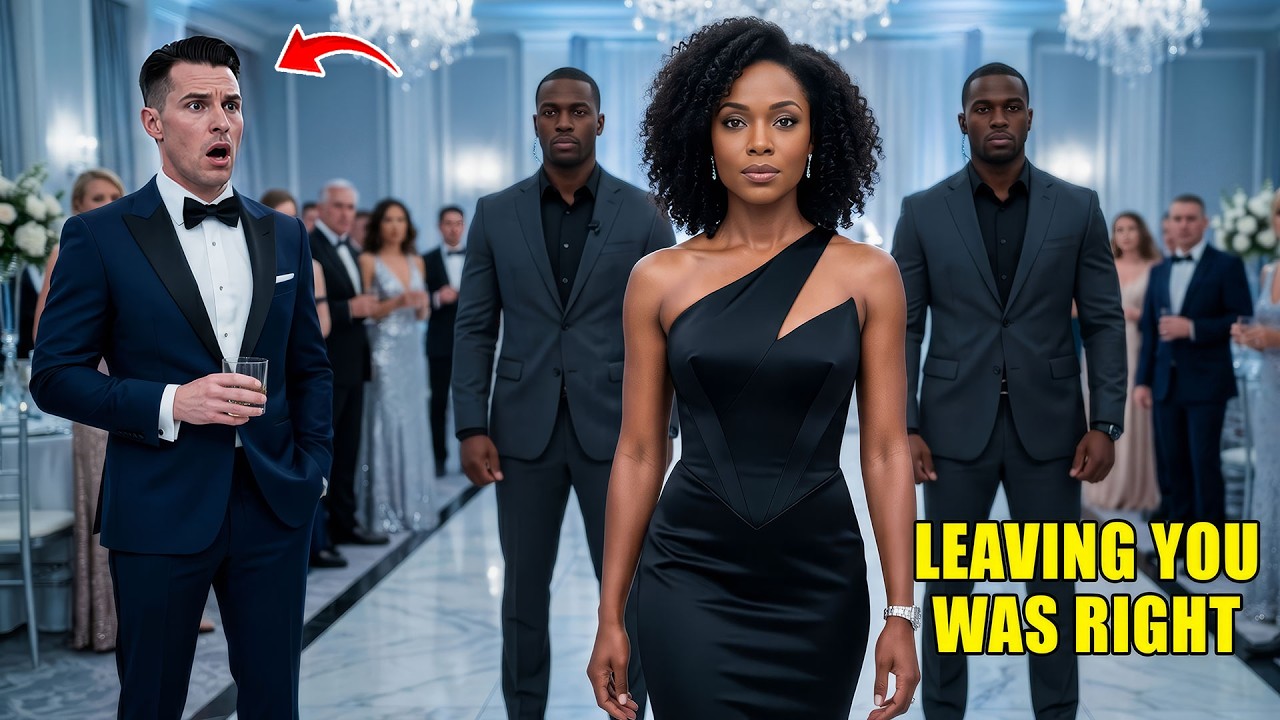
Years of cleaning up his business failures had taught her to find hidden vulnerabilities inside confident presentations.
What had once protected her at home became valuable in the market.
Her assessment prevented a serious incident.
The client referred her to another company.
One contract became four.
Four became sixteen.
Vanessa hired former intelligence analysts, investigators, cybersecurity specialists, and crisis negotiators.
She built Brook Strategic Security quietly.
The firm did not advertise broadly.
It did not need to.
Companies called after kidnappings, executive threats, data breaches, workplace violence, and internal fraud.
Governments hired Vanessa’s teams to protect sensitive infrastructure.
Boards trusted her with risks they did not want named in public.
Within five years, Brook Strategic had offices in five cities and clients in twelve countries.
Vanessa was not famous outside her industry.
Inside it, her name carried weight.
Ethan knew none of this.
He never searched for her company.
He never asked mutual acquaintances what she was doing.
In his version of the past, Vanessa remained exactly where he had placed her: ordinary, abandoned, and watching his success from a distance.
Two days before the wedding, Marcus Reed, Vanessa’s head of operations, entered her office.
He had worked beside her from the company’s first year and knew when she was hiding strain behind efficiency.
“You’re really going?” he asked.
“Yes.”
“You don’t owe him your presence.”
“I know.”
“Then why give it to him?”
Vanessa looked toward the invitation resting beside her computer.
“I’m not going for Ethan.”
Marcus waited.
“I spent years believing that marriage ended when the papers were signed,” she said. “Some things end legally before they end inside you.”
“And Saturday changes that?”
“Saturday closes the door.”
Marcus nodded slowly.
“Do you want security?”
Vanessa almost refused.
Then she considered the guest list.
Several Brook Strategic clients would be attending. Her arrival could create operational complications if she entered without coordination.
“Three vehicles,” she said. “Low profile.”
Marcus smiled faintly.
“For you, that is low profile.”
The Grand Harrington Hotel had been chosen because it looked expensive before anyone entered it.
Its front steps were white marble.
The ballroom ceiling rose three stories above imported roses and glass sculptures.
A pianist played beneath a staircase wrapped in flowers.
Guests included developers, bankers, public officials, and executives whose names regularly appeared in financial publications.
Ethan moved through them with the satisfaction of a man walking inside his own advertisement.
His tuxedo had been tailored in Milan.
His watch had a waiting list.
Every handshake confirmed the image he wanted the room to believe.
Sophia stood beside him in a gown designed specifically for the evening.
She was beautiful.
She was also uneasy.
For months, she had asked about Vanessa.
Not because she feared Ethan still loved her.
Because Ethan became strangely rehearsed whenever Vanessa’s name appeared.
“She was never ambitious,” he said once.
Another time: “She depended on me more than she admitted.”
When Sophia asked why the marriage had lasted six years, Ethan answered too quickly.
“Habit.”
There was a locked room in his history.
Sophia could feel it.
He simply refused to give her the key.
At seven-fifteen, three black SUVs turned into the hotel drive.
The first vehicle stopped beneath the entrance canopy.
A security officer stepped out and opened the rear door.
Vanessa emerged wearing a black evening gown with clean lines and no unnecessary decoration.
She did not dress to compete with the bride.
She did not need to.
Her presence carried the quiet assurance of someone accustomed to entering rooms where important decisions were made.
Marcus exited the second vehicle.
Two security professionals took discreet positions near the entrance.
The hotel manager appeared almost immediately.
“Ms. Brooks,” he said, extending his hand. “It is an honor. We weren’t informed you would be attending.”
“I’m here as a guest.”
“Of course.”
Inside the ballroom, conversations began to shift.
A defense contractor recognized her first.
Then a banking executive.
Within minutes, the question moved through the room.
Is that Vanessa Brooks?
The Vanessa Brooks?
Ethan saw heads turning toward the entrance.
He followed their attention.
For several seconds, he did not recognize her.
Not because she looked completely different.
Because she no longer carried herself in relation to him.
During their marriage, Vanessa had entered rooms anticipating his needs.
Now she entered as though the room itself would have to determine how to meet hers.
Sophia watched Ethan’s expression.
“You said she was struggling.”
Ethan recovered quickly.
“She probably works for one of the guests.”
Then Raymond Holt crossed the ballroom toward Vanessa.
Raymond rarely approached anyone first.
He was in his late sixties and had spent decades deciding which companies received capital and which disappeared.
He embraced Vanessa warmly.
“I was hoping you’d attend the Geneva forum next month,” he said.
“My schedule may allow it.”
“I want you on the infrastructure security panel.”
“We can discuss it.”
Raymond turned and noticed Ethan watching.
He raised one eyebrow.
Then he approached him.
“You invited her?”
Ethan forced a smile.
“Of course. We were married.”
Raymond studied him.
“Do you know who that woman has become?”
Ethan glanced toward Vanessa.
“She runs some consulting firm.”
“Brook Strategic Security.”
“I’ve heard the name.”
“No,” Raymond said quietly. “You’ve heard sounds. You clearly don’t understand the name.”
Across the ballroom, Vanessa was speaking with a group of executives in the language of risk, international operations, and crisis management.
No one was indulging her.
They were listening.
Raymond looked back at Ethan.
“She protects people whose names you would recognize and facilities you are not authorized to know exist.”
Ethan’s smile weakened.
“She always was good at organizing things.”
Raymond stared at him.
“You still don’t know, do you?”
“Know what?”
Raymond did not answer.
He returned to Vanessa.
During dinner, he asked her about the early years after the divorce.
Their conversation eventually moved further back.
“I still remember that introduction you arranged,” Raymond said.
 Vanessa gave a small smile.
“For Ethan?”
“To me. He has called it a chance meeting in at least three interviews.”
“I never corrected him.”
“You also persuaded Monroe Capital to review his proposal.”
“He needed an opportunity.”
“And the manufacturing contract?”
“I knew the owner.”
Raymond leaned back.
For years, he had believed Ethan possessed an extraordinary ability to create relationships.
Now he understood that many of those early doors had been opened by Vanessa.
Ethan had not simply underestimated his wife.
He had mistaken her invisible labor for his own talent.
Before Raymond could respond, Gregory Fenn approached the table.
Gregory led a private lending group evaluating a major expansion proposal from Ethan’s company.
His expression was tense.
“Raymond, may I speak with you?”
“Now?”
“Now.”
They stepped aside.
Gregory lowered his voice.
“Our due-diligence team found undisclosed liabilities.”
“How serious?”
“Serious enough that the projections are meaningless.”
He explained that Ethan’s company had hidden debt through vendor agreements and short-term obligations recorded outside its primary balance sheet.
The expansion proposal depended on capital the business did not have.
More troubling, several disclosures appeared deliberately incomplete.
“Does Ethan know?” Raymond asked.
“He signed them.”
Across the room, Sophia stood near the floral arch and heard only fragments.
Undisclosed liabilities.
Structural insolvency.
Potential concealment.
She looked toward Ethan.
He was laughing with a group of guests, one hand resting around a champagne glass.
For the first time, she did not see confidence.
She saw performance.
The ballroom floor seemed to shift beneath her.
Ethan noticed Raymond and Gregory speaking privately.
He also noticed Vanessa at the center of a conversation that no longer included him.
The evening he had created to display his victory was moving beyond his control.
So he decided to reclaim it.
He crossed the ballroom while a quartet played near the staircase.
Guests watched him approach Vanessa.
He arranged his face into an expression of mature goodwill.
“I’m glad you came,” he said.
The sentence was loud enough for others to hear.
It was designed to make him appear generous.
Vanessa looked at him.
“I didn’t come for you, Ethan.”
The nearby conversations stopped.
His smile remained in place for one second too long.
“I assumed the invitation meant something.”
“It did.”
“What?”
“That I was ready to close the last door.”
Raymond stood.
He looked at Ethan without warmth.
“There are some things we need to discuss.”
Gregory joined him.
“My firm is suspending its participation in your expansion project.”
Ethan stared at him.
“On my wedding night?”
“The calendar does not change the financial facts.”
“What financial facts?”
Gregory’s expression hardened.
“The ones your company failed to disclose.”
Sophia moved closer.
“What is he talking about?”
Ethan ignored her.
“This is a misunderstanding.”
“It is an audit,” Gregory said. “Effective immediately.”
Around the room, investors began separating themselves from Ethan.
One checked his phone and stepped away.
Another whispered to an attorney.
A third left without saying goodbye.
The movement was quiet.
That made it more devastating.
Ethan turned toward Raymond.
“You’re taking her side?”
Raymond’s face showed disbelief.
“This is not a divorce argument. Your company appears financially unstable, and your disclosures may be false.”
“You had no problem with my company yesterday.”
“Yesterday, I did not have the report.”
Sophia looked at Ethan.
“You told me the expansion was fully financed.”
“It will be.”
“You told me there was no hidden debt.”
“There are complexities you don’t understand.”
Her face changed.
The words were familiar.
They were likely the same words he had once used against Vanessa.
Sophia stepped away.
“You should have told me.”
“Not now.”
“Yes,” she said. “Now.”
She removed her hand from his arm.
Then she walked past him.
Ethan called her name.
She did not stop.
The musicians gradually stopped playing.
Guests began leaving the ballroom.
Untouched champagne remained on the tables.
The flowers still stood in perfect arrangements, but the room no longer resembled a celebration.
Without the crowd’s attention, the expensive details looked strangely cold.
Ethan stood near the center of the floor.
His best man had disappeared.
Two investors were speaking with Gregory near the exit.
Sophia had gone upstairs with her mother.
Vanessa picked up her clutch.
Ethan turned toward her.
“You did this.”
She stopped.
“No.”
“You came here knowing what would happen.”
“I came because you invited me.”
“You spoke to Raymond.”
“He spoke to me.”
“You turned everyone against me.”
Vanessa looked around the emptying room.
“This was finished long before I arrived.”
Ethan’s face tightened.
“I built everything I have.”
Vanessa held his gaze.
“You built a story in which no one helped you.”
He looked away.
She continued.
“You believed that story so completely that you never noticed the people carrying the weight.”
Ethan lowered himself into a chair.
For the first time that evening, his posture did not belong to the groom, the founder, or the man who thought he had won.
He simply looked tired.
“Did you ever love me?” he asked.
Vanessa was silent for a moment.
“Yes.”
The answer seemed to wound him more than denial would have.
“Then how can you stand there like this?”
“Like what?”
“Like none of it matters.”
“It mattered for years.”
“Do you hate me?”
“No.”
He looked up.
Vanessa’s expression held no anger.
That frightened him.
“Hate would mean I was still arranging my life around you,” she said.
Ethan pressed his palms together.
“I didn’t know.”
“You chose not to know.”
“I didn’t know what you did for the company. I didn’t know what you became.”
“You did not want to know who I was when knowing required gratitude.”
He stared at the abandoned place setting beside him.
“What am I supposed to do now?”
Vanessa thought of the old apartment.
The bus rides.
The car she had sold.
The nights Ethan slept while she balanced bills at the kitchen table.
Once, she would have answered his question.
She would have built a plan.
Made calls.
Found a lender.
Connected him with the right person.
She would have tried to save him from the consequences of choices he refused to examine.
Not anymore.
“I learned something after our marriage ended,” she said.
“What?”
“You cannot keep rescuing someone who insists on calling the fall a victory.”
Vanessa turned toward the doors.
“Vanessa.”
She kept walking.
He called her name again.
She did not turn around.
Outside, Marcus opened the SUV door.
Vanessa paused beneath the hotel lights and looked back once at the windows above.
She did not feel triumphant.
She did not feel grief.
She felt finished.
The next morning, financial reports about Ethan’s company spread across business channels.
Lenders began reviewing their exposure.
Partners requested documentation.
The board announced an independent audit.
Sophia postponed the legal filing of the marriage certificate, then ended the relationship before the week was over.
Six weeks later, Ethan’s company entered restructuring.
Several divisions were sold.
The expansion collapsed.
Ethan stepped down as chief executive.
People described the decline as sudden.
It was not.
The collapse had been developing for years beneath declarations of success, just as the marriage had deteriorated beneath the appearance of ambition.
Vanessa returned to work on Monday.
At nine, she led a meeting on infrastructure protection.
At eleven, she reviewed an overseas risk assessment.
No one in the office asked about the wedding.
Marcus had made sure they would not.
That afternoon, Vanessa carried the velvet box from her desk.
She drove to the river alone.
The sky was pale, and the water moved slowly beneath the pedestrian bridge.
She opened the box.
The ring caught the light.
For years, she had kept it without fully understanding why.
It was not because she wanted Ethan back.
It was because part of her still carried the woman who had believed loyalty could teach another person how to become worthy of it.
Vanessa removed the ring and held it between two fingers.
Then she dropped it into the river.
There was no dramatic splash.
The water closed over it almost immediately.
Vanessa stood there for another moment.
Then she turned and walked back toward the city.
She had not destroyed Ethan’s life.
She had not stolen his wedding, his investors, or his future.
She had simply stopped holding up the version of him that could not stand on its own.
And sometimes the most powerful ending is not watching someone regret losing you.
It is reaching the point where their regret no longer has anything to do with the life you are building.