CHAPTER ONE — THE MAN WHO LOST EVERYTHING
The day I lost my job, I still went to help Mrs. Eleanor.
That was the part nobody understood.
Not my former boss.
Not my neighbors.
Not even my own son.
Everyone thought losing everything would make me selfish.
They were wrong.
Because when life takes away your title, your paycheck, and your reputation, the only thing left is the kind of person you actually are.
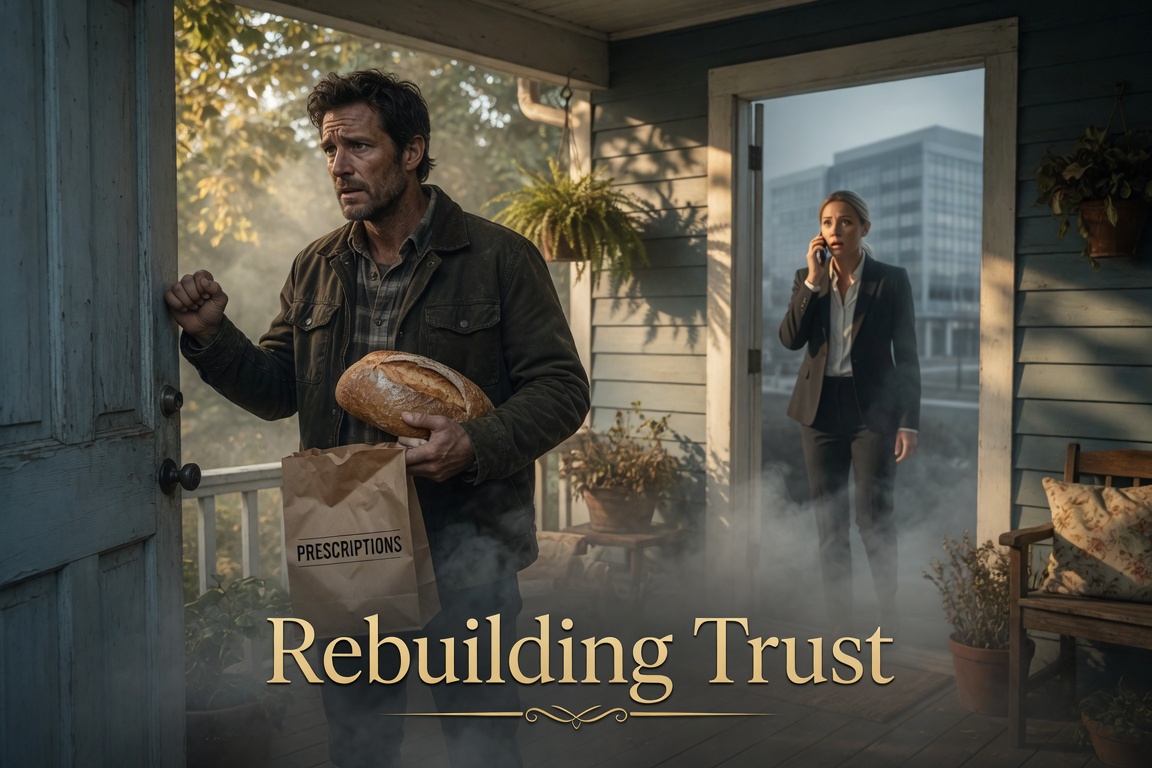
And I knew exactly who I wanted to be.
My name is Daniel Brooks.
I was forty-two years old when Sterling Innovations fired me.
Sixteen years.
That was how long I worked for that company.
Sixteen years of arriving before sunrise.
Sixteen years of fixing problems nobody wanted to admit existed.
Sixteen years of protecting a business that eventually decided I was no longer useful.
The meeting lasted seven minutes.
That was all.
Seven minutes to erase sixteen years.
My manager, Calvin Reed, sat across from me in his glass office overlooking downtown Boston. Behind him was the city skyline, the same skyline I had looked at thousands of times while working late nights.
He folded his hands.
“Daniel, this is difficult.”
That sentence should be printed on every termination letter.
This is difficult.
It never means the company is suffering.
It means they want to feel less guilty.
I looked at the folder on his desk.
My name.
My employee number.
My entire career reduced to paperwork.
“Why?”
Calvin sighed.
“We’re restructuring.”
I nodded.
“Meaning?”
“Leadership wants a different direction.”
Leadership.
Another word people use when they mean someone more connected.
I looked at him.
“Who is taking my position?”
He hesitated.
That hesitation answered before his mouth did.
“Marcus Vale.”
I almost laughed.
Marcus.
Thirty years old.
Three years with the company.
Excellent presentation skills.
Excellent networking skills.
Terrible technical knowledge.
But Marcus played golf with executives.
I fixed systems when executives were asleep.
Different skills.
Different worlds.
“I see.”
Calvin leaned forward.
“Daniel, this isn’t personal.”
I smiled slightly.
“That’s the problem.”
He frowned.
“What?”
“It should have been.”
He did not understand.
People like Calvin rarely understand that loyalty is personal.
When someone spends half their life building something, removing them is never just a business decision.
It is a human one.
I stood.
“Do I need to sign anything?”
He looked relieved.
That hurt more than losing the job.
Not anger.
Relief.
Like my acceptance made him feel better about what they did.
I signed.
Collected my things.
And walked out of Sterling Innovations carrying a cardboard box.
Inside:
A coffee mug my son made in elementary school.
A photograph of my late wife, Rachel.
A notebook filled with sixteen years of ideas.
And a small plant that had survived three different office renovations.
Funny.
The plant survived.
I didn’t.
At least, that was what everyone thought.
CHARACTER FILES
Daniel Brooks — 42
Former technology operations director, single father.
Appearance: Brown hair with early gray, tired eyes, practical clothing, calm expression.
Personality: Patient, humble, protective, disciplined.
Deep wound: After losing his wife Rachel, Daniel dedicated his life to raising his son and building stability.
Greatest fear: Failing his son after already losing his wife.
Secret desire: To be respected for who he is, not only what he provides.
Moral belief: Helping people matters even when nobody notices.
Greatest weakness: He accepts disrespect for too long.
Greatest strength: He remains compassionate under pressure.
Eleanor Whitmore — 79
Daniel’s elderly neighbor.
Appearance: Silver hair, elegant posture, warm eyes, always carrying herself with dignity.
Personality: Intelligent, stubborn, observant, kind.
Deep wound: After losing her husband and becoming isolated, she fears becoming invisible.
Greatest fear: Losing independence.
Secret desire: To know someone cares without needing anything from her.
Moral belief: Character appears when nobody is watching.
Weakness: She hides vulnerability.
Strength: She sees people clearly.
Calvin Reed — 55
Daniel’s former manager.
Appearance: Expensive suits, controlled expression, polished executive style.
Personality: Ambitious, careful, politically skilled.
Deep wound: Spent his career trying to prove he belonged among wealthy executives.
Greatest fear: Losing influence.
Secret desire: To be remembered as powerful.
Moral belief: Success requires difficult choices.
Weakness: He values approval over integrity.
Strength: Understands corporate systems.
Marcus Vale — 30
Employee who replaced Daniel.
Appearance: Confident, fashionable, energetic.
Personality: Charismatic, ambitious, insecure beneath confidence.
Deep wound: Feels he must prove he deserves success.
Greatest fear: Being exposed as unprepared.
Secret desire: Genuine respect.
Weakness: Confuses attention with ability.
Strength: Strong communication skills.
Olivia Sterling — 48
CEO of Sterling Innovations.
Appearance: Professional, composed, intimidating presence.
Personality: Strategic, intelligent, emotionally reserved.
Deep wound: Built her company after betrayal from former partners.
Greatest fear: Losing control of the company she created.
Secret desire: To find people she can trust.
Moral belief: Results matter, but character determines longevity.
Weakness: She often sees people as assets.
Strength: Exceptional judgment when she listens.
CHAPTER TWO — THE OLD HOUSE NEXT DOOR
Three days after losing my job, I knocked on Eleanor Whitmore’s door.
Not because I wanted sympathy.
Because her trash bins were still at the curb.
And Eleanor never left them there.
That was how I knew something was wrong.
Her house stood at the end of Maple Lane.
A beautiful old brick home built in the 1950s.
Large windows.
White curtains.
A garden that looked like someone had spent decades caring for every flower individually.
Rachel loved that house.
Before she died, she used to tell me:
“Some homes remember the people who live inside them.”
I never understood what she meant.
Until I saw Eleanor standing alone inside hers.
I knocked again.
A few seconds later, the door opened.
Eleanor appeared wearing a gray sweater and holding a cane.
“Daniel?”
“Hi, Eleanor.”
She looked behind me.
“Is something wrong?”
“No.”
I pointed toward the trash bins.
“I noticed they weren’t moved.”
She smiled.
“Are you checking on my trash now?”
“Only important matters.”
She laughed.
A real laugh.
“I’m fine.”
I nodded.
“Good.”
I turned to leave.
Then she said:
“Daniel.”
I looked back.
“Did something happen?”
The question caught me off guard.
Most people asked:
How is work?
Not:
Did something happen?
I forced a smile.
“No.”
Eleanor studied me.
She was old.
Not blind.
“Liar.”
I laughed quietly.
“I got fired.”
Her expression softened.
“Oh, Daniel.”
“It’s okay.”
“No.”
She shook her head.
“People say that when they don’t want others to worry.”
That sentence sounded exactly like Rachel.
I looked away.
“I’ll figure something out.”
Eleanor nodded.
Then she opened the door wider.
“Come inside.”
“I don’t want to bother you.”
“You are already standing in my doorway bothering me.”
I smiled.
“That’s fair.”
Inside, her house smelled like cinnamon, old books, and fresh coffee.
The living room was filled with photographs.
A younger Eleanor.
A man who must have been her husband.
Children.
Grandchildren.
A whole life.
“Your husband?”
I pointed toward one photo.
“Yes.”
“Still married?”
She smiled sadly.
“No.”
I nodded.
“Rachel passed five years ago.”
“I know.”
That surprised me.
“You do?”
“You talk about her.”
I smiled.
“I do?”
“More than you realize.”
The room became quiet.
Then Eleanor said:
“Daniel, can I ask you something?”
“Sure.”
“Why do you keep helping everyone?”
I looked confused.
“I don’t.”
She looked toward the repaired porch railing outside.
“The Johnsons’ fence.”
“The broken mailbox on Oak Street.”
“The old man whose car wouldn’t start last winter.”
I shrugged.
“They needed help.”
“That wasn’t my question.”
I looked at her.
She smiled gently.
“Why?”
I did not have an answer.
Because nobody had ever asked.
Finally, I said:
“Because my wife used to say something.”
“What?”
“She said you never know when someone’s worst day is happening.”
Eleanor looked down.
“That’s a beautiful thing to remember.”
I nodded.
Then I left.
The next morning, I fixed her broken kitchen cabinet.
The day after that, I repaired her garden gate.
The following week, I helped her organize old documents.
I did not do it because I expected anything.
I did it because helping people had always been easier than admitting I needed help myself.
CHAPTER THREE — THE WOMAN WHO OPENED THE DOOR
Three months passed.
My savings disappeared slowly.
Bills became more stressful.
Job interviews became more humiliating.
Every company wanted someone younger.
Cheaper.
Someone with “fresh energy.”
A phrase that usually meant:
Someone we can pay less.
Then one morning, my phone rang.
Unknown number.
I answered.
“Hello?”
“Daniel Brooks?”
“Yes.”
“This is Sterling Innovations.”
I almost hung up.
Then the voice continued.
“We need to speak with you.”
I laughed.
“You fired me.”
A pause.
“Yes.”
“So why are you calling?”
Another pause.
“Because we have a problem.”
Of course.
Problems always remember the people who solve them.
“What kind of problem?”
“Our infrastructure has failed.”
I looked out my window.
The city was covered in rain.
“Marcus?”
Silence.
That answered enough.
“He couldn’t fix it.”
“Daniel.”
“No.”
I was calm.
“I’m not coming back.”
“We’ll double your previous salary.”
“No.”
“Triple.”
I smiled.
“Still no.”
The person on the other end became frustrated.
“You understand the company is suffering?”
“Yes.”
“And you don’t care?”
I looked at Eleanor’s house across the street.
At her garden.
At the old woman who never knew my job title.
Only my name.
“I care.”
A pause.
“Then why?”
“Because when I was there, you didn’t need me.”
Silence.
“Now you do.”
I ended the call.
That afternoon, Eleanor invited me for tea.
When I arrived, a black luxury vehicle was parked outside her house.
I frowned.
I had never seen it before.
Inside, voices.
One familiar.
I opened the door.
And froze.
The woman standing in Eleanor’s living room was Olivia Sterling.
The CEO who fired me.
She turned.
Her expression changed.
“Daniel?”
I looked between them.
“Why are you here?”
Olivia looked uncomfortable.
For the first time, I saw something I never expected from her.
Uncertainty.
Eleanor smiled.
“Daniel, there is something you should know.”
I looked at her.
“What?”
She walked toward the table.
On it was an old photograph.
A younger Eleanor.
A younger Olivia.
Together.
My eyes narrowed.
“Eleanor?”
She sighed.
“I suppose the truth has waited long enough.”
Olivia looked at me.
“Daniel, my company didn’t just lose an employee.”
She paused.
“It lost the person who saved it.”
I said nothing.
Eleanor touched the photograph.
“Before Olivia became CEO, she was my granddaughter.”
The room went silent.
I looked at Olivia.
Then Eleanor.
Then back.
“What?”
Olivia lowered her eyes.
“My grandmother asked me to hide my identity when I joined Sterling.”
“Why?”
“Because she wanted to know who people respected when they thought nobody important was watching.”
I laughed once.
“That sounds like something Eleanor would do.”
It was.
Then Olivia looked at me.
“And she was right.”
A silence.
“Because you were the only person who treated her like a human being.”
The words landed.
Not because they surprised me.
Because I finally understood.
Eleanor had never needed a neighbor.
She had been watching.
Learning.
Testing.
And the woman who fired me had just opened her own door.
The same door behind which the truth had been waiting.
Olivia placed a folder on the table.
“Daniel, I owe you an apology.”
I looked at it.
“What is that?”
Her expression became serious.
“Proof.”
“Of what?”
“That your firing was never about performance.”
The room became still.
“Then why?”
Olivia looked at the folder.
“Because someone inside Sterling wanted you removed.”
I opened it.
The first document changed everything.
The signature at the bottom belonged to Calvin Reed.
And the reason written beside it was simple:
Daniel Brooks knows too much.
I looked up.
Olivia’s voice was quiet.
“Daniel, what did you discover before they fired you?”
And for the first time, I realized losing my job had never been the punishment.
It had been the warning.