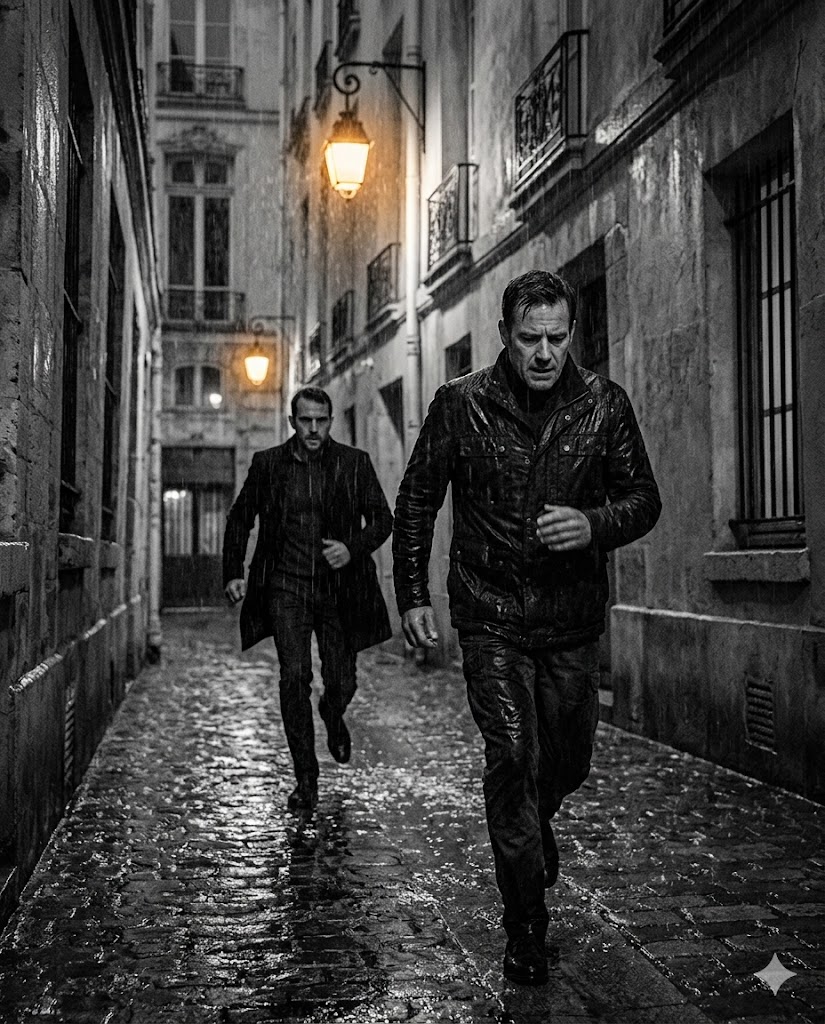
The rain was so heavy that night it almost drowned out the sound of the front gate closing.
Almost.
But I still heard it.
That cold, metallic sound of the iron gates of the Lawson estate locking behind me felt louder than anything I had ever heard in my life.
I stood outside in the darkness with nothing but the clothes I was wearing and an old backpack hanging from my shoulder.
No wallet.
No car.
No house key.
No family.
Just the sound of rain hitting the pavement and the realization that the man who was supposed to protect me had just thrown me away.
My father, Richard Lawson, had built an empire worth hundreds of millions of dollars.
To the world, he was a genius businessman. A respected CEO. A man who appeared on magazine covers and was invited to speak at universities about leadership and success.
People called him disciplined.
They called him brilliant.
They called him an inspiration.
But they never saw what happened behind the doors of our home.
They never saw that Richard Lawson measured love in achievements.
A perfect grade was expected.
A successful project was simply “what you should have done.”
A mistake was never a mistake.

It was a weakness.
After my mother passed away, the warmth in our house disappeared completely.
She had been the only person who could look at me without seeing a résumé, a bank account, or a future business opportunity.
She was the only person who ever told me:
“Your father wants you to become successful. But I want you to become someone you are proud to be.”
I carried those words with me for years.
Because no matter what I accomplished, I always felt like I was still waiting for my father to say one simple sentence.
“I’m proud of you.”
But that sentence never came.
Instead, every accomplishment became another comparison.
When I graduated near the top of my class, he asked why I wasn’t number one.
When I created a technology project that was later acquired by a larger company, he told me I should have built something bigger.
When I started investing quietly and building my own financial future, he said I was wasting my potential because I wasn’t joining his company.
To everyone else, I was Richard Lawson’s son.
At home, I was just another employee who had failed to meet the standard.
The night everything changed started like any other family dinner.
Except this time, almost everyone important was there.
My father had invited relatives, business partners, and close friends.
I thought maybe, finally, after years of trying, he wanted to celebrate something I had done.
I was wrong.
Halfway through dinner, Richard stood up and smiled.
“My son will be joining Lawson Enterprises as the new vice president,” he announced.
Everyone turned toward me.
People started clapping.
My father looked proud.
For a moment, I almost believed this was the moment I had been waiting for.
Then I realized something.

He wasn’t celebrating my choice.
He was announcing his.
I quietly placed my glass down.
“Dad, I appreciate what you’re offering. But I’m not going to take that position.”
The room went silent.
His smile disappeared.
“What did you say?”
“I want to build my own investment company. I’ve already started working on it.”
I expected disappointment.
Maybe an argument.
I never expected what happened next.
His face changed.
Not like a father who was hurt.
Like a CEO who had just been challenged.
“You’re turning down my company?”
“I’m choosing my own path.”
He laughed.
But there was no humor in it.
“Your own path? Everything you have came from this family.”
“That’s not true.”
Those four words changed everything.
My father pushed his chair back.
“You think you can stand on your own?”
I didn’t answer.
Because deep down, I knew something.
I had spent my entire life trying to prove I was worthy of his approval.
And I was tired.
“You’re just like your mother,” he said.
That sentence hurt more than I expected.
Not because it was an insult.
Because my mother was the person I respected most in the world.
“She filled your head with ideas about independence,” he continued. “She made you believe you didn’t need anyone.”
My relatives sat frozen.
Nobody defended me.
Nobody interrupted.
Nobody wanted to challenge Richard Lawson.
Then he pointed toward the door.
“If you think you can live without this family, then go.”
I stared at him.
Waiting.
Waiting for him to take it back.
Waiting for him to remember that I was his son.
He didn’t.
“Leave tonight.”
Those words were followed by the sound of my father’s security team walking toward me.
They escorted me outside.
My belongings were brought out in a small box.
Then the gates closed.
And I was alone.
I spent that night sitting on a wooden bench near the river.
The city continued moving around me.
Cars passed.
People laughed outside restaurants.
Buildings glowed with expensive lights.
And I sat there feeling like I had disappeared.
The strange thing was, I wasn’t thinking about money.
I wasn’t thinking about losing my room, my car, or the comfortable life I had grown up with.
I was thinking about one question.
Why wasn’t I enough?
Why had my father spent years teaching me how to succeed but never taught me that I was loved?
I reached into my old backpack and found the one thing I had kept hidden for years.
A small envelope from my mother.
She gave it to me shortly before she passed away.
She told me not to open it until I truly needed it.
Inside was a handwritten note.
“If life ever takes away everything you think defines you, remember this: nobody can take away what you have built inside yourself.”
I read that sentence over and over.
Because suddenly I remembered something.
I wasn’t actually starting from nothing.
My father thought he had taken away everything.
But he had only taken away the things that were visible.
For years, I had quietly followed my mother’s advice.
I invested carefully.
I built relationships.
I supported promising startups.
I invested in commercial properties and renewable energy companies.
I never told my father.
Not because I wanted to hide success from him.
But because I wanted something that belonged completely to me.
Not Richard Lawson’s son.
Not the heir to a business empire.
Just me.
By sunrise, I washed my face in a public restroom, bought a simple breakfast, and made one phone call.
A few hours later, a black sedan stopped in front of me.
The driver stepped out.
“Mr. Lawson?”
I nodded.
He opened the door.
“Your mother’s attorney has been waiting for this day.”
And suddenly, the life I thought had ended was about to begin.
The car drove away from the city and climbed higher into the hills.
I watched the streets disappear behind me.
The driver said almost nothing.
When we finally arrived, I thought we had stopped at the wrong place.
In front of me stood a massive Mediterranean-style mansion surrounded by gardens, old trees, and a breathtaking view of the ocean.
A place that looked like it belonged in a magazine.
The driver handed me a leather folder.
Inside were documents.
Property records.
Legal papers.
And a letter.
My mother’s handwriting.
My hands started shaking.
The attorney explained everything.
Years earlier, my mother had created a trust in my name.
She had invested money carefully and protected assets she believed would help me build an independent future.
But there was one condition.
I would only receive full control when I proved I could stand on my own.
She didn’t want me to inherit wealth before I understood responsibility.
She wanted me to become someone who could handle success without being controlled by it.
The house in front of me was legally mine.
The value?
Approximately $30 million.
I walked through the gates slowly.
Not because I was overwhelmed by the luxury.
Because I finally understood something.
The person who believed in me the most had been gone for years.
But she had been preparing for me all along.
Inside the mansion, I found another letter sitting on a grand piano.
I opened it.
And her words changed the direction of my entire life.
“My son,
Never use your success to make someone else feel small.
Money can build walls.
But kindness builds bridges.
Your father may teach you how to win.
I hope I taught you something more important.
How to remain human after you win.”
I sat there for a long time.
Because I realized something.
I had spent years imagining the day my father would regret hurting me.
But my mother never wanted me to become someone who needed revenge.
She wanted me to become someone who created something better.
So I made a decision.
I would not use that mansion as a trophy.
I would use it as a beginning.
Over the next few months, the Lawson estate became something nobody expected.
A section of the property became a scholarship center for students who had lost their parents.
Another area became temporary housing for families escaping dangerous situations.
Unused office spaces were opened for young entrepreneurs who had ideas but lacked resources.
The mansion that once represented wealth and privilege slowly became known as a place of opportunity.
People started asking who was behind it.
At first, I refused interviews.
I didn’t want attention.
I wanted results.
But eventually, the story spread.
The son of a famous businessman had been rejected by his own family.
Then, instead of destroying his father’s reputation, he used his success to help strangers.
The public knew Richard Lawson as a powerful businessman.
Now they knew me as something different.
Not a wealthy man.
Not an heir.
Someone who chose what kind of person he wanted to become.
Months later, my father came to the mansion.
The same gates that had closed behind me that rainy night opened again.
But this time, he stood on the other side.
He looked different.
Older.
Tired.
Smaller somehow.
The confidence that once filled every room was gone.
He looked around at the people walking through the property.
Students carrying books.
Families receiving help.
Young founders working on new ideas.
Then he saw me.
For a few seconds, neither of us spoke.
His eyes moved across the mansion.
Not at the expensive furniture.
Not at the ocean view.
At the people whose lives had changed.
And I watched something I never thought I would see.
Richard Lawson looked away.
His shoulders dropped.
The man who once believed he could control everything suddenly looked like someone who finally understood what he had lost.
“I was wrong,” he said quietly.
It was not a perfect apology.
It did not erase years of pain.
But it was the first honest thing he had ever given me.
I invited him inside.
Not because he deserved forgiveness immediately.
But because I refused to let anger control the rest of my life.
Forgiveness was not a gift to him.
It was freedom for me.
Years later, thousands of people would walk through those gates.
Children would receive opportunities they never thought possible.
Families would find safety when they had nowhere else to go.
Young entrepreneurs would build futures from ideas that once existed only on paper.
And everyone who visited that mansion learned the same lesson.
The greatest thing my mother left me was never the $30 million property.
It was the wisdom to understand that success is not measured by what you own.
It is measured by what becomes better because you were there.
My father thought he was throwing me away that night.
He thought he was removing everything that made me powerful.
But he was wrong.
The moment I lost the life he chose for me was the moment I finally found the life I was meant to build.
Sometimes, the door that closes behind you is not the end of your story.
Sometimes, it is the door that finally leads you home.