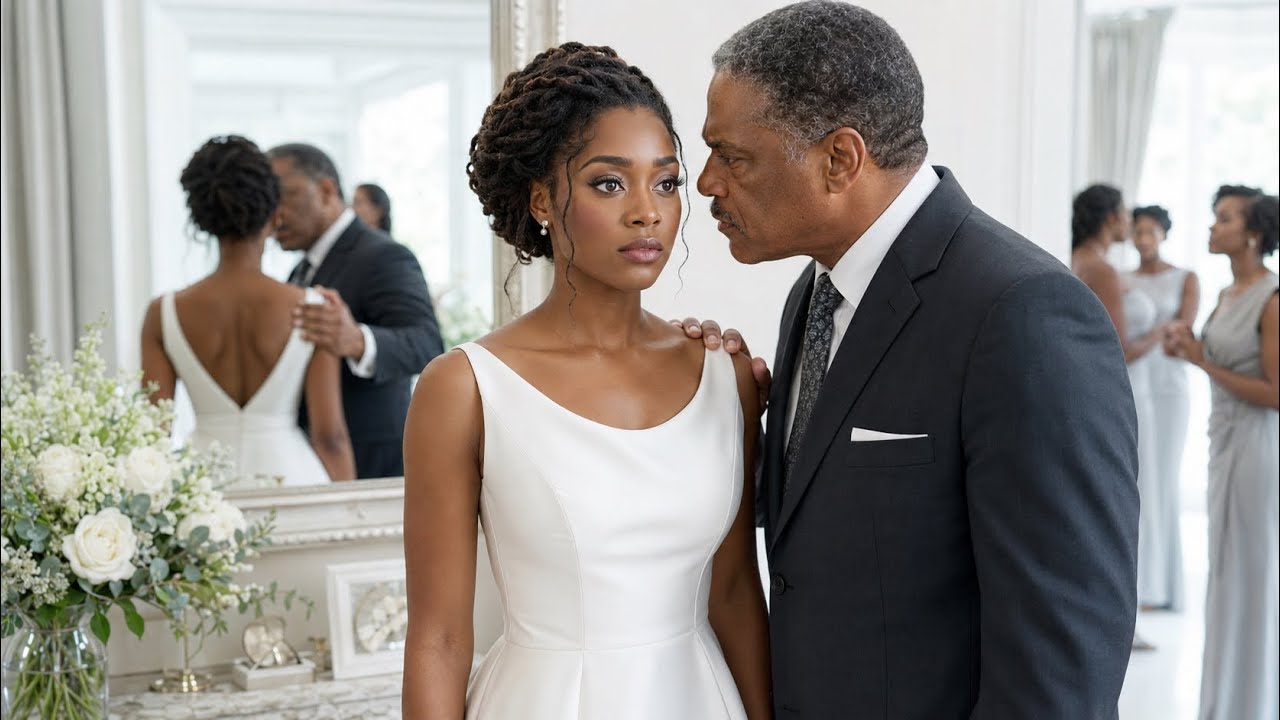
The morning Noel Hargrove got married, her father looked at her in a wrinkled bridesmaid dress and said, “Whatever happens today, don’t embarrass us.”
He did not say it quietly.
Her mother heard him. So did the makeup artist, the photographer, and Breanna—the younger daughter everyone had spent the morning calling beautiful.
No one corrected him.
Inside the Hargrove house, every room smelled of lilies, hairspray, and expensive perfume. Two daughters were getting married on the same day. Two grooms were expected. Yet anyone walking through the front door would have assumed there was only one bride.
Breanna’s gown had arrived from a designer boutique three cities away. Her veil had been steamed twice. Her makeup artist had been given a printed list of instructions from Mrs. Hargrove.
Noel’s dress had been ironed on the wrong setting.
A shiny burn mark ran down one side of the fabric.
When Noel pointed it out, her mother barely looked up.
“It’s not that noticeable.”
“It is when the light hits it.”
“Then don’t stand under direct light.”
Her mother turned back to Breanna and adjusted a pearl near her neckline.
“There,” she said, smiling. “Perfect.”
Noel watched the word settle over her sister like a crown.
Perfect.
Breanna had always been the daughter who belonged in photographs. She knew when to tilt her chin, when to laugh, and when to place a hand on their father’s arm so everyone could see how close they were.
Noel had spent most of her childhood somewhere else.
At thirteen, she had become seriously ill. The recovery took months, then years. Her parents said they could not manage her appointments while raising Breanna and maintaining their social obligations, so Noel went to live with her grandfather.
What was supposed to be temporary became nearly a decade.
Her grandfather’s house was small. The roof leaked during heavy rain. The kitchen table rocked unless a folded piece of cardboard was pushed under one leg.
But every morning, he asked Noel how she had slept.
Every evening, he waited for her before eating.
When he died, Noel returned to her parents’ large house and discovered that her bedroom had become a storage room.
Her family made space for her belongings.
They never made space for her.
On the wedding morning, the florist delivered two bouquets.
Breanna’s was full and dramatic, overflowing with white roses and orchids.
Noel’s was half the size.
Breanna held them side by side and gave Noel a sympathetic smile.
“Oh no,” she said. “Yours looks like the sample version.”
The room laughed.
Breanna immediately touched Noel’s wrist as though she had meant no harm.
“We can switch positions during the ceremony,” she offered. “You can stand closer to the center. I don’t mind.”
It sounded generous.
Everyone praised her for it.
But Noel knew what Breanna was doing. She was offering Noel a place no one had asked Noel whether she wanted, making herself look kind while reminding the room who had the power to give it.
“No, thank you,” Noel said. “I’m fine where I am.”
Breanna’s smile tightened.
Their father passed the doorway a few minutes later. Noel looked up, expecting him to stop.
He glanced at her dress, her smaller bouquet, and the loose strand of hair near her cheek.
“Remember,” he said, “you represent this family today.”
Then he walked into Breanna’s room and told her she looked like royalty.
The first groom arrived at eleven.
Devin Cole stepped out of a black luxury sedan wearing a fitted tuxedo and a watch Mr. Hargrove recognized from across the driveway.
Her father hurried outside to greet him.
Devin worked in commercial development. His family owned several properties downtown. He had the polished confidence of a man who had never been asked to wait near the service entrance.
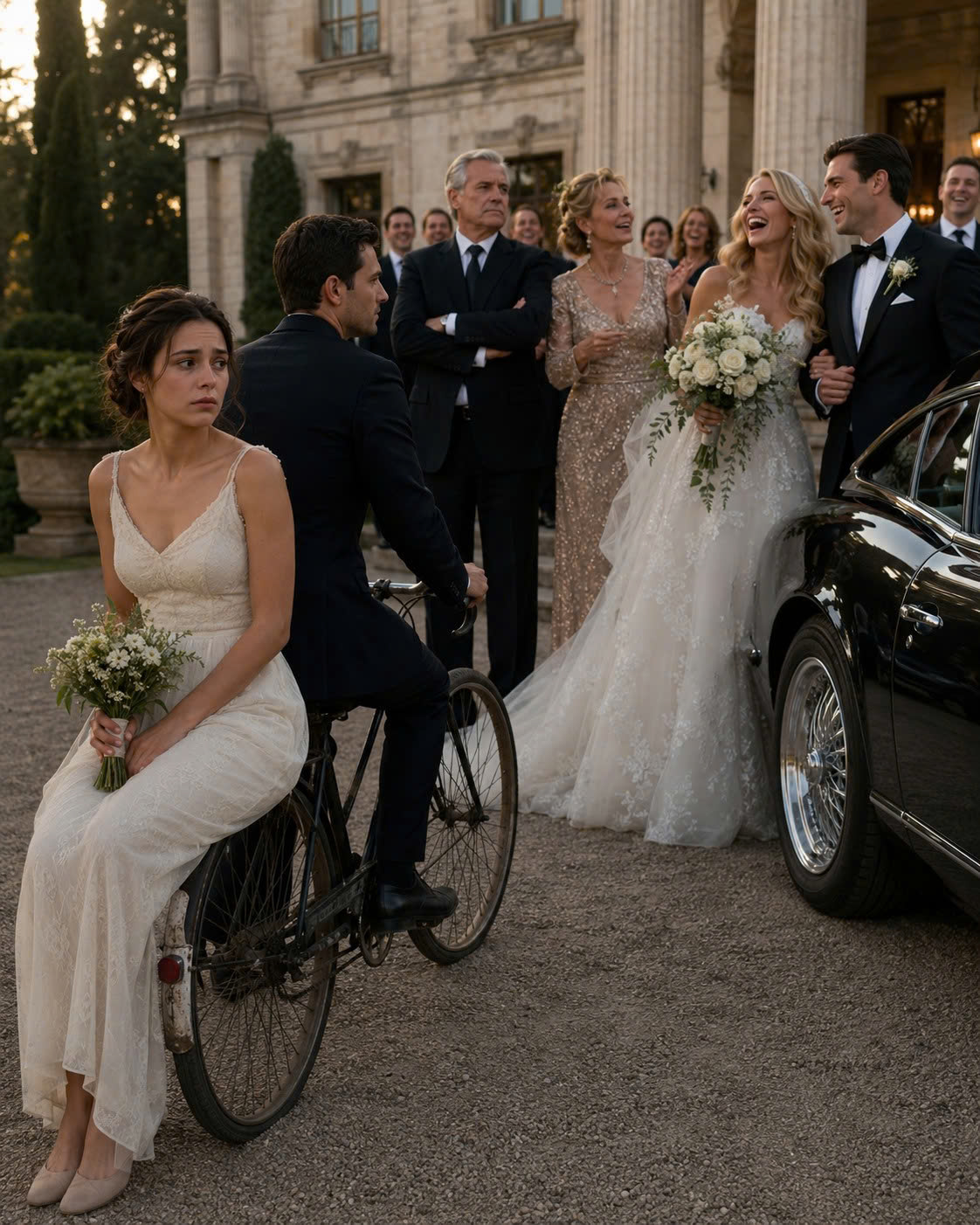
The second groom arrived seven minutes later.
On a bicycle.
Trey Morrow wore a clean dark suit, but the cuffs were slightly worn. His shoes were polished, though clearly old. He parked the bicycle beside the hedges and checked the paper bag tied carefully to the back.
Someone in the sitting room laughed.
Then another person did.
By the time Trey reached the front steps, nearly everyone had seen him through the window.
Devin lifted his champagne glass.
“Did the delivery guy get lost?”
Breanna covered her mouth, pretending to hide her amusement.
Noel’s father did not laugh. His expression was worse.
He took Noel by the elbow and pulled her into the hallway.
“You can still cancel this.”
Noel looked at him.
Only that morning, he had warned her not to embarrass them. Now he spoke as though he were granting mercy.
“You said the arrangements were final,” she replied.
“I didn’t know he would arrive like that.”
“Like what?”
“On a bicycle, Noel.”
She waited for him to mention Trey’s character, his work, or the way he had treated her during their brief courtship.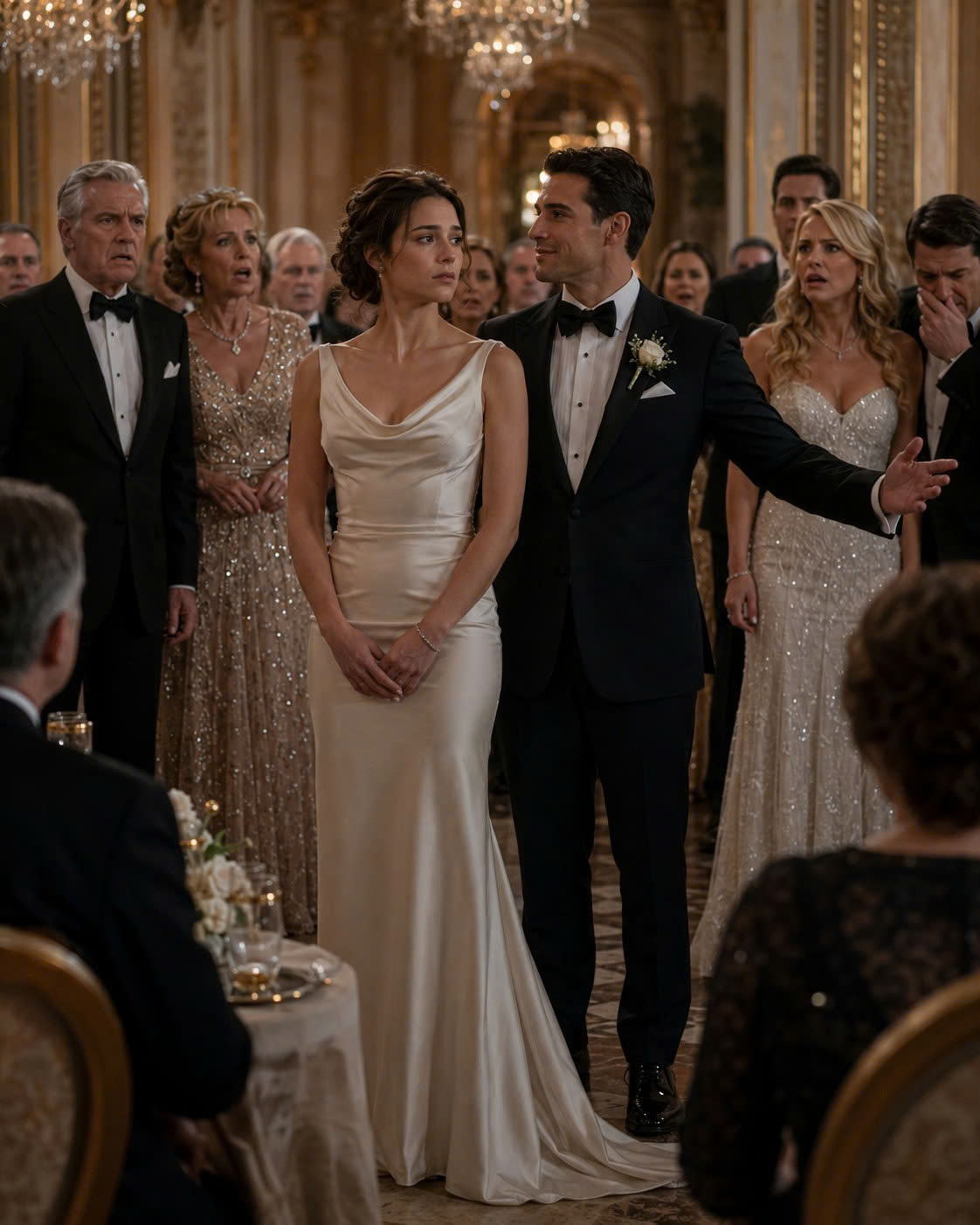
He mentioned none of those things.
“You’re giving me permission to cancel because you’re ashamed of how he arrived?”
“I’m giving you a chance to avoid a mistake.”
Noel glanced through the doorway.
Trey stood alone near the entrance while the photographer focused on Devin. He did not argue with anyone. He did not shrink either.
He simply waited.
Noel turned back to her father.
“I’ll marry him.”
Her father released her arm.
The disappointment on his face was immediate, almost personal.
“Then don’t blame us later.”
The ceremony was rushed.
Breanna and Devin received applause, photographs, and a toast from Mr. Hargrove about legacy.
Noel and Trey received a brief blessing from the officiant and a silence that felt longer than the vows.
Her mother did not cry.
Breanna hugged Noel with one arm, careful not to crush her own dress.
No one walked Noel to the door.
Outside, Trey untied the paper bag from the back of his bicycle. Inside was a secondhand helmet decorated with a small white ribbon.
“I know this isn’t what you expected,” he said.
Noel looked back at the house.
Through the window, her family was already taking another photograph without her.
“It’s exactly what I expected,” she said.
She climbed onto the back of the bicycle.
As Trey pushed away from the curb, laughter followed them down the driveway.
Noel did not turn around.
Trey lived in a small apartment above a closed tailor shop.
The floors creaked. The bedroom barely fit a narrow bed and one wooden dresser. A single window faced an alley where restaurant workers stacked empty crates each evening.
But Trey had cleared half the closet for Noel.
Fresh towels were folded on the bed. A chipped blue cup held wildflowers near the window.
On the first night, Noel stood in the kitchen and apologized for having so few belongings.
Trey looked confused.
“You don’t have to apologize for taking up space here.”
The words stopped her.
At her parents’ house, every object she owned had felt like evidence that she was staying too long.
Trey leaned against the counter.
“Is this very different from where you grew up?”
“My parents’ house is bigger,” Noel said. “But I never felt comfortable there.”
She told him about her grandfather’s house. The leaking roof. The crooked table. The way her grandfather always left the porch light on until she came home.
“When I moved back with my parents,” she said, “I felt like I was breaking into someone else’s life.”
Trey did not tell her to be grateful.
He did not defend people he had barely met.
He simply said, “Then we’ll make this one feel like yours.”
The next morning, Trey’s mother arrived without warning.
Marjorie Morrow wore a bright purple coat, gold shoes, and enough bracelets to announce her arrival before she reached the stairs.
She burst into the apartment carrying three bags of groceries.
When Noel introduced herself, Marjorie dropped the bags and pulled her into a fierce embrace.
“My daughter,” she said.
Noel stiffened.
Marjorie held her at arm’s length.
“This house is yours now. It may be small. It may be noisy. The pipes may complain every time somebody showers. But no one in this family will make you ask permission to belong.”
Noel looked away before either of them could see her eyes fill.
Three weeks later, Breanna called.
She and Devin were hosting a reception at the Grand Meridian Hotel for business partners and relatives who had missed the wedding.
“You should come,” Breanna said. “People have been asking about you.”
Noel doubted that.
Then Breanna added, “Unless you think Trey would be uncomfortable.”
There it was.
The challenge beneath the invitation.
Noel agreed.
Trey did not want to go.
“They humiliated you once,” he said. “They’ll do it again if they think they can.”
“I don’t want them to believe I’m hiding.”
Trey studied her for a moment, then opened a small wooden box.
Inside was a plain silver ring with a dark green stone.
“It belonged to my grandmother,” he said. “She wore it whenever she needed courage.”
Noel slipped it onto her finger.
“It’s beautiful.”
“It’s more important than it looks.” Trey closed her hand around it. “Don’t take it off.”
At the Grand Meridian, Breanna greeted Noel with a smile polished for an audience.
“You look surprisingly elegant,” she said.
Devin glanced at Trey’s simple suit.
“Security staff usually use the service entrance.”
Several guests laughed.
Trey’s expression did not change.
Across the room, an older man named Mr. Callaway noticed Noel’s ring.
His smile disappeared.
He stared at the green stone, then at Trey.
After that, he became Trey.
After that, he became unusually careful. He stopped laughing at Devin’s jokes. Twice, Noel caught him attempting to speak privately with Trey.
Breanna noticed too.
Later, she cornered Noel near the balcony.
“You don’t even try,” she whispered.
Noel frowned. “Try to do what?”
“To be noticed. You disappear for years, come back looking wounded, marry some man on a bicycle, and somehow people still look at you.”
Noel saw something in her sister’s face she had never seen before.
Not confidence.
Exhaustion.
“I did everything right,” Breanna said. “I stayed. I helped Mom. I went to every dinner Dad asked me to attend. I married the man they approved of.”
Her voice shook.
“And you lived with Grandpa, where no one expected anything from you. You came back, and everyone treated you like some quiet tragedy. Somehow you always win.”
Noel could have laughed.
Instead, she said, “Breanna, does this feel like winning to you?”
Her sister’s eyes flashed.
Before she could answer, Devin approached.
He had been drinking.
He took Noel’s hand and examined the ring.
“What is this supposed to be?”
“It belonged to Trey’s grandmother.”
Devin pulled it off her finger.
Noel reached for it.
“Give it back.”
He held it above her head, smiling as guests began to watch.
“Careful. It might be worth twenty dollars.”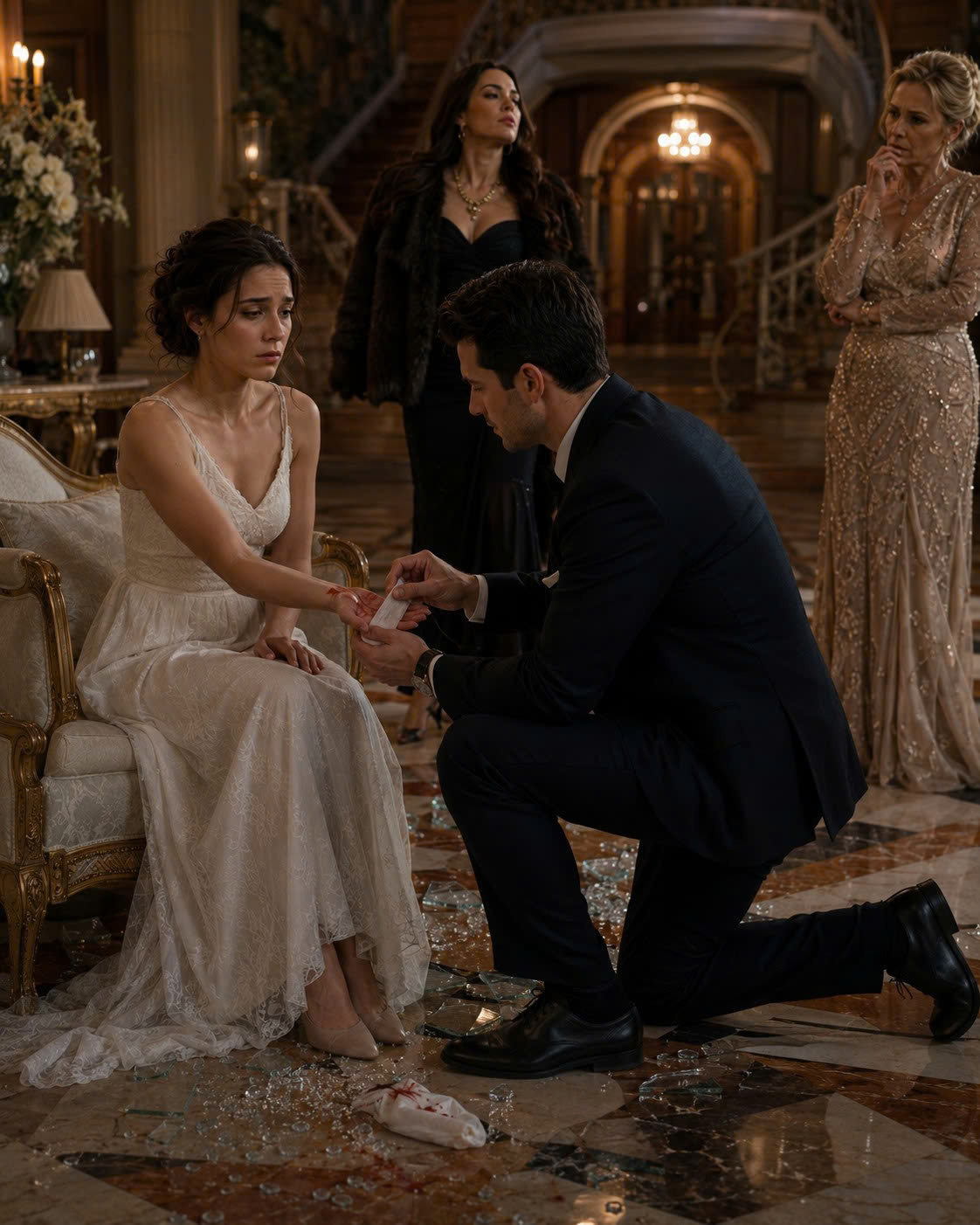
Then he threw it onto the marble floor.
The ring struck the tile and rolled beneath a table.
The room erupted in uncomfortable laughter.
Noel dropped to her knees.
She found the ring near a chair leg. As she reached for it, someone stepped backward, knocking her shoulder. Her palm scraped the edge of the metal table base.
When she stood, her skin was red and bleeding.
Then the room went silent.
Trey had entered from the hallway.
He looked at Noel’s hand.
Then at Devin.
“You will apologize to my wife.”
Devin laughed once, but the sound died quickly.
Mr. Callaway stepped between them.
“Mr. Cole,” he said sharply, “I strongly suggest you do what he asked.”
Devin blinked.
Around the room, several people who had ignored Trey moments earlier now stood straighter. A hotel manager appeared near the doorway. Two senior executives approached but waited for Trey to speak.
For the first time that evening, Devin looked uncertain.
Trey did not raise his voice.
“Your apology.”
Devin looked around for support.
No one moved.
“I was joking,” he muttered.
Trey took Noel’s injured hand.
“We’re leaving.”
On the ride home, Noel asked no questions.
Trey held her hand between both of his, protecting the scraped skin as though it were something sacred.
But the silence between them had changed.
Several days later, Noel accepted temporary work at a nearby estate. The agency told her the owners needed help organizing rooms before a formal event.
When she arrived, she discovered the property belonged to the Morrow family.
The estate was larger than the Grand Meridian. Staff members moved through the halls with quiet precision. Portraits lined the walls. The same green stone from Noel’s ring appeared in an old family crest above the fireplace.
A housekeeper greeted her.
“Good morning, ma’am.”
Noel looked behind her.
The housekeeper smiled. “This way, ma’am.”
Trey appeared at the top of the staircase.
He seemed completely at home.
Noel stared at him.
Before she could speak, a woman in a cream-colored suit entered the foyer.
Cassidy Vale wore diamonds at breakfast and carried herself as though every room had been waiting for her.
She looked Noel up and down.
“Who is this?”
“My wife,” Trey said.
Cassidy’s face changed for half a second.
Then she smiled.
“How unexpected.”
Throughout the morning, Cassidy followed Noel from room to room. She spoke about the estate’s history, its board meetings, and the renovations she planned to make “when the right marriage finally happened.”
She referred to Trey’s future as though Noel were not standing there.
Near lunch, Cassidy deliberately knocked a glass from the counter.
It shattered at Noel’s feet.
“Pick that up,” Cassidy said.
Noel reached for a cloth.
Cassidy grabbed her wrist.
“No. By hand.”
Noel pulled away, but Cassidy tightened her grip. Noel’s palm came down on a shard of glass.
Blood appeared instantly.
Trey crossed the room before Cassidy could step back.
“Leave.”
Cassidy opened her mouth.
“Now.”
He did not shout.
He did not need to.
Her face drained of color. She collected her bag under the gaze of the staff and walked out without another word.
Trey took Noel into a private study and cleaned the cut himself.
His hands trembled as he wrapped the bandage.
Marjorie stood near the door, watching him.
“You waited too long,” she said.
Noel looked between them.
That night, she confronted Trey.
“Why does Mr. Callaway act like he works for you?”
Trey said nothing.
“Why do the staff call me ma’am?”
He lowered his head.
“Why does Cassidy think she was supposed to own this house?”
Still no answer.
Noel removed the green ring and placed it on the table.
“Who are you?”
Trey stared at the ring.
Then he told her.
The Morrow family owned the estate, the Grand Meridian, and several regional development companies. Mr. Callaway managed one division. Cassidy’s family had spent years trying to arrange a partnership through marriage.
The apartment above the tailor shop belonged to the Morrow Foundation.
The bicycle had been chosen deliberately.
The worn suit had been borrowed.
Trey had created the entire appearance of poverty because he wanted to know whether Noel would choose him if she believed he had nothing.
Noel listened until he finished.
Then she asked, “Was any of it real?”
“My feelings were real.”
“That isn’t what I asked.”
Trey stepped closer.
“I had watched people treat my family name like a prize. Cassidy wanted the estate. Others wanted the business. I wanted someone who would stay without any of it.”
“So you tested me.”
“I was afraid.”
“You studied me.”
“Noel—”
“You watched my family humiliate me. You let me leave my wedding on a bicycle while they laughed because it was part of your test.”
Trey’s face tightened.
“I wanted to take you away from them.”
“You made me believe we were struggling.”
“I never wanted you to suffer.”
“But you decided how much truth I deserved.”
Her voice broke for the first time.
“The worst part is that I was happy in that room, Trey. I thought I had finally built something honest.”
She walked into the garden before he could answer.
Near the fountain, the world tilted.
A doctor was called after Noel nearly collapsed. Marjorie remained beside her while the examination was completed.
Noel was pregnant.
The child was healthy.
Trey’s father arrived that evening, dismissed the remaining staff, and told his son there could be no more hidden truths.
Trey found Noel sitting beneath an old cedar tree.
“I planned to tell everyone about you at the reception,” he said. “I wanted to introduce you properly. Then I lost my courage.”
“You had enough courage to test me.”
He sat several feet away.
“You’re right.”
“You made me feel strong for surviving a life you invented.”
“I can’t undo that.”
“No.”
“But the peace you felt in that apartment was real. The way my mother loves you is real. The way I love you is real.”
Noel looked at him.
“From now on, I decide what is real for me.”
Ten days later, the Morrow family held a formal banquet.
Noel attended because she had agreed to hear the entire truth in public, where no one could reshape it later.
Her parents arrived with Breanna and Devin.
Cassidy sat with distant relatives near the back.
When Trey stepped onto the platform, the room quieted.
He did not introduce Noel as a guest.
He gave her full name.
“My wife, Noel Hargrove Morrow, is a member of this family. Anyone who disrespects her, questions her place, or treats her dignity as negotiable will no longer have a place in our business or our home.”
Cassidy lowered her eyes.
Several relatives shifted uncomfortably.
Noel’s father stood.
“This seems unnecessary. Families have misunderstandings. We were always willing to put the wedding behind us.”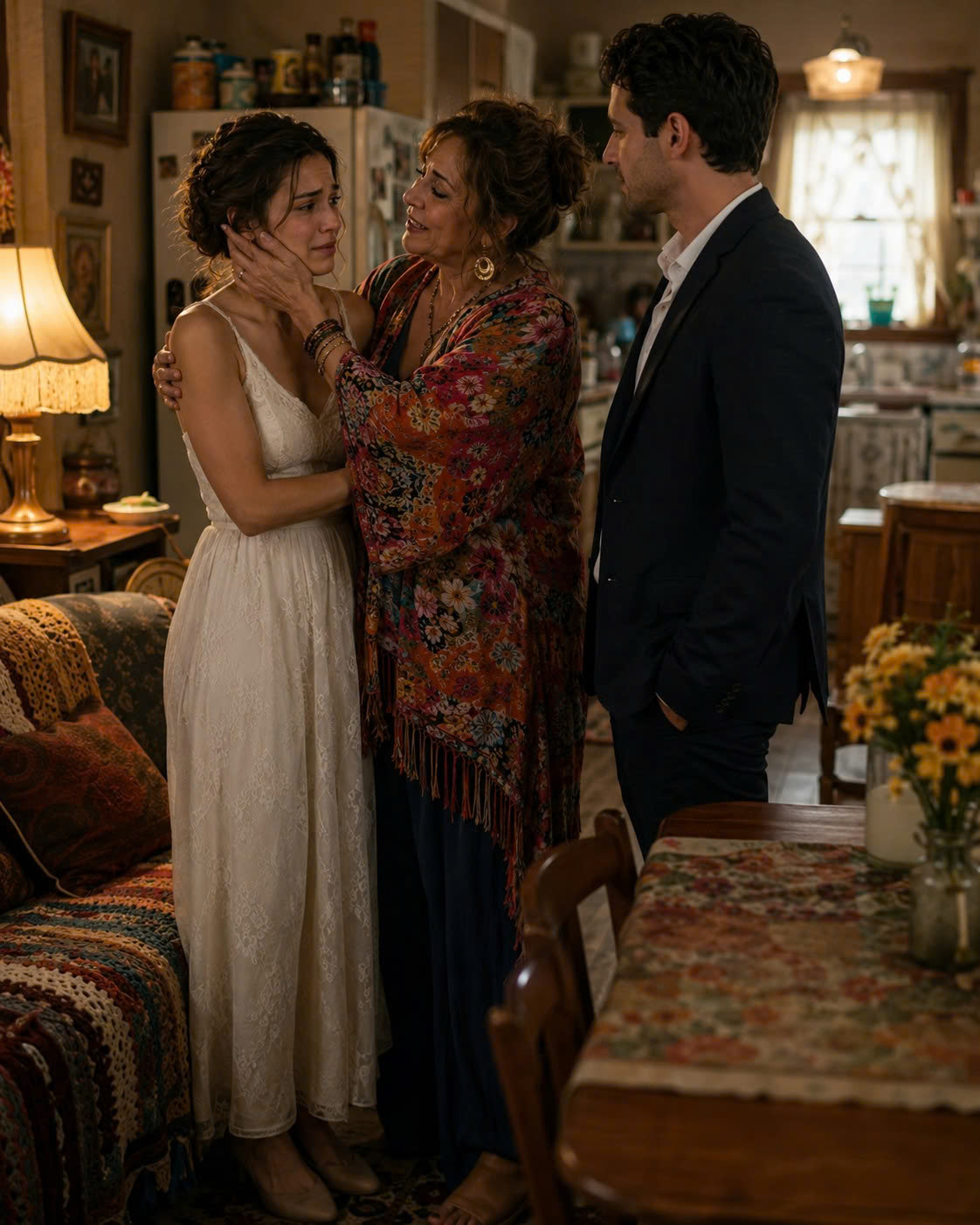
Trey looked directly at him.
“You watched your daughter leave her wedding while people laughed.”
Mr. Hargrove’s mouth tightened.
“You said nothing when her ring was thrown onto the floor. Before the ceremony, you told her not to embarrass you.”
The color left Noel’s father’s face.
The room turned toward him.
For years, he had controlled every conversation through status and certainty. Now his hands hung uselessly at his sides.
Trey’s voice remained steady.
“Noel was never the embarrassment in your family.”
Mr. Hargrove looked at his eldest daughter.
For one suspended moment, recognition crossed his face.
His eyes moved from the chandeliers to the executives seated around Trey, then back to Noel.
He finally understood.
Not merely that Trey was wealthy.
He understood that the daughter he had treated like a burden now stood in a room where his approval had no value.
His lips parted.
Nothing came out.
Before he could recover, a woman entered from the side corridor.
She walked directly toward Devin.
She was visibly pregnant.
In one hand, she held medical documents. In the other, printed messages.
“You stopped answering,” she said.
Breanna turned slowly toward her husband.
Devin’s confident expression vanished.
The woman placed the documents on the table.
The dates went back months before the wedding.
Guests began reading the messages closest to them. Mr. Callaway’s face hardened. Breanna’s mother reached for the papers, but Breanna pulled them away.
She read in silence.
Her shoulders dropped.
The perfect daughter, in the perfect dress, with the perfect husband, finally saw what her obedience had purchased.
Devin reached for her.
“Breanna, let me explain.”
She stepped back.
The entire room watched the moment he realized she was no longer protecting him.
His hand remained suspended in the air.
Noel crossed the room.
Breanna looked at her with wet, stunned eyes.
Noel did not say, “I told you so.”
She placed an arm around her sister and led her outside before the room could consume what remained of her dignity.
After the guests left, Noel sat beside Trey on the terrace.
The estate gardens stretched into the darkness.
“I haven’t forgiven you,” she said.
“I know.”
“I may not for a long time.”
“I know.”
“The money was never the deepest lie. The house wasn’t either. You took my trust and turned it into an examination.”
Trey nodded.
“I did.”
He offered no defense.
Noel touched the ring on her finger.
For most of her life, people had chosen where she would live, how much space she could take, and how grateful she was required to be.
Her father had not chosen her.
Her mother had made room for her only when it was convenient.
Breanna had treated love like a competition because their family had taught both daughters that affection had to be earned.
Trey had chosen Noel—but he had chosen her through fear, secrecy, and a test she never agreed to take.
That truth would not disappear because he loved her.
Yet neither would the other truth.
In the little apartment, he had listened.
His mother had called her daughter without hesitation.
For the first time, Noel had experienced what it felt like to be welcomed rather than tolerated.
“You don’t get to decide how quickly this heals,” she said.
“I won’t.”
“You don’t get to hide anything from me again.”
“I won’t.”
“And we rebuild from the beginning. No tests. No performances. No deciding what I can handle.”
Trey extended his hand but did not touch her.
Noel looked at it for several seconds.
Then she placed her hand in his.
Not as surrender.
As a choice.
The people who had spent years making Noel feel small had watched her leave on the back of a bicycle, certain she was riding toward a lesser life.
They never imagined they were watching her leave the only place where she had never belonged.
And sometimes, the people who push you out of their house are the very ones who clear the road to your throne.