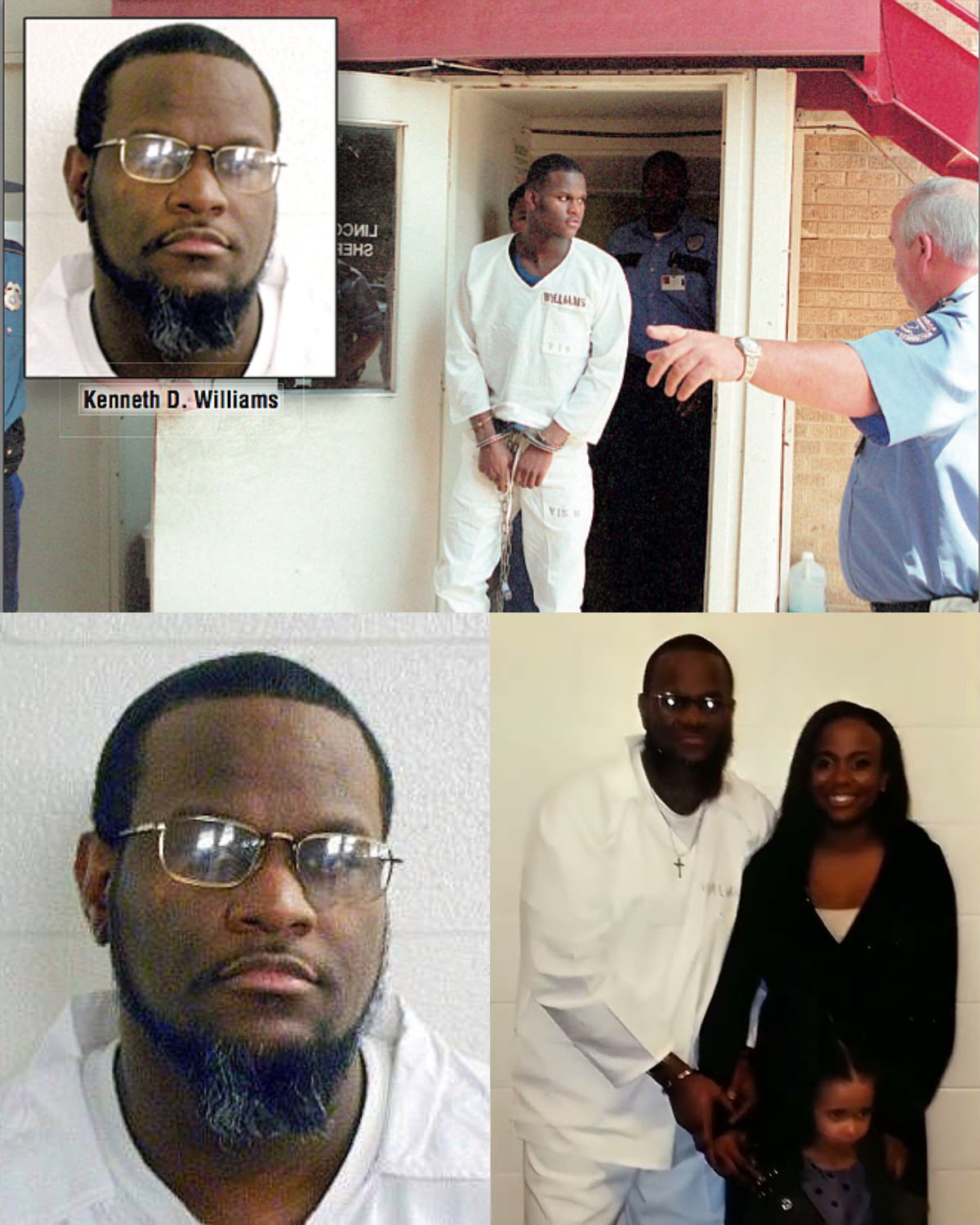
Ricky Javon Gray was executed by lethal injection Wednesday evening at Greensville Correctional Center in Virginia, ending a nearly 10-year stay on death row for the brutal murders of seven people, including a family of four on New Year’s Day 2006. The 39-year-old declined a final meal and offered only one word as his last statement: “Nope.” But the execution was marred by a 48-minute ordeal that raised new questions about the state’s lethal injection protocol
Gray was pronounced dead at 9:42 p. m. , after prison staff struggled for 33 minutes to establish an IV line.
 Witnesses reported labored breathing, gasping and snoring from the condemned man. The execution was Virginia’s 112th since 1976, and would be the second-to-last before the state abolished capital punishment in 2021.
The crimes that put Gray on death row began on New Year’s Day 2006. He and his nephew, Ray Dandridge, entered the Richmond home of Brian and Katherine Harvey through an unlocked front door. The couple and their two daughters were preparing a chili party.
Gray and Dandridge forced the family into the basement, bound them with electrical cords, beat them with claw hammers and slit their throats. They then set the house on fire to cover the massacre.
Firefighters arriving at the scene found four bodies in the basement. Brian Harvey, 49, was a musician and guitarist for the cult band House of Freaks. Katherine Harvey, 39, co-owned World of Mirth, a beloved toy store.
Their daughters, ages 9 and 11, were also killed. The medical examiner later said one child was still alive when the fire started and died from smoke inhalation combined with blunt force trauma.
Five days later, on January 6, 2006, police discovered three more bodies in a home 15 miles away. Mary Baskerville Tucker, 47, her husband Perciel Tucker, 55, and her daughter Ashley Baskerville, 21, had been suffocated with plastic wrap, socks stuffed in their mouths and duct tape. Ashley was wearing Katherine Harvey’s stolen wedding ring, connecting the two crime scenes.
Gray had also confessed to killing his own wife, Trevor Terrell Gray, in November 2005. He bludgeoned her with a lead pipe and buried her in a shallow grave in Pennsylvania. In a separate attack on New Year’s Eve 2005, Gray and Dandridge beat and stabbed a 26-year-old man named Ryan Kerry, who survived but permanently lost use of his right arm.
Gray was arrested in Philadelphia on January 7, 2006. He provided a detailed three-page written confession, describing the Harvey murders as a “real nasty scene.” Physical evidence included hammers with the victims’ DNA, a knife with blood of all four Harvey family members, and Gray’s boots stained with blood from Brian Harvey and one of the children.
 At trial, the prosecution presented overwhelming evidence. The jury deliberated only 30 minutes before convicting Gray on five counts of capital murder. They recommended death for the murders of the two children and life in prison for the murders of the parents.
On October 23, 2006, Gray was sentenced to death and transported to death row.
During nearly 10 years on death row, Gray’s attorneys filed multiple appeals. They argued that the jury was never fully informed about the horrific childhood abuse Gray suffered—sexual slavery starting at age seven, rape by his half-brother, sexual abuse by women at his father’s brothel, and brutal beatings. More than 50 mental health professionals wrote a letter supporting clemency, detailing how Gray turned to drugs at age nine to numb chronic fear.
Gray himself expressed remorse in a video, saying, “Remorse is not a deep enough word for how I feel.” He said he had stolen Christmases, birthdays, graduations and weddings from his victims. But on January 17, 2017, Virginia Governor Terry McAuliffe declined to commute the sentence, stating the trial was fair and all legal options were exhausted.
The execution used a new three-drug cocktail containing compounded midazolam, a sedative that had been involved in several botched executions in other states. Gray’s attorneys challenged the protocol as “chemical torture,” but courts denied their appeals. The U
S. Supreme Court rejected the final appeal less than 30 minutes before the scheduled execution.
When the curtain opened, witnesses saw Gray strapped to the gurney. After his one-word last statement, the curtain closed. Minutes stretched into half an hour
 A physician appeared from behind the curtain, an unusual sight. When the curtain finally opened, the drugs began flowing. Witnesses reported that Gray showed labored breathing, making audible gasping sounds.
It took 48 minutes from start to pronouncement.
An independent pathologist, Dr. Mark Edgar from Emory University, later examined Gray’s body and found acute pulmonary edema—fluid in the upper airways. He said the anatomic changes were more often seen after a sarin gas attack than a routine hospital autopsy
Dr. Edgar concluded that this way of dying is “intolerable” and that if Gray was aware, it would have been “unbearable.”
Virginia Department of Corrections officials initially could not explain the delay. The next morning, they attributed it to difficulties finding a vein. They insisted the midazolam was not responsible for any suffering.
But the state never used that drug protocol again, and in 2021, Virginia abolished the death penalty entirely.
After the execution, victim family members spoke. Steven Culp, Katherine Harvey’s half-brother and a well-known actor, said the pain was “bottomless, a lightning bolt to the heart.” Daisy Adams, sister of Mary Baskerville Tucker, stated that people hollered about Gray’s suffering but that victims suffered more.
 Gray’s attorney Elizabeth Pifer said the execution took from the world a man trying to make amends.
The Harvey family declined comment, but their memory lives on. All four are buried together in Hollywood Cemetery in Richmond, where a large rose bush grows at their grave. The city still remembers the dark day of January 1, 2006, when a chili party turned into a massacre that haunted first responders and an entire community.
Ray Dandridge, Gray’s nephew and accomplice, is still alive. He pleaded guilty to three counts of capital murder and received three life sentences without parole. He avoided the death penalty by cooperating with prosecutors and is currently serving his sentences at Sussex II State Prison in Virginia.
The case of Ricky Javon Gray raised profound questions about childhood trauma and the cycle of violence. His attorneys argued that the abuse he suffered made him incapable of functioning as a healthy human being. But the prosecution argued that choices were made, that the murders were planned and methodical.
The jury agreed. Justice was served, they said.
But for many, the botched execution added another layer of tragedy to an already horrific story. Seven people lost their lives because of Gray and Dandridge. Eight, if counting Cheryl Warner, a legal secretary found shot and hanged in her burning home in 2006.
Gray was indicted for her murder but the charge was suspended due to contradictory evidence. Her case remains officially unsolved.
Ricky Javon Gray is dead. The New Year’s Day nightmare that devastated Richmond ended with a 48-minute execution that raised as many questions as it answered. The candles that neighbors kept lit for weeks outside the Harvey home have long gone out, but the memory of the victims endures.
Brian Harvey, Katherine Harvey, their two daughters, Mary Baskerville Tucker, Perciel Tucker, Ashley Baskerville, Trevor Terrell Gray—they are not forgotten.