The execution chamber in Huntsville, Texas fell silent at 6:21 p. m. on September 14, 2005, as Frances Newton became the first black woman executed in the state since the Civil War, maintaining her innocence to the final breath.
For nearly two decades she had insisted she never pulled the trigger that killed her husband Adrian and their two children, Alton and baby Farah. In the last 24 hours of her life, she refused a special meal and when asked for final words she whispered only “No.” No confession, no apology—just denial that has since fueled a bitter national debate over whether Texas executed an innocent mother
 The atmosphere outside the Huntsville prison was electric and fractured. Protesters carried signs screaming that the state was about to kill an innocent woman. Supporters of the victims countered with chants for justice, demanding that the punishment finally be carried out.
The crowd was tense, divided, and haunted by the weight of the moment. Inside, corrections officers moved with clinical precision. Guards reported that Newton remained collected, almost eerily calm, as they walked her through the final procedures.
She gave no special last meal request, a decision that unsettled some staff members who saw it as a final act of defiance or control in a situation where control had been stripped away.
Her final hours began at the Mountain View Unit in Gatesville where she had spent 17 years on death row. She was woken early, monitored constantly, and allowed visits from her spiritual adviser and attorneys. They tried to comfort her, but witnesses say she instead comforted them, repeating the same assertion she had made since the night of the murders: she was innocent.
She told her legal team that critical evidence had never been properly examined, specifically the ballistics evidence showing that shell casings found at the crime scene did not match the weapon the state claimed was the murder weapon. That claim has haunted the case ever since.
The crime that sent her to death row occurred on April 7, 1987 in an apartment on West Mount Houston Road in Houston. Adrian Newton, 23, was found shot once in the head on the couch. Their seven-year-old son Alton lay dead on a bed with a bullet to the chest.
Twenty-one-month-old Farah was killed in her crib. There was no forced entry, nothing stolen. The only person missing from the scene was Frances herself.
She told police she had returned home to find her family gone, but something about her dry-eyed composure unsettled investigators from the start.
At trial in October 1988, prosecutors built a case on three pillars. First, the murder weapon, a Raven Arms . 25 caliber pistol, was found in a blue bag hidden in an abandoned house.
Newton’s cousin Sandra testified that she saw Frances carry that bag into the house on the night of the murders. Second, the insurance policies. Just weeks before the killings, Newton had taken out three life insurance policies—on Adrian, on Farah, and on herself—totaling more than $100,000.
Prosecutors showed that Adrian’s signature on the paperwork was forged, a damning link to Newton’s prior forgery conviction from 1986.
Third, the forensic evidence. A crime lab analyst testified that Newton’s skirt carried gunshot residue near the waistband, consistent with firing or being near a discharging weapon. The defense argued that the residue could have come from simply being near the scene, that no fingerprints tied her to the pistol, and that the real killer was a drug dealer named Charlie who had threatened Adrian over drug debts.
But Adrian’s family testified that he had no connection to such criminals. Adrian’s mother delivered a crushing line: “There ain’t no Charlie. She is Charlie.”
The jury deliberated only six hours before finding Newton guilty of capital murder. Days later, they sentenced her to death. She showed no emotion in court.
Her legal team immediately appealed, arguing that the ballistics evidence had been mishandled, that the state suppressed reports supporting her story about Adrian’s drug involvement, and that the gunshot residue test was unreliable. In 1997 they nearly secured a new trial, but the appeals court denied the motion, ruling the original trial was fair enough.
As the execution date approached in 2004 and 2005, protests intensified. Amnesty International, the Texas Coalition to Abolish the Death Penalty, and religious leaders petitioned Governor Rick Perry for a stay. The Board of Pardons and Paroles granted short reprieves but each review ended the same way—the conviction upheld, the sentence intact.
On the morning of September 14, 2005, all appeals were exhausted. The governor refused to intervene.
Newton was transported from Gatesville to the Huntsville execution facility in late afternoon. She was led to a small holding area near the death chamber. Officials asked her one last time for a final statement.
She shook her head. At 6:17 p. m.
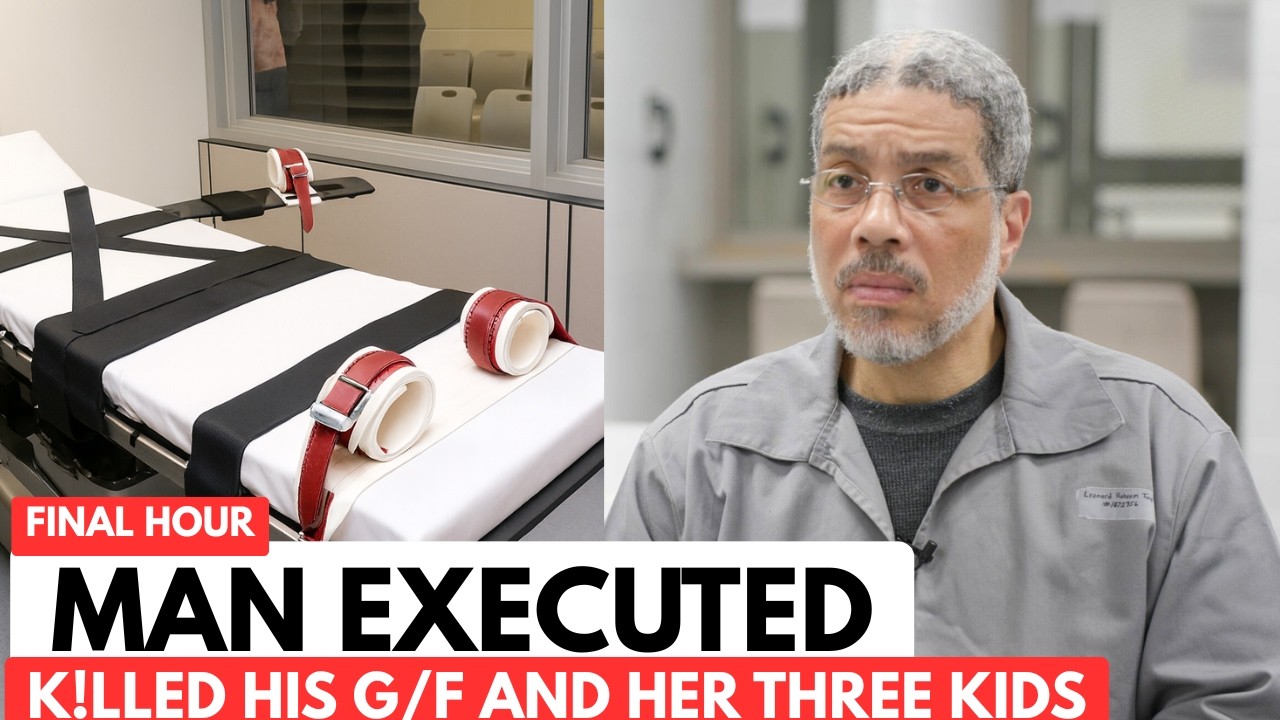
, she was strapped to the gurney. Thick leather restraints secured her arms and legs. Witnesses—reporters, victims’ relatives, and supporters who had fought for her life—watched through the glass.
She stared upward, calm, eyes fixed on a spot above her. The executioner inserted the IV line. A clear chemical flowed into her veins.
Within seconds, her body relaxed. Her chest rose and fell slowly, then grew still. At 6:21 p.
m. , she was pronounced dead.
Her silence in those final moments deepened the divide. To those who believed she was guilty, it signaled a cold lack of remorse—a killer who refused to own her crime. To those who believed she was innocent, it was the haunting silence of a woman wrongfully executed, deprived of a life she never deserved to lose.
The question that has never been resolved is the ballistics discrepancy. Newton claimed after the trial that an attorney reviewing her case discovered that shell casings found at the crime scene did not match the murder weapon. That evidence, she said, was never brought up in any court hearing.
“Those are like fingerprints,” she said in an interview. “It’s a major issue.”
The case remains one of the most controversial in Texas death penalty history. It exposed deep cracks in the justice system: the reliability of circumstantial evidence, the weight of prior convictions, and the finality of a punishment that cannot be undone. For the victims’ family, the execution brought closure.
For Newton’s supporters, it was a tragic mistake. And for the state of Texas, it was a historic moment—the first execution of a black woman in more than 130 years.
Frances Newton was born Frances Elaine in Houston in 1965, raised in a working-class neighborhood where money was often tight. She was described as soft-spoken and polite as a child. But by her early twenties she had a forgery conviction, a rocky marriage, and three new insurance policies.
Whether those facts pointed to a murderer or a desperate woman caught in impossible circumstances remains the central ambiguity of her story. She said it herself while on death row: “So many things that I don’t know and I don’t have answers to, but there are some things that I do know—that if a jury knew, they would have come to a different decision.”
Today, her case continues to be cited in death penalty debates across the nation. The echoes of her final moments—the refusal of a last meal, the whispered “No,” the calm gaze as the chemicals flowed—will not fade. For those who watched the execution through the glass, the memory is indelible: a woman who went to her death saying she never pulled the trigger, leaving behind a ghost of doubt that Texas may have killed an innocent soul.