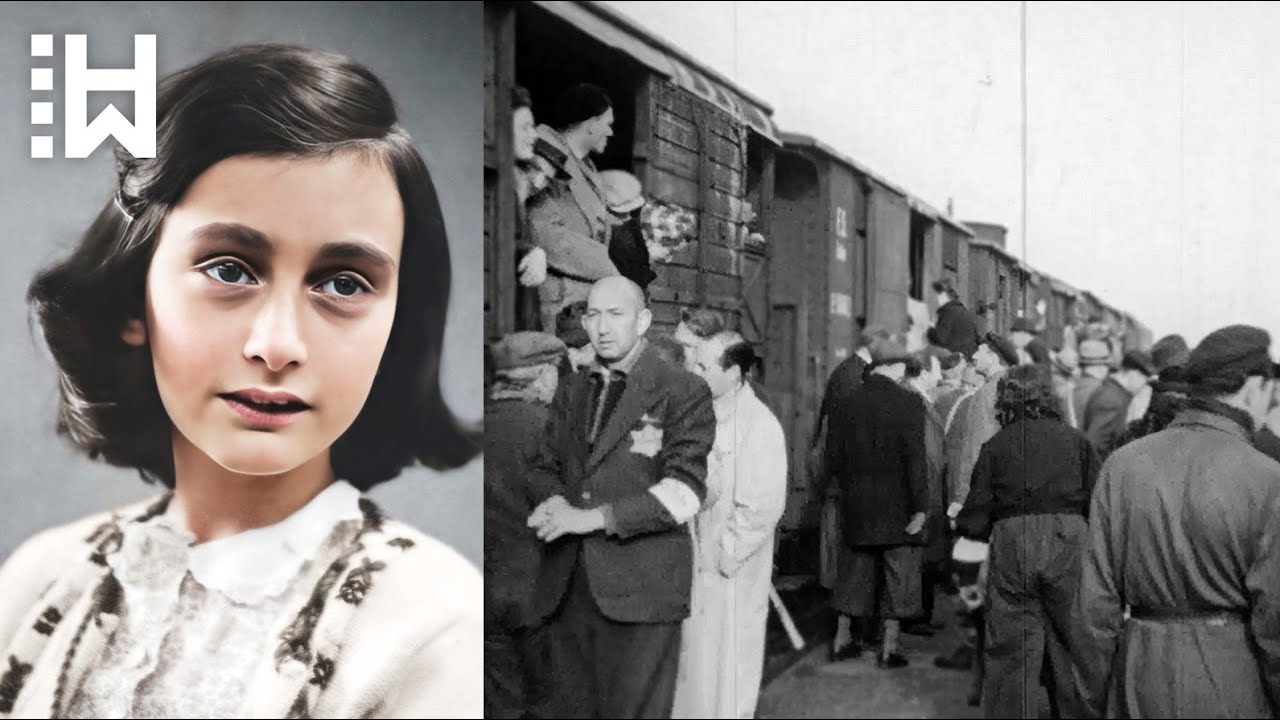
On June 22, 1941, Nazi Germany launched the largest invasion in military history.

Without declaring war, millions of German soldiers crossed into the Soviet Union.
From the Baltic Sea to the Carpathian Mountains, the Eastern Front exploded into violence.
Within weeks, the Soviet military suffered catastrophic defeats. Entire armies were surrounded. Hundreds of thousands of soldiers were captured. Millions more would fall into the chaos of a war unlike anything the world had seen.
For many Soviet prisoners, the nightmare began after capture.
They were not treated as ordinary prisoners of war.
They were abandoned in open fields.
They lacked food, shelter, medicine, and protection.
Thousands died from starvation, disease, exposure, and exhaustion before they ever reached prison camps.
Inside these camps, some prisoners faced an impossible choice.
Remain loyal to Stalin and likely die.
Or cooperate with Germany and hope to survive.
For some, the decision came from hatred of the Soviet system.
For others, it came from desperation.
And for one man, it would become a decision that changed history.
His name was Andrey Vlasov.
Before becoming a symbol of collaboration, Vlasov was one of the most respected generals in the Soviet Red Army.
He was not always an enemy of his own country.
In fact, he had once been considered one of Stalin’s successful commanders.
Born in 1901 in Russia, Vlasov joined the Red Army after the Russian Revolution. He proved himself as a talented officer and gradually rose through the military ranks.
During the early years of World War II, he became known as a capable commander.
His greatest moment came during the defense of Moscow in 1941.
As German forces approached the Soviet capital, Vlasov played a role in organizing the defense. The Soviet victory around Moscow became one of the first major defeats suffered by Nazi Germany.
For his performance, Vlasov was praised as a hero.
He received recognition from Stalin.
His image represented Soviet resistance.
But only months later, everything changed.
In 1942, Vlasov commanded the Soviet 2nd Shock Army during the fighting near the Volkhov River.

The operation turned into disaster.
The army was surrounded by German forces.
Supply lines collapsed.
Soldiers starved.
Communication disappeared.
The men under Vlasov were trapped deep behind enemy lines.
Unlike some commanders who escaped by air, Vlasov reportedly refused evacuation.
He remained with his soldiers.
But eventually, the army was destroyed.
In July 1942, Vlasov was captured by German forces after being betrayed by a local villager.
The Soviet hero was now a prisoner of the enemy.
For Stalin’s government, capture itself was already considered a crime.
Soviet military doctrine treated commanders who surrendered as suspicious.
A captured officer could be accused of treason.
Vlasov understood the danger.
If he returned to the Soviet Union after the war, he believed he would almost certainly face execution.
Then German intelligence officers approached him.
They saw something valuable.
A former Soviet general.
A respected military figure.
A man who could be used against Stalin.
Germany had captured millions of Soviet prisoners, but it lacked a trusted Russian figure capable of creating a serious anti-Soviet movement.
Vlasov appeared to be the answer.
At first, Nazi leaders were uncertain.
They wanted to exploit his reputation but did not fully trust him.
However, Vlasov quickly agreed to cooperate.
His motivations remain debated.
Some historians argue that he genuinely opposed Stalin’s dictatorship and believed Russia needed political change.
Others argue that survival and personal ambition played a major role.
The reality was likely a mixture of desperation, ideology, and calculation.
Vlasov knew that he had crossed a point of no return.
Returning to Stalin’s Soviet Union was almost impossible.
Working with Germany became his only path forward.
In December 1942, the so-called Smolensk Declaration was created.
It presented Vlasov as the leader of a movement against Stalin.
The declaration promised a different Russia.
It called for:
The end of collective farming.
Freedom of religion.
Freedom of speech.
Private property rights.
An end to Soviet political terror.
To many anti-Stalin Russians, these ideas had appeal.
Millions had suffered under forced collectivization, purges, and political repression.
But there was a major problem.
The Germans did not truly support Russian independence.
Hitler’s ideology viewed Slavic peoples as inferior.
The Nazi leadership wanted control over conquered territories, not a free Russian government.
This created the central contradiction of Vlasov’s movement.
He wanted to fight Stalin.
But he needed support from a regime that had its own plans for domination.
The Russian Liberation Army, known as the ROA, existed more as an idea than a real army during the early years.
Germany allowed propaganda.
Germany used Vlasov’s image.
But Germany refused to give him genuine power.
Hitler did not want an independent Russian military force.
He feared that such a force could eventually turn against Germany.
For years, Vlasov remained trapped between two enemies.
The Soviet Union considered him a traitor.
Germany considered him a useful but dangerous tool.
Only when Germany’s military situation became desperate did the Nazis finally allow the ROA to develop into a real military organization.
By late 1944, the war was collapsing for Germany.
The Soviet Army was advancing from the east.
The Western Allies were pushing through France and Germany.
Berlin needed soldiers.
Suddenly, Vlasov became more valuable.
On November 14, 1944, the Committee for the Liberation of the Peoples of Russia was created in Prague.
It became the political center of the movement.
Vlasov presented a new manifesto with fourteen principles.
It promised civil rights.
Religious freedom.
Equality before the law.
An end to Stalinist oppression.
However, Germany still pressured the movement.
The Nazis demanded anti-Western and anti-Allied language.
The final declaration included criticism of Britain and the United States, describing them as forces supporting Stalin.
Even in its final form, the movement remained trapped by German influence.
It wanted to represent Russian liberation.
But it was born under Nazi protection.
That contradiction would follow Vlasov until the end.
The men who joined the ROA came from many different backgrounds.
Some were former Soviet soldiers who hated Stalin.
Some were prisoners desperate to survive.
Some were motivated by nationalism.
Others simply saw no future returning to the Soviet Union.
They were not a unified movement.
They were a collection of people brought together by defeat, anger, fear, and hope.
Among the most important commanders beneath Vlasov was Sergei Bunyachenko.
A former Soviet officer, Bunyachenko had also been captured by Germany.
Like Vlasov, he saw the ROA as a possible path away from Stalin’s rule.
By late 1944, he became commander of the 1st Division of the ROA.
The division began forming at Münsingen in southern Germany.
But even its creation revealed the chaos surrounding the movement.
The unit received men from different backgrounds, including remnants of the Kaminski Brigade, a collaborationist formation already associated with brutal actions in Belarus and Warsaw.
Bunyachenko disliked the situation.
He believed many of these men damaged the reputation of the ROA.
He saw them as criminals rather than soldiers.
The new division had weapons.
It had uniforms.
It had commanders.
But it lacked the one thing every army needed:
A clear future.
Germany was collapsing.
The ROA was preparing to fight.
But nobody knew who would still be alive when the war ended.
By early 1945, the Russian Liberation Army finally became a real military force.
But it happened at the worst possible moment.
Germany was collapsing.
The Eastern Front was moving west.
The Red Army was approaching the heart of Europe.
The ROA was no longer preparing for a future war.
It was fighting for its own survival.
The commander responsible for transforming the movement into a battlefield unit was Sergei Bunyachenko.
Unlike many political figures around Vlasov, Bunyachenko had direct military experience. He understood that speeches and declarations would not save his soldiers.
Only action could.
The 1st Division of the ROA, also known as the 600th Russian Infantry Division, began forming in late 1944.
The unit was officially recognized by Germany, but serious problems remained.
Weapons were limited.
Supplies were unreliable.
Training time was short.
Many soldiers had uncertain loyalty.
Some had joined because they believed in the anti-Stalin cause.
Others joined because returning to the Soviet Union meant possible execution.
Some simply wanted to survive the final months of the war.
The ROA was not born from victory.
It was born from desperation.
The arrival of men from other collaborationist formations created even more problems.
Among them were remnants of the Kaminski Brigade, a unit known for brutal actions in occupied Soviet territory and during the Warsaw Uprising.
Bunyachenko strongly disliked their reputation.
He believed these men represented everything that damaged the image of the ROA.
He wanted soldiers.
Not criminals.
Despite these problems, the division eventually became operational.
For the first time, Vlasov’s movement had something it had always lacked:
A real army.
Its first major combat experience came near the Oder River in early 1945.
A small ROA force under Igor Sakharov attacked Soviet positions near the eastern bank of the river.
The operation captured several positions, including areas near Neulewin and Küstrin.
German commanders praised the performance.
The soldiers showed discipline.
They fought aggressively.
For a brief moment, the ROA appeared to prove that it could function as a military organization.
But the victory was meaningless in the larger war.
Germany was already losing.
The battlefield was moving toward Berlin.
The next major test came in April 1945.
The ROA was sent toward the Oder front, where German forces were trying to stop the Soviet advance.
Bunyachenko’s division attacked Soviet bridgeheads near Frankfurt an der Oder.
But the situation was impossible.
The Germans lacked enough artillery.
Air support was almost nonexistent.
The Soviet forces were stronger and better supplied.
After several days, the attack failed.
The losses were heavy.
And something changed inside Bunyachenko.
He realized that continuing to fight for Germany was pointless.
The Nazis had never truly trusted the ROA.
They had only used it when they needed soldiers.
Now Germany was collapsing.
The question was no longer how to defeat Stalin.
The question was how to survive after Hitler’s defeat.
Bunyachenko made a decision.
He would no longer obey German orders.
The ROA began moving toward Czechoslovakia.
There, another dramatic event was unfolding.
Prague was preparing to rise.
By early May 1945, Germany was collapsing across Europe.
In Prague, Czech resistance groups prepared an uprising against German occupation.
The city became a battlefield.
On May 5, 1945, the Prague Uprising began.
Resistance fighters seized important locations, including the radio station.
Barricades appeared throughout the streets.
For the first time in years, many residents openly challenged Nazi rule.
But German forces responded immediately.
Tanks moved into the city.
Artillery fired.
SS units attempted to crush the rebellion.
The Czech National Council faced a desperate situation.
They needed weapons.
They needed soldiers.
They needed help.
And nearby stood the ROA.
A strange situation developed.
A Russian army that had fought against Stalin and alongside Germany was now being asked to fight against the Nazis.
The decision was extremely complicated.
For Vlasov, it represented a possible chance to prove that the ROA was not simply a German puppet.
For Bunyachenko, it was also a military calculation.
If the ROA helped Prague, perhaps Western Allies would see them differently.
Perhaps they could avoid Soviet revenge.
Vlasov hesitated.
But Bunyachenko made the decision.
The ROA would fight.
On May 6, its soldiers entered Prague.
For the first time, they turned their weapons against their former German allies.
The fighting was intense.
ROA troops attacked German positions.
They helped defend barricades.
They fought against SS and Wehrmacht units still trying to maintain control.
Their artillery and armored vehicles played an important role in several areas.
Many Czech civilians welcomed them.
For a brief moment, the Russian soldiers who had been labeled traitors were seen by some residents as liberators.
But the situation was changing quickly.
The Soviet Army was approaching Prague.
And the Soviet government had already decided the fate of Vlasov and his followers.
To Stalin, they were not political opponents.
They were traitors.
Nothing could change that.
The ROA’s victory in Prague would not save them.
On May 8, 1945, Germany surrendered.
The war in Europe was over.
But for the ROA, the danger was just beginning.
Bunyachenko ordered his troops to move west.
They hoped to surrender to American forces.
They believed the United States might protect them from being returned to the Soviet Union.
But their hope was based on a misunderstanding.
At the Yalta Conference, Allied leaders had agreed that Soviet citizens who ended up in Western-controlled areas would be returned to Soviet authorities.
For many ROA soldiers, this agreement became a death sentence.
The political reality was stronger than their hopes.
On May 9, Soviet troops entered Prague.
They were accompanied by NKVD and SMERSH security units.
Their mission was clear:
Find the collaborators.
Capture the traitors.
Punish the enemies of Stalin.
Any ROA members who had not escaped were immediately at risk.
The wounded were especially vulnerable.
Many could not move.
They were left behind in hospitals and military facilities.
According to accounts from the period, Soviet security forces searched for them and carried out executions.
The survivors who escaped west faced another terrible uncertainty.
Would the Americans protect them?
Or would they be handed over?
In the end, many were not protected.
ROA soldiers who surrendered to Western forces were gradually returned to Soviet control.
For many, the journey ended in prison camps.
For the leaders, the fate was even worse.
On May 12, 1945, Andrey Vlasov was captured by Soviet forces.
He had been traveling with a small group when Soviet troops intercepted him.
The man who had once been celebrated as a Soviet hero was now a prisoner of the country he had betrayed.
He was taken to Moscow.
There, he was held at the Lubyanka prison.
For months, Soviet investigators questioned him and other ROA leaders.
The interrogations produced thousands of pages of documents.
The Soviet government wanted to present the case as a complete betrayal of the Soviet homeland.
The trial was conducted secretly.
There was no public courtroom drama.
No international observers.
No opportunity for a political defense.
Vlasov and his commanders were tried before the Military Collegium of the Supreme Court of the Soviet Union.
The charges included treason, collaboration with Nazi Germany, and anti-Soviet activity.
On July 30, 1946, the trial began.
After only a short period, the verdict was decided.
Vlasov and eleven other ROA leaders were found guilty.
All were sentenced to death.
On August 1, 1946, they were executed by hanging at Butyrka Prison in Moscow.
The men who had hoped to create a new Russia died as enemies of the state they once served.
Their bodies were cremated.
Their ashes were secretly disposed of.
No public memorial marked their final resting place.
The story of Andrey Vlasov remains one of the most controversial episodes of World War II.
To some anti-Stalin Russians, he represented resistance against Soviet dictatorship.
To others, he represented betrayal because he allied himself with Nazi Germany, a regime responsible for enormous destruction and genocide.
His life was shaped by impossible choices.
He fought for Stalin.
Then he fought against Stalin.
He opposed one dictatorship by cooperating with another.
He promised liberation while depending on a regime that denied freedom to millions.
The tragedy of Vlasov was not only that he lost.
It was that every possible path led to destruction.
The Soviet Union would never forgive him.
Germany never truly trusted him.
The Western Allies could not save him.
In the end, the man who tried to create an army between two worlds disappeared into history as a symbol of war’s darkest contradictions.
A hero to some.
A traitor to others.
But above all, a reminder that in the chaos of total war, choices made under pressure can define a person forever.