At 2:47 in the morning, Serena Mack was standing under the white fluorescent lights of St. Ambrose Memorial Hospital, trying to convince an eighty-three-year-old man that pulling out his IV would not help him get home faster.
She had already worked fourteen hours.
Her shoes hurt. Her coffee had gone cold sometime before midnight. The thin blue fabric of her scrubs smelled faintly of antiseptic, saline, and the stale air of rooms where nobody had slept properly in days.
The emergency department was overflowing.
A child was crying behind curtain four. Two police officers were waiting outside the trauma room. Somewhere near the nurses’ station, a monitor kept sounding the same warning tone every thirty seconds because no one had yet found time to replace a faulty sensor.
Serena silenced it, adjusted the old man’s blanket, and checked the phone vibrating in her pocket.
Unknown number.
She ignored it.
The phone stopped.
Then it rang again.
Serena glanced at the charge nurse, who was arguing with radiology over a delayed CT scan, and stepped into the medication room.
“This is Serena.”
For three seconds, no one spoke.
Then a man said, “Your brother owes four hundred thousand dollars.”
Serena’s fingers tightened around the phone.
The medication room suddenly felt too small.
“Who is this?”
“You’re Serena Mack. Twenty-nine years old. Registered nurse. Night shift at St. Ambrose. You live on West Forty-Ninth. Your brother is Dominic Mack.”
The man spoke calmly.
That was what made it frightening.
There was no anger in his voice. No shouting. No attempt to sound dangerous.
He was simply reciting facts.
Serena turned toward the narrow glass panel in the door. Through it, she could see the nurses’ station, the moving stretchers, the physicians staring at screens, the familiar world where every problem had a protocol.
There was no protocol for this.
“Where is Dominic?”
“Alive.”
“That wasn’t my question.”
The man paused.
“You’re direct. That’s good.”
“Where is my brother?”
“Your brother made agreements with people who expected him to keep them.”

Serena closed her eyes.
For two years, Dominic had been telling her that everything was under control.
A late rent payment was only a banking error.
A bruised cheek came from falling down stairs.
A missing car was being borrowed by a friend.
The men who waited outside his apartment were people from work.
Serena had believed none of it.
But she had allowed herself to accept it.
There was a difference.
“What do you want from me?” she asked.
“We want you to come to an address.”
“I’m working.”
“So are we.”
Serena looked at the clock on the wall.
2:48 a.m.
“I can’t leave my patients.”
“Then finish your shift.”
The answer surprised her.
She had expected a demand. A countdown. A threat shouted into the receiver.
Instead, the man said, “Write this down.”
Serena pulled a small patient note card from her pocket and clicked her pen.
He gave her an address in the garment district.
No company name. No suite number. Just a street address and instructions to use the side entrance.
“When?” she asked.
“Six thirty.”
“My shift ends at seven.”
“Then seven thirty.”
Serena wrote the time beneath the address.
Her handwriting was steady.
Her pulse was not.
“And if I don’t come?”
The silence lasted long enough for her to hear the medication refrigerator humming behind her.
Then the man said, “Dominic currently has all ten fingers.”
Serena’s pen stopped moving.
“We’d prefer he keeps them.”
The line went dead.
For a moment, Serena stood perfectly still.
Then someone knocked on the door.
“Serena?” a nurse called. “Room nine’s pressure is dropping.”
She folded the note card once, placed it in the breast pocket of her scrubs, and went back to work.
For the next four hours, Serena did what she had always done when fear threatened to take control.
She turned it into tasks.
She started fluids.
She paged physicians.
She changed dressings.
She explained medication side effects to a frightened college student.
She held pressure on a bleeding wound while a resident searched for the source.
She did not call Dominic.
If the people on the phone had him, calling would change nothing.
If they did not, he would lie.
At 6:55, Serena entered the staff restroom and looked at herself in the mirror.
Her dark hair was tied in a loose knot. There were faint shadows beneath her eyes. A small stain marked the left sleeve of her scrub top.
She looked like exactly what she was.
A tired nurse at the end of a double shift.
Not someone who belonged in a building controlled by men who discussed fingers as if they were repayment options.
She washed her face, changed into the spare gray sweater she kept in her locker, and drove downtown in a twelve-year-old Honda that made a clicking sound whenever she turned left.
The address led her to a narrow gray building between a fabric warehouse and a closed wholesale showroom.
There was no sign above the entrance.
The windows on the lower floors were dark.
A camera mounted above the side door rotated toward her before she reached it.
Serena stopped on the pavement and looked up at the lens.
The door buzzed open.
Inside, a man in a black coat stood beside an empty security desk.
He did not ask her name.
“Phone.”
“I’m keeping it.”
“Phone,” he repeated.
Serena looked at him.
He was taller than she was, with the calm posture of someone used to being obeyed.
“My brother may be injured. If I need to call emergency services, I’ll need my phone.”
The man’s expression did not change.
“You won’t be calling emergency services.”
“Then you don’t need to worry about what I do with it.”
For the first time, his eyes shifted slightly.
He had expected fear.
He had not expected resistance.
A second man appeared through a doorway and gave a nearly invisible nod.
The first man stepped aside.
“Sixth floor.”
The elevator had no buttons below the fifth floor and no markings above it. The man used a key card, then entered a code.
Serena watched his hand.
He noticed.
“You planning to come back alone?”
“I notice things when I’m nervous.”
“You don’t look nervous.”
“That doesn’t mean I’m not.”
The elevator opened onto a space that looked nothing like the building below.
Polished dark wood covered the floor. Low amber lighting softened the walls. A long conference table stood beneath a row of pendant lamps, and beyond it, floor-to-ceiling windows overlooked the waking city.
Five men were inside.
Two stood near the windows.
One sat at the table with a laptop.
Another leaned against the wall.
The fifth man stood at the far end of the room, pouring coffee into a white porcelain cup.
He was in his early fifties, perhaps older. His suit was charcoal gray, perfectly fitted, without a visible wrinkle. There was nothing dramatic about him.
No gold chains.
No raised voice.
No scar displayed like a warning.
He looked like someone who could have chaired a board meeting at nine and ordered a man’s disappearance at ten.
“Serena Mack,” he said.
She looked at him.
“Where is Dominic?”
The man set down the coffee pot.
“My name is Adrian Voss.”
“I didn’t ask.”
The man near the laptop looked up sharply.
Voss did not.
He took a sip of coffee and studied Serena over the rim of the cup.
“Your brother is safe for the moment.”
“That phrase is doing a lot of work.”
One of the men by the window almost smiled.
Voss placed the cup on the table.
“Dominic owes four hundred thousand dollars.”
“I don’t have four hundred thousand dollars.”
“I know.”
“My apartment is rented. My car is barely running. I still owe thirty-seven thousand on student loans. If someone told you I had access to money, they lied.”
“I don’t need your money.”
The room became still.
Serena pulled the folded note card from her pocket.
“Then why am I here?”
Voss walked to the conference table and slid a manila folder toward her.
“Because your brother has something I want.”
Serena did not touch the folder.
“What?”
“A sister who keeps people alive.”
The words landed differently from a threat.
Voss opened the folder.
Inside was a hospital discharge summary.
Serena recognized the St. Ambrose letterhead immediately.
She stepped closer.
The patient’s name was Theodore Russo.
Thirty-four years old.
Gunshot wound to the lower abdomen.
Emergency exploratory laparotomy.
Small bowel repair.
Partial colon resection.
Drain placement.
The discharge date was four days earlier.
Serena scanned the medications, vital signs, physician notes, and postoperative instructions.
Then she looked up.
“He left against medical advice.”
“He dislikes hospitals.”
“He was shot in the abdomen. He doesn’t get to have preferences.”
One of the men near the window shifted.
Voss’s expression remained calm.
“He now has a fever.”
“How high?”
“One hundred three point one.”
“Heart rate?”
“One twenty.”
“Blood pressure?”
“Ninety-eight over sixty.”
Serena looked back at the papers.
“Is he confused?”
“Occasionally.”
“Vomiting?”
“Twice.”
“Has the wound opened?”
“There is drainage.”
“What color?”
The men glanced at one another.
Voss answered, “Yellow. Some blood.”
“Odor?”
“Yes.”
Serena closed the folder.
“He could be septic.”
“We understand it is an infection.”
“No. You understand he has a fever. Sepsis means the infection may already be affecting his entire body. If his pressure drops further, his organs can begin failing.”
“We want you to treat him.”
“He needs a hospital.”
“He will not return to one.”
“Then he may die.”
The statement produced the first visible change in the room.
The man against the wall straightened.
The one with the laptop stopped typing.
Voss remained motionless.
Serena could feel that she had said something others were not permitted to say.
But she had spent years speaking plainly in rooms where families wanted lies.
There were moments when gentleness helped.
This was not one of them.
“You took him out too early,” she said. “Now you want medicine to negotiate with your decisions.”
Voss looked at her for several seconds.
Then he asked, “Can you keep him alive?”
“Maybe.”
“What do you need?”
“A real assessment first. Full records, not just discharge paperwork. Operative notes. Lab results. Cultures if they took any. I need to know what antibiotics he received and whether he has allergies.”
Voss nodded toward the man with the laptop.
Serena continued.
“I need sterile saline, Betadine, sterile gauze, abdominal pads, tape, gloves in medium and large, a thermometer, blood pressure cuff, pulse oximeter, IV start kits, tubing, fluids, and proper sharps disposal.”
The man began typing.
“Antibiotics?” Voss asked.
“I need the records before I choose anything.”
“We have access to most medications.”
“I don’t care what you have access to. I care what is appropriate.”
Voss’s eyes narrowed slightly.
Not with anger.
With interest.
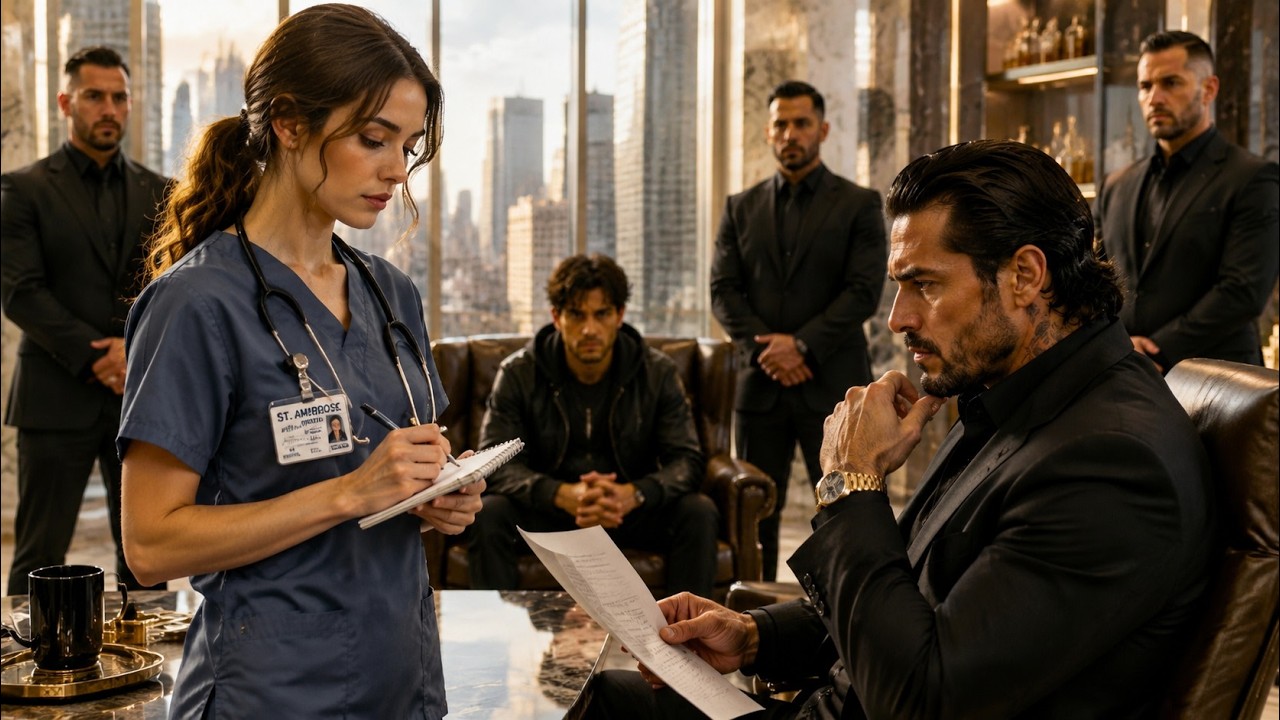
Serena pulled the note card from her pocket, turned it over, and began writing.
She listed supplies in neat block letters.
She added wound culture swabs, syringes, alcohol pads, sterile drapes, suture removal tools, and a portable lamp.
“No substitutions,” she said.
“We’re not running a discount pharmacy.”
“I’ve seen wealthy people make cheap decisions.”
This time, the man by the window did smile.
Voss glanced at him.
The smile disappeared.
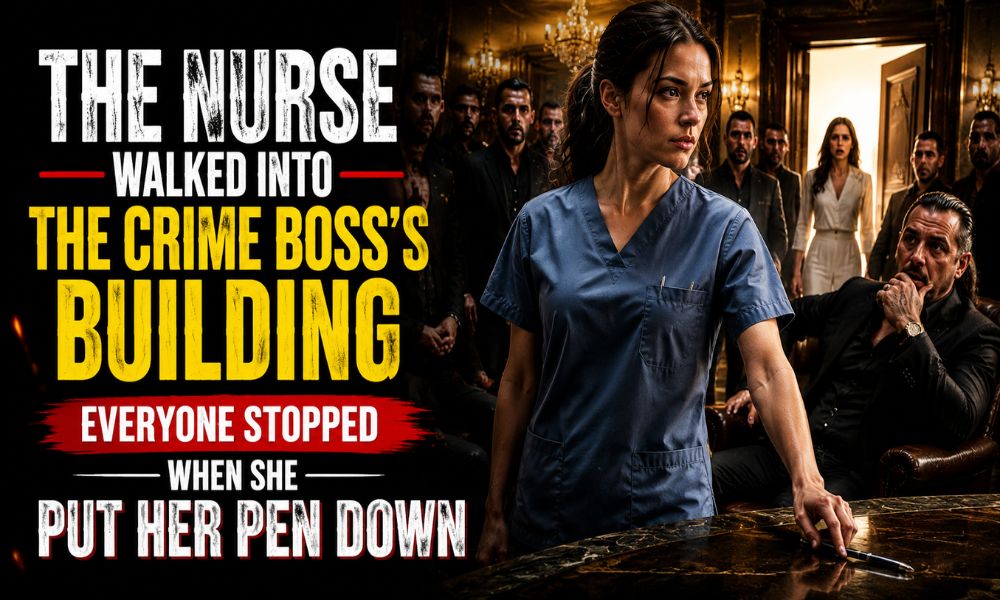
Serena set her pen down on the polished table.
The click echoed through the room.
Every man stopped moving.
It was not loud.
But in a place where Voss’s men waited for his gestures, the simple act of a nurse placing down a pen felt like an order.
“I will assess him,” Serena said. “I will not promise he survives. If I believe he needs surgery, he goes to a hospital. If you refuse, I walk away. And my brother leaves with me.”
One of the men stepped forward.
“You don’t make conditions here.”
Serena turned to him.
“No. I make conditions around a patient.”
The room went silent.
Voss lifted one hand.
The man stopped.
Then Voss picked up Serena’s list.
“You’ll have what you requested.”
“And Dominic?”
“Your brother remains untouched while you treat Theo.”
“That wasn’t my condition.”
“It is the condition I am offering.”
Serena looked at him.
She had negotiated with surgeons, insurance representatives, angry relatives, intoxicated patients, and administrators who cared more about bed turnover than recovery.
But Voss was different.
He did not pretend morality mattered to him.
That made the boundaries clearer.
“How long?” she asked.
“Until Theo is well enough to travel.”
“Travel where?”
“A meeting.”
“When?”
“Three weeks.”
Serena considered the discharge summary.
“If the infection hasn’t spread and there’s no internal leak, he might be stable enough by then. But I decide what ‘well enough’ means medically.”
Voss folded the supply list and handed it to the man beside him.
“You decide whether he can stand, walk, and remain conscious.”
“That is not the same thing.”
“It is close enough for my purposes.”
Serena picked up her pen.
“No,” she said. “It isn’t.”
For a brief second, something cold entered Voss’s expression.
Then it was gone.
“Show her to Theo.”
The apartment was two floors below.
Its living room had been cleared of furniture. A hospital bed stood near the center beneath a portable light. Boxes of medical supplies were stacked against one wall, some unopened, others clearly purchased in haste.
Theo Russo lay beneath a gray blanket.
He was broad-shouldered, pale, and sweating.
His face tightened when Serena entered.
“No.”
Serena stopped beside the bed.
“No what?”
“No nurse.”
“You have a temperature of one hundred three, your blood pressure is low, and you smell like an infected surgical wound. You’re in a poor position to reject staffing.”
Theo looked toward Voss.
“I’m fine.”
Serena pulled on gloves.
“You’re shivering under two blankets.”
“It’s cold.”
“It’s seventy-four degrees.”
Theo muttered something under his breath.
Serena lowered the blanket and examined the dressing across his abdomen.
The gauze was stained with cloudy drainage.
Her stomach tightened.
Not from disgust.
From recognition.
The tissue around the incision was red and swollen. Several staples had pulled against the skin. A thick line of fluid had collected near the lower edge of the wound.
“When was this changed?”
“This morning,” one of the men said.
“By whom?”
“Me.”
“Did you wash your hands?”
The man looked offended.
“Of course.”
“For how long?”
He did not answer.
Serena removed the dressing carefully.
Theo hissed and grabbed the bedrail.
“Pain level?”
“Three.”
“It’s eight.”
“It’s three.”
“People who say three don’t turn white when gauze moves.”
She pressed lightly near the incision.
Theo cursed.
A pocket of foul-smelling fluid seeped between two staples.
Serena looked at Voss.
“This is not just surface irritation.”
“Can you treat it?”
“I can clean it, culture it, start fluids, and begin antibiotics once I see the records. But if there’s an abscess or a leak inside his abdomen, he needs imaging and possibly another operation.”
Theo lifted his head.
“I’m not going back.”
Serena leaned closer.
“You may believe staying out of the hospital proves loyalty. It doesn’t. Dead men are not loyal. They’re dead.”
Theo stared at her.
Voss said nothing.
Serena checked Theo’s pulse, oxygen level, skin temperature, mental status, and abdominal tenderness.
When she finished, she removed her gloves and stood.
“I need his full chart within an hour.”
“It’s being obtained,” Voss said.
“I also need someone to watch him continuously.”
“We have people.”
“I need someone who can tell the difference between sleeping and losing consciousness.”
The man who had challenged her earlier frowned.
Serena pointed to him.
“Not him.”
Theo laughed once, then winced.
The tension in the room shifted.
Only slightly.
But enough.
Serena spent the next two hours cleaning Theo’s wound.
She worked slowly, flushing infected fluid from the incision while he gripped the rail and refused pain medication until Voss ordered him to take it.
When the hospital records arrived, they confirmed what Serena had suspected.
Theo had been discharged with strict instructions to complete intravenous antibiotics through an outpatient service.
He had attended no appointments.
The last wound culture showed bacteria resistant to several common medications.
Serena chose an antibiotic based on the sensitivity report and instructed one of Voss’s men on how to prepare the infusion without contaminating the line.
“Do not touch this,” she said, pointing to the sterile connector.
“I know how an IV works.”
“Then explain it.”
The man stared at her.
Serena waited.
After five seconds, Voss said, “Explain it.”
The man could not.
Serena taught him.
By noon, Theo’s first bag of fluid had finished. His pressure improved slightly. His heart rate remained high, but he was more alert.
Serena wrote every medication, dose, time, temperature, and blood pressure reading on a sheet taped to the wall.
Voss stood behind her, reading.
“You document everything.”
“I like evidence.”
“Evidence can become dangerous.”
“Only when someone has something to hide.”
Voss looked at the handwritten chart.
“Everyone has something to hide.”
Serena capped her pen.
“Then they should be careful what they make nurses witness.”
She returned that evening after sleeping for three hours.
Then again the next morning.
For the first four days, Theo’s fever rose and fell unpredictably.
At 3:10 on the second night, his pressure dropped.
Serena was halfway through her shift at St. Ambrose when Voss’s driver appeared near the ambulance entrance.
She handed off her patients, told the charge nurse she had a family emergency, and climbed into the waiting car.
When she reached the apartment, Theo was barely responsive.
His skin was gray.
His breathing was fast and shallow.
Serena checked his abdomen and found the swelling worse.
“He needs imaging now.”
Theo’s eyes opened.
“No hospital.”
Serena turned to Voss.
“This is the boundary.”
Voss stood at the foot of the bed, his jaw tight.
For the first time since she had met him, he looked uncertain.
Not frightened.
Uncertain.
Men like Voss were comfortable controlling people.
The body was harder to intimidate.
“What are the alternatives?” he asked.
“Bring in a surgeon, portable ultrasound if possible, labs, and someone capable of placing a central line if his pressure crashes. But if he has an internal leak, none of that replaces an operating room.”
Voss made three phone calls.
Within ninety minutes, a private physician arrived with equipment that most urgent care centers did not possess.
The ultrasound showed a fluid collection near the surgical site.
The physician wanted Theo transferred.
Theo refused.
Voss stood over him.
“You’ll go.”
“I can handle it.”
“No,” Serena said. “You can endure pain. That is not the same as handling an infection.”
Theo looked at Voss.
Something passed between them.
A history Serena did not know.
Finally, Theo nodded.
They moved him through a private entrance to a small surgical facility across the river. A surgeon drained the abscess and confirmed there was no active intestinal leak.
Theo returned to the apartment twelve hours later, exhausted but alive.
After that, he stopped arguing with Serena about every instruction.
Not completely.
But enough.
Over the next two and a half weeks, Serena lived between two worlds.
At St. Ambrose, she wore an employee badge, answered call lights, argued for additional pain medication, and microwaved soup at odd hours.
At Voss’s apartment, armed men moved aside when she entered.
They began keeping the exact brand of coffee she drank in a cabinet near Theo’s room.
No one mentioned who had noticed.
Serena never asked.
Theo improved slowly.
His fever disappeared.
The drainage decreased.
His appetite returned.
On the eighth day, he sat upright for twenty minutes.
On the eleventh, Serena made him stand.
He took three steps before sweat appeared across his forehead.
“That enough?” he asked.
“For today.”
“I can do more.”
“You can also tear your incision.”
He looked at Voss, who was reading messages near the window.
“You hear how she talks to me?”
Voss did not look up.
“She talks to everyone that way.”
Serena checked Theo’s pulse.
“That is not true.”
Theo raised an eyebrow.
“I’m nicer to cooperative people.”
For the first time, he smiled at her without sarcasm.
The men around Voss treated Theo differently from one another.
Some feared him.
Some respected him.
A few seemed to love him in the complicated way men loved someone who had saved their lives and now owned pieces of them.
Theo spoke of Voss with absolute loyalty.
When Serena asked how long they had known each other, Theo said, “Since before he was Voss.”
She did not ask what that meant.
She learned enough simply by watching.
Meetings happened at odd hours.
Men arrived angry and left quiet.
Envelopes changed hands.
Names were spoken once and never repeated.
Voss rarely raised his voice.
He did not need to.
One afternoon, Serena was changing Theo’s dressing when she heard a man in the next room begging for more time.
“I have children,” the man said.
“So does the person whose money you lost,” Voss replied.
“I can fix it.”
“You already had that opportunity.”
There was no violence.
Not then.
But the silence after the man left felt heavier than shouting.
Serena finished the dressing and wrote the date on the tape.
Theo watched her.
“You don’t ask questions.”
“I ask medical questions.”
“You hear things.”
“I hear many things at the hospital too.”
“And you keep them to yourself?”
“When they aren’t my business.”
Theo studied her.
“That’s why he likes you.”
Serena looked up.
“Voss does not like me.”
Theo gave a tired laugh.
“You told him no in front of six people and you’re still here.”
“That is a low standard for affection.”
“It’s a high standard in this building.”
Two days later, Voss asked Serena to join him in the conference room.
There were no other men present.
A folder sat on the table.
Serena remained standing.
“What is it?”
“Theo will attend a meeting next Thursday.”
“He is not cleared for strenuous activity.”
“He will sit.”
“He still needs antibiotics.”
“He can receive them before and after.”
Serena folded her arms.
“What kind of meeting requires a recovering gunshot victim?”
“The kind where absence is interpreted as weakness.”
There it was.
The real reason Theo had needed to survive.
Not friendship alone.
Not loyalty alone.
Appearance.
Power depended on what others believed.
And Voss needed the room to believe Theo was still standing beside him.
“You said Dominic’s debt was connected to this meeting,” Serena said.
“It is.”
“How?”
Voss opened the folder.
Inside were transaction records, loan documents, screenshots of messages, and photographs of Dominic entering clubs and apartments Serena had never seen.
She sat down without meaning to.
Four hundred thousand dollars was not one debt.
It was a chain of them.
Money borrowed to cover money already lost.
Interest paid with new loans.
Promises made to multiple people.
Dominic had been trying to outrun the consequences by creating more of them.
“He told me it was gambling,” Serena said.
“It began with gambling.”
“What did it become?”
“Transporting cash. Signing for merchandise. Introducing people who should not have been introduced.”
Serena looked at one photograph.
Dominic stood beside a black car, smiling nervously while two men loaded cases into the trunk.
“What was in those?”
“Enough to make the photograph useful.”
“Did he know?”
“He knew enough.”
Serena closed the folder.
“What happens at the meeting?”
“Debts are assigned. Territories are adjusted. Some obligations disappear. Others become permanent.”
“And Dominic?”
“That depends on who controls his debt when the meeting ends.”
Serena felt a cold pressure behind her ribs.
“What do you want?”
“Theo at my side.”
“You already have that.”
“I want him strong enough that no one questions whether he can remain there.”
“And if he is?”
“I take responsibility for Dominic’s debt.”
Serena stared at Voss.
“You forgive it?”
“No.”
The answer came too quickly.
“Then what does responsibility mean?”
“It means no one removes his fingers. No one puts him in a river. No one collects from you.”
“And Dominic?”
“He works.”
“For you.”
“For an organization I control.”
“For how long?”
“Until his value equals what he owes.”
“That could take the rest of his life.”
“If he is disciplined, it will not.”
Serena stood.
“I want it in writing.”
Voss leaned back slightly.
“You want a written criminal agreement?”
“I want your signature beneath the terms you just stated.”
“That document would be dangerous to possess.”
“So is trusting you.”
Voss looked almost amused.
Almost.
“You believe paper protects you?”
“No. I believe people reveal themselves when asked to put promises on paper.”
The room remained silent.
Then Voss pulled a blank sheet from the folder.
He wrote slowly.
Dominic Mack’s debt would be transferred under Voss’s authority.
No physical harm would come to Dominic as long as he complied with assigned work.
No collection would be pursued against Serena.
Dominic’s service would be reviewed after twenty-four months.
Voss signed the bottom.
Then he pushed the page across the table.
Serena read every word.
“What does ‘reviewed’ mean?”
“It means reviewed.”
“It does not mean released.”
“No.”
“Change it.”
Voss’s eyes lifted.
“To what?”
“If he follows instructions, commits no theft, and creates no additional debt, he is released after twenty-four months.”
“That is generous.”
“He nearly died because of a debt you allowed to grow.”
“He nearly died because he continued making choices after every warning.”
Serena held his gaze.
Both statements were true.
That was the problem.
Voss picked up the pen, crossed out the sentence, and rewrote it.
After twenty-four months of compliance, the obligation would be considered fulfilled.
He initialed the change.
Serena folded the paper.
“When Theo is medically cleared to attend, I’ll tell you.”
“He will attend.”
“Then you’d better hope I clear him.”
For the first time, Voss smiled openly.
It was not warm.
But it was real.
“You would have done well in another profession.”
“I already do well in mine.”
Dominic appeared at the apartment three days before the meeting.
Serena found him sitting at the small kitchen table, staring at his hands.
He looked older than twenty-six.
His face was thinner. His clothes hung loosely from his shoulders. A healing cut marked his lower lip.
When Serena entered, he stood too quickly.
“Serena.”
She put down her bag.
For years, she had looked at Dominic and seen the boy who slept beside their mother’s hospital bed.
The teenager who worked weekends to help pay the electricity bill.
The younger brother who once walked three miles in the rain because he had spent his bus money buying Serena a birthday cake.
That version of him had protected him from her anger.
Now she forced herself to see the man at the table.
A man who had borrowed four hundred thousand dollars from people who threatened dismemberment.
A man whose choices had dragged her into a building with armed guards.
“You almost got yourself killed,” she said.
Dominic looked down.
“I know.”
“No. You know people are angry. You don’t understand how close you were.”
“I understand.”
“Then look at me.”
He did.
His eyes were red.
Serena felt anger rise in her chest, hot and immediate.
But beneath it was something worse.
Relief.
He was alive.
She hated that survival had become the standard.
“Why didn’t you tell me?” she asked.
“What would you have done?”
“I would have helped.”
“With four hundred thousand dollars?”
“With the first five thousand. Before it became twenty. Before twenty became eighty. Before you started carrying things for strangers.”
Dominic swallowed.
“I thought I could fix it.”
“That sentence has ruined more lives than bad luck ever did.”
He sat again.
Serena remained standing.
“What does Voss want you to do?”
“I don’t know yet.”
“You do know something.”
Dominic rubbed his palms against his jeans.
“He said there might be work after the meeting.”
“What kind?”
“Driving. Deliveries. Keeping records.”
“No side deals.”
“I know.”
“No borrowing.”
“I know.”
“No gambling.”
“I stopped.”
Serena leaned both hands on the table.
“Do not say ‘I know’ unless your actions prove it.”
Dominic flinched.
She had never spoken to him that way.
Maybe that was part of the problem.
For years, Serena had confused protecting him with softening every consequence.
She had paid his rent.
Covered his phone bill.
Lied to their aunt about why he missed Christmas.
Called his employer when he disappeared for three days.
Every rescue had given him one more reason to believe the fall was survivable.
It had not saved him.
It had delayed the impact.
“For the next two years,” Serena said, “you tell me every financial decision before you make it.”
Dominic gave a bitter laugh.
“I’m twenty-six.”
“And you owe four hundred thousand dollars.”
His mouth closed.
“You do exactly what Voss tells you, unless it involves hurting someone. If anyone offers you a faster way out, you walk away. If you feel embarrassed, you live with it. If you feel trapped, you call me. If you lie to me again, I will not cover for you.”
Dominic’s eyes filled.
“Voss might make me work for him.”
“I know.”
“You’re okay with that?”
“No.”
Serena sat across from him.
“But I am more okay with you working than being buried.”
Dominic stared at the table.
After a while, he whispered, “I’m sorry.”
Serena wanted to accept it.
She wanted the words to repair everything because that would have been easier.
Instead, she said, “Be different.”
Dominic nodded.
A tear dropped onto his hand.
Serena did not move to wipe it away.
Some pain was not a wound she was supposed to dress.
By Wednesday, Theo could walk the length of the apartment without support.
He tired quickly, but his color had returned. The incision was closing. His lab results showed the infection was under control.
Serena changed his dressing one final time before the meeting.
“You’ll sit as much as possible,” she said. “No alcohol. No pain medication unless you’ve eaten. If you feel dizzy, you tell someone immediately.”
Theo buttoned his shirt.
“You know where we’re going?”
“No.”
“You want to?”
“No.”
He looked at her in the mirror.
“You’re a terrible liar.”
Serena taped a small packet of emergency supplies closed and handed it to him.
“I want Dominic alive. I do not need details.”
Theo took the packet.
“He’ll be all right.”
“That isn’t a promise you can make.”
“No,” Theo said. “But Voss can.”
Serena looked toward the doorway.
Voss stood there in a black suit.
He looked from Theo to Serena.
“Is he ready?”
Serena checked Theo’s posture, breathing, and the faint sheen of sweat near his hairline.
“Medically, he should still be resting.”
Voss waited.
Serena turned to Theo.
“If the incision pulls or you develop sudden pain, you leave. Not in an hour. Not after the conversation. Immediately.”
Theo nodded.
Serena looked at Voss.
“He can attend for a limited period.”
Voss gave a slight nod.
That was all.
No thanks.
No celebration.
But the men outside shifted when Theo walked into the hall under his own strength.
Serena understood then that Theo’s recovery was not private.
It was theater.
Every step he took was a message.
Voss had not been weakened.
His people had not been broken.
The man who had been shot was still standing.
The meeting took place Thursday afternoon.
Serena was not there.
She was at St. Ambrose, helping an exhausted father hold his newborn daughter while the mother underwent emergency surgery.
At 4:18 p.m., Serena checked her phone.
No messages.
At 5:02, she checked again.
Nothing.
At 6:40, she inserted a catheter, cleaned blood from the floor, and forced herself not to imagine Dominic kneeling in a warehouse.
At 8:11, her phone rang.
Dominic.
Serena stepped into the stairwell.
“Hello?”
For a second, she heard only breathing.
Then Dominic said, “It’s done.”
“What does that mean?”
“I’m okay.”
“Where are you?”
“With Voss’s people.”
“Are you hurt?”
“No.”
“Did anyone touch you?”
“No.”
Serena leaned against the concrete wall.
The pressure inside her chest loosened so suddenly that her knees felt weak.
“What happened?”
“I can’t explain it over the phone.”
“Then tell me what you can.”
Dominic was quiet.
Finally, he said, “He kept his word.”
Serena closed her eyes.
“Thank you,” Dominic whispered.
The call ended.
She remained in the stairwell for another thirty seconds.
Then the overhead speaker called for medical assistance in room twelve.
Serena put the phone away and returned to work.
Three days passed.
Voss did not contact her.
Theo did not call.
Dominic sent one message saying he had begun working at a freight office in Queens.
Serena did not ask what the office moved.
On Sunday evening, while she was walking through the hospital parking garage, her phone rang.
This time, Voss’s name appeared on the screen.
She had saved the number after the fourth call, labeling it simply A.V.
“Hello?”
“Theo saw a physician today,” Voss said.
“And?”
“He has been formally discharged from care.”
“He still needs ten more days of oral antibiotics.”
“I’m aware.”
“No alcohol with the medication.”
“I’m aware of that too.”
Serena reached her car and unlocked it.
The overhead light flickered.
“Then why are you calling?”
Voss paused.
“The meeting ended favorably.”
“For you?”
“For several people.”
“And Dominic?”
“His previous debts no longer exist.”
Serena leaned against the car door.
“What does that mean exactly?”
“It means the men who owned his obligations left without them.”
“And now you own them.”
“For twenty-four months, he works under my protection.”
“Protection and ownership are not the same thing.”
“They often are.”
Serena disliked the answer.
But she understood it.
Voss continued.
“Theo’s presence changed the room.”
“You mean people thought you were weak because he had been shot.”
“I mean people had prepared to take advantage of his absence.”
“And when he walked in?”
“They reconsidered.”
Serena pictured it.
A long table.
Men who had already divided territory in their minds.
Conversations planned around the assumption that Voss would arrive diminished.
Then Theo entering beside him, pale but upright.
Alive when everyone had expected him hidden or dead.
Voss had needed a symbol.
Serena had unknowingly repaired one.
“You could have told me,” she said.
“You would still have treated him.”
“Yes.”
“But you would have understood the leverage.”
“I understood enough.”
Voss was silent for a moment.
Then he said, “I won’t forget what you did.”
Serena opened the car door.
“I did my job.”
“No,” Voss replied. “You did your job in a room where everyone else had stopped thinking clearly.”
“That is still my job.”
She expected him to end the call.
Instead, he said, “Your brother will be given a chance to become useful.”
“He needs a chance to become honest.”
“Sometimes usefulness comes first.”
“Not forever.”
“No,” Voss said. “Not forever.”
The line went quiet.
Serena sat in the driver’s seat.
“Voss?”
“Yes?”
“Do not mistake my silence for approval.”
“I don’t.”
“And do not involve me again.”
A soft exhale came through the phone.
It might have been amusement.
“I hope I never need to.”
The call ended.
Serena placed the phone in the cup holder and started the engine.
A warning light appeared on the dashboard.
It had been there for six months.
She opened her banking app to check whether she had enough money for repairs.
The balance did not make sense.
Serena stared at the screen.
She refreshed it.
Then refreshed it again.
A transfer had been deposited that afternoon.
The amount was large enough to clear the remaining thirty-seven thousand dollars of her student loan.
Large enough to replace her failing car.
Large enough to leave an emergency fund she had never been able to build despite working double shifts for years.
The transaction description contained only two words.
PROFESSIONAL SERVICES.
Serena’s first reaction was anger.
She called Voss.
He answered immediately.
“What did you do?”
“I compensated you.”
“I did not agree to that amount.”
“You did not provide an invoice.”
“I am not one of your contractors.”
“No,” Voss said. “My contractors are less reliable.”
“Take it back.”
“No.”
“I’m serious.”
“So am I.”
Serena gripped the steering wheel.
“You do not get to buy my silence.”
“Your silence was never for sale.”
“Then what is this?”
“Payment for keeping a man alive when the people around him had enough money to purchase anything except competence.”
Serena said nothing.
Voss continued.
“You asked for proper records. Proper medication. Proper equipment. You told armed men to wash their hands. You stopped treatment when the conditions became unsafe. You forced Theo into surgery when no one else could.”
“That does not justify this.”
“In my world, people are paid for changing outcomes.”
“In my world, we don’t measure a life that way.”
“Your hospital does.”
The answer struck harder than she expected.
Serena thought of billing codes.
Insurance denials.
Administrators calculating nurse-to-patient ratios.
Patients choosing between medication and rent.
She hated that Voss had found a true thing to use against her.
“You cannot send money to people without warning,” she said.
“I already did.”
“And if I report it?”
“You are free to do so.”
“You don’t believe I will.”
“No,” Voss said. “I believe you will decide based on what causes the least harm.”
Serena stared through the windshield at the concrete wall.
He had learned her too well.
“If this creates an obligation,” she said, “I return every dollar.”
“It creates none.”
“I want that in writing.”
Voss laughed.
It was the first time she had heard him do it.
“I’ll have it delivered tomorrow.”
The call ended.
Serena remained in the garage for a long time.
Cars entered and left.
Headlights swept across the windshield.
Somewhere above her, an ambulance arrived at the emergency entrance, its siren cutting through the concrete levels.
She thought about the first morning she had entered Voss’s building.
She had believed she was powerless because she had no money, no weapons, and no influence.
But she had walked into a room of dangerous men carrying something none of them possessed.
Knowledge.
Discipline.
The ability to remain calm while others panicked.
They controlled buildings, money, and fear.
But when Theo’s blood pressure dropped, they had all looked at her.
When the wound opened, they had waited for her instructions.
When she placed her pen on the table and said no, everyone had stopped.
Not because she was stronger than them.
Because competence creates its own kind of authority.
It does not need to shout.
It does not need to threaten.
It simply becomes impossible to ignore.
Serena used part of the money to clear her student loan.
She placed the rest in a separate account and did not touch it for months.
She kept working at St. Ambrose.
She continued driving the old Honda until the transmission finally failed at an intersection during a rainstorm.
Only then did she replace it.
Dominic worked for Voss for twenty-four months.
He arrived every morning at a freight office before seven.
He tracked shipments, reconciled invoices, and delivered sealed envelopes he had been told not to open.
Once a week, he met Serena for breakfast.
At first, he spoke very little.
Then, slowly, he began telling the truth without being forced.
He admitted when he was afraid.
He admitted when someone offered him money to manipulate records.
He admitted when he wanted to gamble again.
Serena never rescued him from those moments.
She made him choose.
At the end of the twenty-fourth month, Dominic received an envelope.
Inside was the agreement Voss had signed.
Across the bottom, beneath Serena’s folded copy of the terms, Voss had written one sentence.
OBLIGATION FULFILLED.
Dominic walked out of the freight office carrying nothing but his jacket and the paper.
Voss kept his word.
Theo recovered fully.
Serena saw him only once more.
Nearly three years after the first phone call, he appeared in the St. Ambrose emergency department with a young woman whose hand was wrapped in a bloody towel.
The woman had cut her palm on broken glass.
Theo spotted Serena behind the nurses’ station.
For a second, both of them froze.
He looked healthier. Heavier. A faint line of scar tissue showed above his collar when he moved.
Serena approached the woman.
“What happened?”
“Glass broke while I was washing it,” she said.
Serena guided her toward an examination room.
Theo remained in the hallway.
As Serena passed him, he said quietly, “I didn’t argue with her about coming here.”
Serena looked at him.
“Growth.”
He smiled.
Then his expression became serious.
“He was right about you.”
“Who?”
“Voss.”
Serena waited.
Theo glanced toward the treatment room.
“He said the most dangerous person in that building wasn’t the one carrying a gun.”
Serena almost laughed.
“That sounds dramatic.”
“He said it after you left.”
“What exactly did he say?”
Theo looked at her.
“He said, ‘She knows what she’s worth, and none of us can make her forget it.’”
A physician called Serena’s name from down the hall.
She turned to leave.
Theo said, “Thank you.”
This time, Serena allowed herself to accept it.
“You’re welcome.”
Then she went back to work.
Years later, Serena would still remember the exact time of the first call.
2:47 a.m.
She would remember the smell of old coffee, the cold medication room, and the stranger calmly explaining what could happen to Dominic’s fingers.
But that was not the moment that changed her life.
The real moment came hours later, inside a silent room on the sixth floor of an unmarked building.
A powerful man had expected her to beg.
His men had expected her to obey.
Instead, Serena wrote down exactly what she needed, placed her pen on the table, and made her conditions clear.
And everyone stopped.
Because power is not always the person who owns the building.
Sometimes, power is the person everyone in the building suddenly realizes they cannot afford to lose.