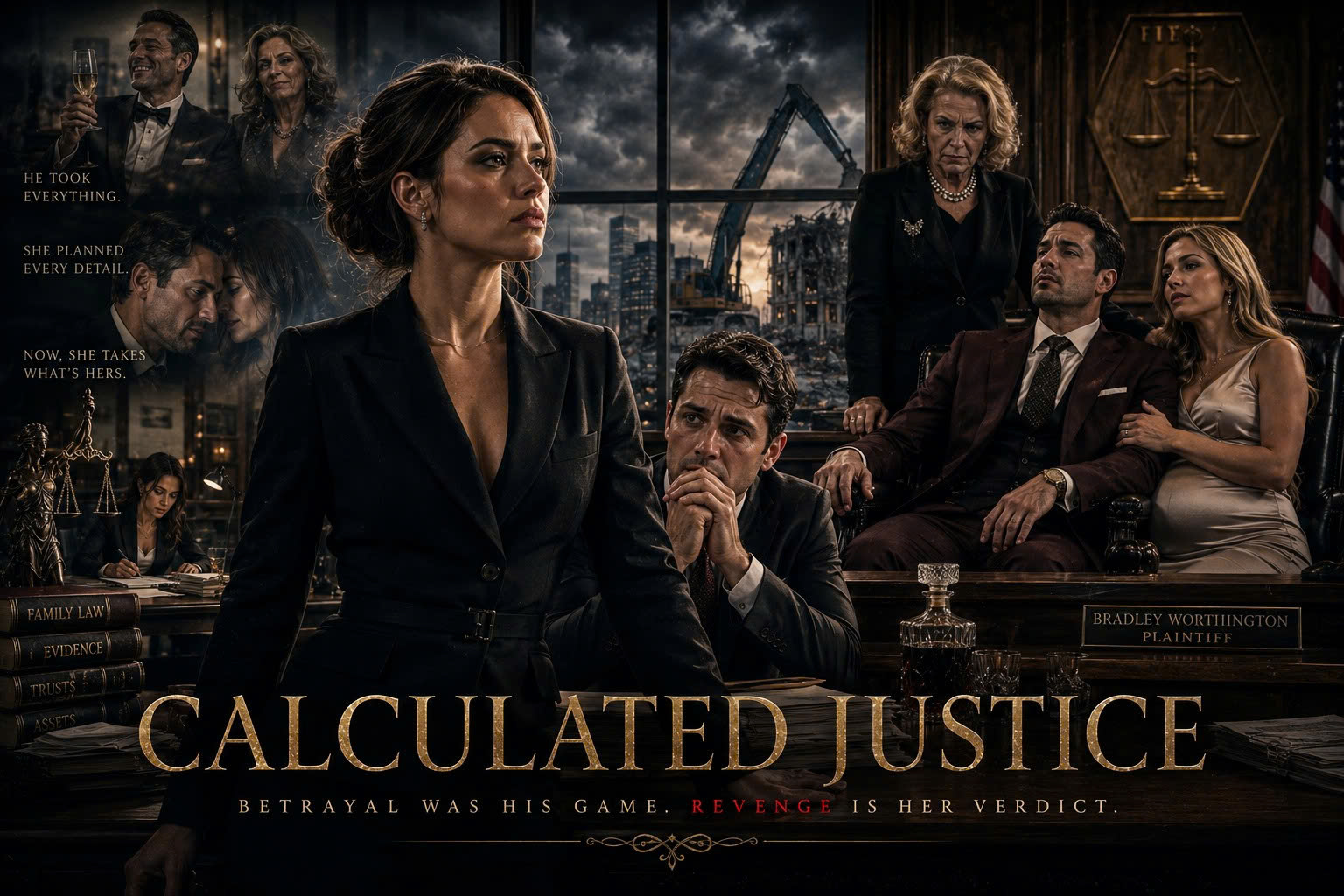
The first thing I saw when I returned from London was my life lying in the rain.
A black garbage bag had split open at the edge of the driveway, spilling silk blouses, shoes, framed photographs, and confidential work files across the wet concrete.
Seattle rain had soaked through everything.
One of my coats lay beneath the rear tire of a contractor’s truck.
My framed graduate degree had been thrown face down into a puddle.
Pages marked CONFIDENTIAL—BOARD REVIEW ONLY clung to the pavement like dead leaves.
For several seconds, I remained inside the car with both hands on the steering wheel.
My flight had landed six hours early.
Bradley thought I was still somewhere above the Atlantic.
That was the only reason I was seeing the truth before they had time to package it into a polite lie.
My name is Megan Clarke.
I was thirty-three years old, married for five years, and known to my husband’s family as a quiet finance employee who traveled too much and earned just enough to be useful.
They believed Bradley had paid for our house.
They believed his startup had made him wealthy.
They believed I depended on him.
I had encouraged all three assumptions.
Not because I was ashamed of my work.
Because money changed the way people behaved around you.
Before our marriage, I had watched friendships become negotiations the moment people learned the value of my investments. So when Bradley and I met, I described myself simply as a finance executive.
I did not explain that I was a managing partner at Northstar Meridian Ventures.
I did not explain that I controlled the fund through which more than $1.8 billion in capital was deployed.
And I never told his mother that the suburban mansion she called “Bradley’s achievement” belonged to an LLC controlled entirely by me.
That Friday afternoon, as rain beat against the windshield, the house no longer looked like a home.
It looked like a hostile takeover.
I stepped out of the car.
A demolition saw screamed from inside.
Someone was tearing apart the western side of the house.
My home office was on that side.
I crossed the driveway, picked up my work laptop, and placed it beneath my coat.
The front door stood open.
Boot prints covered the marble foyer.
Plastic sheeting hung from the ceiling, and white dust floated through the air.
Three contractors were carrying pieces of walnut shelving out of my office.
The custom shelves had been built to hold financial records, books, and the awards I rarely displayed.
Now they were broken into sections.
“Stop.”
The word came out calmly.
One contractor turned.
“Ma’am, you cannot be in here without protective equipment.”
“This is my house.”
He looked uncertain.
Behind him, a familiar voice said, “Not anymore.”
Beatrice Hale stepped through the dust.
My mother-in-law wore a cream pantsuit, pearl earrings, and a satisfied expression.
She had always treated cruelty as proof of breeding.
Her gaze moved over my travel clothes.
“You were not supposed to be back until tomorrow.”
“I noticed.”
She gestured toward the ruined office.
“We are converting this into a nursery and playroom.”
“For whose child?”
A woman appeared behind her.
Brittany Sloan.
Bradley’s twenty-six-year-old executive secretary.
She was wearing my blue cashmere robe.
One hand rested on the curve of her pregnant stomach.
The robe had been a gift from my mother.
Brittany smiled as though she had been rehearsing the moment.
“You are home.”
“So are you, apparently.”
Bradley entered from the hallway.
He had removed his jacket and rolled up his sleeves, adopting the pose he used when he wanted to appear practical and reasonable.
“Megan,” he said. “Let’s not make this ugly.”
I looked from him to Brittany.
“How far along?”
Brittany answered.
“Six months.”
Six months.
Bradley had sat beside me at a fertility consultation five months earlier and held my hand while the doctor discussed why stress might be affecting our chances of conceiving.
He had told me we had time.
He had kissed my forehead in the parking garage.
That evening, he had probably gone to Brittany.
Beatrice stepped closer.
“At least now this family will have an heir.”
I looked at her.
“An heir to what?”
Her expression tightened.
“To Bradley’s legacy.”
Brittany stroked her stomach.
“We did not want you finding out this way.”
“Then how did you want me to find out?”
Bradley sighed.
“I was going to explain after your trip.”
“Before or after you destroyed my office?”
“It was necessary to prepare the house.”
“For your secretary?”
“For my child.”
The contractors had stopped working.
Bradley noticed them listening.
He lowered his voice.
“This marriage has not worked for a long time.”
“That is interesting. You renewed our anniversary reservation three weeks ago.”
“I was trying to keep things stable.”
“For whom?”
“For everyone.”
Beatrice laughed softly.
“Megan, do not embarrass yourself. You have a career. That should be enough for a woman like you.”
“A woman like me?”
“Independent. Cold. Barren.”
The final word landed between us.
Bradley did not correct her.
Brittany lowered her eyes, pretending discomfort while wearing my robe in my house.
I removed my wedding ring.
Bradley watched closely.
“What are you doing?”
“What should have been done six months ago.”
I placed the ring on the foyer table.
He reached into his pocket and produced an envelope.
“I have prepared something to make the transition easier.”
Inside was a check for $5,000.
Beneath it lay a nondisclosure agreement and a waiver.
The documents required me to surrender any claim to the house, Bradley’s company, his personal assets, future income, and intellectual property.
They also prohibited me from discussing his relationship with Brittany.
I read the first page.
Then the second.
Beatrice smiled.
“Five thousand dollars is generous.”
“For five years of marriage?”
Bradley folded his arms.
“You have a salary.”
“I do.”
“You will be fine.”
“What do you believe I earn?”
He shrugged.
“Maybe ninety thousand. A little more now.”
Brittany looked surprised.
She had probably assumed I worked in back-office accounting.
Bradley continued.
“The house is mine. The company is mine. The family assets are mine. You came into this marriage with a job and some savings.”
“Is that what you told your lawyer?”
“It is the truth.”
I looked toward the contractors.
“Did you authorize the destruction of the office?”
“Yes.”
“In writing?”
Bradley frowned.
“Why does that matter?”
“It does not.”
I folded the check and documents and placed them back inside the envelope.
“You will sign?” he asked.
“I will review them.”
Relief crossed his face.
He had expected tears.
A scene.
Threats.
Instead, I picked up my laptop.
Beatrice moved aside.
“That is all you are taking?”
“For now.”
“Good,” she said. “The rest can be sent somewhere cheap.”
Brittany’s hand tightened around the robe.
“You should leave before you become emotional.”
I looked at her.
“You are wearing my mother’s robe.”
Bradley stepped between us.
“It is just clothing.”
“No.”
I met his eyes.
“It is evidence of your standards.”
Then I walked out.
Behind me, Beatrice laughed.
“Five thousand dollars is more than she deserves.”
The rain had become heavier.
I carried my laptop to the car, placed it on the passenger seat, and closed the door.
Only then did I breathe deeply.
I did not cry.
Grief would come later.
First came containment.
I called Alexander Vale.
Alexander was not a divorce attorney.
He was my asset-management counsel, trust adviser, and the man who had structured most of the entities Bradley believed were his.
He answered on the second ring.
“You landed early.”
“Yes.”
“Something happened.”
“My husband moved his pregnant secretary into my house.”
Silence.
Then, “Are you safe?”
“Yes.”
“What did he do?”
“He emptied my office into the rain. Contractors are converting it into a nursery.”
Alexander’s voice became colder.
“Whose contractors?”
“I will find out.”
“What do you need?”
“Confirm ownership of the house.”
“MVC Residential Seven owns it. You hold one hundred percent of the membership interest through your trust.”
“Bradley?”
“Occupancy permission only. No title. No beneficial interest.”
“Good. List it.”
“For sale?”
“Immediately. Commercial buyer. Cash. No contingency except title.”
“Market value is approximately $4.6 million.”
“I will take a discount for speed.”
“What about Bradley?”
“Do not notify him.”
Alexander paused.
“What else?”
“Pull the capital structure for Hale Dynamics.”
Bradley’s startup.
Alexander understood before I finished.
“Northstar owns fifty-one percent through three funds.”
“And voting control?”
“Yours.”
“Call an emergency board review.”
“What grounds?”
“I will send them.”
“You have evidence?”
“Not yet.”
“Then why—”
My phone vibrated.
A message from an unknown number appeared.
Please do not ignore this. Bradley has been stealing from the company. I have proof. —Jamal
I read it twice.
Then I said, “I have a lead.”
Alexander did not ask for drama.
“Send me everything. Do not access any system you are not authorized to use. Do not contact Bradley again without counsel.”
“One more thing.”
“Yes?”
“Check whether the condominium Beatrice lives in is personally owned.”
“I know that one. Hale Dynamics purchased it as an executive hospitality residence.”
I looked through the windshield at my mother-in-law standing inside the foyer of my house.
“It is corporate property?”
“Yes.”
“Prepare to reclaim it.”
Alexander exhaled.
“Megan, what exactly are you planning?”
I watched Bradley close the front door.
“An audit.”
I checked into the Meridian Grand under my maiden name.
The top-floor penthouse was maintained by Northstar for visiting partners and investors. Bradley believed my work trips were covered through an employer travel program.
He had never asked enough questions to understand that the employer was mine.
The next morning, I met Jamal Reed in a private conference room.
Jamal was married to Bradley’s younger sister Courtney.
He worked as internal audit director for Hale Dynamics.
Beatrice treated him with polite contempt because he had come from a working-class family and refused to flatter her.
Jamal carried a laptop and two encrypted drives.
He looked exhausted.
“I am sorry,” he said.
“For what?”
“For waiting.”
“How long have you known?”
“I noticed irregular invoices eight months ago.”
“And Bradley?”
“He controls approvals through the chief financial officer. Every time I questioned a vendor, the supporting files were replaced.”
“What vendors?”
He opened the laptop.
Marketing consultancies.
Executive-recruitment firms.
Market-research agencies.
All apparently legitimate.
All incorporated within days of receiving contracts.
Most shared mailing addresses.
Several used nominee managers.
Payments totaled $934,000.
Jamal displayed a flowchart.
“Funds moved from Hale Dynamics to these vendors. Then to two shell accounts. From there, money paid for Brittany’s apartment, jewelry, travel, and medical expenses.”
“And Beatrice?”
“The company purchased her condominium for $1.2 million.”
“I know.”
“She thinks Bradley bought it personally.”
“What else?”
“Courtney’s spa received $280,000 in business-development funding.”
“Did the spa perform services for the company?”
“No.”
“Did Courtney know where the money came from?”
Jamal’s expression hardened.
“She signed the consulting contracts.”
His own wife.
“Why are you bringing this to me?”
“Because yesterday Bradley told the finance team you would no longer be involved in company matters.”
“I was never publicly involved.”
“He said he had removed a minority investor.”
I almost smiled.
“He believes I am the minority investor?”
“He has never seen the full beneficial ownership schedule.”
The three Northstar funds were separately named. Bradley had treated them as independent institutional backers.
Together, they represented fifty-one percent.
I controlled all three.
Jamal continued.
“He is preparing to move another $600,000 next week.”
“For what?”
“A product launch budget.”
“Real purpose?”
“Unknown. Possibly a foreign account.”
I inserted the first drive into a secure laptop.
“Chain of custody?”
“Documented. Copies came from systems I am authorized to audit.”
“Original files preserved?”
“Yes.”
“Have you altered anything?”
“No.”
“Good.”
Jamal looked toward the window.
“Courtney knows something is wrong.”
“Does she know you contacted me?”
“No.”
“Keep it that way.”
He rubbed his forehead.
“I have a son.”
“I know.”
“If Bradley discovers this—”
“You will have protection.”
“I do not need money.”
“I am not offering money.”
I met his eyes.
“I am offering legal support, employment protection, and security for your child.”
He nodded.
“What are you going to do?”
“Let Bradley complete enough of his plan to eliminate every plausible excuse.”
“You want him to keep stealing?”
“I want every existing transaction documented. No one is encouraging additional crimes.”
Jamal understood the distinction.
“When?”
“Tuesday. Three o’clock.”
“What happens Tuesday?”
“Everything.”
Alexander joined us remotely.
By noon, the plan had become a legal operation rather than an emotional response.
First, the house.
A regional developer had wanted the parcel for months because it connected two commercial lots.
Bradley had rejected earlier inquiries without consulting me.
The developer offered $4 million cash with immediate title transfer.
I accepted.
Second, Hale Dynamics.
As majority shareholder, Northstar called an emergency board session.
The independent directors reviewed Jamal’s audit evidence.
Bradley was not notified because he was the subject of the investigation.
The board authorized:
Suspension of Bradley’s executive authority.
Termination for cause if the evidence was confirmed.
Freezing of discretionary executive accounts.
Referral to outside forensic accountants.
Preservation of servers and electronic devices.
Cooperation with federal authorities.
Third, Beatrice’s condominium.
Hale Dynamics’ corporate counsel confirmed that the property was occupied under a revocable license.
No lease.
No ownership interest.
A lawful notice to vacate was prepared.
Fourth, Courtney’s spa.
Payments and equipment purchased with company funds were identified for recovery through court proceedings.
Nothing would be seized without proper legal authority.
Everything would be documented.
At 3:17 that afternoon, Bradley called.
I answered from the penthouse dining table.
“Megan.”
“Bradley.”
“Have you reviewed the agreement?”
“I have started.”
“It is straightforward.”
“Very.”
“My lawyer says the offer expires Tuesday.”
“What time?”
“Three.”
I looked at Alexander, who sat across from me reviewing the sale documents.
“That works.”
Bradley relaxed.
“Good. We can finish this cleanly.”
“How is Brittany?”
He hesitated.
“Fine.”
“And the baby?”
“Healthy.”
“I am glad.”
My calmness confused him.
“Listen, I know yesterday was difficult.”
“You threw my belongings into the rain.”
“Mom overreacted.”
“She directed contractors to destroy my office.”
“It was going to become a nursery eventually.”
“For Brittany’s child.”
“For my child.”
“Of course.”
He lowered his voice.
“The five thousand is conditional on the NDA.”
“I understand.”
“You cannot discuss my private life or company.”
“I understand that too.”
“You will sign Tuesday?”
“Yes.”
He believed me.
After the call, Alexander looked up.
“You intend to sign?”
“I intend to sign a settlement describing assets he does not own.”
Alexander considered this.
“The language must be precise. You cannot misrepresent anything.”
“I will not.”
“If it says he retains the house, the company, and personal accounts, we must disclose their present legal status if asked.”
“He will not ask.”
“His attorney might.”
“Then we answer truthfully.”
A broker called that evening.
The house sale had closed.
Funds cleared.
Title transferred.
The developer intended to begin demolition after the lawful occupancy period expired.
Bradley still believed he owned the property.
Tuesday morning arrived clear and cold.
The courthouse stood beneath a white sky.
I wore a charcoal suit and a simple black coat.
Bradley arrived with Brittany, Beatrice, and Courtney.
They looked like a family attending an award ceremony.
Brittany wore a cream maternity dress and carried a designer bag purchased with Hale Dynamics funds.
Beatrice looked me over slowly.
“That suit is older than your marriage.”
“It lasted longer.”
Courtney laughed.
Bradley stepped forward with his attorney.
“Megan, sign today and this ends.”
“What ends?”
“Your claim on my life.”
Brittany placed a hand on his arm.
He allowed it.
Beatrice spoke loudly enough for people nearby to hear.
“She should be grateful she is receiving anything. Bradley supported her for years.”
I looked at her.
“You truly believe that.”
“I know it.”
“Then today should be educational.”
Bradley’s attorney, Martin Keller, guided us into the mediation room.
My divorce counsel, Elias Hart, was already seated.
Elias was an accomplished litigator who had agreed to appear uneasy.
His tie was slightly crooked.
His briefcase looked overfilled.
When Bradley entered, Elias gave me a concerned glance.
It was excellent theater.
Martin began reading the settlement.
Bradley retained sole possession of the suburban residence.
Bradley retained full ownership and control of Hale Dynamics.
Bradley retained all vehicles, executive accounts, investments, and intellectual property listed in his disclosure.
I received $5,000.
I waived future claims against company property.
I agreed not to discuss confidential marital or business information except as required by law.
The final phrase had been added by Elias.
Martin barely noticed it.
“Any objections?” the mediator asked.
Elias cleared his throat.
“My client understands the terms.”
Bradley smiled.
I signed.
He signed immediately after me.
At 2:57 p.m., the mediator submitted the agreement for final review.
At 2:59, my phone vibrated once.
The board resolution had been entered.
At exactly 3:00 p.m., three things happened.
Hale Dynamics froze Bradley’s executive accounts.
A process server approached Beatrice’s condominium.
The commercial developer took legal possession of the suburban property.
The judge finalized the divorce shortly after.
Bradley left the courtroom smiling.
In the corridor, he stopped in front of me.
“Five thousand dollars,” he said. “Try not to spend it all at once.”
Brittany laughed.
Beatrice stepped closer.
“You walked into this family with nothing, and you are leaving with exactly what you brought.”
I looked at the courthouse clock.
3:06 p.m.
“You should check your phone.”
Bradley frowned.
His screen displayed several missed calls.
The first was from Hale Dynamics’ board chair.
The second was from corporate counsel.
The third was from the bank.
He opened the banking application.
Access denied.
“What did you do?”
“Nothing to your money.”
“My accounts are frozen.”
“Corporate accounts.”
“They are my accounts.”
“No. They belong to Hale Dynamics.”
His attorney moved closer.
“What is happening?”
I looked at Martin.
“Your client has been terminated for cause.”
Bradley laughed once.
“That is impossible.”
“Hale Dynamics’ board voted this morning.”
“I control the board.”
“You hold twelve percent of the company.”
His face changed.
“I founded it.”
“That is not the same as owning it.”
“Northstar’s funds are separate.”
“They are managed by the same controlling partner.”
“Who?”
“Me.”
The corridor became silent.
Brittany stared at me.
Beatrice shook her head.
“That is absurd. You are a finance employee.”
“I am managing partner of Northstar Meridian Ventures.”
Bradley’s lips parted.
“Northstar owns fifty-one percent.”
“Yes.”
“You said you worked for them.”
“I do.”
“You never said—”
“You never asked what my title was.”
Martin turned toward him.
“Is this true?”
Bradley ignored him.
“You invested in my company?”
“I rescued it.”
“That money was from institutional investors.”
“It was from funds I control.”
“You let me believe—”
“I let you describe yourself as self-made.”
Brittany’s phone vibrated.
She checked it.
Her face went pale.
“My card was declined.”
“Company card,” I said.
Bradley looked at her.
“What were you buying?”
“That does not matter.”
“It matters now.”
Beatrice’s phone rang.
She answered irritably.
Then her expression changed.
“What do you mean, vacate?”
The process server had delivered the notice.
She looked at me.
“My condominium belongs to Bradley.”
“No.”
“It was a gift.”
“It was purchased by Hale Dynamics as a corporate residence.”
“You cannot throw me out.”
“The company has revoked your occupancy license.”
“I live there!”
“You have twenty-four hours to remove personal belongings. The company will inventory everything purchased with corporate funds.”
Courtney stepped forward.
“You are insane.”
“Your spa is under forensic review.”
Her face hardened.
“My business has nothing to do with Bradley.”
“Hale Dynamics transferred $280,000 to it under consulting agreements you signed.”
“That was investment capital.”
“For services your spa never performed.”
Courtney looked at Bradley.
He looked away.
Martin held up both hands.
“Everyone needs to stop speaking.”
I turned back to Bradley.
“The board has also referred evidence of suspected embezzlement and wire fraud to federal investigators.”
He stared at me.
“You planned this.”
“I audited it.”
“You sold me out.”
“You stole from a company I controlled.”
He moved closer.
“You still signed the house over to me.”
“No.”
He smiled desperately.
“The settlement says I retain the house.”
“It says you retain whatever legal interest you possess.”
His smile disappeared.
“You had no legal interest.”
“That house is in my name.”
“It was owned by MVC Residential Seven.”
His attorney closed his eyes.
“The LLC,” Martin said quietly.
I nodded.
“I own the LLC.”
Bradley’s face became almost gray.
“The house was sold Friday.”
“To whom?”
“A commercial developer.”
“You cannot sell my home.”
“It was never yours.”
Brittany touched his arm.
“Where are we supposed to live?”
I looked at the blue cashmere robe visible inside her bag.
“That sounds like a personal planning issue.”
Bradley pulled out his phone and called someone.
No answer.
He tried again.
Then he stared at me.
“There are contractors at the house.”
“The buyer has taken possession.”
“My things are inside.”
“A relocation company has been authorized to pack and store personal belongings. The developer will follow all legal procedures before demolition.”
“You sold it while I was living there?”
“Yes.”
“You cannot do that!”
“My attorney disagrees.”
Beatrice made a sound between a sob and a scream.
“You evil, barren—”
I stepped toward her.
“Finish that sentence, and it will become part of the record.”
She stopped.
Brittany removed her hand from Bradley’s arm.
“What exactly did you do with the company money?”
Bradley looked at her.
“Do not start.”
“You told me the condo, the cards, the travel—”
“Be quiet.”
“You said it was your company.”
“It is my company!”
“No,” I said. “It was your position.”
Brittany backed away.
“I need air.”
She walked toward the elevator.
Bradley grabbed her wrist.
“You are not leaving.”
She pulled free.
“My cards do not work, we do not have a house, and the FBI is investigating you.”
“It will be fixed.”
“You told me Megan had nothing!”
The elevator doors opened.
Brittany stepped inside.
She did not look back.
Bradley watched the doors close.
Then he turned to me.
“You destroyed my family.”
I picked up my coat.
“No. I removed its funding.”
One week later, federal agents entered Hale Dynamics’ offices with warrants.
They seized servers, executive laptops, accounting records, and backup drives.
Bradley was questioned regarding more than $900,000 in suspicious transfers.
The investigation expanded when forensic accountants found false vendors, redirected marketing budgets, and altered approval logs.
Brittany disappeared from Seattle two days after her company cards stopped working.
She took several suitcases, the engagement jewelry Bradley had purchased, and whatever cash she could find.
She sent him one message.
I cannot raise a child around a criminal investigation.
Bradley called her repeatedly.
She blocked him.
Beatrice refused to leave the condominium.
The company obtained an order.
A sheriff’s deputy supervised her removal.
She was allowed to take personal clothing, family photographs, and items she could prove she owned.
The imported furniture, artwork, and electronics had been purchased with company funds.
They remained.
Beatrice spent three nights in a luxury hotel.
When her cards stopped working, she moved to a motel near the highway.
The women who had praised her at charity lunches stopped answering calls.
Her social-club membership was suspended for nonpayment.
Courtney’s spa was audited.
Investigators identified equipment and improvements funded through false corporate contracts.
The spa’s accounts were frozen during the litigation.
Courtney blamed Jamal.
He filed for divorce.
The financial records showed that Courtney had signed contracts she knew were false.
Jamal used the evidence to demonstrate the instability surrounding their child.
He received temporary primary custody.
Two weeks after the courthouse confrontation, I invited him to the Northstar penthouse.
He arrived wearing the same tired expression he had worn during our first meeting.
“I heard Bradley was formally charged,” he said.
“Yes.”
“And Courtney?”
“Civil recovery first. Criminal decisions belong to prosecutors.”
Jamal nodded.
“What happens to me?”
I placed a contract on the table.
“Northstar is creating a global internal-audit division.”
He read the title.
Chief Global Audit Officer.
“This is not necessary.”
“It is not a reward for betraying your family.”
“I did not betray them.”
“I know.”
I pushed the contract closer.
“It is an offer based on the quality of your work.”
He read the compensation.
His eyes widened.
“This is more than triple my salary.”
“It includes equity participation, legal protection, and education funding for your son.”
“I cannot accept charity.”
“It is not charity.”
“Then what is it?”
“An investment in someone who chose truth when lying would have been easier.”
Jamal signed three days later.
Bradley’s case took eighteen months.
He eventually pleaded guilty to wire fraud, embezzlement, and misuse of corporate assets.
The sentence was substantial, though lower than it might have been because he cooperated and helped recover funds.
He lost his executive role permanently.
He lost his professional reputation.
He lost the company he continued calling his even after the board removed him.
Brittany negotiated her own agreement with investigators.
She claimed she had believed Bradley was independently wealthy.
Records showed she knew some expenses came through false vendors, but prosecutors gave her reduced penalties in exchange for testimony.
She raised the baby with help from her own family.
I never contacted her.
Beatrice visited Bradley regularly until travel costs became difficult.
She wrote me six letters.
The first accused me of cruelty.
The second appealed to family loyalty.
The third said stress had affected Bradley’s judgment.
The fourth included an apology written in handwriting that did not resemble hers.
I stopped opening them after that.
Months later, on another rainy Seattle morning, I left Northstar’s downtown office and found Bradley and Beatrice waiting outside.
Bradley had lost weight.
His expensive haircut had grown out.
Beatrice wore a raincoat over clothing I had seen her wear years earlier.
Neither looked like the people who had stood in my foyer while workers destroyed my office.
Beatrice stepped in front of me.
“Megan.”
Security moved closer.
I raised one hand, asking them to wait.
Bradley looked at the black town car behind me.
“You upgraded.”
“No.”
He frowned.
“You always had this life?”
“Yes.”
“All five years?”
“Yes.”
“And you let me think—”
“That you supported me?”
His face tightened.
Beatrice took both my hands before I could move away.
“Please.”
I removed my hands gently.
“Do not touch me.”
She began crying.
Not elegantly.
Not for effect.
She sank to her knees on the wet pavement.
People near the entrance turned to look.
“Help him,” she said. “You can speak to the prosecutors. You can tell them you forgive him.”
“This is not a private complaint.”
“You have influence.”
“I will not interfere with a criminal case.”
“He is your husband.”
“Former husband.”
“He made mistakes.”
“He stole nearly a million dollars.”
“He was under pressure.”
Bradley stepped forward.
“I was trying to build something.”
“You were paying for your mistress.”
“I lost control.”
“You forged invoices.”
“I was stressed.”
“You moved your pregnant secretary into my home.”
“I thought you did not love me.”
I looked at him.
“You were not unloved. You were dishonest.”
He swallowed.
“I can come back to the company.”
“No.”
“I founded Hale Dynamics.”
“You founded the idea. Investors built the company.”
“I know the business.”
“Jamal knows the numbers.”
His expression darkened.
“You gave him my position?”
“I gave him a different position.”
“He turned against the family.”
“No. He refused to help you steal.”
Beatrice remained on the pavement.
“I will do anything,” she whispered. “I will work for you. Clean your house. Apologize publicly.”
“Stand up.”
She looked at me.
“Please.”
“Stand up, Beatrice.”
She slowly rose.
“Family protects family,” she said.
“Yes.”
I looked at both of them.
“That is why neither of you ever treated me like family.”
Bradley’s voice became desperate.
“Give me one chance.”
“I gave you five years.”
“One real chance.”
“You had access to my trust, my home, my loyalty, and a company I saved.”
I stepped toward the car.
“You mistook access for ownership.”
Beatrice began crying again.
“What are we supposed to do?”
“What you expected me to do with five thousand dollars.”
I opened the car door.
Bradley stared at me.
“You are enjoying this.”
“No.”
That answer surprised him.
“I enjoyed peace. I enjoyed knowing the accounts were secure. I enjoyed rebuilding what you damaged.”
I looked toward the building.
“But this?”
I shook my head.
“This is simply the result.”
Security stepped between us.
I entered the car.
As we pulled away, Bradley and Beatrice remained standing in the rain.
Exactly where they had once left me.
Five years earlier, I had believed keeping my power private would protect my marriage.
It did not.
Secrecy protected Bradley instead.
It allowed him to imagine my silence meant dependence.
It allowed Beatrice to believe my restraint meant shame.
It allowed Brittany to wear my robe and assume she had inherited my life.
They did not understand that wealth was never the strongest thing I possessed.
Control was.
The discipline to wait.
The patience to document.
The ability to separate pain from action.
Anyone can scream when betrayed.
Anyone can throw clothes into a driveway.
Anyone can destroy a room.
It takes more strength to walk away quietly while preserving every file.
To call counsel before calling family.
To verify ownership before making threats.
To let arrogant people continue speaking until their own words become evidence.
Bradley thought he was taking my house.
He never checked the title.
He thought he was keeping his company.
He never read the capitalization table.
Beatrice thought she owned her condominium.
She never saw the deed.
Courtney believed corporate money became hers once it entered her spa.
Brittany believed a luxury card was proof of wealth.
None of them understood the difference between possession and ownership.
Between appearances and control.
Between being allowed inside a system and having the authority to shut it down.
I did not win because I was richer.
I won because I knew what belonged to whom.
I knew how every asset was structured.
I knew where every dollar came from.
And when they threw my belongings into the rain, I did not beg to return.
I revoked their access.


