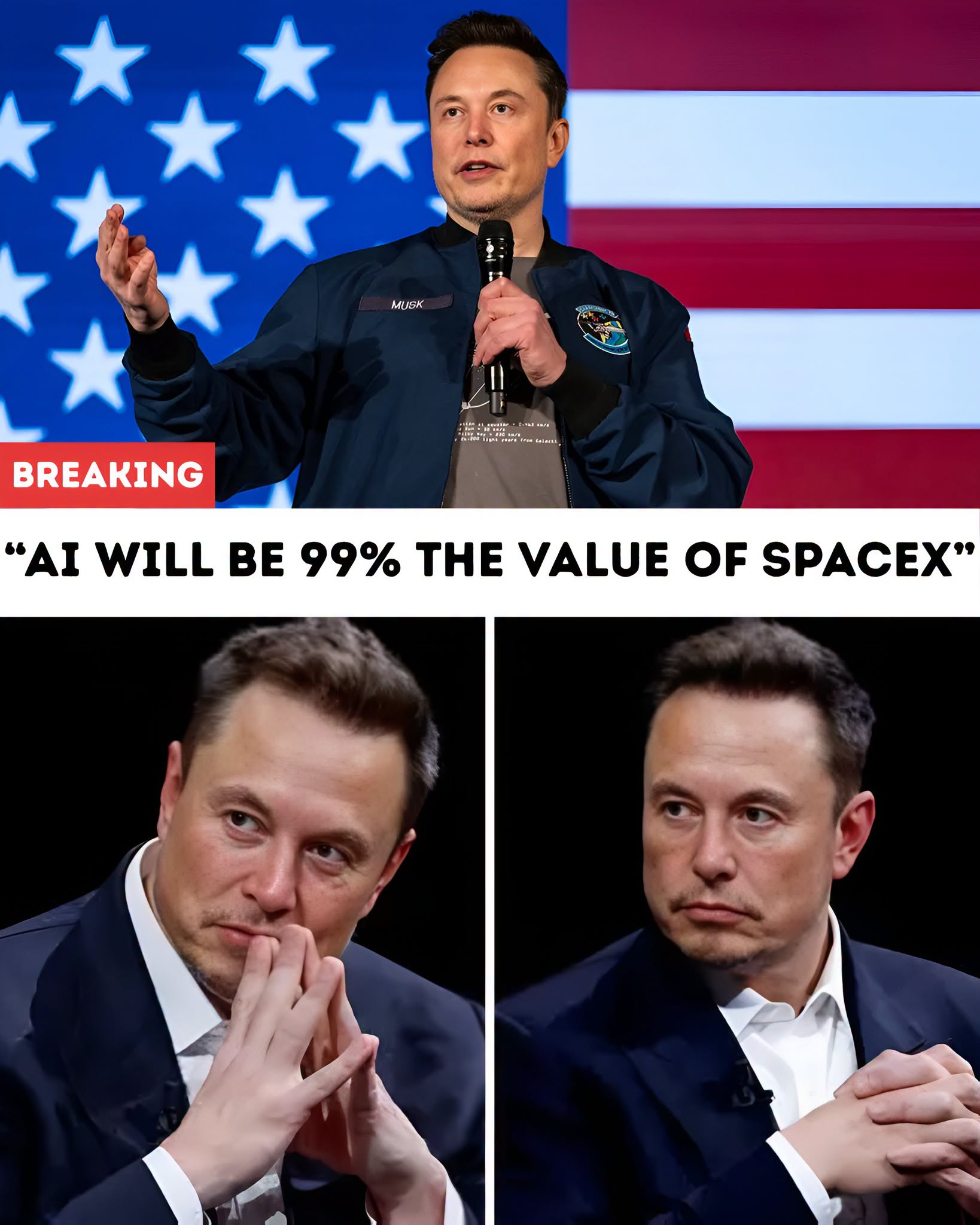
Elon Musk has spent much of his life talking about problems most people rarely think about.
Electric cars before they became mainstream.
Reusable rockets when many experts considered them unrealistic.
Artificial intelligence before it became part of everyday conversation.
And the possibility of building a human civilization on Mars while most of the world was still debating whether such a dream was even possible.
But one of Musk’s most personal warnings was not about technology, energy, or machines.
It was about people.
More specifically, he feared there might not be enough of them.
During a conversation on Twitter, now known as X, Musk warned that population collapse could become a far greater threat than most people realized. At the time, he was already a father of seven, and his comments quickly turned a serious demographic discussion into something deeply personal.
When a Tesla fan account praised him for making a “tangible effort” to fight declining birth rates, Musk responded with the kind of remark that sounded partly humorous and partly urgent.
He said he was trying to set a good example.
Then he added a warning.
“Population collapse is a much bigger problem than people realize,” he wrote, before expanding the conversation beyond Earth itself.
Mars, he pointed out, had an even more dramatic population problem.
Its population was zero.
For Musk, the joke carried a serious message.
He did not simply want people to have more children because he enjoyed being a father. His concern was tied to a much larger vision of humanity’s future.
He believed civilization needed enough people to survive, innovate, explore, and eventually become a species capable of living on more than one planet.
And when asked about the possibility of having another child, Musk reportedly expressed a simple hope.
He hoped the next one would be a girl.
It was an unexpectedly ordinary wish from a man whose public statements often involved rockets, robots, satellites, and the future of civilization.
Behind the billionaire known for designing machines and challenging entire industries was a father imagining the child who might come next.
That contrast was what made the moment memorable.
Musk was not merely discussing birth rates as lines on a chart.
He was connecting the future of humanity to the most basic human decision of all: bringing another life into the world.
At the time, Musk had an enormous following on Twitter. Millions of people watched his account closely, waiting for comments about Tesla, SpaceX, cryptocurrency, artificial intelligence, or whatever controversy had captured his attention that day.
Unlike many corporate leaders, Musk frequently replied directly to ordinary users.

A short question could receive an unexpected answer.
A fan account could suddenly become part of an international news story.
That was what happened when Tesla Owners of the East Bay shared an alarming message about a possible population collapse.
The group highlighted Musk’s large family and jokingly praised him for personally contributing to the solution.
Many public figures might have ignored the post.
Others might have responded with a laughing emoji and moved on.
Musk did something different.
He treated the concern seriously.
He said the problem was much larger than people understood—not only for individual nations, but for Earth as a whole.
That statement reflected a belief he had expressed many times: a civilization cannot remain strong if its population shrinks faster than its institutions can adapt.
A declining population can mean fewer workers supporting more retirees.
It can mean fewer young people entering critical industries.
It can mean schools closing, communities shrinking, and economic growth slowing.
It can also change the psychological atmosphere of a society.
A growing civilization tends to think about expansion, construction, and opportunity.
A shrinking one may become more focused on preserving what already exists.
For Musk, that difference mattered.
His companies were built around the assumption that humanity should continue advancing.
Tesla was created around the idea that people could transform transportation and energy.
SpaceX was founded on the belief that humans should not remain permanently confined to Earth.
His businesses did not merely produce products.
They represented a worldview.
Humanity, in Musk’s mind, was supposed to move forward.
But moving forward required people.
Engineers to design the machines.
Scientists to solve the problems.
Workers to build the infrastructure.
Families to create the next generation.
Children who might one day become the explorers, doctors, inventors, teachers, and leaders of the future.
Without enough people, even the most ambitious civilization could lose momentum.
That was why Musk’s concern about population decline was closely connected to his dream of Mars.
For decades, Mars had been treated as a destination for science fiction.
A red planet in books and films.
A distant world that might be visited by robots but never permanently inhabited by humans.
Musk wanted to change that.
Through SpaceX, he envisioned building reusable spacecraft capable of carrying large numbers of people and cargo beyond Earth.
His goal was not simply to send astronauts to Mars for a short mission.
He wanted to establish a lasting human presence there.
A real settlement.
Then, eventually, a self-sustaining civilization.
But a city cannot exist without people.
A planet cannot become a second home for humanity if no one is willing to go there, build there, raise families there, and remain there through enormous hardship.
Mars would need engineers, farmers, doctors, technicians, builders, researchers, and families.
It would need people willing to leave behind everything familiar and begin again in one of the most hostile environments imaginable.
That was why Musk’s population argument extended beyond Earth.
When he wrote that Mars currently had a population of zero, he was pointing out something obvious in a way that made the scale of his ambition impossible to ignore.
There were billions of people on Earth.
There were none on Mars.
If humanity ever wanted to become a multiplanetary species, the challenge was not only transportation.
It was population.
“Humans are the custodians of other life on Earth,” Musk wrote.
Then came the declaration that summarized his dream:
“Let us bring life to Mars.”
The sentence sounded grand, almost cinematic.
But the idea behind it was practical.
Earth was the only known planet containing life.
Every forest, ocean, animal, plant, and person existed within one fragile world.
If something catastrophic happened to Earth, humanity had no second home.
Musk believed that spreading life beyond Earth could serve as a kind of protection—not only for humans, but for the continuation of life itself.
His critics viewed the plan as unrealistic, expensive, or dangerously distracting.
They argued that humanity should focus first on solving poverty, inequality, climate change, war, and other urgent problems on Earth.
Supporters saw no contradiction.
They believed people could improve Earth while also preparing for a future beyond it.
Musk’s answer was typically ambitious.
Humanity did not have to choose between fixing one planet and reaching another.
It could attempt both.
But none of those plans would matter if civilization stopped producing enough people to carry them forward.
That was the deeper concern behind his warning.
Population collapse did not mean humanity would disappear overnight.
It would not arrive as a sudden event that everyone could watch on television.
It would happen slowly.
Birth rates would fall.
The population would age.
The number of deaths would begin exceeding the number of births.
Cities might remain full for years, giving people the impression that nothing had changed.
But underneath the surface, the structure of society would be shifting.
Fewer children would enter schools.
Fewer young adults would enter the workforce.
A smaller generation would inherit the responsibility of supporting a much larger older population.
The consequences would unfold over decades.
That slow pace made the problem easy to ignore.
People respond quickly to visible emergencies.
A fire demands immediate action.
A flood creates dramatic images.
A financial crash produces numbers that can be seen within hours.
Demographic decline is different.
By the time its effects become obvious, the decisions that caused it may be many years in the past.
A child who is not born today cannot enter the workforce twenty years later.
A missing generation cannot be produced overnight.
That was why Musk believed the issue deserved attention before it became a crisis.
His critics, however, pointed out that the world’s population was still enormous.
They questioned how anyone could warn about population collapse when billions of people already lived on Earth.
Others argued that the problem was not the total number of humans but the distribution of resources, opportunities, and wealth.
In some regions, communities faced declining birth rates and aging populations.
In others, families continued growing rapidly while struggling with inadequate housing, healthcare, education, and employment.
Population was not one simple global story.
It was many different stories happening at the same time.
Some countries worried about too few births.
Others struggled to support rapidly growing populations.
Some governments offered financial incentives for couples to have children.
Others lacked enough schools and hospitals for the children already being born.
Musk’s warning simplified a complicated subject, but it also forced millions of people to think about a question they had rarely considered.
What happens when a civilization becomes less willing—or less able—to create its next generation?
For many families, the choice to have fewer children was not based on pessimism about humanity.
It was based on practical reality.
Housing had become expensive.
Childcare could cost as much as a salary.
Healthcare, education, and daily living expenses placed enormous pressure on parents.
Many young adults delayed marriage or parenthood because they did not feel financially secure.
Others chose not to have children because of career demands, environmental concerns, or personal preference.
Some wanted families but could not find the right partner.
Others experienced infertility or medical complications.
Telling people simply to have more children ignored those realities.
That was where Musk’s position became controversial.
It was easy for a billionaire to speak about the importance of large families.
He had access to resources that ordinary parents could never imagine.
Most families did not have private transportation, multiple homes, household staff, or unlimited access to childcare.
For them, every additional child meant a serious financial and emotional commitment.
The decision could not be reduced to a demographic responsibility.
It was deeply personal.
Yet Musk’s supporters argued that his wealth did not automatically make his concern invalid.
A warning could still be important even when the person delivering it lived differently from most people.
They believed his willingness to discuss population decline helped move the issue into public conversation.
And they appreciated that Musk appeared to follow his own advice.
He was not asking other people to value parenthood while rejecting it in his own life.
He had built a large family.
When the fan account praised him for doing his part, he did not deny it.
He said he was trying to set an example.
But the most human detail in the entire conversation was not his warning about civilization.
It was his hope for a daughter.
Public discussions about Musk often treated his children as numbers.
Seven children.
Then the possibility of an eighth.
A contribution to population growth.
Evidence supporting his argument.
But children are not demographic statistics to their parents.
Each one is a person.
A name.
A personality.
A relationship that changes the family around them.
Musk’s reported hope that his next child would be a girl briefly moved the conversation away from global population charts and back into the private world of a father.
He was not speaking only about increasing the number of humans on Earth.
He was imagining who the next child might be.
Perhaps that was the contradiction at the center of the story.
Musk often described humanity from a distant perspective, almost as if he were looking down at civilization from space.
He thought about species survival.
Planetary risk.
Long-term population trends.
Life on Mars.
The future thousands or millions of years from now.
But every civilization is built through intimate moments that cannot be seen from that distance.
A couple deciding whether they are ready for a child.
A parent hearing a heartbeat for the first time.
A family choosing a name.
A baby opening its eyes.
A father quietly hoping for a daughter.
The future of humanity may be discussed in conferences, reports, laboratories, and government offices.
But it begins in homes.
Musk’s own lifestyle made the contrast even sharper.
Around the same period, reports described him as living in a small prefabricated house near SpaceX’s operations in Boca Chica, Texas.
The home was said to be worth around $50,000 and measured approximately 37 square meters.
For someone associated with extraordinary wealth, the image seemed almost unbelievable.
He could afford enormous estates, private islands, and nearly any luxury available.
Yet he was reportedly living in a compact home near the site where SpaceX was developing its most ambitious rocket.
Whether that arrangement was permanent or practical, it reinforced the mythology surrounding him.
Musk was portrayed as someone willing to reduce parts of his personal life in order to remain close to his mission.
He could spend his days working on machines designed to carry humans toward Mars, then return to a house smaller than many apartments.
At the same time, reports claimed he had purchased a $250,000 ticket for a future flight aboard Virgin Galactic, the space-tourism company founded by fellow billionaire Richard Branson.
The ticket was another symbol of his obsession with space.
Most people dreamed about taking a vacation to another country.
Musk appeared interested in purchasing a journey beyond the atmosphere.
Yet even that expensive trip would be only a brief experience.
A flight to the edge of space was not the same as building a civilization on Mars.
One was tourism.
The other was a generational project that might require thousands of people working for decades.
Musk understood that he might not live to see the full result.
The first permanent Martian settlement, if it ever happened, could demand more time than one person’s lifetime.
That was why the next generation mattered so much to him.
Children were not only members of families.
They were the people who would inherit unfinished dreams.
The engineers who might improve today’s spacecraft.
The scientists who could discover better ways to produce food in hostile environments.
The doctors who might learn how the human body responds to life on another planet.
The leaders who would decide whether humanity continued expanding or retreated from ambition.
In Musk’s worldview, every new generation represented possibility.
That did not mean every child would become a scientist or travel to Mars.
Most would live ordinary lives.
But civilization depended on ordinary lives just as much as extraordinary ones.
It needed people to care for others, repair infrastructure, teach children, create art, grow food, write laws, maintain communities, and pass knowledge forward.
A future filled only with machines would not be a human future.
Technology could increase productivity.
Robots could perform dangerous tasks.
Artificial intelligence could process enormous amounts of information.
But machines could not replace the meaning of human continuity.
A civilization survived because people believed there would be someone after them.
Someone to inherit the language.
Someone to remember the history.
Someone to continue what they had begun.
That was what made Musk’s population warning larger than a debate about birth rates.
It was a debate about confidence in the future.
People tend to start families when they believe tomorrow is worth building.
When they feel secure.
When they believe their children can have meaningful lives.
When housing, healthcare, education, and employment seem achievable.
A society worried about declining birth rates could not solve the problem only by telling people to reproduce.
It had to create conditions in which parenthood felt possible.
Families needed time.
Stability.
Affordable homes.
Reliable childcare.
Supportive workplaces.
Communities in which raising children did not feel like an impossible financial test.
Without those things, warnings about population collapse would remain abstract.
Musk could draw attention to the issue.
But the solution required more than one wealthy father having more children.
It required governments, businesses, and communities to ask why so many people felt unable to build the families they wanted.
That may have been the most important question hidden beneath the viral exchange.
Musk said he was trying to set an example.
But an example alone could not change demographic reality.
People did not need billionaires to tell them that children mattered.
They needed a world that made raising children less frightening.
Still, Musk’s message struck a nerve because it combined three subjects that rarely appeared together.
Family.
Civilization.
Mars.
He took a conversation that began with the number of children he had and expanded it into a vision of life spreading beyond Earth.
To some, that was inspiring.
To others, it was absurd.
But it was unmistakably Musk.
He had always been more interested in the largest possible version of a problem.
He did not merely want to build a better car.
He wanted to transform the global transportation system.
He did not simply want to launch satellites.
He wanted to make humanity multiplanetary.
He did not speak only about having another child.
He connected parenthood to the survival of civilization.
And then, in the middle of that enormous vision, came one modest hope.
He wanted a girl.
That detail changed the tone of everything.
For a moment, the man speaking about the population of planets was simply a father thinking about his family.
The future did not appear as a distant Martian city beneath a glass dome.
It appeared as a child he had not yet met.
A daughter whose face he could not yet imagine.
A person who might grow up in a world transformed by technologies her father had helped create.
Perhaps she would care about rockets.
Perhaps she would have no interest in them at all.
Perhaps she would admire his mission.
Perhaps she would challenge it.
That was the part no entrepreneur could control.
You can design a car.
You can calculate a rocket’s trajectory.
You can buy a company and change its direction.
But a child is not a project.
A child becomes a person with an independent mind, private dreams, and a future no parent can fully design.
And that may be the most humbling truth in the story.
Elon Musk spoke confidently about saving humanity from population collapse and bringing life to Mars.
Yet the future he wanted to protect would ultimately belong to people he could not command.
His children.
Their generation.
And the generations that came after them.
Whether Musk’s warning proves correct or exaggerated, the question he raised will not disappear.
What does humanity owe the future?
More technology?
More exploration?
More children?
Or a society in which the next generation can live with security, dignity, and hope?
Perhaps the answer is not one of those things.
Perhaps it is all of them.
A civilization does not survive because one billionaire builds rockets.
It survives because millions of ordinary people believe there is still something worth building.
It survives when parents believe their children will inherit opportunity rather than despair.
It survives when the next generation is not treated as a statistic, but as the reason progress matters at all.
Musk may dream of crowded cities on Mars.
But before humanity can fill another planet, it must give people a reason to believe in life on this one.
Because population is not preserved by fear alone.
It is preserved by hope.
And the future will never be saved merely by counting how many children are born—but by building a world in which those children are glad they arrived.