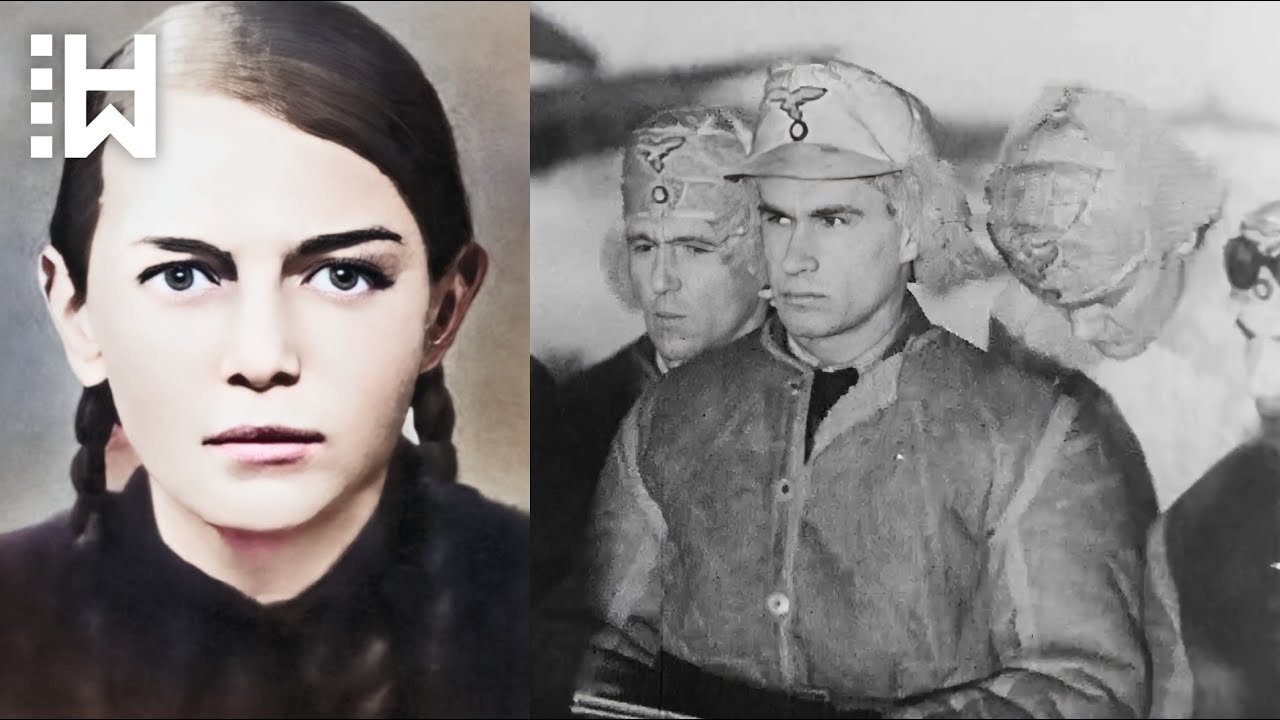
On the morning of October 14, 1944, two generals arrived at a quiet villa in southern Germany carrying a message that officially did not exist.
Inside the house was Field Marshal Erwin Rommel—the legendary “Desert Fox,” one of Germany’s most celebrated commanders, a man whose name had been used for years by Nazi propaganda as proof that German soldiers could still be admired even as the war turned against them.
He was recovering from a fractured skull.
His wife was nearby.
His fifteen-year-old son was home.
And outside the villa, men in civilian clothes had quietly taken up positions around the property.
They were not there to protect him.
They were there to make sure he did not escape.
The two visitors, General Wilhelm Burgdorf and General Ernst Maisel, had come from Hitler’s headquarters.
They gave Rommel a choice.
He could be arrested, publicly tried for treason, humiliated before the nation, and almost certainly executed.
His family could expect the consequences that followed the families of traitors in Nazi Germany.
Or—
he could die quietly.
That day.
If he chose the second option, Hitler’s government would announce that Germany’s famous field marshal had died from the wounds he suffered in Normandy.
Rommel would receive a state funeral.
His military reputation would remain intact.
His wife and children would be left alone.
There was even a cyanide capsule ready for him.
One death in exchange for several lives.
For years, Rommel had commanded armored columns across deserts, calculated enemy movements, escaped encirclements, and made decisions while artillery exploded around him.
Now the most important decision of his life had to be made in his own home.
And there was no battlefield maneuver left.
No reserve force.
No retreat.
Only a wife, a teenage son, two generals waiting downstairs—
and a car outside that would carry him away alive and return him dead.
 Herrlingen was not the kind of place where history seemed likely to arrive with such violence.
The small village lay near Ulm, surrounded by the landscape of southern Germany. Rommel had come there not as a conquering field marshal but as a badly injured man.
Three months earlier, on July 17, 1944, his staff car had been attacked by Allied aircraft in Normandy.
The vehicle crashed.
Rommel suffered serious injuries, including a fractured skull.
By autumn, he was recovering at home.
Germany itself was not recovering.
By late 1944, the military situation had become catastrophic.
The Allies had landed in Normandy in June. German forces were being pushed back in the west. In the east, the Soviet advance was crushing what remained of Hitler’s armies.
Cities were being bombed.
Fuel was disappearing.
Young boys and older men were being drawn into a war that increasingly looked impossible to win.
And inside the German leadership, paranoia had become almost as dangerous as the enemy armies approaching the Reich.
On July 20, 1944, Colonel Claus von Stauffenberg carried a bomb into Hitler’s headquarters at the Wolf’s Lair.
The explosion killed several people.
Hitler survived.
What followed was not simply an investigation.
It became a purge.
The Gestapo hunted conspirators, contacts, relatives, suspected sympathizers, and anyone whose name appeared in testimony extracted from arrested officers.
Men who had once worn medals beside Hitler were suddenly dragged into interrogation rooms.
Executions followed.
Some condemned officers were hanged.
Some trials were filmed.
The message was deliberate:
There would be no honorable ending for anyone Hitler considered a traitor.
And then Rommel’s name began appearing.
His exact relationship to the July 20 conspiracy would later become one of the most argued questions surrounding his legacy.
Evidence suggested that people connected to the resistance believed Rommel could play a role in a Germany after Hitler.
Some officers testified that Rommel had become convinced the war had to end.
Rommel had certainly grown deeply critical of Hitler’s conduct of the war.
But whether he knew about the assassination plan in detail, supported killing Hitler, opposed assassination but favored removing him from power, or was implicated more heavily by desperate prisoners remains debated.
In October 1944, such distinctions no longer mattered.
Hitler had heard enough.
And once Hitler decided that Rommel could no longer be trusted, the Field Marshal faced a special problem.
Rommel was too famous to arrest casually.
For years, the regime itself had built him into a national hero.
His photographs had appeared everywhere.
His victories in North Africa had been celebrated when Germany badly needed victories to celebrate.
Soldiers admired him.
Civilians knew his name.
Even his enemies respected his battlefield reputation.
To place Rommel before the notorious People’s Court would raise a dangerous question inside Germany:
If even Rommel had turned against Hitler, what did that say about Hitler?
So the regime found another solution.
It would eliminate the man—
while keeping the legend.
 That Saturday morning, October 14, Burgdorf and Maisel arrived at the Rommel residence.
The atmosphere changed almost immediately.
Rommel understood that this was no ordinary military visit.
Men associated with the security apparatus were positioned around the area.
The villa was effectively surrounded.
There would be no sudden drive away.
No telephone call to friendly troops.
No attempt to reach another commander.
The decision had already been engineered so that only two doors remained.
And both led to Rommel’s death.
Burgdorf delivered the accusation.
Rommel was implicated in the conspiracy against Hitler.
The government possessed testimony.
If Rommel rejected the offer being presented, he would be taken to Berlin and brought before the People’s Court.
For anyone familiar with the fate of July 20 defendants, the meaning was obvious.
The proceedings would not be designed to discover whether he was guilty.
They would be designed to destroy him publicly before killing him.
Then came the alternative.
Suicide.
Immediate.
Secret.
A cyanide capsule would be provided.
The official explanation would state that Field Marshal Rommel had succumbed to the head injuries he received in Normandy.
His family would be protected.
His reputation would be preserved.
He would receive the honors appropriate to a German field marshal.
The government that had come to kill him was offering to organize his funeral.
There was one condition.
Everyone closest to him would have to live inside the lie.
Rommel left the generals and went to speak with his family.
Lucie Rommel had been beside her husband through years in which his military career had carried him from one assignment to another and finally into the mythology of wartime Germany.
Now she was being told, inside her own home, that the state had decided her husband must die.
According to later family accounts, she resisted the idea.
Why should he kill himself?
Why cooperate?
Why make their crime easier?
But Rommel believed the alternative was worse.
He understood what the People’s Court had become.
He also knew that punishment under the Nazi system did not necessarily stop with the accused.
The doctrine later commonly associated with Sippenhaft—family liability—made the threat against relatives terrifyingly real.
If he allowed himself to be arrested as a traitor, he could not guarantee what would happen to Lucie.
He could not guarantee what would happen to Manfred.
The boy was fifteen.
Old enough to understand what was happening.
Young enough that no father should ever have been forced to place such a decision in front of him.
Rommel explained that he had been given only a short time.
He believed he had no chance of surviving a trial.
The men outside were not going to let him disappear.
He had reached the point where surrendering his own life appeared to be the only action still available to protect his family.
It is difficult to imagine the silence in that house.
For years, military decisions had arrived on maps.
This one was sitting at the family table.
A wife knew that the husband standing before her might be dead within an hour.
A son knew that his father was preparing to walk voluntarily toward the men who had come to kill him.
And Rommel knew that he had to make the act look calm enough that the people he loved could survive it.
He changed into his field marshal’s uniform.
He put on the familiar military clothing that had once represented authority.
He took his marshal’s baton.
The transformation was almost cruel.
Minutes earlier, he had been an injured husband and father inside his home.
Now he looked again like the public figure Germany recognized.
Lucie watched him prepare.
Manfred watched too.
There was no dramatic rescue.
No loyal armored unit came roaring down the road.
No hidden detachment opened fire on the men outside.
The famous commander who had escaped battlefield traps across two continents had been trapped by paperwork, political terror, and the knowledge that resistance might destroy his family.
Rommel left the house.
He walked to the waiting car.
Then he climbed inside beside Burgdorf.
The vehicle drove away from Herrlingen.
His family remained behind.
Rommel did not return alive.
 The drive was short.
Somewhere away from the villa, the car stopped.
What happened inside has been reconstructed largely from later testimony and family accounts.
The essential fact was simple.
The cyanide prepared for Rommel was used.
Within minutes, the field marshal was dying.
The poison worked quickly.
A man whose death would soon be blamed on wounds suffered three months earlier had actually been alive that morning, dressing himself, speaking to his wife, and walking from his home under his own power.
Now his body had become a political problem.
The officials needed medical paperwork.
Rommel was taken to the Wagner School hospital in Ulm.
Doctors were confronted with the corpse of one of the most famous soldiers in Germany.
The circumstances did not make sense.
A man supposedly recovering from combat injuries was suddenly dead after leaving home with senior officers.
There were reasons to ask questions.
A physician reportedly wanted an autopsy because of the unusual nature of the death.
That could not be allowed.
An autopsy might expose the mechanism of death.
And if the mechanism became known, the entire operation could collapse.
Burgdorf intervened.
There would be no investigation that threatened the official story.
No inconvenient medical curiosity.
No report that said cyanide when Berlin needed the nation to hear “war wounds.”
The regime had killed Rommel.
Now it had to control his body.
Then it had to control the story.
At the villa, the waiting did not last long.
Roughly ten minutes after the expected time, according to later accounts, the family received word.
Rommel was dead.
Lucie already knew what that meant.
Manfred knew too.
But knowledge and the ability to speak are not the same thing.
The family was now trapped in a second stage of the ultimatum.
Rommel’s silence had been purchased with his life.
Their silence was the price of surviving him.
Soon the machinery of propaganda began moving.
And this is where the story became almost grotesque.
The same government that had forced Rommel to swallow poison announced his death as a national tragedy.
Hitler issued words of praise.
Germany was told that Field Marshal Erwin Rommel had died as a consequence of the severe wounds he had suffered in Normandy.
There was no mention of Burgdorf.
No mention of the cyanide.
No mention of the July 20 investigation.
No mention of the threat against his family.
Nothing about the villa surrounded by security personnel.
Nothing about the ultimatum.
Instead, the dead man became useful again.
Four days later, on October 18, 1944, Germany staged an official funeral for Rommel.
Military honors surrounded the ceremony.
Senior figures attended.
A representative of Hitler was present.
Speeches praised the field marshal’s courage and service.
The public image was almost perfect.
Here lay one of Germany’s great commanders, supposedly killed slowly by wounds received while defending the country against the Allied invasion.
To ordinary Germans hearing the announcement, the story made sense.
Rommel had been badly injured in July.
He had been recovering.
Now, tragically, he had died.
But Lucie knew.
Manfred knew.
The men who delivered the ultimatum knew.
Hitler knew.
A handful of officials knew.
And that knowledge turned every honor into another layer of intimidation.
Imagine standing through a state ceremony for your husband while government representatives praise him, knowing those same authorities ordered his death.
Imagine hearing them describe the courage of a man they had threatened with a show trial.
Imagine being expected not merely to remain silent but to participate in the appearance that their version was true.
There are forms of political violence that end with death.
This one continued through the funeral.
The lie had to be performed publicly.
Rommel’s coffin became part of the performance.
His medals became part of it.
The speeches became part of it.
The mourners who genuinely believed they were honoring a field marshal who died of his wounds became, without knowing it, extras in a state-managed deception.
But the deception had a purpose larger than hiding murder.
Hitler could not afford the truth.
If German soldiers learned that Rommel had been accused of involvement with the resistance, some might ask why.
If German civilians learned that one of Hitler’s most famous commanders believed the regime was leading the country toward disaster, the symbolism could become dangerous.
And if Rommel were publicly tried, testimony about the military situation might reveal too much.
So Hitler achieved something politically colder than a simple execution.
He erased the dissident while preserving the hero.
The man died.
The symbol remained loyal.
Rommel’s body was cremated.
His ashes were later buried at Herrlingen.
There was no great public revelation.
No newspaper exposed the cyanide.
No surviving officer immediately stepped forward and told Germany what had happened.
The country continued fighting.
More cities were destroyed.
More soldiers died.
More teenagers were pushed toward the front.
And inside the Rommel household, one of the most explosive secrets in Germany sat behind closed doors.
For approximately six months, the official version survived.
Then the world around Herrlingen changed.
The Reich that had been powerful enough to order Rommel’s death was collapsing.
American troops advanced into southern Germany.
Hitler’s government was nearing its end.
And in April 1945, soldiers from the enemy army—the army Nazi propaganda had warned Germans to fear—arrived in the region where Rommel’s family lived.
That was when the story took another turn.
Because the people who had forced Lucie Rommel to remain silent were losing the power to punish her.
For the first time since October, she could tell someone what really happened.
American intelligence officers were deeply interested in Rommel.
Allied soldiers knew his name well.
Many had fought against troops under his command in North Africa and Europe.
He had been an enemy commander, but he was no ordinary anonymous general in Allied military memory.
Captain Charles F. Marshall, working with American forces, became involved in interviewing Rommel’s family and gathering information about the circumstances surrounding his death.
The official German story was that Rommel had died from his injuries.
The family told a different one.
Lucie described the visit on October 14.
She described the ultimatum.
She described the threat.
She described her husband leaving with the generals.
And she described receiving confirmation of his death soon afterward.
Manfred corroborated the essential account.
The boy who had watched his father leave the villa was now living in a Germany without the government that had imposed silence on him.
Suddenly the funeral of October 1944 looked entirely different.
The supposed national hero had not simply died from an old battlefield wound.
Hitler’s own government had cornered him.
The state funeral had not been merely a tribute.
It had been camouflage.
The regime had publicly mourned the man it privately forced to kill himself.
For many people outside the inner circle, this was the plot twist that changed everything.
But history was not finished complicating the story.
Because once the truth about Rommel’s forced suicide emerged, another version of Rommel began to grow.
This time, not under Hitler—
but after Hitler.
Lucie survived the war.
The punishment Rommel had feared for his family did not arrive.
With the Nazi government destroyed, the political machinery that had threatened them disappeared.
She was ultimately treated as a military widow rather than prosecuted as part of the July 20 conspiracy.
Her later life was far quieter than the years in which she had lived beside one of Germany’s most famous military figures.
But she carried an unusual burden.
She had witnessed the final private hours of a man whose public image would be argued over for generations.
Her husband had been used first by Nazi propaganda as a symbol of military brilliance.
Then his death was concealed by Nazi propaganda.
And after the war, he would be used again—this time in arguments about what kind of Germany could be rebuilt from the ruins.
Manfred’s life moved in an even more unexpected direction.
At fifteen, he had watched a dictatorship force his father into a car with a poison capsule.
He had experienced war not as an abstract chapter in a textbook but as something that entered his home and removed his father.
During the final period of the conflict, Manfred himself was drawn into German military service, including service connected to the Luftwaffe.
Then the Reich collapsed.
For the son of a field marshal, there would be no continuation of the old military world.
Instead, Manfred chose law.
Then politics.
And decades later, the teenage boy standing helplessly in the Herrlingen villa became one of the most recognizable municipal leaders in postwar Germany.
Manfred Rommel became mayor of Stuttgart.
Not briefly.
He served three terms, from 1974 until 1996.
His public identity developed in striking contrast to the world that had shaped his childhood.
His father’s generation had been defined by armies crossing borders.
Manfred became known for dialogue across borders.
His childhood had been marked by dictatorship and secrecy.
His political image emphasized pragmatic democracy, reconciliation, and civic responsibility.
His family name had once appeared in wartime communiqués.
Now it appeared in international partnerships and municipal diplomacy.
One particularly powerful aspect of his later life was his friendship with the sons of former Allied commanders.
David Montgomery, son of British Field Marshal Bernard Montgomery—Rommel’s famous adversary in North Africa—became friendly with Manfred.
The symbolism was difficult to miss.
Their fathers had been placed on opposite sides of one of the largest wars in human history.
Their sons could sit together without tanks between them.
History had not been erased.
It had been transformed.
Manfred received recognition from multiple countries and became respected for an approach to politics that often favored practical compromise over spectacle.
For those who knew the story of October 14, 1944, there was a profound irony in that trajectory.
Hitler’s government had threatened a fifteen-year-old boy to guarantee his father’s silence.
That boy survived long enough to become a democratic political leader in the Germany Hitler had claimed would last a thousand years.
The dictatorship survived less than one more year after Rommel’s death.
Manfred would serve the democratic city of Stuttgart for more than two decades.
But even this was not the final complication in the Rommel family story.
Because another family secret had existed long before the generals arrived in Herrlingen.
Her name was Gertrude.
Before Rommel married Lucie, he had fathered a daughter, Gertrude, from an earlier relationship.
The circumstances were kept discreet.
Gertrude remained connected to the family but was publicly presented in a way that concealed the full truth of her parentage.
To outsiders, the relationship could appear to be that of extended family.
Inside the family circle, reality was more complicated.
It adds a deeply human dimension to a figure usually seen in uniform.
Historical icons become flat very easily.
Photographs turn them into symbols.
Military maps reduce them to arrows.
Biographies reduce decades into chapters.
But families remember differently.
They remember letters.
Awkward arrangements.
Private loyalties.
Secrets protected for reasons outsiders may never fully understand.
Lucie’s acceptance of the complicated family situation reveals something that military histories often miss: the Rommel household had private histories long before the politics of 1944 engulfed it.
Gertrude’s existence does not explain Rommel’s political choices.
But it reminds us that behind the field marshal’s baton was a private life that never fit neatly into the heroic image produced by propaganda.
And that matters, because after 1945, the battle over Rommel was no longer fought with tanks.
It was fought through memory.
Postwar Germany faced a brutal question.
How could a new German military eventually be built in a country where the old military had served a criminal dictatorship?
How could Germans honor military professionalism without rehabilitating Nazism?
How could former enemies cooperate in the emerging Cold War when memories of the Second World War were still fresh?
Rommel became useful again.
Officers such as Hans Speidel, who had served with Rommel and had connections to the anti-Hitler resistance, helped shape the postwar understanding of him.
Biographies and memoirs contributed to what later historians would sometimes describe as the “Rommel myth.”
In this version, Rommel represented a professional soldier distinct from Nazi ideology.
A brilliant commander.
A man respected by enemies.
A field marshal increasingly disillusioned with Hitler.
A potential supporter of efforts to remove the dictator.
And finally, a victim of the regime himself.
There were real facts supporting important parts of that picture.
Rommel had indeed been forced to die.
He had indeed become critical of Hitler’s strategy.
People involved in opposition circles had indeed seen him as important.
His battlefield conduct and reputation had often differed from that of more explicitly ideological Nazi figures.
But the cleaner the legend became, the more historians began asking uncomfortable questions.
How early had Rommel truly broken with Hitler?
How much had he benefited from his relationship with the regime?
How enthusiastically had he accepted the fame Nazi propaganda gave him?
What exactly did he know about the July 20 conspiracy?
Did he support killing Hitler?
Did he want Hitler arrested instead?
Was his opposition primarily military—the belief that Hitler was losing the war—or had it developed into deeper political resistance?
And how much of the postwar image had been shaped because West Germany and its Western allies needed usable examples of “honorable German soldiers” during the Cold War?
Those questions never produced one simple answer.
That is precisely why Rommel remains so fascinating.
The easy version of the story says there were heroes on one side and villains on another.
Rommel’s life resists that simplicity.
He served Hitler’s Germany at the highest military levels.
His victories strengthened the regime.
Nazi propaganda helped create his fame.
He was not an outsider who had spent the entire war resisting the dictatorship.
Yet by 1944, Hitler considered him dangerous enough to eliminate.
Rommel had become sufficiently associated with opposition that the regime feared a public trial.
And in the end, the dictatorship he had served turned its machinery against him.
History rarely offers a cleaner warning about what happens when personal prestige depends on the favor of absolute power.
Rommel had rank.
Decorations.
International fame.
Access to Hitler.
Command over huge formations of men and machines.
None of it mattered when the system decided he had become inconvenient.
On October 14, 1944, he had less freedom than many ordinary men.
Two generals came to his door.
Security personnel surrounded his house.
A poison capsule waited.
And his family became the leverage.
That was the true nature of the power structure around him.
The medals had never made him untouchable.
They had only made his elimination more complicated.
There is one detail that gives the entire episode an almost unbearable symmetry.
The regime needed Rommel’s death to remain secret because Rommel was too valuable as a hero.
Hitler could kill the man.
But he could not admit why.
So the government committed one final act of appropriation.
It took control of Rommel’s final decision.
It took control of his cause of death.
It took control of his funeral.
It took control of the public’s grief.
It even tried to control what his wife and son were allowed to say after he was gone.
But control has an expiration date.
Six months later, the men who had imposed that silence belonged to a collapsing regime.
Burgdorf would not survive the fall of Berlin.
Hitler would die in his bunker at the end of April 1945.
Nazi Germany surrendered in May.
The government that had promised Rommel a glorious official memory disappeared.
Lucie remained.
Manfred remained.
Their testimony remained.
And the secret Hitler had protected with threats became part of the historical record.
That is the first great reversal of the story.
The dictator controlled the funeral.
The family controlled what survived afterward.
But there was another reversal.
Hitler had offered Rommel suicide as a way to preserve his name.
In the narrowest sense, the promise worked.
Rommel’s wife and son survived.
His military reputation was not destroyed by a staged treason trial.
Millions continued to remember him as a distinguished soldier.
Yet the regime could not control what that preserved reputation would eventually mean.
Rommel’s name became attached not only to German military glory but also to the story of Hitler turning against one of his own most famous commanders.
The death meant to conceal internal resistance became evidence that resistance had penetrated surprisingly high levels of the German military establishment.
And Rommel’s son transformed the family name yet again.
Not into another military dynasty.
Into a postwar story of civic politics and reconciliation.
A name Hitler’s propaganda once associated with armored warfare later became associated, through Manfred, with Stuttgart, democratic government, international friendship, and cooperation with former enemies.
That may be the most extraordinary plot twist of all.
Hitler threatened a family because he wanted to determine how history would remember one man.
History refused to obey.
Even today, the arguments continue.
Some readers see Rommel primarily as a brilliant professional soldier trapped by the regime he once served.
Others warn that admiration for his military skill can turn too easily into an excuse to detach him from the political system that made his career possible.
Some emphasize his late opposition to Hitler.
Others point out that late opposition cannot erase earlier service.
Some portray him as a central figure close to the July 20 conspirators.
More cautious historians distinguish between opposition to Hitler, possible knowledge of resistance plans, and proven involvement in the assassination attempt itself.
These disagreements are not evidence that history has failed.
They are evidence that history is working.
Real human beings do not arrive in the past carrying labels that tell later generations exactly what to think.
They change.
They compromise.
They misjudge.
They benefit from systems they later oppose.
They act bravely in one moment and remain silent in another.
They become symbols that are cleaner than the lives they actually lived.
Rommel is remembered partly because his story contains all of those contradictions.
But on October 14, 1944, the contradictions temporarily disappeared.
There was simply a man inside a villa with his family.
A car waiting outside.
A government demanding his death.
And a decision no father should ever have to make.
He could refuse.
He could be arrested.
He could stand before a court where the verdict was almost certainly predetermined.
His family could be pulled into the punishment.
His name could be publicly destroyed before his execution.
Or he could walk out of his home, take the poison, and trust the people who were killing him to keep their promise not to harm his wife and son.
Rommel chose the car.
Lucie watched him leave.
Manfred watched him leave.
That image is more revealing than any photograph of tanks in the desert.
Because military power had been stripped away.
The field marshal no longer had an army.
The famous strategist no longer had options.
The propaganda hero no longer controlled his own story.
And the regime claiming to honor him was preparing to announce a lie before his body was cold.
Four days later, officials stood before his coffin and praised him.
Six months later, his widow told the enemy what those officials had done.
Thirty years later, the fifteen-year-old boy they had frightened inside that villa became the elected mayor of one of Germany’s major cities.
And decades after that, historians were still arguing over the man Hitler tried to freeze forever inside a convenient legend.
Perhaps that is the real lesson of Herrlingen.
Power can force silence.
It can manufacture funerals.
It can dictate newspaper headlines.
It can threaten families until a lie becomes the only safe sentence anyone is allowed to speak.
But power has one weakness dictators repeatedly misunderstand:
It cannot guarantee who will still be alive when the truth is finally safe to tell.
Hitler controlled the story of Erwin Rommel’s death for six months.
Lucie and Manfred helped change it for generations.
And sometimes the most devastating defeat a dictatorship suffers is not on a battlefield—it is the moment the people it tried to silence outlive it, speak, and make the world listen.