The Fate of Adolf Eichmann’s Children After His Execution
On the night Adolf Eichmann died, his four sons did not inherit his crimes.
They inherited his name.
And for Klaus, Horst, Dieter, and Ricardo Eichmann, that name would become four very different kinds of prison.
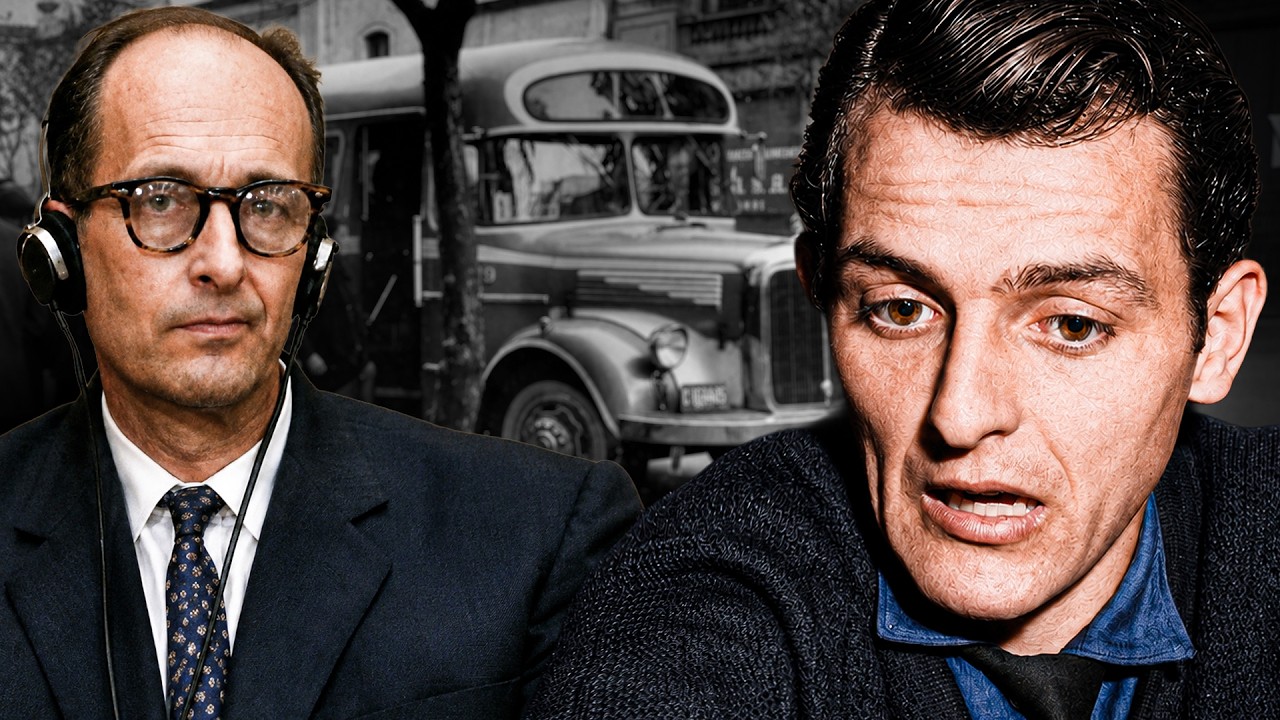
Shortly before midnight on May 31, 1962, Adolf Eichmann was taken from his cell in Israel. The former SS officer, who had played a central role in organizing the deportation of European Jews during the Holocaust, had been captured by Israeli agents in Argentina two years earlier. He had been brought to Jerusalem, tried before the world, convicted of crimes against the Jewish people, crimes against humanity, war crimes, and membership in criminal organizations, and sentenced to death. Near midnight, between May 31 and June 1, he was hanged. His body was cremated, and his ashes were scattered at sea beyond Israel’s territorial waters. (Bách Khoa Toàn Thư Holocaust)
There would be no grave.
No family tomb.
No place where his sons could stand and separate the father they remembered from the historical figure whose name had become inseparable from genocide.
The physical remains of Adolf Eichmann disappeared into the sea.
The surname did not.
And that was where the second story began.
It is tempting to imagine the sons of a notorious criminal as characters moving together through the same shadow, united by blood and condemned to the same emotional fate.
The Eichmann brothers did almost the opposite.
One fought publicly to defend his father.
Another reportedly plunged deeper into extremist politics.
A third retreated so completely that his silence became almost as striking as his brothers’ declarations.
The youngest eventually did what might have been hardest of all: he publicly accepted that his father had been guilty.
Four sons.
One father.
Four radically different answers to the same question:
What do you do when the man who raised you is remembered by millions as one of the administrators of mass murder?
The House on Garibaldi Street
Before Adolf Eichmann became the defendant inside a glass booth in Jerusalem, he had been Ricardo Klement.
That was the name under which he lived in Argentina after escaping Europe.
To neighbors and casual acquaintances, the family could resemble thousands of postwar immigrant households attempting to build a second life. Eichmann eventually worked at a Mercedes-Benz factory near Buenos Aires. His wife and children joined him. The family lived far from the ruined cities and abandoned concentration camps of Europe. (Bách Khoa Toàn Thư Holocaust)
But the past had not disappeared.
It had merely changed continents.
The older boys knew far more than the youngest.
Klaus, the eldest, was already moving into adulthood by the end of the 1950s. Horst was also old enough to absorb his father’s political worldview. Dieter stood somewhere between the older brothers and the youngest child.
Ricardo was different from the beginning for one unavoidable reason.
He was born in Buenos Aires in 1955.
For him, Nazi Germany was not a childhood memory.
Argentina was home.
His father was not initially the SS officer whose name would fill history books.
He was simply his father.
That illusion collapsed in May 1960.
Israeli agents had spent months confirming that the quiet factory worker calling himself Ricardo Klement was actually Adolf Eichmann. Acting on intelligence that ultimately drew international investigators toward the family, they watched his routines and prepared an extraordinary operation.
On May 11, 1960, Eichmann was seized near his home.
Then he vanished.
For the family, there was initially no public courtroom, no dramatic announcement at the door, no orderly transition from fugitive father to international defendant.
There was simply an absence.
A man failed to come home.
Then the truth exploded around them.
Israel announced that Adolf Eichmann had been captured.
The anonymous household in Argentina was suddenly connected to one of the most wanted Nazi fugitives on earth.
The family secret had become world news.
For the sons, the consequences began immediately.
But what followed is where the brothers’ paths started moving apart.
Klaus Chose Defiance
If history had offered Klaus Eichmann an opportunity to separate himself publicly from his father, he did not take it.
He moved in the other direction.
During the trial, when evidence of Adolf Eichmann’s activities was being presented in Jerusalem and Holocaust survivors were testifying about persecution, deportation, ghettos, shootings, trains, camps, separation, and death, Klaus became one of his father’s most visible defenders.
In April 1961, he argued publicly that his father should not be tried by Israel but by an international tribunal. He accepted only a narrow portion of the charges connected with his father’s membership in Nazi organizations and rejected the larger case being assembled against him. (JTA)
It was not the response many outsiders wanted from the son of such a man.
But psychologically, Klaus faced a brutal contradiction.
To accept the prosecution’s case meant accepting that the person he had known as a father was also a major participant in an apparatus of persecution and mass murder.
For millions of people, there was no contradiction at all. Adolf Eichmann was a perpetrator whose responsibility had to be judged by the evidence.
For a son, however, the mental collision was different.
The father of private memory and the criminal of public history occupied the same body.
Klaus appeared to solve that collision by attacking the history.
Years after the execution, he was still publicly describing his father’s conviction as unjust. In a 1965 interview reported by the Jewish Telegraphic Agency, Klaus continued discussing claims his father had made about other Nazi leaders and again maintained that Adolf Eichmann had been wrongly convicted. (JTA)
This was not merely grief.
It was a refusal.
And that refusal had consequences.
The philosopher Günther Anders later addressed Klaus in famous public letters, confronting the moral problem facing the children of perpetrators: no child inherits a parent’s guilt, but adulthood creates a new responsibility over what one chooses to defend, deny, or condemn.
Klaus was not responsible for what Adolf Eichmann had done during the Holocaust.
But Klaus was responsible for Klaus.
That distinction would become the central moral divide in the story of the brothers.
Because the youngest brother would eventually reach exactly the opposite conclusion.
Not yet.
First came Horst.
Horst Chose the Father’s World
Of the four brothers, Horst Eichmann became associated most strongly in later accounts with continued Nazi sympathies in Argentina.
Documentation and later reporting indicate that the older Eichmann sons became involved in far-right and neo-Nazi political activity after their father’s capture. A study of Argentine antisemitism describes the two older brothers as forming a small National Socialist youth organization in reaction to their father’s capture, with extremist propaganda and plans targeting Jewish institutions attributed to the circle. (ORT Uruguay)
Later accounts from people who knew Horst portrayed his devotion to his father as intense and enduring.
One former partner described him as a committed Nazi who continued believing Adolf Eichmann had done nothing wrong. Those recollections were reported decades later and should be treated as testimony rather than the equivalent of Horst giving a public account himself. (ynetglobal)
Yet the picture they create is disturbing.
Imagine what acceptance would have required from him.
If Adolf Eichmann was guilty, then the stories that had protected the family from reality were false.
If the Holocaust was not propaganda, then the father had not merely been a defeated German official hunted by victorious enemies.
If the documents, witnesses, transportation records, orders, and bureaucratic structures described in court were real, then the family mythology collapsed.
For someone emotionally committed to that mythology, denial offered an escape.
But denial is never truly passive.
It requires maintenance.
Every document becomes an enemy.
Every witness becomes a liar.
Every historical fact must be reinterpreted.
Every contradiction must be swallowed by a larger conspiracy.
That is the trap of ideological inheritance.
A child begins by defending a father.
Years later, he may discover that he is defending an entire worldview simply because abandoning the worldview would mean admitting who the father was.
Horst seems to have moved deeper into that trap.
The execution did not end Adolf Eichmann’s influence over his son.
It may have strengthened it.
Once a father becomes a martyr in the imagination of the family, evidence can become almost powerless.
Death freezes the argument.
The dead man can no longer confess.
He cannot change.
He cannot be confronted across a kitchen table.
He cannot be asked by his adult children:
Did you know?
Did you understand where the trains were going?
What did you believe?
Why did you continue?
Why did you never truly repent?
The sons were left to construct their own answers.
Horst appears to have constructed his in the image of his father.
Dieter Chose Silence
Then there was Dieter.
And Dieter presents the most difficult problem for anyone trying to tell this story responsibly.
There is less reliable public material about him than about Klaus or Ricardo.
That absence itself is important.
History loves declarations.
It preserves interviews.
Speeches survive.
Newspaper confrontations survive.
Court transcripts survive.
Photographs survive.
Silence is harder to archive.
Later reporting described Dieter as remaining sympathetic to his father and believing in his innocence, but those claims were attributed to other people rather than to extensive public interviews with Dieter himself. Reports have also described him as having spent his professional life largely outside public attention. (ynetglobal)
And so his fate cannot honestly be written with the same certainty as Klaus’s public defense or Ricardo’s eventual public rejection.
Perhaps that uncertainty is itself the story.
Because silence can mean many things.
It can mean agreement.
It can mean shame.
It can mean fear.
It can mean loyalty.
It can mean exhaustion.
It can mean a deliberate refusal to let journalists transform a private life into an endless trial of the father.
And sometimes it means several of those things at once.
The surname Eichmann offered no easy form of anonymity.
A stranger hearing it could ask the question.
A colleague could hesitate.
A journalist could start searching.
A child could eventually learn what the name meant before a parent decided how to explain it.
Changing the name might have offered concealment.
Keeping it meant carrying history into every introduction.
But the most startling contrast was still developing elsewhere.
While his older brothers lived with memories of their father, the youngest brother was growing up with almost none.
For Ricardo Eichmann, the real horror began not with memory.
It began with discovery.
The Boy Who Thought His Father Had Disappeared
Ricardo was five years old when Israeli agents captured Adolf Eichmann.
He did not initially understand what had happened.
That fact would shape almost everything that followed.
After the capture and trial, Ricardo eventually returned to Germany with his mother. He later recalled that his mother avoided explaining his father’s crimes and even the details of his death. The subject became a family taboo. (JTA)
For a child, silence does not erase a secret.
It gives the secret power.
Ricardo knew there was something he was not supposed to know.
He knew the name mattered.
He knew adults reacted to it.
But he lacked the complete explanation.
His father became a hole in the center of the family.
There were newspaper clippings.
There were fragments.
There were adults who knew more than he did.
And there was the strange psychological torture of understanding that everyone else might recognize your story before you do.
Years later, Ricardo described discovering information about his father gradually as he entered adolescence.
The revelation was not a single conversation.
His mother did not sit him down and calmly explain the Holocaust, the SS, deportation policy, the Jerusalem trial, and the execution.
He reconstructed the truth himself.
Around the age of thirteen or fourteen, he came across an image connected to the hanging of his father.
Suddenly the disappearance had an ending.
His father had not simply gone away.
He had been executed.
Ricardo later recalled the discomfort of sitting in school when Nazi history or the Eichmann trial arose.
Imagine the name appearing in a lesson.
The teacher speaks.
Students listen.
A historical criminal is discussed.
And somewhere in the classroom sits his son.
Not a metaphorical son.
Not a distant relative.
His son.
The person being described in textbooks is the man whose absence has shaped your childhood.
The surname on the page is the surname written on your school records.
Ricardo later remembered turning red when Nazis or the SS were mentioned.
He also became suspicious of other people’s reactions.
Were they friendly because they knew?
Hostile because they knew?
Did they not know?
Should he tell them?
Should he hide it?
Could anyone ever meet Ricardo without also meeting Adolf?
That question followed him into adulthood.
Then something happened that pushed him toward a profession almost eerily suited to the problem that haunted him.
He began studying archaeology.
The Son Who Dug Into the Past
Ricardo Eichmann initially had another ambition.
He wanted to become a pilot.
But during training, according to his later account, an exercise involved language that made a grotesque joke out of the Eichmann name and gas chambers.
He left.
He turned instead toward archaeology. (The Independent)
The symbolism is almost too perfect, but it is real.
The son of a man whose historical defense depended heavily on bureaucratic evasions chose a field built around physical evidence.
Layers.
Fragments.
Objects.
Dates.
Structures.
Things buried underground that cannot simply be argued out of existence.
Archaeology asks a brutal question:
What does the evidence say happened here?
Not what did your father tell you.
Not what your family wishes happened.
Not what would make life easier.
What does the evidence say?
Ricardo built a distinguished academic career in Near Eastern archaeology. By 1995, he had become a professor at the University of Tübingen. His appointment brought new media attention, and after decades of relative silence, journalists began asking the question he had known might someday come:
Are you Adolf Eichmann’s son?
This could have been the moment he changed his name.
He did not.
This could have been the moment he refused every question.
He did not do that either.
Instead, Ricardo did something that separated him decisively from the public position of his older brother Klaus.
He acknowledged his father’s guilt.
The Twist the Family Could Not Avoid Forever
In 1995, more than three decades after the execution, Ricardo Eichmann began speaking publicly.
His statements were extraordinary not because he had discovered new evidence about the Holocaust.
He had not.
They were extraordinary because of the family name attached to them.
Ricardo said he did not resent Israel for bringing his father to justice.
He rejected the idea that merely following orders excused Adolf Eichmann.
He described his father almost as a historical figure rather than an intimate personal presence.
In one interview, he said the father deserved to be brought to justice, while also explaining that he personally opposed capital punishment. (The Independent)
That distinction matters.
Ricardo did not need to love the execution in order to recognize the guilt.
He did not need to hate himself because of his father.
He did not need to erase his surname.
He did not need to invent an innocent Adolf Eichmann in order to rescue the innocent child Ricardo had once been.
That may have been the most important break in the family story.
Klaus had tried to protect the father by challenging the historical judgment.
Ricardo protected himself by accepting it.
The difference is enormous.
A son cannot change his bloodline.
But he can refuse its ideology.
Ricardo later expressed the idea that changing his surname would only alter the outside. The burden would remain. (JTA)
So he carried the name.
Not as a banner.
Not as an excuse.
As a fact.
And then came an encounter almost no novelist would dare invent because it would seem too perfectly constructed.
Ricardo Eichmann met one of the men who had helped capture his father.
The Son Meets the Hunter
Zvi Aharoni had participated in the Israeli intelligence operation that identified and captured Adolf Eichmann in Argentina.
Decades later, Ricardo met him.
Think about the geometry of that room.
On one side sat the son.
On the other sat a man connected to the operation that took the father away forever.
For Horst, such a man might have represented the destruction of the family.
For Klaus, perhaps an enemy.
Ricardo’s response was different.
He said he did not feel anger toward Aharoni.
The man who helped remove Adolf Eichmann from Argentina had not, in Ricardo’s mature judgment, committed the original wrong that mattered most.
Adolf Eichmann had.
That meeting closed a circle that had begun when Ricardo was five years old.
The frightened child had experienced his father’s capture as disappearance.
The adult archaeologist could now see the capture as part of a process of accountability.
But accepting that did not make the emotional damage vanish.
Justice for history does not automatically create peace inside a family.
Ricardo still had children of his own.
And eventually they began asking questions.
Now the old dilemma returned.
Only this time Ricardo was not the child.
He was the father.
Would he repeat the silence?
The Secret Under the Sofa
Ricardo remembered his own childhood as a landscape of partial truths.
His mother had kept newspaper material about Adolf Eichmann.
He recalled finding clippings and trying to understand them while being discouraged from discussing the subject openly. (The Independent)
That pattern could easily have continued for another generation.
Families are remarkably good at inheriting silence.
One generation refuses to discuss a trauma because it is too painful.
The next grows up sensing danger around the subject.
By the third generation, the silence itself becomes tradition.
Ricardo chose differently.
When his own sons began asking why journalists were interested in their family, he started explaining.
Not everything.
They were children.
But he told them enough to begin breaking the taboo.
Their grandfather had followed Hitler.
Their grandfather had been imprisoned.
Their grandfather had been punished.
Later, the details could become more complicated.
But the central truth would not be hidden.
That decision may seem small beside the enormity of the Holocaust.
It was not.
Because the moral battle inside families of perpetrators is often fought precisely there.
At the dinner table.
In the answers given to children.
In whether a photograph is hidden.
In whether a name is explained.
In whether a grandfather is transformed into a victim.
In whether documented crimes become “stories told by enemies.”
In whether descendants learn history or mythology.
Adolf Eichmann had spent part of his postwar life hiding behind the identity Ricardo Klement.
His youngest son ultimately moved in the opposite direction.
He stopped hiding from the identity Eichmann.
And he refused to let the name dictate his beliefs.
Four Brothers, Four Answers
By the 1990s, the contrast between the brothers had become almost painfully clear.
Klaus had publicly defended the father.
Horst had been associated with extremist politics and was remembered by people close to him as remaining ideologically loyal.
Dieter stayed largely beyond the reach of public interviews, leaving a much thinner documentary record and later secondhand claims about his beliefs.
Ricardo rejected the father’s ideology, acknowledged his guilt, and built a respected professional life studying civilizations older than the political nightmare into which he had been born.
None of those paths changed who their father was.
None changed the evidence presented in Jerusalem.
None altered the experiences of Holocaust survivors.
The trial itself had become historically important partly because survivor testimony reached an enormous international audience. The proceedings helped bring individual voices and experiences of the Holocaust into public consciousness in ways previous trials had not. (Bách Khoa Toàn Thư Holocaust)
That fact makes the sons’ story morally delicate.
Their suffering cannot be placed on the same scale as the suffering caused by the Nazi system their father served.
They were not victims of the Holocaust in the sense that those persecuted, deported, imprisoned, and murdered by Nazi Germany were victims.
But children can still be damaged by the crimes of their parents.
The recognition of one truth does not erase the other.
The sons inherited consequences without inheriting guilt.
And then, as adults, they made choices.
That is where the story becomes larger than the Eichmann family.
The Most Dangerous Inheritance
People often speak of inherited guilt.
But guilt is not genetic.
A child born to a murderer has committed no murder.
A child born to a dictator has issued no orders.
A child born to a war criminal does not arrive in the world morally contaminated.
What can be inherited is something more complicated.
Stories.
Silence.
Loyalty.
Fear.
Names.
Networks.
Prejudices.
Excuses.
A version of history repeated so often inside a home that questioning it feels like betrayal.
That was the real inheritance confronting Adolf Eichmann’s sons.
The test was never whether they could change their father.
He was dead.
The test was whether his worldview would continue living through them.
For some, the answer appears to have been yes.
For Ricardo, eventually, it was no.
And that difference destroys one of the comforting myths people sometimes tell about history: that evil reproduces itself automatically through blood.
It does not.
Ideas reproduce through teaching, loyalty, fear, propaganda, silence, resentment, and choice.
Which means they can also be stopped by choice.
Ricardo Eichmann could not choose his father.
He could choose what he taught his own children.
He could choose what kind of scholar he became.
He could choose whether to view Jewish people through the racial hatred of the Third Reich.
He could choose whether the Israeli agent who helped capture his father was an eternal enemy.
He could choose whether to hide.
He could choose whether to lie.
This does not turn him into a hero of the Holocaust story.
That would be the wrong conclusion.
The heroes, survivors, resisters, rescuers, witnesses, investigators, prosecutors, historians, and others who confronted Nazi crimes occupy their own historical ground.
Ricardo’s story is something else.
It is the story of a descendant refusing ideological inheritance.
The Father Who Never Returned
Perhaps the cruelest twist for Ricardo was that he never had the confrontation that adulthood might have demanded.
Adolf Eichmann died when Ricardo was still a child.
There would never be an adult conversation between them.
No opportunity for the son to place documents on a table.
No question about Hungary.
No argument about deportations.
No demand for remorse.
No moment in which the father could see that the youngest son had rejected what he represented.
Ricardo later indicated that he was in some sense relieved that he did not have to face that impossible situation.
What would such a meeting even have looked like?
Would Adolf Eichmann have repeated the defense that he had been obeying orders?
Would he have minimized his responsibility?
Would he have expected filial loyalty?
Would he have understood that his son had become the opposite of what ideological inheritance demanded?
There is no answer.
The execution made the conversation impossible.
The son was left with documents, history, testimony, and his own conscience.
Perhaps that is why archaeology suited him.
The dead do not always explain themselves.
Sometimes they leave evidence.
The living must decide what it means.
A Name That Refused to Die
For years, Ricardo attempted to live professionally without making his father the center of his identity.
But the surname kept reopening the door.
In 1995, his academic appointment renewed attention around him. Journalists arrived. Questions multiplied. The private struggle became public.
He understood that his own children would eventually face the same surname.
And so speaking became a form of protection.
Not protection from history.
Protection from secrecy.
If he addressed the story himself, perhaps his children would not discover their grandfather the way he had: through fragments, whispers, embarrassment, and a terrifying image encountered in adolescence.
That is another striking reversal.
Adolf Eichmann had survived after the war by constructing a false identity.
His youngest son tried to protect the next generation by dismantling falsehood.
One man escaped Europe under another name.
The other kept the notorious name and told his children what it meant.
Father and son moved in opposite directions.
One away from accountability.
The other toward it.
But What Happened to the Others?
The temptation here is to demand neat endings.
History rarely provides them.
Klaus continued to defend his father publicly for years after the execution. Later accounts say he eventually lived in Germany and died decades afterward. The precise details of his later private life are less historically important than the fact that his public break with his father never resembled Ricardo’s. (JTA)
Horst also lived on for decades. Later reporting associated him with persistent Nazi sympathies and a continued belief in his father’s innocence. Because many of those details come from people who knew him rather than a large archive of his own public testimony, caution is necessary. (ynetglobal)
Dieter remained the most publicly elusive brother. Secondary accounts have said that he continued believing in Adolf Eichmann’s innocence, but he avoided the kind of sustained press engagement that would allow us to map his beliefs with the same confidence available in Ricardo’s case. (ynetglobal)
Ricardo, by contrast, became internationally known in archaeology and openly separated himself from his father’s ideology. His scholarly career eventually extended far beyond the brief period of intense media attention in 1995. Biographical records identify him as a German archaeologist born in Buenos Aires in 1955, while contemporary reporting documented his appointment at Tübingen and his public reckoning with his family history. (JTA)
That uneven record matters.
Because history becomes dangerous when uncertainty is replaced with drama merely because drama sounds better.
The real story is already unsettling enough.
The Final Twist Was Not About Adolf Eichmann
For decades, the name Eichmann seemed to make this a story about one man.
But the deeper story is about what happened after he was gone.
Adolf Eichmann could not choose his sons’ futures from the grave.
That was the limit of his power.
Klaus could defend him.
Horst could preserve parts of his worldview.
Dieter could retreat from public judgment.
Ricardo could reject it.
The father provided the burden.
The sons decided how to carry it.
And perhaps that is why the story still disturbs people.
We want history to divide neatly.
Criminal and innocent.
Victim and perpetrator.
Past and present.
But families complicate those boundaries.
A child can love a parent before understanding what the parent did.
A son can grieve a father whom history condemns.
A family can experience genuine pain after the arrest of a man whose victims experienced suffering beyond anything that family could comprehend.
Two emotional truths can exist without being morally equal.
The mistake is believing that love obligates denial.
It does not.
Ricardo Eichmann eventually demonstrated that a son could acknowledge the father without defending the crime.
That is the line his older brothers struggled, or refused, to cross.
The Question That Outlived the Execution
When Adolf Eichmann was hanged in 1962, Israel ended the legal case against a living defendant.
But no court could sentence his children to an identity.
No judge could determine what Klaus, Horst, Dieter, or Ricardo would believe thirty years later.
No execution could prevent Nazi ideas from surviving inside families, political organizations, books, myths, and resentments.
And no execution could force a descendant to keep those ideas.
That battle belonged to the next generation.
The eldest son looked backward and defended.
Another reportedly turned ideological loyalty into activism.
A third withdrew from the public stage.
The youngest looked at the historical record and accepted something his family had spent years trying not to discuss.
His father was guilty.
And he, the son, was not.
Those two sentences could exist together.
That may be the most important revelation in the entire story.
Because the opposite belief is psychologically catastrophic.
If condemning your father means condemning yourself, you may spend your whole life falsifying history to protect your identity.
But if you understand that moral responsibility belongs to the person who makes the choice, then a door opens.
You can say:
That was my father.
Those were his actions.
Those actions were wrong.
And I will not repeat them.
Nothing about the past changes.
The victims are not restored.
The crimes are not diminished.
The surname remains.
But the chain breaks.
The Buried Evidence
An archaeologist spends his life understanding that burial does not equal disappearance.
A palace falls.
A city burns.
A ruler dies.
A civilization attempts to erase an enemy.
Centuries pass.
Then someone digs.
A wall appears.
A shard emerges.
A name survives.
Evidence returns to the light.
The Eichmann family discovered the same principle in a far more personal way.
Adolf Eichmann fled Europe.
He took another name.
He built another life.
For years, he escaped judgment.
Yet the past remained beneath the surface.
Investigators found him.
Witnesses testified.
Documents were examined.
The fugitive became the defendant.
The defendant became the executed prisoner.
Then his sons were left with another burial attempt.
Silence.
That failed too.
Klaus brought the father back into public argument through defense.
Horst preserved him through ideology.
Journalists kept searching.
Historians kept writing.
Ricardo found the name in books and newspapers.
Then Ricardo’s own children asked questions.
The past surfaced again.
And again.
And again.
Perhaps that is the final lesson hidden inside the fate of Adolf Eichmann’s sons.
History does not disappear merely because a family refuses to speak about it.
It waits.
Sometimes in an archive.
Sometimes in a photograph.
Sometimes beneath a sofa among old newspaper clippings.
Sometimes in a classroom textbook.
Sometimes inside a surname.
And eventually a child asks:
Who was he?
At that moment, every family has a choice.
Create another myth.
Or tell the truth.
Adolf Eichmann spent years trying to escape history.
His sons spent decades discovering that escape was never really possible.
Klaus answered history with denial.
Horst, according to the strongest later accounts, answered it with ideological loyalty.
Dieter largely answered it with silence.
Ricardo answered it by confronting the name he had inherited and separating blood from belief.
The execution in 1962 ended Adolf Eichmann’s life.
It did not determine the fate of his children.
Their choices did.
And decades later, that remains the most unsettling part of the story.
Not that the children of a notorious perpetrator carried his shadow.
But that the same shadow produced completely different human responses.
One surname became a defense.
A banner.
A silence.
And finally, a warning.
The father’s ashes disappeared into the sea.
His history did not.
And neither did the question left behind for every generation that came after him:
When the truth about those before us becomes impossible to deny, do we protect the myth that shaped us—or become the person who finally breaks it?