The phone rang, and I almost didn’t answer it. I was in the easternmost diocese of Cuba when a Cuban priest student studying in Rome delivered the news that would shatter centuries of tradition. “The Holy Father has resigned. ”
My brain shut down.
My legs began to tremble. I had heard Pope Benedict XVI speaking in Latin, and for a moment I thought I had lost my command of the language entirely. I couldn’t make sense of the connection between a canonization ceremony and the words coming from the Holy Father’s mouth. But there it was, delivered in the Church’s official language, completely legal: the Pope himself was swearing off his position before the united college of cardinals.
On February 11, 2013, Pope Benedict XVI became the first head of the Roman Catholic Church to resign in nearly six hundred years. He stated that he had reached this decision after a careful examination of conscience. His resignation was valid. And the world was shocked.
I was more surprised than shocked, actually. Years earlier, in an interview with a German journalist, Benedict had hinted at exactly this possibility. He said a day would come when a pope might step down due to health reasons. He had also placed flowers on the tomb of Pope Celestine V, the last pope to resign before him.
The man wanted peace. He wanted a place of silent meditation, far from the media circus. Speculation about his reasons ran wild. Some pointed to his deteriorating health and relentless schedule.
His final papal journey had taken him to Cuba, where he looked exhausted upon arriving from Mexico. By the time he reached Havana, he seemed more composed. The last year of his papacy had been marked by scandals that appeared to weaken him. He had commissioned three prominent cardinals to prepare a secret report on corruption within the Vatican, which he wanted to hand personally to his successor.
Journalist Gianluigi Nuzzi had already ignited the Vatileaks scandal by publishing confidential documents. Such far-reaching decisions, I knew, are never made by just one hand. Benedict chose his retreat carefully. The Roman courtier wanted the monastery of Mater Ecclesiae within the Vatican walls, the only working farm in that tiny state.
He wisely decided against returning to Bavaria. Germany would have turned into a pilgrimage destination. In the Vatican, he was protected and could live the quiet life he hoped for. Before his final day as pope, Benedict appeared four more times in public, to the delight of Roman Catholics.
“Dear brothers and sisters, I thank you for your goodwill,” he told the crowds. Immediately after his resignation, he denounced the egoism and individualism within the Church. He urged the cardinals to overcome their own individualism and unite under a new pope. On February 28, 2013, Pope Benedict XVI left the Vatican by helicopter, flying to his residence at Castel Gandolfo.
In Rome, the papal apartments were sealed and the Throne of Peter declared vacant. When there’s no pope, a sense of emptiness overcomes you. You cannot be without Peter. Eight years had passed since the death of Pope John Paul II.
In a way, we were still living in his aura. His courage continued even after his death. But because there was no pope to mourn, Catholic protocols underwent radical change. For the first time ever, there would be two popes in the Vatican.
As someone who reports exclusively from the Vatican, I couldn’t deny that something monumental was happening. We were dealing with an institution with a history spanning more than two thousand years. You rarely use words like “uncharted territory” there, but that was exactly where we stood. Benedict’s resignation set in motion an ancient ritual still wrapped in mystery.
Over the following two weeks, the most influential representatives of the Catholic Church gathered in the Vatican audience hall before heading to the conclave to elect a new pope. The man they chose was extraordinary, like everything else in that conclave. He was the first non-European pope in thirteen hundred years and the first Jesuit ever granted that power. He was seventy-six years old.
He and others thought a younger pope would be more appropriate, but this man still seemed to meet the necessary criteria. “I believe the Holy Spirit granted him grace,” one cardinal said. On March 19, 2013, just five weeks after Benedict’s resignation announcement, a new pope took office as spiritual head of the largest organized faith community in the world. This archbishop from faraway Argentina had led the two-thousand-year-old institution into the modern world.
During the preparations for these mysterious elections, long-forgotten church protocols were dusted off. Speculation ran rampant. Bookmakers took bets on the outcome. The Irish bookmaker Paddy Power said, “For us it’s pure entertainment, nothing sinful.
We started a guarantee promotion. If a black pope is elected, we give the money back. We could have lost a million dollars if someone like Cardinal Turkson from Ghana had been chosen. Fortunately our prayers were heard and the promotion flopped.
”
Behind the scenes, the ecclesiastical tailors of Gammarelli worked hard to prepare three papal vestments in various sizes for the one who would be elected. The family business had served popes for three hundred years. “The priestly robe never changes. It can vary in height or width depending on the person, but the design remains the same,” a tailor explained.
“It’s simply beautiful to see priests entering the shop for their first cassock and later becoming monsignors, bishops, or cardinals. ”
As the assembly drew closer, the Gammarelli tailors proudly displayed in their shop windows the robes that would find their way into the Room of Tears, the dressing room for the new head of the Church. Since Christianity’s beginnings, the pope has been both a political and spiritual leader. When a pope dies, the chamberlain removes the papal insignia, the Fisherman’s Ring, and destroys it along with the official seal.
In 2013, Cardinal Tarcisio Bertone, the powerful Vatican Secretary of State and chamberlain, personally affixed the seals to the papal apartments on the third floor of the Apostolic Palace, not at Castel Gandolfo where the emeritus pope was residing. The sudden resignation of Benedict XVI was a great shock to all of us. “It shows us that nothing is impossible nowadays,” observed Vatican journalist Fabrizio Mastrofini. The tradition of papal election goes back to Christianity’s beginnings in the Roman Empire.
The seclusion of cardinals for the secret election of a pope is the result of a thousand years of power struggles between political and spiritual leaders. Saint Peter was the first Christian missionary in Rome. For three hundred years, Christians in Rome remained united under a local leader elected by his followers. In 313, Emperor Constantine legalized Christianity, and the bishops of Rome gained political power.
The Church survived the fall of the Roman Empire, and over subsequent centuries, popes became cultural and political power brokers. As God’s representatives on earth, popes could create or destroy kingdoms and empires. Since a pope could grant divine authority to queens and emperors, he was essential to medieval society. To prevent outside influence during elections, cardinals were secluded and sometimes even locked up.
That’s where the word “conclave” comes from, Latin for “room with a key. ”
When a pope died, elections were held. Five of these took place in Perugia, near Rome. There, a divided college of cardinals elected an obscure, holy monk as pope.
In a secret assembly in 1294, the hermit Pietro Morrone was elected Pope Celestine V. He reigned only five months before resigning. The next two popes died violent deaths. Pope Benedict XI was poisoned in Perugia.
The city had a bad reputation for that. The old cathedral of Perugia still houses artifacts from those conclaves, including a mass grave with the remains of five popes and a throne modeled on the folding chair of Roman generals. The last assembly held there brought catastrophe upon the Church. The new pope was French and moved the Holy See to Avignon.
Today, cardinals travel from all over the world, a testament to a global faith community of 1. 2 billion members. But for two thousand years, it was chiefly Italians who stood close to the Bishop of Rome. The Church’s reach has fused with ancient traditions: every cardinal is asked to preside over a local church in Rome.
“One automatically becomes an elector when one exercises one’s parish office in Rome,” the custom dictated. In the ancient Church, the Bishop of Rome was elected by the parish priests of the community, and so the practice continues. When someone is made a cardinal, he receives a church in Rome as a titular pastor. The cardinals’ first goal is therefore not election as pope, but election as Bishop of Rome.
Only rarely do cardinals from around the world return to the churches assigned to them in Rome. But on March 10, 2013, the cardinals exceptionally held services in these churches, giving the public a rare glimpse of the men who would soon retreat to the Sistine Chapel for the papal election. The number of cardinals has grown from a handful in medieval times to 180 today, with the number of electors under eighty limited to 120. Ancient engravings show the entire process of papal election, from the pope’s death to the election of a new head.
Cardinals once had to sleep in cabins near the conclave hall until Pope John Paul II had a residence built within the Vatican walls. With the assembly in Rome, the Church faced its most severe crisis in decades. Paedophilia accusations, the Vatican Bank, and irregularities within the Vatican government, known as the Curia, were order of the day. “During the congregation in which all cardinals participated, we laid all our cards on the table each morning for almost a week, speaking very openly about the challenges facing the Church and the qualities the new pope must bring,” a cardinal recalled.
The North American delegation demanded more transparency and held daily press conferences in the United States. Church hierarchy dictated that only the official Vatican spokesman could carry information to the public, which left the North American cardinals with their hands tied. To the Vatican apparatus, it seemed a step back to the Middle Ages. SNAP, the organization for abuse victims, published a list of twelve cardinals called the “Dirty Dozen,” rejecting them as potential popes due to their ambivalent stance toward abuse.
“The leadership records of some candidates cause us great concern,” the organization stated. “For a cardinal, it’s enormously important to have a clean slate and not be associated with sexual abuse. The last thing you want from a papal turn is a scandal cloud dragging over Rome. ”
The question remained: who could face these serious reforms?
The profile of the successor was an omnipresent topic. “There will always be a surprise,” observers noted. “The elected pope and his profile during the pontificate is not something that can be anticipated in advance. ”
Many hoped for a quick conclave.
A long assembly would create a bad impression and cause more confusion. There hadn’t been an Italian pope in thirty-five years. Many longed for an Italian cardinal, and the Archbishop of Milan, Angelo Scola, was the front-runner. But African cardinals like Cardinal Lorenz from Nigeria were also highly regarded.
Some argued it was high time for a North American. Latin America, however, was the most Catholic continent in the world, home to 44% of all Catholics. It was also the continent with the greatest social hurdles. The growing diversity within the Roman Catholic Church would prove a key factor in the upcoming papal election.
The Sistine Chapel was carefully prepared to receive the 115 cardinals who would elect the next pope. Beneath the splendor of Michelangelo’s breathtaking frescoes, the old chapel was transformed into a magnificent stage for the dramatic election of one of the most powerful men in the world. “The floor of the Sistine Chapel is uneven, quite usual for such a utilitarian church,” explained one observer. “During the election, it is repaired and straightened to prevent the cardinals from tripping.
”
The stove, one of the most important items during the entire conclave, had to be prepared for burning the ballots. It was connected by copper pipes to the legendary chimney protruding from the chapel’s roof. The ballots were burned with a chemical mixture, producing black smoke when there was no two-thirds majority and white smoke when a pope had been elected. Although Europeans, with sixty cardinals, represented the largest group, a delegation of twenty from the United States and thirteen candidates from Latin America seemed to upset the balance of cultural interests within the voting body.
On March 12, 2013, the college of all 180 cardinals held a great mass in St. Peter’s Basilica, praying with faithful from around the world for the election of a new pope. One hundred fifteen cardinals then proceeded into the nearby Sistine Chapel, where they would vote four times a day until the decision fell on one man. This voting ritual had changed steadily over millennia.
For centuries, cardinals swore to carry nothing of it outside. After taking the vow of secrecy, the master of ceremonies dismissed the cardinals with the words “extra omnes” — everyone out. The doors were now closed. Outside in St.
Peter’s Square, great excitement reigned. Inside, the cardinals sat on their excessively narrow chairs, writing the name of their chosen candidate, then processing in a predetermined order through the chapel to cast their ballots. According to electoral regulations, a two-thirds majority was required for success. The candidate needed seventy-seven votes.
“Everything about it is so dramatic,” one cardinal reflected. “Starting with the Sistine Chapel, which you don’t ordinarily experience in full detail. During the voting procession, you have plenty of time to look around, not to mention Michelangelo’s paintings, the frescoes of Adam and Eve, and the Last Judgement. It’s simply a breathtaking experience.
”
Two days, the cardinals prayed and voted in the Sistine Chapel, pausing only for lunch and dinner. A bus took them from the chapel to their residence behind St. Peter’s. They were accompanied by a series of attendants bound to secrecy.
Outside, the square filled with church groups, associations, and pilgrims from all over the world waiting for a sign. The first two ballots on the afternoon of March 12 produced only black smoke. The following two rounds on the morning of March 13 showed no change. Speculation raged about what power struggles might be unfolding within.
“In this silent time, one prays and votes, not much more,” a cardinal recalled. “You can quietly converse with your seat neighbor, but due to the fixed order, it’s always the same person. To my left always sits the Archbishop of Mexico City, next to him the Archbishop of Vienna. The former cardinal of Lviv and Ukraine has died, so now a Polish cardinal sits next to me.
”
The voting system, while laborious and outdated, had reliably produced 266 popes. There were four ballots per day, two in the morning and two in the afternoon. After each session, the ballots were burned. The three vote examiners, chosen by lot among the 115 cardinals, counted the votes.
At the beginning of each round, each cardinal received a handful of cards bearing the Latin words “Eligo Summum Pontificem. ” The candidate’s name was entered in a field at the bottom. After a voting oath, the cards were placed in order on a plate that initially covered the urn before the cards were dropped into it. “You swear before God that this is the man you choose as the next pope,” a cardinal described.
“Then you lay down the card and step back from the urn. Until everyone is through takes about twenty minutes. You return to your seat and pray or speak with your neighbors and wait. You think about your motives.
Am I doing this out of self-interest or only for my own church? Am I voting for my own culture and people, or because I believe he belongs at the head of the world church? The first examination of conscience happens when casting the vote. It’s meant to be liberating.
Then you ask yourself: is he independent enough to lead the world church? ”
After the voting, the cards were counted and read aloud. The three vote helpers counted them. Then the examiners pulled a ballot from the urn and passed it along.
The next examiner read it aloud. This procedure was repeated for all 115 votes. “Naturally, everyone listens attentively and with enthusiasm. How many votes did this one and that one get?
Then it starts all over again. You have two votes each. You try to do it with God, even though the Lord cannot be overruled. You try to be open to the inspirations of the Holy Spirit.
It’s not easy to stay with yourself. You observe, you vote again, and you ask yourself which path is the right one. ”
If no two-thirds majority emerged, the cards were tied together, counted, and burned. A chemical mixture ensured deeply black smoke so there was no confusion about the outcome.
After the fourth ballot, one cardinal stood close to victory. “I have rarely experienced such drama,” a cardinal recalled. “You could have heard a pin drop. He needed seventy-seven votes in total.
There was complete silence, and then some people started to clap. But the vote could not be interrupted. ”
Witnesses described the emotional shift: “The cardinals are quite ordinary people. Sure, each has some talent, but basically they’re a rather boring bunch.
Yet as soon as a man is elected, and he must accept the election or there is no pope, the relationships suddenly change and you see something in him you didn’t see before. It’s the moment when an ordinary cardinal assumes an extraordinary office. With the choice of his name, his papacy will be remembered for all eternity. ”
The highest-ranking cardinal had once approached Cardinal Ratzinger, asking if he was ready to become the supreme pontiff.
“I accept the will of God,” Ratzinger had replied. When asked what name he would take, he said, “Benedict. ” And just like that, he was pope. There was no ceremony for it.
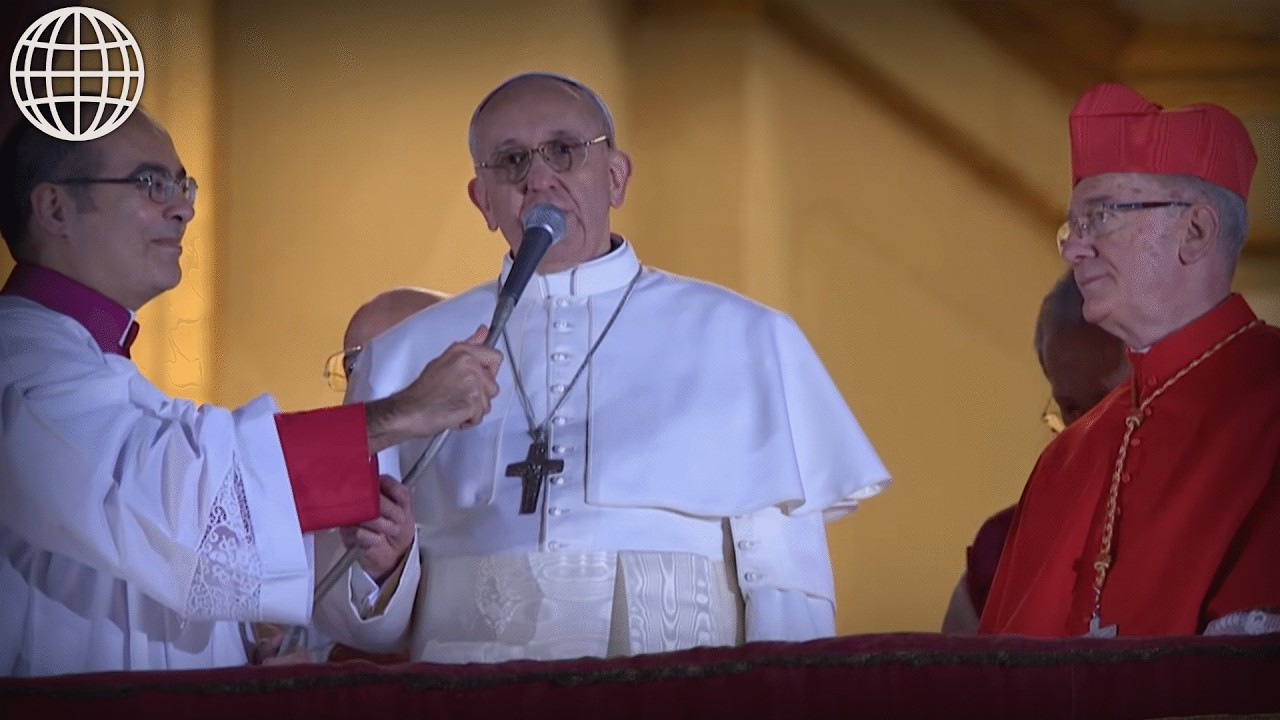
From that moment on, he was simply pope. When the new pope chose the name Francis, I was astonished. It wasn’t a Roman name like Gregory, Pius, or Benedict, but an Italian one — and my own baptismal name. I couldn’t believe it.
Cardinal Jorge Mario Bergoglio was the first pope ever to choose the name Francis, after Saint Francis of Assisi, the defender of the poor and oppressed. After he was elected and slipped into his white vestments, we all went up to him one by one to say a few words. I spoke in Spanish: “Santo Padre, my name is Francis too. ” He just laughed and said, “I know, Francis George.
”
For Catholics, the pope isn’t just an appendage of the Church; he’s an essential part of the Catholic faith. “We believe Jesus commissioned Peter and the apostles to spread the teaching. And that’s exactly what happens today. Peter and the bishops continue the teachings.
”
It had taken a long time to get a pope from South America. Cardinal Bergoglio was known but not a cardinal very active in Rome. His priority was governing Buenos Aires and providing aid to the poor there. A secret thousand-year-old ritual had just produced a new pope.
His name astonished the world. Cardinal Jorge Mario Bergoglio was the first non-European pope in more than a thousand years. He himself noted that his cardinal brothers had gone to the other end of the world to find a new head. Pope Francis came from the distant diocese of Buenos Aires.
The electoral process took less than two weeks. Benedict had represented Europe and held European views. With the new pope, the Church would take on a Latin American orientation, pursuing priorities in Latin America’s interest to be spread throughout the rest of the world. With his election, he was named pastor of the city of Rome and had to establish a new government, a task without equal.
“The pope doesn’t occupy the office from outside; the office occupies the pope,” one cardinal explained. “Benedict was aware of that. It wasn’t his task to change the teachings but to educate about them and carry them forward. ”
Among the new pope’s first tasks was his inauguration mass, where one could already discern from his words which direction he would take, including politically.
As Pope Francis, he was now head of state of the Vatican, Bishop of Rome, and the highest moral authority of the Roman Catholic world. Non-Catholics might not believe everything the pope says, but they acknowledge that the election of a pope is a significant event for worldwide moral consensus. “Whether they accept what he says or not, it matters all the same,” a Vatican observer noted. “He is a moral ambassador.
He is a man of the people who doesn’t really identify with the luxury or gold of the Curia. Instead, he takes the bus to work like an ordinary person. ”
The new pope, known for his strict yet simple lifestyle, refused to occupy the ornate papal apartments his predecessors had inhabited for more than 150 years. Instead, he preferred a small apartment in the Santa Marta residence, where the cardinals had stayed during the conclave.
But this was only the beginning of the radical restructuring of church leadership. On March 19, 2013, Pope Francis celebrated his very first mass in a globally broadcast inauguration ceremony. The imagery of the ceremony was already a clear sign of the pope’s change in style. Upon receiving an entirely new Fisherman’s Ring, he was confirmed as the 266th pope and Bishop of Rome.
His plain vestments symbolized a radical departure from the archaic, elaborate appearance of his predecessors. The papal tiara, once representing the pope’s threefold authority as supreme pontiff, vicar of Christ, and ruler over humanity, had already been abandoned by Pope Paul VI in 1963. The simplicity of the new pope was meant to set the tone for a new era in the Vatican. He believed the Church should return to the people and the poor.
He even refused the red shoes, still wearing his old worn-out slippers. After all, he had named himself Francis. For the first time in history, two popes now lived in the Vatican. On May 2, 2013, the emeritus Pope Benedict returned from Castel Gandolfo to the Vatican, taking up residence at the Mater Ecclesiae monastery.
As promised, he handed the secret report on Vatican corruption to his successor. Neither would Benedict seek to influence his successor, nor would the successor be swayed by anything. Although the two popes dressed similarly, there was a marginal difference in their white vestments. The emeritus Pope Benedict would continue to wear white but without the small cape worn by the pope who served as Bishop of Rome.
Unlike his predecessor Benedict XVI, Pope Francis seemed unable to embrace the pomp and ceremony of Vatican life. Instead, as a child of an immigrant family, he remained faithful to the modest, grounded lifestyle he was accustomed to from Buenos Aires. From the day of his inauguration, Pope Francis developed an open and simple leadership style in the Roman Catholic Church. “I’m glad Pope Francis is only seventy-six years old,” one supporter commented.
“That makes him relatively young. Still, he’s a man with much experience who has spent the last ten years dealing with the affairs of the Vatican and the Church. Inevitably, many demands for reforming the governance within the Holy See will lead to changes. He reminds us that the Church is catholic, that it is universal, and that the poor are first in the kingdom of God.
If he takes the necessary steps to make church governance more efficient and transparent, it will bring enormous change. ”
Pope Francis responded to the accusations by summoning eight cardinals to Rome and establishing a commission to investigate reforms. Among them were Cardinal O’Malley, Archbishop of Boston, and Cardinal Bertello, president of the Governatorate of Vatican City. “The pope is free to do whatever he wants,” one analyst noted.
“But he is morally bound to the direction of the other cardinals from the congregation. ”
Jorge Mario Bergoglio was a traditionalist. He had spoken out against abortion, gay marriage, and euthanasia. On the other hand, he was extremely progressive, especially in how he addressed the Church’s duties and handled everyday matters.
The Jesuits were obedient to the Church and the pope and did not stand in self-responsibility. That was the foundation of the Society of Jesus, which until now had made the election of a Jesuit pope impossible. His task as head of the Roman Catholic Church focused on representing people from all economic strata, especially in Latin America. Pope Francis spoke of re-evangelizing the Catholics who had lost sight of Catholicism’s core values.
Latin America was home to three hundred million Roman Catholics, a continent marked by rapid social change and great poverty. In the slums, indigenous traditions often mixed with classic conservative Catholicism. The Vatican, the smallest sovereign state in the world, was the beating heart of the Roman Catholic Church. Looking at the first months of this papacy, the enthusiasm of Latin American Catholics combined with Pope Francis’s leadership style had increased the pulse and set rapid change in motion.
The Roman Catholic Church was in the throes of a grave crisis. Pope Benedict had just stepped down, and a desperate search for his successor was on. It took place eleven thousand kilometers away, where fervent faith and tango filled the summer nights. Thousands of Argentines crowded into the Plaza de la Nación.
On March 13, 2013, the white smoke rose over the Sistine Chapel. Cardinal Jorge Mario Bergoglio, the first non-European to occupy the throne in thirteen hundred years, the first Jesuit to become pope, and as an Argentine, the first Latin American, had been chosen. It was a turning point in the Church’s two-thousand-year history. Back in Buenos Aires, the local football stadium had been prepared for a mass with the new pope.
But Rome called, and the media attention shifted to the Vatican. The new pope seemed overwhelmed by his sudden fame as the global media spotlight turned upon him. Pope Francis’s humble lifestyle, taking the metro home and preparing simple meals, struck a chord with ordinary people. But beneath the warmth, there was steel.
When asked about the Vatican dramas, he was blunt: “Noi negli ultimi anni abbiamo imparato a prevedere le difficoltà, ma la verità non deve mai essere nascosta. ” In recent years we have learned to anticipate difficulties, but the truth must never be hidden. The question of Bergoglio’s role during Argentina’s Dirty War remained a shadow. He had been accused of contact with the military junta that murdered thirty thousand people.
Some documents were even delivered to him personally by Father Jalics. The accusations were never fully resolved. Human rights activists would later discover how ambiguous the Argentine church’s position had been during that terrible period. Yet in his defense, his biographers argued that his quiet diplomacy may have saved lives.
“La complicazione perché noi non sappiamo tutto,” one local priest admitted. The complication is that we don’t know everything. But the crowds that gathered in St. Peter’s Square on March 19, 2013, weren’t thinking about historical ambiguities.
The mood was festive. With his powerful style, reaching the farthest corners of this global faith, Pope Francis had been installed as the 266th pope and Bishop of Rome. Roman Catholics the world over would remember this day as the beginning of a new era for their two-thousand-year-old church.