A Texas judge has denied convicted murderer Carmelo Anthony a new trial, rejecting claims of racial bias and constitutional violations as prosecutors unveiled a cache of disturbing text messages showing the 19-year-old threatening to kill his girlfriend and describing his desire to lick blood off a knife blade after stabbing someone. The ruling, delivered Thursday in a Collin County courtroom, keeps Anthony behind bars for the 2024 stabbing death of 17-year-old Austin Metcalfe at a high school track meet, a case that has ignited fierce debate over race, justice, and the handling of evidence.
The decision came after a contentious hearing where Anthony’s legal team argued that a secret agreement between prosecutors and defense attorneys to suppress character evidence violated his right to a fair trial. That agreement, described as a gentleman’s handshake, kept both Anthony’s violent text messages and Metcalfe’s documented history of racist bullying out of the original trial. The judge, however, ruled that the deal did not constitute grounds for a new trial, stating that Anthony’s own actions and statements were sufficient to support the jury’s verdict.
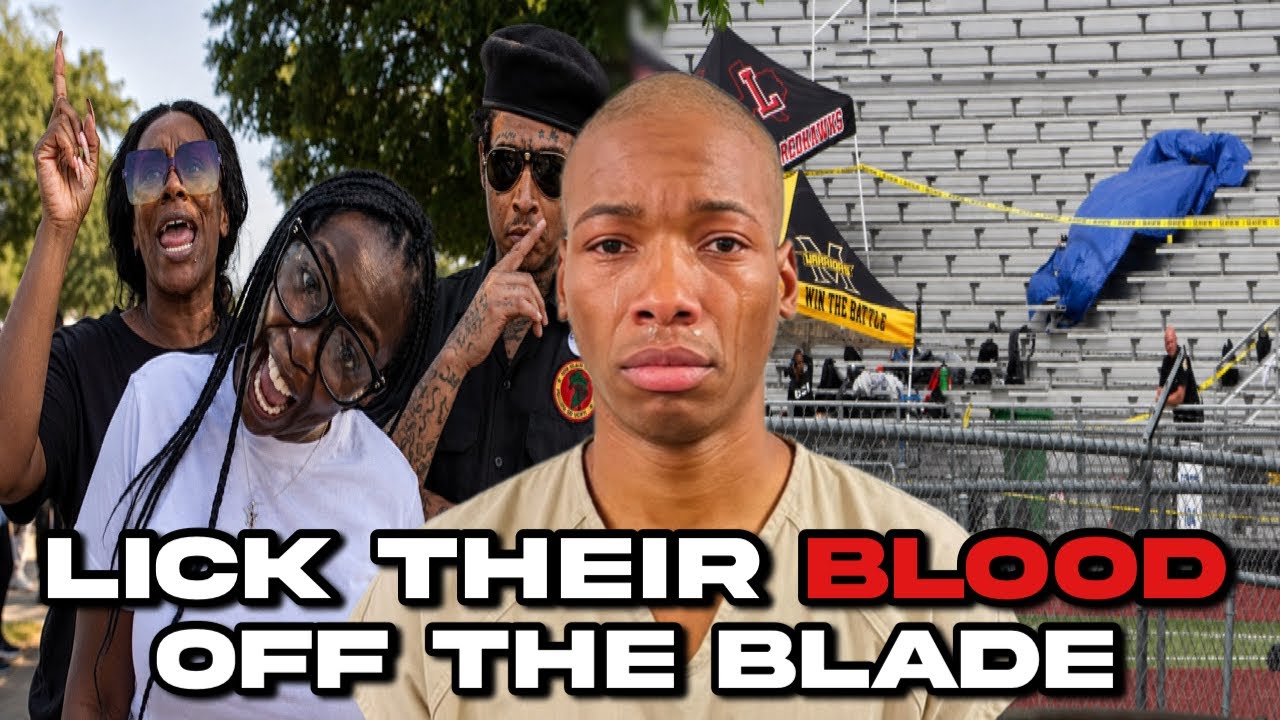 Prosecutors seized on the newly revealed texts to paint Anthony as a ticking time bomb. In one message sent to his girlfriend, Anthony wrote, How many bullets you want coming out of your chest? In another, he stated, When I stab somebody, I’m going to lick their blood off the blade.
Just two hours before Metcalfe was stabbed in the heart, Anthony texted, I’m low-key on the verge. These messages, prosecutors argued, demonstrated a clear pattern of violent ideation and premeditation, even if the victim was not specifically targeted in advance.
The defense countered that the texts were taken out of context and that Anthony was a troubled teenager struggling with mental health issues. They argued that the original jury should have heard about Metcalfe’s juvenile record, which included incidents of graffiti with racial slurs, bullying minority students, and even a discussion about bringing a gun to school. The defense claimed this history would have provided crucial context for the confrontation under the tent at the track meet, suggesting that Metcalfe was the aggressor in a racially charged encounter.
The judge’s rejection of the retrial motion effectively closes the door on Anthony’s immediate hopes for freedom, though his legal team has already filed an appeal. The 35-year sentence, handed down after a trial that lasted just over a week, remains in place. Anthony, who was 17 at the time of the killing, is currently incarcerated in a Texas state prison, where he will be eligible for parole only after serving at least half of his sentence.
The case has drawn national attention, with commentators and activists on both sides weighing in. Some have called for Anthony’s execution, arguing that the text messages prove he is a danger to society. Others have pointed to Metcalfe’s record as evidence of a systemic failure to address racist violence in schools.
The revelation that an assistant principal was allegedly warned by Anthony’s ex-girlfriend that he was stalking her has also raised questions about whether school officials could have prevented the tragedy.
Eric Doherty, a conservative commentator who has closely followed the case, posted on X that the denial of a retrial was the only correct outcome. He wrote, Carmelo Anthony has just been denied a retrial by the Texas judge for the murder of Austin Metcalfe. He cried racism and other violations yet the judge struck it down.
Doherty, who has called for capital punishment in the case, added, His prison term is still not enough. Capital punishment was the only correct outcome here. This can still be appealed.
The text messages were not the only bombshell to emerge during the hearing. Prosecutors also revealed that Anthony had a documented obsession with knives and guns, and a history of getting into fights. His ex-girlfriend testified that she had shown the threatening texts to an assistant principal, who allegedly took no action.
This has led to accusations that the school system failed in its duty to protect students, both from Anthony and from Metcalfe’s known violent behavior.
Metcalfe’s juvenile record, which was also kept from the original jury, paints a picture of a troubled youth with a pattern of racist and violent behavior. According to court documents, Metcalfe and his brother were caught spray-painting graffiti that included the letters KKK and the N-word. They were sentenced to 12 months of juvenile probation.
In 2023, Metcalfe was accused of bullying a black student in class, and in 2018, while still in elementary school, he was arrested for bullying and assaulting a female student.
During an argument in 2024, Metcalfe allegedly knocked a female student to the ground and punched her in the stomach. He was also kicked out of a football game and later texted someone, I was about to beat the out of those kids. At a previous track meet, when another student alerted Metcalfe that someone was talking wild behind their bench, he reportedly replied, Kill that motherfucker.
 School disciplinary records from the 2023-2024 school year show that Metcalfe received multiple in-school suspensions for using profanity and calling a teacher the B-word.
The defense argued that this history was essential to understanding the confrontation that led to Metcalfe’s death. They claimed that Metcalfe had a history of targeting minority students and that Anthony, who is black, was acting in self-defense. However, prosecutors countered that Anthony brought a knife to the track meet and used it fatally, regardless of any provocation.
The judge agreed, ruling that the evidence of Metcalfe’s past did not justify Anthony’s actions.
The gentleman’s agreement that kept both sets of evidence out of the original trial has become a focal point of controversy. Legal experts have noted that such agreements are not uncommon in high-profile cases, where both sides seek to avoid prejudicing the jury. However, in this case, the agreement has been criticized for preventing the jury from hearing information that could have changed the outcome.
Anthony’s legal team now argues that the agreement violated his constitutional rights, a claim that will be central to the appeal.
The appeal process could take months or even years, and there is no guarantee of success. Texas courts have been reluctant to overturn murder convictions, especially in cases where the evidence of guilt is strong. The text messages, which were not part of the original trial, could be used to support the prosecution’s case if a new trial is granted.
However, the defense could also use Metcalfe’s record to argue that Anthony was not the sole aggressor.
The case has also sparked a broader conversation about race and justice in America. Some commentators have pointed to the racial dynamics of the case, noting that Anthony is black and Metcalfe was white. They argue that the justice system is biased against black defendants, and that Anthony’s sentence is disproportionately harsh.
Others have countered that the evidence against Anthony is overwhelming, and that his race should not be a factor in determining his guilt or punishment.
The revelation that Metcalfe had a history of racist behavior has added another layer of complexity. Some have argued that this history should have been admissible in the original trial, as it could have provided context for the confrontation. Others have countered that Metcalfe’s past does not excuse Anthony’s actions, and that the focus should remain on the fact that Anthony brought a knife to a school event and used it to kill someone.
The judge’s decision to deny the retrial has been met with mixed reactions. Some have praised the ruling as a victory for justice, while others have condemned it as a miscarriage of justice. The case is likely to remain in the public eye as the appeal process unfolds, with both sides continuing to argue their positions.
For now, Carmelo Anthony remains in prison, serving a 35-year sentence for a crime that has divided a community and a nation. The text messages that were revealed in court have only deepened the controversy, raising questions about what the jury did not hear and what might have been different if they had. As the legal battle continues, the families of both Anthony and Metcalfe are left to grapple with the aftermath of a tragedy that could have been prevented.
 The judge’s ruling also highlighted the role of school officials in the lead-up to the stabbing. The fact that Anthony’s ex-girlfriend allegedly warned an assistant principal about his threats has led to calls for accountability. Some have argued that the school should have searched Anthony’s bag, which would have revealed the knife.
Others have pointed out that Metcalfe’s own history of violence should have resulted in more severe disciplinary action, potentially preventing the confrontation altogether.
The case has also drawn attention to the issue of juvenile justice in Texas. Anthony was 17 at the time of the killing, and his case was automatically transferred to adult court under state law. Some advocates have argued that this is too harsh, and that juveniles should be given a chance at rehabilitation.
Others have countered that the severity of the crime justifies the adult sentence, especially given the evidence of premeditation.
The text messages have been particularly damaging to Anthony’s case. In addition to the threats against his girlfriend, prosecutors also presented evidence that Anthony had a fascination with knives and guns. They argued that this obsession, combined with his statements about killing, showed that he was not a victim of circumstance but an active participant in a violent act.
The defense has tried to downplay the significance of the texts, arguing that they were the product of teenage bravado and should not be taken literally.
The appeal will likely focus on the gentleman’s agreement and whether it violated Anthony’s rights. His legal team will argue that the agreement prevented him from presenting a complete defense, and that the jury was misled by the omission of Metcalfe’s record. The prosecution will counter that the agreement was mutual and that Anthony’s own texts were far more damaging than anything Metcalfe had done.
The case has also become a flashpoint in the culture wars, with some commentators using it to argue about race, violence, and the justice system. Social media has been flooded with opinions on both sides, with some calling for Anthony’s release and others demanding harsher punishment. The judge’s decision to deny the retrial has only intensified the debate, with both sides claiming vindication.
As the legal process continues, the families of both Anthony and Metcalfe are left to mourn. The Metcalfe family has expressed relief at the judge’s decision, saying that justice has been served. The Anthony family has vowed to continue fighting, arguing that their son did not receive a fair trial.
The case is a stark reminder of the consequences of violence, and of the deep divisions that exist in American society.
The judge’s ruling also raises questions about the role of the media in high-profile cases. The text messages were leaked to the press before the hearing, leading to widespread coverage and public outcry. Some have argued that this prejudiced the judge and the public against Anthony, while others have said that the information was in the public interest.
The case highlights the tension between the right to a fair trial and the public’s right to know.
 For now, Carmelo Anthony’s fate is sealed, at least for the immediate future. The appeal will determine whether he gets a second chance, but the odds are stacked against him. The text messages, which were kept from the original jury, have become a central part of the narrative, and they are unlikely to help his cause.
The case is a tragic example of how a single moment of violence can change lives forever, and of how the justice system struggles to find a balance between punishment and fairness.
The judge’s decision has also been seen as a victory for the prosecution, which argued that the original trial was fair and that the evidence of Anthony’s guilt was overwhelming. The prosecution has said that the text messages only confirm what they already knew: that Anthony was a dangerous individual who posed a threat to society. The defense, meanwhile, has vowed to continue fighting, arguing that the case is far from over.
The case has also sparked a debate about the use of character evidence in criminal trials. Some legal experts have argued that the gentleman’s agreement was a mistake, and that both sides should have been allowed to present all relevant evidence. Others have said that such agreements are necessary to prevent trials from becoming muddled with irrelevant information.
The case is likely to be studied by legal scholars for years to come.
As the dust settles, the focus now shifts to the appeal. Anthony’s legal team will need to convince a higher court that the judge erred in denying the retrial, and that the original trial was fundamentally unfair. This is a high bar, and the odds are against them.
But in a case that has already defied expectations, nothing can be ruled out.
The families of both Anthony and Metcalfe are left to pick up the pieces. The Metcalfe family has expressed gratitude to the judge and the prosecutors, saying that they are relieved that the case is over. The Anthony family has expressed disappointment, but has vowed to continue supporting their son.
The case is a reminder of the human cost of violence, and of the long and painful journey toward justice.
In the end, the judge’s decision is a reflection of the evidence and the law. The text messages, the history of violence, and the tragic death of Austin Metcalfe all point to a single conclusion: Carmelo Anthony is guilty of murder, and he will spend the next 35 years in prison. The appeal may change that, but for now, the case is closed.
The debate, however, is far from over.