The bathroom walls began shaking like rubber. I was in the toilet when it started, and I just thought, “What is this? ” Then I heard my wife yelling from outside, “Dendy, please go out. This is an earthquake happening.
”
It was Boxing Day 2004, and I was in Banda Aceh, Indonesia. I had experienced earthquakes before—this was a place that was no stranger to them. But this one was different. It was violent, and it went on.
I grabbed my video camera because I’m a journalist, and I needed to capture it. Everybody outside was lying flat on the ground because the land was moving like porridge. Every time I tried to stand, I fell. When the shaking finally stopped, my wife and I got in my Jeep to assess the damage.
We drove past the biggest hotel in Banda Aceh. The lobby had collapsed into the basement, and the second floor was now the entrance. People who had survived were jumping out of the windows to escape. Some were fully dressed; others were in their underwear.
We had no idea that the earthquake was just the beginning. That morning, I spoke to Dr. Xand van Tulleken, who was working a Christmas shift at King’s College Hospital in London. While he was finishing his shift, 7,000 miles away, deep under the Indian Ocean, the Earth’s structure was changing.
Two tectonic plates—the Indian and the Eurasian—had been pushing against each other for millions of years, moving at just two inches a year, about the speed fingernails grow. But the pressure had reached a breaking point. At 7:58 a. m.
, the plates ruptured. A massive section of the seabed lifted by over 40 feet, across a distance of 746 miles—longer than the whole of the UK. Imagine half of the UK tearing off and leaping violently 40 feet into the air. That happened under the ocean in a matter of seconds.
It created one of the biggest earthquakes ever recorded: a 9. 1 magnitude quake. The shockwaves hit the Indonesian island of Sumatra within seconds. In Banda Aceh, we were among the first to feel its full power.
The earthquake lasted for almost 10 minutes, and within 15 minutes, the city was all but destroyed. But we didn’t know the worst was yet to come. As my wife and I were checking on the damage, people started running toward us, shouting that the water was coming. My wife screamed at me, “Dendy, the water is coming to the land.
” I thought she was kidding. Then I saw it. The first wave was just 100 meters from me, heading straight for my house. It was carrying street carts and overwhelming buildings that were two or three stories high.
I just thought, “I need to escape. I don’t want to die. ”
I jumped into my Jeep, and people started climbing in. I ended up with 25 people packed onto the vehicle.
We tried to escape, but just 50 meters further down the road, the first hit of the water came. All the cars behind me were being swept away like toys. The weight of the 25 people on my Jeep turned out to be a blessing. When the first wave hit us, it kept the Jeep stable.
That saved our lives. After the second wave receded, my wife and I turned back to check on our home. When we reached a bridge about five or six kilometers from the city center, the river had burst its banks. The water was full of debris—houses and the residents who once lived in them.
People were floating in the river. As I was filming, one of my hands was helping others. When the water reached four or five kilometers into the city, I knew Banda Aceh was gone. Back in Thailand, 300 miles from the fault line, people were waking up to what looked like a perfect day.
Luke Symonds was a 30-year-old British teacher on holiday with his older brother Piers on the island of Koh Phi Phi. They had planned to move to a quieter island called Koh Lanta that morning, so they were killing time before the ferry at their favorite cafe. Luke remembers the day clearly. He didn’t have any sense of foreboding.
The walk to the cafe took them through the heart of the town, so they never even saw the sea. He didn’t feel any tremors. The clearest memory he has of that day is just how perfect it was. On the island of Phuket, 11-year-old Becky Croston was on the beach with her mom Sandra and dad John.
It was the first time the family had gone away over Christmas. Her dad was keen to make the most of it, so they had an early breakfast and went to the beach for a lovely morning. Her mom was sunbathing, and vendors were selling T-shirts along the sand. It was everything you’d expect from an Asian holiday.
Then Becky’s dad noticed a group of locals pushing a big wooden Thai fishing boat into the water. He wanted to take a photo of Becky with it. But as he looked through the viewfinder, his expression changed. He wasn’t looking at her.
He was looking behind her. Becky turned and saw that the ocean had completely vanished. It had gone out so fast that fish were left flapping on the sand. The air was still.
Nobody on the beach was talking. There was just an eerie silence. Becky’s dad was a science teacher, and he knew what it meant. A tsunami was on its way.
The trough of the wave was arriving before the giant wave itself. He said to her, “You need to get to your mom, and we need to run. ”
He ran onto the beach, shouting at the top of his voice, “Run! ” They sprinted toward the parking area.
At that exact moment, a shuttle bus from their hotel pulled up, loaded with tourists. Becky’s dad jumped on board, shouting that they had to leave and get to high ground. He was scared, and his fear conveyed itself to the people on board. They jumped on the bus, and it started heading back toward the hotel.
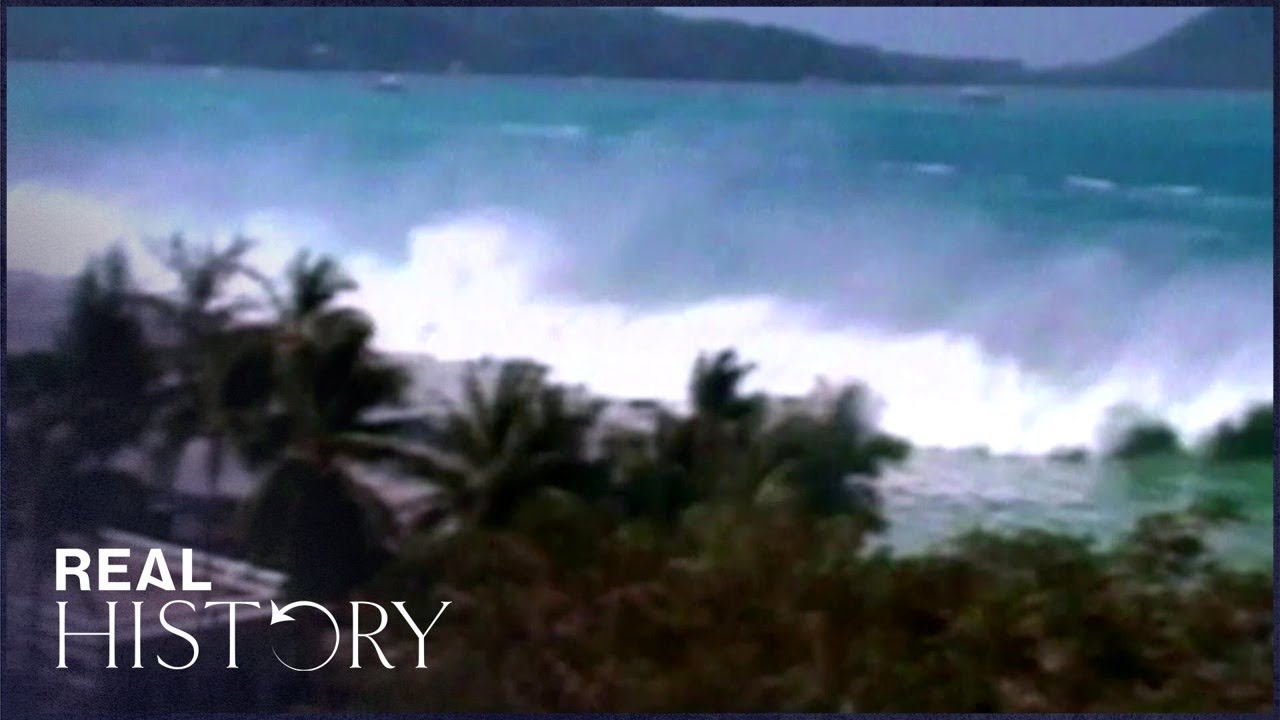
Just moments later, the wave hit. From the bus, Becky saw it. It wasn’t a big crashing peaking wave like in the movies. It was a wall of water, and it just obliterated the beach huts that had been there.
They vanished. With moments to spare, they made it to high ground. If they had been seconds later, they would have been completely hit. That day, Becky’s dad saved the lives of at least 50 people.
If he hadn’t been there, her mom and Becky probably would have died. She is immensely proud of him. Back on Koh Phi Phi, Luke and Piers were having breakfast when people came running into the cafe, screaming and shouting. Luke knew something was wrong because these people weren’t running between the tables.
They were running straight through them, out the back door, through the kitchen. Instinct took over. Luke, Piers, and their friend Sophie got up and joined them. They turned 90 degrees and tried to run down a side alley.
At the back was a corrugated iron shed, and Luke remembers seeing plastic petrol containers. He put his foot on one of them. The next thing he knew, he was on the roof. The head of the water hit the building he was on.
Piers was underneath, trying to hoist Sophie up while Luke pulled at her hand. Water and debris went up her body quickly, over her head. Sophie got hit by a piece of debris, popped up, and was in a bad way. She was whimpering.
They eventually got her up onto the apex of the roof. Luke’s priority was Sophie. He wasn’t thinking about Piers at all. On the island of Khao Lak, Andy Chagger and his girlfriend Nova were on holiday, sleeping in a beachside bungalow.
Andy woke up to the bungalow shaking violently. Nova was already awake, looking around, saying, “What’s that noise? What’s happening? ” The sound was like a jet engine, building and building like a plane getting ready for takeoff.
Then the tsunami hit. The next thing Andy knew, he was being swept along by the water. It wasn’t just the force of the water. There were bricks, metal, glass, and debris everywhere.
It was impossible to fight against it. He remembers coming to underwater, trying to surface, trying to catch his breath, thinking, “What the hell is happening here? ”
He was swept through what he presumed was a hotel under construction—just concrete floors and support pillars, no walls. In the process, his left leg was caught against one of the pillars, and wreckage was trapped against it.
Minutes later, the wave receded. Although that caused the worst of his injuries, it stopped him from being dragged out to sea. It probably saved his life. But Andy was badly injured, stranded, and alone.
He was terrified. Where was Nova? As he drifted in and out of consciousness, his mind turned to her. He had no way of knowing that Nova had been swept away and killed by the wave.
Her body wasn’t found until six months later. Just 90 minutes had passed since the earthquake struck. Becky, Andy, and Luke had survived the first terrifying wave. But it wasn’t over.
A second wave was headed their way, and it would be even deadlier. In Banda Aceh, I knew the city was gone. We were living in a terrible trauma. The water had taken everything.
And across the Indian Ocean, the unstoppable force was moving toward the next country in its path, Sri Lanka. The world was about to learn, hour by hour, how the Boxing Day tsunami had claimed over a quarter of a million lives in just 24 hours. And for those who survived, the memory of that morning would never fade.
For some, the search for the missing had only just begun.