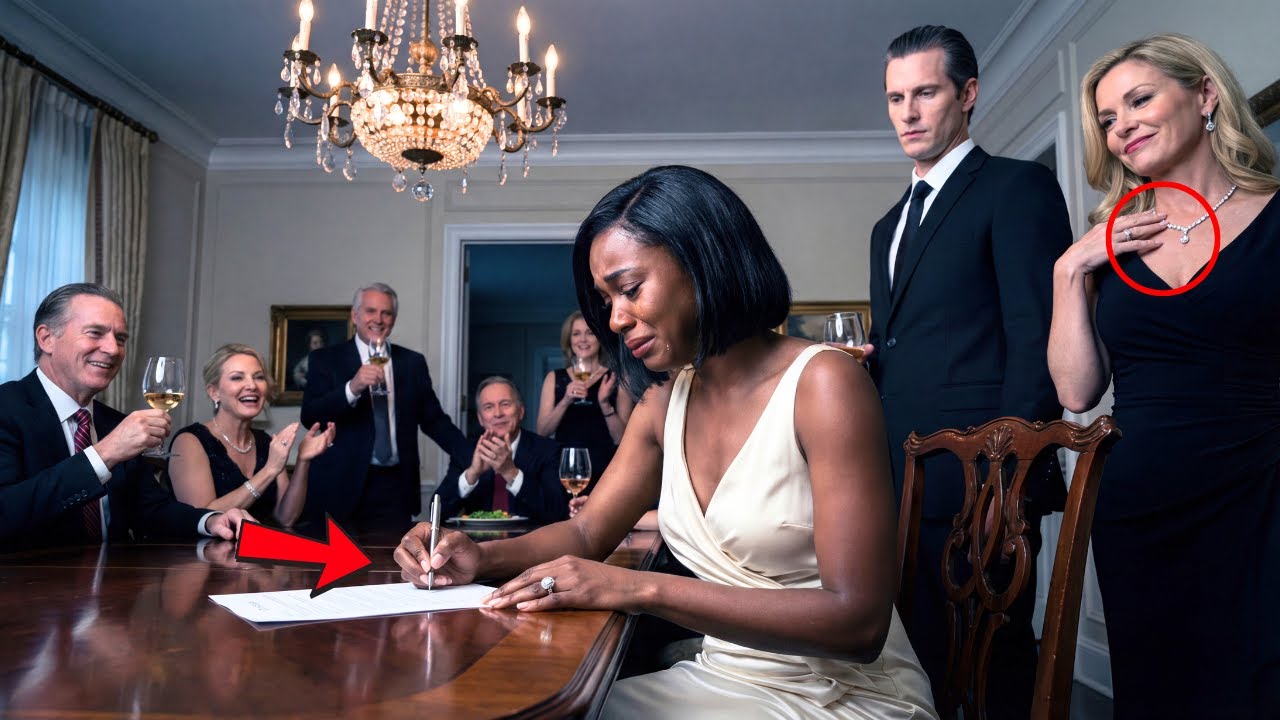
Frank Woods’s heavy hand slammed into my chest and shoved me backward, right in front of the bronze warrior statue. He pointed at the 30-pound camera bag he’d just thrown on the ground. “Pick the camera up and take a good shot. That’s the only reason I let you drag your face to your brother’s SEAL graduation.

”
I stood silent. The Pacific waves crashing against the cliffs weren’t as loud as the shattering inside my chest. An active-duty rear admiral of the United States Navy, the person who signed deployment orders for three strike fleets last night, had just been shoved out of a family photo by my own father like a stray dog. But that night would be the single night in 30 years he’d regret being blind to my power.
And who ended up paying the price? The cab of Frank’s rusting Ford F-150 smelled like a cheap motel room—stale tobacco, old fast food grease, and the bitter sweat of a man angry at the world. We rolled slowly toward the main gate of Naval Base Coronado. I was behind the wheel.
Frank always refused to drive on military installations. He wanted to be chauffeured around to feel like the important man he never became. Fifty yards from the checkpoint, my hand moved toward the inside breast pocket of my dark blazer. My fingers brushed the hard plastic of my Department of Defense identification card.
The security hologram. The rank. Rear Admiral. Two stars that commanded thousands of lives and controlled billions in Pacific Fleet assets.
A sudden blur of motion. Frank lunged across the console, his calloused fingers digging into the back of my hand. He snatched the card from my grip and hurled it onto the floorboard. “Put that damn desk jockey card away,” he spat, his voice a gravelly snarl.
My hand shot back to the steering wheel. I gripped the sun-cracked leather so hard the blood fled from my knuckles. The urge to react, to assert my command right there in the cramped cab, was a crushing pressure inside my skull. I didn’t open my mouth.
I clamped my jaw shut and started tactical box breathing—the same rhythm I used in a blood-soaked bunker in Kandahar when mortar shells rained down. Frank smirked, mistaking my silence for submission. He had no idea it was a trap setting its steel jaws. “If anyone asks,” he hissed, pointing a stubby finger at my face, “you’re just a coffee-fetching brat who pushes papers in some air-conditioned basement.
You’re a secretary. You staple garbage. Got it? I’m not going to let you ruin this day for your brother.
I don’t want these real men knowing the Woods family has a quitter. ”
A quitter. The word hung in the hot air, toxic and heavy. In his twisted reality, a washed-up E-5 sergeant who never amounted to anything needed someone beneath him to feel ten feet tall.
My two stars were a lethal threat to his shattered ego, so he simply erased them. He demanded I play the failure, the ultimate disappointment. I didn’t nod. I didn’t voice agreement.
But I accepted the terms of engagement. The lie was laid out thick and impenetrable. It was the perfect cover—a phantom operating in plain sight. Frank shifted his weight and deliberately planted his heavy Timberland boot on top of my security card, grinding his heel down.
I leaned down, shoved my fingers under the rubber sole, and pried the card out. It was smeared with greasy black dirt. I didn’t wipe it clean. I shoved the filthy card deep into my front pocket, letting the dirty plastic edge press hard against my thigh—a constant physical reminder.
At the gate, I handed the sentry my standard civilian driver’s license. Frank didn’t notice. He was too busy puffing his chest and quoting Teddy Roosevelt. “Caleb is the man in the arena, a real operator, not a coward hiding behind a keyboard,” he sneered.
“You sit in air conditioning all day, leeching off the system. Makes me sick. ”
In the backseat, my mother, Mary, pressed against the door panel, trying to make herself as small as possible. Her trembling fingers pulled out a tangled string of wooden rosary beads.
Click. Click. Click. “Frank, please don’t start,” she murmured, her voice thin and brittle.
It was an obligation, not a defense. She immediately squeezed her eyes shut and checked out completely. No intervention. No standing up for the daughter driving the truck.
Her silence hit me harder than Frank’s loud mouth. A punch you can brace for. But the silence of the person supposed to protect you—that’s a cold knife twisting slow in the gut. My mind snapped back to a windowless SCIF deep inside the Pentagon.
Just 72 hours ago, I stood in that sterile room, staring at a satellite feed, and authorized a kinetic strike that neutralized a terror cell creeping toward a Marine outpost in Al Anbar. I maneuvered three covert extraction teams to pull out an ambushed SEAL squad. Caleb’s squad. I covered my golden boy brother’s blind spot from 6,000 miles away.
I moved billion-dollar naval assets to make sure he didn’t come home to Frank in a flag-draped box. But Frank didn’t know that. He evaluated military glory by the grease on a man’s hands. He didn’t know about the thick, knotted scar tissue wrapping around my left shoulder—an AK-47 round that shattered my collarbone in Kandahar while I dragged a bleeding field medic behind a concrete barrier.
I bled for this country. I bled for this family. But to the washed-up E-5 sitting next to me, I was just a useless secretary fetching coffee. The clicking of Mary’s rosary beads sped up.
It was the sound of a family rotting from the inside out. I killed the last remaining ember of hope in my chest—the pathetic, lingering hope that maybe just once my parents would look at me and actually see me. That craving for validation died right there in the driver’s seat. I didn’t need them to understand.
The isolation was no longer a punishment. I strapped it on like heavy Kevlar. I pressed the gas pedal hard. The old V8 engine roared, drowning out Frank’s rambling and Mary’s empty prayers.
I whipped the truck into the VIP parking lot and slammed on the brakes. The F-150 jerked to a brutal halt. “Get out,” Frank barked. “And don’t drop the ice cooler.
Caleb’s hands are for holding a rifle, not dragging luggage. You’re carrying everything. ”
I stepped out into the hundred-degree heat. Frank shot out of the truck like a man half his age.
“There he is,” he bellowed. Caleb stood near the edge of the lot in his crisp navy dress whites. Frank closed the distance and pulled him into a crushing embrace, slapping his back so hard the sound echoed. Mary scrambled out and rushed to wrap her arms around her boy.
I stood by the open tailgate, my hands resting on the blistering hot metal. I waited for a nod, a passing glance, something to acknowledge that I’d driven them three hours through dead-stop traffic. Nothing. I was invisible.
A ghost haunting my own bloodline. Frank marched back to the tailgate, shoving past me like I was a piece of rusty yard furniture. He grabbed the 30-pound camera bag and the 50-quart cooler packed with ice and cheap beer. He spun around and shoved the cooler into my chest.
My combat reflexes fired. I caught the plastic handles before the hard edge crushed my ribs. Then he threw the heavy canvas strap of the camera bag over my neck. The rough material dug into my collarbone, sliding right over the scar tissue from Kandahar.
“Frank, maybe she could use a hand with that,” Caleb said, his voice low and nervous. “Absolutely not,” Frank scoffed. “Your hands are for pulling a trigger, son, not hauling water. Let the secretary do the heavy lifting for once.
”
Caleb looked at me over Frank’s shoulder. For a split second, I saw guilt—the pathetic, cowardly guilt of a golden child who knows exactly how good he has it. He knew the price being paid in blood right in front of him, and he still chose to stay quiet. He swallowed hard, broke eye contact, and looked down at his polished black shoes.
“Yeah. Okay, Dad,” he mumbled. He turned his back on me. Frank, Mary, and Caleb linked arms and walked toward the reception hall, laughing.
I stood alone by the rusted bumper, my knuckles white around the cooler handles. I squared my shoulders, locked my jaw, and stepped forward, putting exactly ten paces between me and the family. The perfect distance to remain unseen. The perfect distance to protect the illusion of their flawless family.
Inside the reception center, Frank strutted into the lobby like he owned the base. A loud voice cut through the hum. Bob Miller, Frank’s next-door neighbor, stood near the coffee station. “Look at this guy, a real American hero,” Bob said to Caleb.
Then he turned to me, his lips curling into a patronizing line. “And Lexie, you made it. ”
“Barely,” Frank interrupted. “Had to drag her out of her cubicle.
She just staples garbage and fetches coffee for the brass these days. ”
Bob let out a short nasal chuckle. “Not everyone is cut out for the real work,” he said, dripping with condescension. “Takes a certain kind of grit.
Right, Frank? ”
“Exactly,” Frank sneered. “She quit when things got tough. But hey, somebody has to operate the copy machine.
”
I didn’t defend myself. I didn’t correct the record. I locked my jaw and forced a dead, closed-mouth smile. Let them have their cheap little victory.
I tightened my bleeding hands around the cooler handles and hoisted it back off the floor. We walked down the corridor toward the outdoor pavilion. The walls were lined with naval history—photographs of carrier groups, bronze plaques. This was my world.
But to the men walking in front of me, I was just the hired help. Coming from the opposite direction was a group of three naval officers in service khakis. The man in the center was a lieutenant. Fifty feet away, his eyes scanned the loud, obnoxious civilian blocking the hallway.
Then his gaze shifted past Frank’s shoulder. He looked at me. Thirty feet away, the lieutenant stopped breathing. I saw the exact microsecond his brain short-circuited.
The color drained from his face. He knew my face. Just two weeks ago, that lieutenant was standing at attention in a classified briefing room while I ripped his tactical insertion plan to shreds with a red pen. Twenty feet.
Panic seized him. His right arm twitched, starting to snap up into a textbook salute. His mouth opened. I didn’t stop walking.
I locked my eyes onto his and delivered a microscopic shake of my head. Stand down. Do not blow my cover. Ten feet.
The lieutenant swallowed hard, choked back the greeting, forced his hand down, and plastered himself against the wall to give me a wide berth. He looked like a man who’d just dodged a sniper bullet. Frank watched the officers scurry past and let out a loud, booming laugh. “See that, Caleb?
” he practically yelled. “Even the real officers won’t look at her. They can smell a quitter. ”
Frank had absolutely no idea.
He didn’t know that the officer wasn’t disgusted by me. The officer was terrified of me. At the barbecue, Frank dropped his frame onto a picnic table. Caleb brought two trays.
One had a massive half rack of ribs, golden fries, and a cold beer. The second tray had only one paper plate. Frank slid it across the splintered wood until it hit the edge of the table in front of my chest. I looked down.
It was a single hamburger patty—no bun, no cheese, no sides. Just a solid blackened puck of ground beef left on the grill until it turned into pure charcoal. “You sit in the air conditioning all day,” Frank said, ripping a rib apart with his teeth. “You don’t need ribs.
Eat the burger. Leave the real protein for your brother. ”
I stared at the black disc of meat. Outside Fallujah, a 19-year-old combat medic with a shrapnel wound once offered me the very last drop of water from his canteen because I’d been on watch for 18 hours.
He was a complete stranger. My own flesh and blood threw me a carcinogenic piece of garbage. I didn’t argue. I picked up the blackened meat with my bare hands.
It felt like pumice stone. I brought it to my mouth and took a bite. The burnt crust shattered against my teeth. The taste of bitter dry ash flooded the back of my throat.
The meat was so hard it scraped against my bottom lip. The dry skin cracked. A sharp metallic taste leaked onto my tongue. Blood.
I chewed the ash. I swallowed it down. I stood up from the picnic table. Frank didn’t even bother looking up from his ribs.
I turned my back and walked away. In the public restroom, I gripped the edges of the porcelain sink and stared at my reflection in the cheap, scratched mirror. A streak of dirt marred my white blouse. A drop of blood sat on my cracked lip.
The door swung open. Eleanor Harris, the wife of the Pacific Fleet Commander, stepped inside. She glanced up at the mirror. Her hands froze.
The compact slipped from her fingers and clattered onto the cold tile floor. “Lexie,” she gasped. “Good god, what are you wearing? Why are you out there sitting with that loudmouth civilian?
”
I didn’t turn around. I looked at her through the mirror, raised my right hand, and pressed a single finger against my lips. “Stand down, Eleanor,” I said, my voice a low, absolute whisper. “That is a direct order.
Do not blow my cover. ”
Eleanor stopped dead in her tracks. The confusion in her eyes slowly melted away, replaced by a deep, heartbreaking understanding. She saw the fresh blood on my lip.
She saw the cold war happening right outside these doors. She gave me a slow, solemn nod. I turned on the faucet, cupped my hands, and washed away the blood and the ash. Above the thick concrete ceiling, the sky suddenly tore open.
A deafening roar ripped through the air as a squadron of F/A-18 Super Hornets flew directly over the building. The acoustic shockwave vibrated the water in the sink. It was the sound of my world, the sound of absolute power. I grabbed a paper towel, wiped my face clean, and crushed it into a tight ball.
It was time. The main auditorium was packed—2,000 people. Frank bulldozed his way down the center aisle, leading Mary and Caleb to the second row, the VIP section. Four plush red velvet seats reserved with crisp white name tags.
Woods family. Frank dropped into the aisle seat. Mary sat next to him. Caleb took the third.
I walked up behind them, my shoulders aching under the 30-pound camera bag. I moved to take the fourth empty seat on the end. Frank’s arm shot out. He grabbed the heavy Nikon bag from my hand and slammed it down hard onto the velvet cushion.
“Get to the back of the room,” he ordered, not lowering his voice. “You need a wide angle to get a good shot of your brother. Put the bag on the seat. The floor is too dirty for the lenses.
”
A camera bag got a velvet seat. The daughter who drove them three hours and hauled their ice got the concrete floor. He looked up at me with a nasty, smug grin. He was testing me, pushing the boundary in public to see if I would break my cover and cause a scene.
He wanted an excuse to play the victim. I didn’t argue. I turned around and walked up the long sloping aisle, past row after row of proud parents and smiling siblings, until I hit the back wall. The absolute furthest point in the room.
I stepped into the shadows near the heavy exit doors and pressed my back against the cold painted drywall. I was standing next to two men in dark suits with coiled earpieces. United States Secret Service. They gave me a quick, assessing look, then immediately relaxed.
They recognized a predator that belonged in the same jungle. I was completely isolated from my family. Banished to the dark edge of the room. But standing against that cold wall, I had the ultimate tactical vantage point.
I could see every single face in the auditorium. I could see the back of Frank’s thick neck. The house lights dropped. A harsh spotlight hit the wooden podium.
The heavy solemn brass notes of the Navy band filled the room. The Star-Spangled Banner. Two thousand people stood in unison. Down in the second row, Frank puffed his chest out so far the buttons on his polo shirt strained.
He threw his hand over his heart and started singing, louder than anyone else, off-key and aggressive. He was performing, playing the role of the ultimate patriotic American father. The sheer hypocrisy made my stomach turn. As the final note echoed through the silent hall, Frank dropped his hand.
Before sitting down, he turned his massive head and looked all the way to the back of the room. He found me standing in the shadows. He shot me one final sneering look of pure disgust. I didn’t look away.
I curled my fingers inward, digging my nails into my palms. It took every ounce of willpower to kill the automatic muscle memory screaming at my right arm to snap up into a rigid textbook salute. I kept my hands balled into tight fists. The trap was fully set.
The heavy red velvet curtains behind the stage parted. A single man stepped out from the wings. He didn’t walk. He marched.
Lieutenant General Michael Vance, commander of Naval Special Warfare. A three-star legend. He stepped up to the heavy mahogany podium and leaned into the microphone. A sharp burst of acoustic feedback pierced the air.
Two thousand people went dead silent. Down in the second row, Frank was practically vibrating with self-importance. He leaned into Mary. “Look at that, Mary,” he whispered loudly.
“That’s a real general up there, three stars. You see the seats I got us, front and center. We’re right in his line of sight. ” He puffed his chest out, waiting for the acknowledging nod, the respectful glance from one warrior to another.
Frank genuinely believed his presence in that velvet chair mattered to the man who commanded the deadliest operators on the planet. Up on the stage, General Vance didn’t pull out a speech. He lifted his chin, his eyes cold and sharp as a falcon’s, and began a slow, deliberate, tactical scan. He swept over the front row of politicians.
He swept over the second row of VIP families. His eyes slid right past Frank’s puffed-out chest like Frank was nothing more than a speck of dust on a radar screen. Frank’s eager grin faltered. Vance’s gaze continued to cut through the crowd, row by row, deeper into the hall.
Then he stopped. His gaze locked onto the far back corner of the room—the dark shadowed pocket of space next to the heavy metal exit doors. Where I was standing. Even from 200 feet away, I saw the exact moment the general found me.
I saw his jaw clench. I saw the muscles in his neck pull tight. He looked at the heavy camera bag slung over my injured shoulder. He looked at my wrinkled civilian clothes.
He looked at the stark isolating distance between me and the rest of the families. He knew my rank. He knew my clearance. He knew I was the architect behind the Pacific strategy that kept his men alive.
And he saw me standing in the dark like a banished servant. General Vance lowered his hands and gripped the thick edges of the mahogany podium. He squeezed the wood so hard his knuckles turned bone white. The rage rolling off him was palpable—a cold, quiet fury that sucked the remaining oxygen out of the room.
The silence stretched. Five seconds. Ten seconds. It felt like an hour.
Finally, Vance leaned directly into the microphone. “Before we begin,” he growled, his voice not loud but carrying a heavy, gravelly authority that shook the floorboards, “I am looking out at this room, and I see a severe violation of military protocol. ”
A ripple of nervous energy shot through the crowd. Down in the second row, Frank let out a low mocking scoff.
He leaned forward, craning his thick neck, looking left and right to see which poor pathetic fool was about to get chewed out by a three-star general. He thought it was a show, a piece of entertainment put on just for him. Frank had absolutely no idea. He didn’t know that the crosshairs were painted squarely on the back of his own balding head.
General Vance let go of the podium and stood to his full height. He raised his right arm slowly, deliberately, pointing his index finger straight out into the crowd. He aimed right over the top of Frank’s balding head, past the VIP rows, past the local politicians, directly into the deep cold shadows hugging the back wall. “I see a severe violation of military protocol,” Vance said, his voice a low rolling thunder.
“We do not leave the architect of our Pacific defense strategy standing in the dark. It is an absolute honor to have you here. Welcome aboard, Rear Admiral Lexi Woods. ”
The words hit the room like a physical shockwave.
Rear Admiral. Before anyone could process the gravity of that rank, the Master Chief Petty Officer standing stage left stepped up, filled his massive chest with air, and unleashed a raw guttural roar: “Attention on deck. ”
Kaboom. The sound of 300 highly trained lethal operators moving at the exact same millisecond.
Three hundred Navy SEALs violently pushed back their chairs and shot up from their seats. Three hundred pairs of polished black boots slammed down onto the hardwood floor simultaneously. The concussive impact shook the walls. They spun around 180 degrees.
Every single operator turned their backs to the stage, turned their backs to Frank, and faced the dark corner in the back of the room. Three hundred right arms snapped up. A textbook razor-sharp salute held completely rigid. Dead silent.
They were not saluting a coffee-fetching secretary. They were not saluting a quitter. They were paying absolute unyielding respect to the woman who held their lives in her hands. I didn’t flinch.
I stepped out of the shadows and walked into the harsh glare of the aisle lights. The heavy camera bag still hung off my shoulder. My blazer was wrinkled and stained with dirt. But my spine was forged steel.
I stood perfectly straight, my shoulders squared, my chin parallel to the floor. I didn’t look at my mother. I didn’t look at Caleb, who was standing at attention with the rest of his class, his face completely drained of blood. I brought my right hand up.
Crisp, brutal. A flawless return salute. I held it for exactly three seconds, the military standard. I let the silence burn into the minds of every single civilian in the room.
I snapped my hand down to my side. “Thank you, gentlemen,” I projected my voice down the long center aisle, cold, sharp, slicing through the heavy air. “Carry on. ”
Kaboom.
Three hundred boots snapped back. Three hundred arms dropped. The SEALs re-took their seats in perfect synchronized discipline. Down in the second row, Frank was completely paralyzed.
He looked like a man who’d just been struck by lightning. The cheap plastic cell phone slipped from his sweaty fingers and hit the hardwood floor with a sharp clack. He didn’t reach down to pick it up. His thick sunburned neck rotated slowly, painfully, until he was looking back at me.
His face was the color of wet ash. His jaw hung open, slack and stupid. The arrogant, puffed-out chest had completely caved in. The man who had spent the last three hours humiliating me, bragging to his neighbors, and wiping his muddy boots on my security clearance was currently suffocating under the crushing weight of reality.
A quitter. A paper pusher. The lies shattered. Thousands of shards of glass drove themselves right into Frank’s fragile, pathetic ego.
He was not the tough guy. He was not the warrior in the arena. He was a washed-up, bitter old man who had just forced a United States Rear Admiral to carry his beer cooler in front of the Commander of Naval Special Warfare. Sitting right next to Frank, Bob Miller leaned away like Frank had a contagious disease.
Bob stared at me, his eyes wide with absolute terror. Then he looked at Frank, his lip curling in disgust. “You arrogant, lying piece of trash,” Bob whispered, a harsh hiss that carried up the aisle. Frank shrank.
He physically folded in on himself. He slumped down into the plush velvet chair he’d been so proud of. He brought his thick, shaking hands up to cover his face, trying to hide from the burning stares of the VIP families sitting around him. He wanted the floor to open up and swallow him whole.
I stood at the back of the room. I didn’t smile. I didn’t gloat. I just watched him break.
The ceremony resumed. General Vance gave his speech. Caleb crossed the stage and got his trident pin. Frank didn’t cheer.
He didn’t stand up. He sat frozen in his seat, staring at the floorboards, utterly humiliated. When the final applause died down, the double doors at the back of the auditorium were thrown open. The crowd began to flood out into the muggy California afternoon.
I turned around and walked out first. I didn’t wait for them. I walked straight across the hot asphalt of the parking lot, heading right back to the rusted, foul-smelling cab of the F-150. I popped the heavy metal door open and slid into the driver’s seat.
The air inside was stifling. I waited. Five minutes later, Frank appeared. He wasn’t strutting anymore.
He dragged his feet across the pavement, his head down, looking like a beaten dog. He pulled the passenger door open and hauled his heavy frame onto the frayed fabric. He slammed the door shut. The silence inside the truck was violently thick.
I put the key in the ignition. I didn’t start the engine. Frank’s thick fingers gripped the edge of the dirty dashboard. His knuckles were white.
He was breathing heavily, his chest heaving with desperate, ugly breaths. The shock was wearing off. The humiliation was calcifying into something else, something desperate. He turned his head slowly.
His bloodshot eyes locked onto the side of my face. “You set me up,” Frank hissed, his voice thick with venom. “You planned this whole thing. You let me walk in there blind.
You let me look like a fool in front of Bob, in front of the general, just so you could flex your rank. You humiliated me. ”
I didn’t start the engine. I kept my hands resting lightly on the steering wheel.
“You think wearing some stars on your collar makes you better than me? ” Frank leaned toward me, his face blotchy red with panicked anger. “You never served a day in the dirt. You never sacrificed a damn thing for anyone in this family.
You just hid behind a desk and let real men like Caleb do the bleeding. ”
The engine block ticked as it cooled down. The time for tactical breathing was over. The time for maintaining cover was dead.
I reached inside the breast pocket of my blazer. I didn’t pull out my military ID. I pulled out my thin leather wallet. I flipped it open and slid two fingers into the hidden back slot.
I pulled out a single wallet-sized photograph, sealed in thick heavy plastic, the edges worn smooth from years of being carried across three different continents. I didn’t hand it to him. I flicked my wrist and threw the laminated photo hard. It hit Frank square in the chest, bounced off his polo shirt, and landed face up on his thick thigh.
Frank blinked. He looked down. It was a photograph taken inside a dimly lit forward operating base triage tent. The woman in the photo was lying on a canvas stretcher.
Her desert camouflage uniform was completely saturated with dark glistening blood. Her right shoulder was a mangled pulpy crater of torn flesh and shattered bone. Her face was pale, covered in black grease and dirt. Her eyes rolled back from the sheer blinding agony of the morphine wearing off.
It was not a picture of a paper pusher. It was a picture of a slaughterhouse. Frank stared at the plastic rectangle. His thick calloused fingers hovered over it.
He didn’t want to pick it up. He didn’t want to touch the reality of what he was seeing. But the image was inescapable. “Kandahar, November 2010,” I said, my voice a cold, flat monotone, the voice of a prosecutor reading a death warrant.
Frank swallowed, a loud dry click in his throat. “My convoy was hit by an IED. We took heavy incoming fire. I caught two rounds from an AK-47.
One shattered my collarbone. The other tore through the muscle. ” I turned my head slowly and locked my eyes onto his. “I took those rounds while dragging a bleeding marine behind a concrete barrier.
I lay on that canvas stretcher for six hours waiting for an evac chopper. ”
Frank finally picked up the photo. His hand was shaking. The laminated plastic rattled faintly against his fingernails.
He stared at the torn bloody flesh of the daughter he had just called a coward. “Do you know what day it was, Frank? ” I asked softly. He didn’t answer.
He couldn’t speak. “It was Thanksgiving Day. ” The words hung in the suffocating heat of the truck cab. “I was lying on a metal table.
A field surgeon was digging hot shrapnel out of my shoulder without enough anesthetic, and my satellite phone rang. A nurse held it to my ear. ”
Frank’s eyes ripped away from the photograph and stared at me, wide, terrified. The memory of that phone call was suddenly clawing its way back into his brain.
“It was you,” I said. “You called me. ” Frank opened his mouth, but only a raspy broken breath came out. “You didn’t ask how I was doing.
You didn’t ask if I was safe. You called me to scream. You called me to yell at me for being selfish. You cursed me out for choosing the Navy over coming home to carve a damn turkey.
You called me a disappointment while they were picking bullets out of my bones. ”
I reached up and pulled the collar of my white blouse to the side. I exposed the thick jagged keloid scar that snaked across my collarbone and up the side of my neck. The scar the canvas strap of the camera bag had been grinding against all afternoon.
Frank stared at the scar. His eyes traced the violent raised tissue. He looked back down at the blood-soaked stretcher in the photograph. Then he looked at his own dirty, unscarred hands.
The delusion snapped. The 30-year fortress of toxic masculinity, of blue-collar superiority, of weaponized incompetence—it all collapsed inward. The sheer, undeniable weight of his own monstrous behavior crushed him. He had spent his entire life trying to shrink me so he could feel tall.
He had abused the very person who had bled to protect the freedom he bragged about. Frank’s broad shoulders slumped. The air rushed out of his chest in a ragged, pathetic wheeze. He bent forward, burying his face in his hands.
Then came the sound. It was not a dignified cry. It was an ugly, guttural sob. The sound of a broken man realizing he was completely, entirely hollow.
His thick fingers dug into his scalp as he wept into the steering column. “What did I do? ” Frank choked out, the words muffled by his hands. “Oh God, what did I do?
”
I watched him cry. I felt no pity. I felt no anger. The heavy, burning weight I had carried since that Thanksgiving in Kandahar simply evaporated.
The debt was settled. The ledger was clear. I reached over and snatched the laminated photo from his lap. I slid it back into my wallet.
“Get out of my truck. ”
The flickering red neon sign of the local Denny’s buzzed like an angry hornet. It was 11:00 at night. The cracked vinyl booth stuck to the back of my blazer.
The diner was dead empty save for a tired waitress wiping down the counter with a bleach rag. Frank sat across from me. He stared down at a thick ceramic mug of cheap, watered-down black coffee. He looked 15 years older than he had that morning at the base.
The aggressive bluster, the puffed-out chest, the cruel smirk—it was all gone. The toxic armor had rusted straight through to the bone. He ran a thick, calloused finger along the chipped rim of the mug. He didn’t look at my face.
“I… I’m an E5,” Frank said, his voice a dry, grating rasp. “A sergeant who peaked at 25. I never promoted.
I watched guys younger than me, guys with half my grit, put on brass and walk right past me while I stayed stuck in the mud. ”
I didn’t interrupt. I drank my ice water. “I was terrified of you,” he whispered to the black coffee.
“You joined up and you just kept climbing. You got the gold bars, then the oak leaves, then the stars. Every single promotion you got made me feel smaller in my own house. I had to break you down.
I had to make you a failure in my own head just so I could still feel like the giant. ”
The confession hung in the air, heavy with the smell of old frying grease and burnt coffee beans. A brilliant tactician knows exactly when to press an attack. A master commander knows exactly when to stop shooting.
The enemy infrastructure was completely decimated. There was no honor in firing into the rubble. I reached across the sticky laminate table and placed my hand over his. His knuckles were covered in deep permanent stains of engine oil and age spots.
He flinched at the sudden contact, fully expecting another strike. I just held his scarred hand down against the table. “I have enough officers shouting orders at me, Frank,” I said, my voice steady, entirely stripped of its military edge. “I don’t need another superior.
I just needed a father. ”
Frank squeezed his eyes shut. A single heavy tear leaked out from his wrinkled eyelid, cutting a clean track down his dirty sunburnt cheek. It was a pathetic, ugly, necessary tear.
Between us sat a cheap oval plate of lukewarm french fries. Frank picked one up with shaking fingers. He broke the grease-soaked potato in half. He slid the smaller piece across the scratched table toward me.
A silent, desperate olive branch. I picked up the greasy fry. I put it in my mouth. It tasted like old cooking oil and the sharp stinging salt of his tears.
I chewed it slowly. The bitter ashen taste of the burnt hamburger from this afternoon was finally gone. We sat in the low hum of the diner refrigerators, chewing on a delayed, painful forgiveness. The glaring morning sun beat down on the concrete drop-off lane at San Diego International Airport.
The heavy exhaust from idling shuttle buses and the smell of raw jet fuel filled the air. Frank pulled my heavy luggage out of the trunk of his car. He didn’t let me touch the bags. He hauled the heavy nylon suitcases onto the curb himself, his breathing heavy but deliberate.
He turned around to face me. He was wearing a brand new navy blue cotton t-shirt. The bright white block letters stretched across his broad chest read, “Proud Navy Dad of a Rear Admiral. ” The cardboard price tag was still sticking out of the back collar.
He stood awkwardly on the concrete curb. He wiped his palms on his denim jeans. He took a deliberate step backward, creating a crisp physical distance between us. Frank squared his heavy shoulders.
He brought his right foot back, slamming his heavy boot heel into the concrete. The sharp crack echoed over the noisy airport traffic. He brought his right hand up to his brow. A rigid, flawless textbook military salute.
“Goodbye, Admiral,” Frank said. His voice was thick, completely devoid of sarcasm. It held a new, unbreakable gravity, absolute respect. I straightened my spine.
I snapped my right hand up, returning the honor. The boundary was permanently set. The hierarchy was undeniable, written in the very air between us. “Safe travels, Sergeant,” I replied.
I dropped my salute, turned my back, and walked through the sliding glass doors of the terminal. I didn’t look over my shoulder. Five minutes later, I stepped out the opposite side of the terminal and slid into the back of a waiting armored black suburban sent by the Department of Defense. The heavy bulletproof door slammed shut, sealing me inside a vault of absolute silence.
The leather seat squeaked as I leaned back. Deep inside my blazer pocket, my secure encrypted satellite phone vibrated violently against my ribs. I pulled out the heavy black device. The screen flashed red.
A priority override from the Pentagon. I pressed the cold receiver to my ear. “Admiral Woods,” I answered. The steel returned to my spine instantly.
The personal war was over. The real war was waiting. True power is never about shouting the loudest in a crowded room to prove you exist. True power is enduring the absolute worst they can throw at you, holding your ground, and letting the undeniable truth speak through your blood, your rank, and your honor.
Forgiving them is how you free yourself from the poison. But justice must always be served cold and in plain sight.