When the Germans seized Norway after their invasion in April 1940, they found a willing collaborator in the Norwegian fascist leader Vidkun Quisling. His name would become a permanent synonym for traitor, but at the time, his movement, the Nasjonal Samling, was just one of many small extremist parties struggling to find relevance in interwar Europe. Fascism was rising across the continent during the 1920s and 1930s, and Norway was no exception. The country produced its own fascist party called Nasjonal Samling, which meant National Rally.
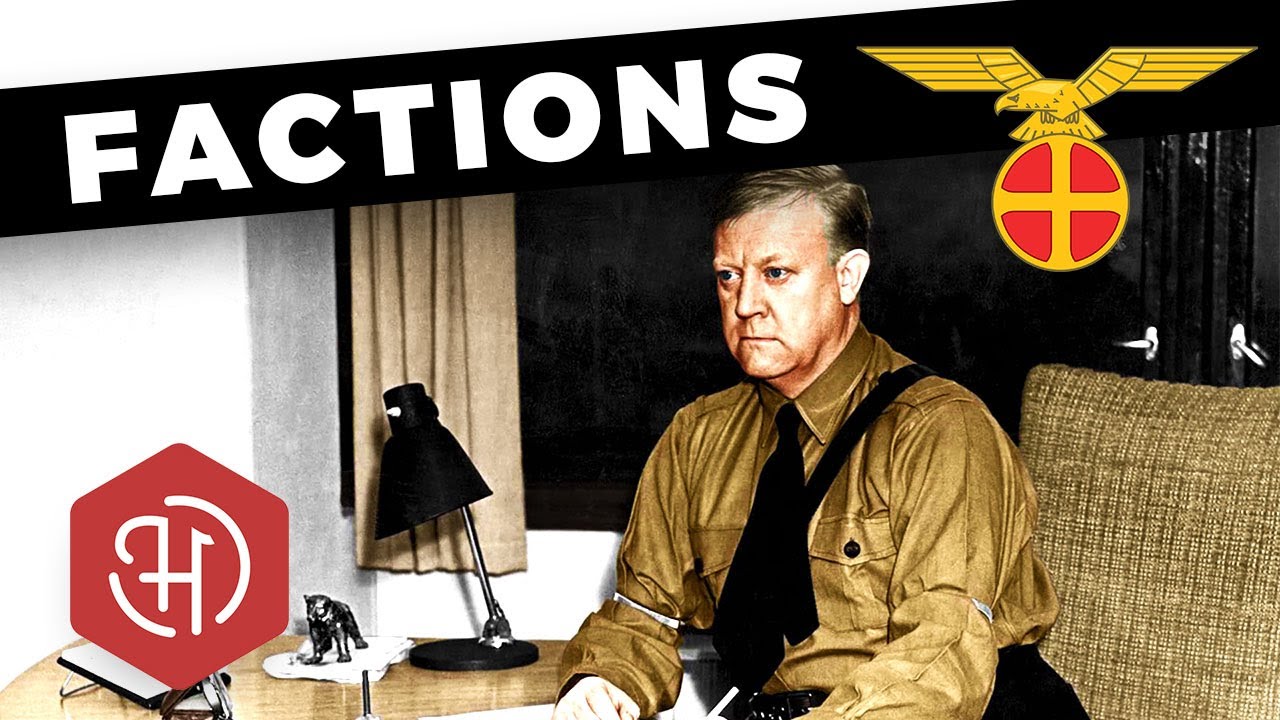
They had their own leader, their own uniform, their own flag, and their own eagle emblem. The party was founded in 1933 by Quisling, a former minister of defense, and in the elections that same year, they managed to pull in around two percent of the vote. That was better than the communists managed, but it was hardly a mandate for revolution. The numbers did not improve in the years that followed.
Right before the outbreak of World War II, the party had somewhere between five and six thousand active members, a small base for a movement that dreamed of ruling the entire country. The ideology of Nasjonal Samling was a strange and contradictory mixture. Before the party was founded, several minor proto-fascist movements had appeared in Norway, each drawing inspiration from either Italian fascism or German Nazism. The Fatherland League and the National Legion leaned toward Mussolini, while the National Socialist Workers Party of Norway copied Hitler.
Nasjonal Samling itself was officially established as a successor to a small anti-socialist organization called the Nordic People’s Uprising. From the moment of its founding in 1933 until its collapse in 1945, Quisling was the most prominent figure in the party, proclaimed as the unconditional Fører, a leadership principle that mirrored both Hitler and Mussolini. The party was never ideologically uniform. It attracted conservatives and radicals, devout Christians and followers of neopagan religion, traditional Norwegian nationalists and men who admired the fascist systems being built in Italy and Germany.
Opinions within the movement differed dramatically, but there was a basic level of agreement that Quisling had set from the start. The party was antisocialist, anti-parliamentarian, and driven by a vague but passionate desire for radical political change in Norway. Within this broad framework, two antagonistic camps emerged. One strand was radical, totalitarian, anti-Semitic, and deeply inspired by German Nazism.
The other was more authoritarian and conservative, rooted in Norwegian nationalism and Christian values, and it was this camp that Quisling and his deputy chairman belonged to. Despite the divisions, many members were influenced by the German race researcher Hans F. K. Günther and his ideas about the Nordic race.
This ideology insisted on the superiority of the Nordic people, and it came heavily laced with anti-Semitic beliefs. In its early years, two ideas dominated the party’s worldview. First, there was a strong sense of crisis, a belief that the Norwegian nation was spiritually sick and in need of national rebirth. This crisis could only be overcome through unity and the leadership of Vidkun Quisling.
Second, the party refused to associate itself directly with Italian fascism or German Nazism, even while admitting that a certain kinship existed between them. It was probably no coincidence that Nasjonal Samling was founded just a few months after Hitler seized power in Germany, even though the party was ultimately shaped by domestic Norwegian conditions. Tellingly, the abbreviation NS, which in Germany stood for national socialism, raised immediate suspicion. Much of the Norwegian press assumed that Quisling’s movement was simply a Norwegian copy of fascism or Nazism.
Not surprisingly, the party rejected this label entirely. In a public speech in August 1933, Quisling made his position clear. He said they were not trying to adapt any foreign doctrine to the country. They were seeking to solve issues based on Nordic conditions and accommodate things to Norwegian purposes.
He stated plainly that they wanted neither fascism nor national socialism. The party journal occasionally mentioned Italy and Germany, but an article titled “The Ideological Base of Our Movement” raised the question of how fascism and Nazism related to Nasjonal Samling. The article emphasized the party’s Norwegian spiritual and national distinctiveness, which the party’s leaders considered the reason for their ideological independence from kindred movements abroad. The conclusion was that they could never rely on fascism or national socialism, since those movements emerged from Italian and German conditions, but they could still learn practical lessons from the struggles those movements had faced.
This statement summed up the party’s general position. They refused to call themselves fascist or Nazi, but acknowledged that they shared certain ideas and methods with the great dictatorships of the south. The reasoning was simple. In a country with a strong liberal tradition, the word Nazi was used pejoratively to discredit political opponents.
Other fascist movements in similar countries were not so shy. Fritz Clausen’s National Socialist Workers Party of Denmark used the label openly, as did the Swedish National Socialist Party. In Britain, there was the British Union of Fascists and the Imperial Fascist League. But in Norway, the failed cases of the National Legion and the Norwegian National Socialist Workers Party had shown that there was little to gain from calling oneself fascist or Nazi.
That experience clearly affected Nasjonal Samling. The party preferred to present itself as an independent national phenomenon, and Quisling supported this idea fully. Initially, he was neither pro-Italian nor pro-German, but actually pro-British. He dreamed of combining Italian fascism and German national socialism into his own political synthesis, expressed entirely through the ideology of Nasjonal Samling.
This focus on Norwegian independence was reflected in the party’s emphasis on Norwegian history and tradition, especially from the medieval period. The party symbol was not the swastika, which the Danish and Swedish fascist parties had eagerly copied from the Germans, but the Olaf cross, a sun cross based on Norway’s national saint. The old Norse greeting “Heil og Sæl,” meaning healthy and happy, was used as the party’s form of salutation, accompanied by the raising of the right hand. The greeting itself was Norwegian, but there was no mistaking the style, clearly inspired by the Roman salute of Italian fascism and the Nazi salute of Germany.
When Germany invaded Denmark and Norway on April 9, 1940, everything changed for Quisling and his party. The Norwegian army was poorly trained and poorly equipped, and despite a desperate defense, it was forced to fall back. Allied support that landed at Narvik only prolonged the inevitable. On June 10, the remaining Norwegian forces signed a capitulation treaty with the Germans.
Norway was now under German occupation. Hitler appointed Josef Terboven as Reichskommissar, the supreme civilian authority in the country. In September, all political parties except Nasjonal Samling were banned. Members of Quisling’s party were installed as commissary ministers, and in 1942, Quisling himself was made head of the collaborationist government.
Quisling proved more than willing to promote and facilitate the recruitment of Norwegians into Germany’s armed forces. He undoubtedly wanted Germany to win the war, and he was a firm believer in the idea of Nordic-Germanic racial unification. But like most collaborators in Nazi-occupied Europe, Quisling and his party also pursued their own nationalistic aims and power-political interests. The Nasjonal Samling administration was given a degree of autonomy in purely civilian matters, but in reality, it was controlled by Reichskommissar Terboven, who answered only to Adolf Hitler.
Quisling saw a national socialist Norway as the core element of a Nordic community of Scandinavian nations that would confederate with a Germanic Europe under Hitler’s leadership. Military recruitment was also a way to boost popular support for the party, which remained dangerously small even after the German takeover. If the Germans ever decided to restore Norwegian independence, Nasjonal Samling would need to be large enough to rule the entire country. Military collaboration was also rooted in the party’s ideology.
Before the invasion of the Soviet Union, in January 1941, a campaign was launched to recruit volunteers for the SS Regiment Nordland. At the end of that month, a group of around 200 volunteers was sworn in by Heinrich Himmler himself at a ceremony in Oslo. Over the following months, several hundred more enlisted. But the largest wave of recruitment came after Germany attacked the Soviet Union in June 1941.
On June 29, Reichskommissar Terboven proclaimed the creation of the Norwegian Legion on the radio. The major propaganda slogan came down to “free Finland. ” Since neighboring Finland had been attacked by the Soviets in 1939, the Nordic races were called to come to its aid and save the Nordic lands, and indeed all of Europe, from the red peril. Eventually, the Norwegian Legion was sent to the Leningrad front.
The unit was plagued by disillusionment throughout its entire deployment. Morale collapsed, and desertion and self-mutilation became serious problems. In May 1943, the unit was officially dissolved. Around 1,900 Norwegians had served in the Legion, and roughly 180 of them were killed.
Additionally, about 400 Norwegian nurses served at the front, of whom twenty were killed or listed as missing in action. Norway remained under German rule until the very end of World War II. When the war was over, Quisling was arrested, put on trial, and found guilty of treason. In October 1945, he was executed.
His name, however, would live on, not as a leader of a proud national movement, but as a permanent reminder of what it means to betray one’s own country.


