Ancient Graves in the Andes Reveal a Surprising Story of Migration, Survival, and Continuity in the Uspallata Valley
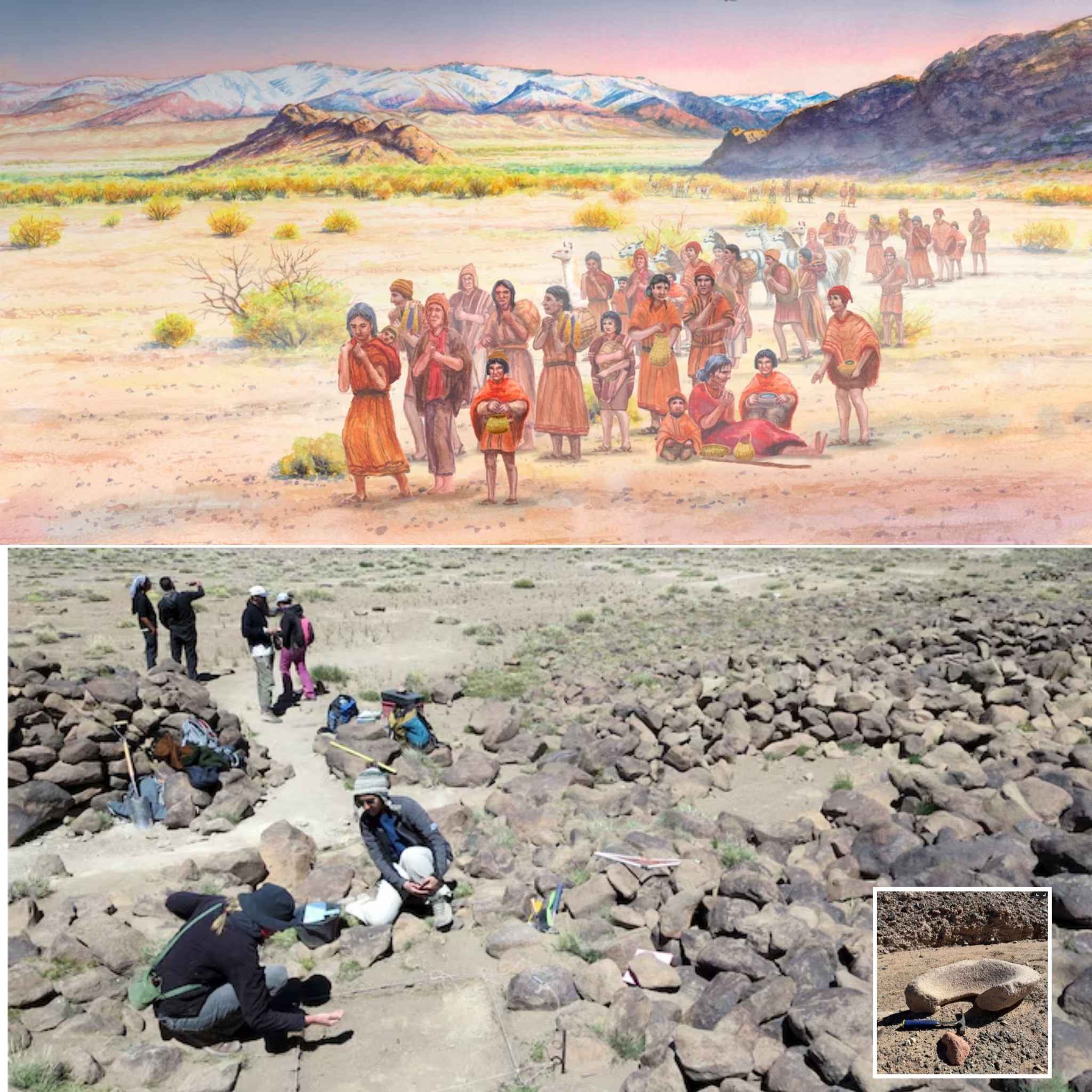
Far from being a forgotten or “extinct” population, the ancient inhabitants of the Uspallata Valley in Argentina are now revealed to have deep and continuing ties to people living in the region today. A new multidisciplinary study, published in Nature, is reshaping long-held assumptions about population replacement, migration, and survival in the southern Andes.
For decades, many archaeologists believed that the original inhabitants of this scenic high-altitude valley had disappeared, replaced entirely by later farming communities. But new genetic and chemical evidence tells a very different story—one of continuity, adaptation, and resilience across thousands of years.
The findings suggest that today’s Indigenous communities in the wider region are not only connected to agricultural societies that once lived in the valley, but also to even earlier hunter-gatherer groups. Together, these lineages form a long, continuous thread of human presence stretching deep into prehistory.
What emerges is not a narrative of extinction, but of transformation.
A valley shaped by survival, not disappearance
The Uspallata Valley sits in a strategically important corridor of the Andes, where mountain routes connect different ecological zones. Its archaeological record includes burial sites spanning more than 2,000 years, offering a rare window into how communities adapted to environmental stress, migration, and social change.
At the center of the new research is a burial site known as Potrero las Colonias, excavated originally in the 1930s, where more than a hundred individuals were discovered. For decades, these remains were only partially studied. That changed in 2018, when a research team led by archaeologist Ramiro Barberena of the Interdisciplinary Institute of Basic Science in Mendoza returned to analyze the site using modern techniques.
Instead of focusing only on artifacts or burial styles, the team examined isotopes in teeth and bones, as well as ancient DNA extracted from human remains. These methods allow scientists to reconstruct where individuals grew up, what they ate, and how they were biologically related to other populations across time.
What they found challenged established assumptions about population turnover in the Andes.
Migrants buried among locals: a surprising pattern
One of the most striking discoveries came from strontium isotope analysis, which reveals geographic origins based on the chemical signature of local geology absorbed during childhood.


When the team tested remains from 130 individuals, they initially sampled seven in detail. All seven showed chemical signatures indicating they were migrants—not people born in the immediate valley.
This result was unexpected. Instead of a static local population being replaced over time, the burial site appeared to contain individuals who had traveled from elsewhere and were later integrated into the community.
Even more surprisingly, the migrants were not segregated in death. They were buried alongside local inhabitants in the same cemeteries, suggesting they had been fully accepted into society during their lives.
This pattern points to a level of social openness that contrasts with many other regions of the Andes during the same time period, where archaeological evidence often indicates conflict, defensive structures, and violent competition over resources.
In the Uspallata Valley, that pattern is largely absent.
DNA reveals deep ancestral continuity
While isotope analysis revealed migration, ancient DNA provided an even deeper insight: long-term biological continuity across thousands of years.
When researchers analyzed genetic material from 36 individuals across multiple burial sites, they identified a clear genetic link between agricultural farmers and much older hunter-gatherer populations who lived in the region more than 2,000 years earlier.
This finding overturns a long-standing assumption in Andean archaeology: that hunter-gatherer groups were completely replaced by incoming farming populations.
Instead, the evidence suggests continuity. Hunter-gatherers did not disappear—they transitioned into farming societies over time, adopting new subsistence strategies while retaining genetic lineage.
This transformation was likely gradual, shaped by environmental pressures and the opportunities offered by agriculture.
Agriculture, adaptation, and an unexpected trap
The shift to farming, particularly maize cultivation, had profound consequences for health and survival.
Chemical analysis of teeth showed heavy reliance on corn as a staple food. While maize allowed for population growth and settlement stability, it also brought new vulnerabilities.
Striations in tooth enamel and skeletal markers indicate repeated episodes of nutritional stress and famine. In some individuals, bones show signs of chronic disease and developmental stress, suggesting that food supply was not always reliable.


Researchers believe that reliance on irrigation-dependent maize farming may have created a fragile system. During periods of drought, irrigation channels could dry up, causing crop failure and widespread food shortages.
This “agricultural trap” may have made communities more vulnerable—not only to famine but also to disease outbreaks.
Disease in a connected ancient world
Among the most unexpected discoveries was evidence of infectious disease, including a lineage of tuberculosis bacteria found in some individuals.
Interestingly, this strain appears to have originated in seals before making its way into human populations—a finding that raises new questions about long-distance transmission routes and ancient human-environment interactions.
As researcher Nicolás Rascovan from the Pasteur Institute in Paris noted, the pathway of transmission remains unclear. However, its presence in the valley suggests that even remote Andean communities were not isolated. Instead, they were part of broader networks of contact that may have extended across vast distances.
This also implies that migration routes and temporary shelters in mountainous terrain could have acted as hubs for disease transmission, especially in crowded or resource-stressed conditions.
A society with little evidence of violence
Despite the environmental pressures of famine and disease, one of the most remarkable patterns in the archaeological record is the lack of evidence for large-scale violence.
In many parts of the Andes during similar periods, skeletal remains show trauma from conflict, and settlements often display defensive architecture. The Uspallata Valley, however, shows almost none of these indicators.
This absence suggests a different social strategy—one based on cooperation rather than confrontation.
Researchers interpret this as evidence that communities in the valley may have developed systems of mutual support, even during times of scarcity. Instead of competing violently for limited resources, they appear to have absorbed migrants into existing social structures.
This pattern of integration is rare in the archaeological record and may reflect a strong cultural emphasis on connection and shared survival.
Women, migration, and social cohesion
One of the most intriguing aspects of the study is the demographic composition of migrants found in burial sites. Many were women and children, including family groupings such as grandmothers, mothers, and daughters buried together.
This suggests that migration was not purely individual or male-dominated. Instead, entire family units appear to have moved together, or at least remained closely connected during relocation.
Researchers propose that women may have played a central role in maintaining social ties between communities, facilitating integration and cooperation across settlements.


This interpretation is supported by ethnographic parallels with modern Indigenous Huarpe communities in the region, where women often maintain kinship networks and social alliances across geographic boundaries.
Such continuity between ancient and modern social organization suggests that some cultural practices may have deep historical roots.
Collaboration between science and Indigenous knowledge
A key dimension of the study is the involvement of Indigenous Huarpe communities, whose ancestral ties to the region remain central to contemporary identity and politics.
Three community leaders contributed as co-authors, sharing oral traditions and perspectives that helped contextualize the scientific findings.
However, the collaboration was not without tension. Claudia Herrera, leader of the Guaytamari community, described initial distrust toward researchers due to a long history in which Indigenous peoples were treated as objects of study rather than partners.
Over time, however, the collaboration evolved into a more dialogical relationship, reflecting changing approaches in archaeology and anthropology.
Community members emphasized that genetic data alone cannot define identity, which is shaped equally—if not more strongly—by culture, history, and lived experience.
As researcher Nicolás Rascovan cautioned, genetic relationships should not be used to define belonging or rights. Identity, he argued, is fundamentally social rather than biological.
Living continuity and modern challenges
For members of the Huarpe communities, the findings carry both scientific and political significance. The evidence of long-term continuity in the valley reinforces long-standing oral traditions asserting ancestral presence in the region.
At the same time, the communities face ongoing challenges, including economic marginalization and environmental pressures linked to industrial activity and land use policies.
Graciela Coz, from the Llahué Xumec community, highlighted how historical and modern hardships—ranging from colonial labor exploitation to exposure to agrochemicals—continue to shape community health today.
She also noted that learning about ancient disease patterns offers a new perspective on contemporary struggles, connecting past and present experiences of vulnerability and resilience.
Community members also see archaeological evidence as a potential tool for defending territorial rights and protecting heritage sites from extractive industries.
Science as a tool for identity and resistance
Perhaps the most profound takeaway from the study is not only what it reveals about the past, but how it intersects with present-day identity and political struggles.
As Matías Candito of the Guaytamari community stated:
“Today we also live in a Western system that sets the general policies in the territory. Science can be a tool to help us defend our identity.”
This statement captures the complex dual role of archaeology in Indigenous contexts: it can both challenge and reinforce historical narratives, depending on how evidence is interpreted and who has authority to interpret it.
In the case of the Uspallata Valley, scientific data is not simply rewriting history—it is interacting with living communities whose ancestors are part of that history.
A new story of the Andes
The emerging picture from the Uspallata Valley is one of continuity rather than replacement, cooperation rather than conflict, and adaptation rather than disappearance.
Far from being extinct, ancient populations in the region appear to have transformed over time, integrating new practices such as agriculture while maintaining genetic and cultural continuity with earlier hunter-gatherer groups.
Migration was not a force of rupture, but of integration. Even in times of famine, disease, and environmental stress, communities appear to have maintained strong social bonds and welcomed newcomers.
In this sense, the valley tells a different story from many other parts of the ancient world—a story in which survival depended not on exclusion, but on connection.
And that story, preserved in bones, teeth, and DNA, continues to resonate today in the voices of the people who still call the Andes home.