Witnessing History: Entering King Tut’s Tomb in 1923
In 1923, National Geographic’s first foreign correspondent, Maynard Owen Williams, had the rare privilege of approaching one of history’s most anticipated archaeological discoveries: the opening of King Tutankhamen’s tomb in the Valley of the Kings.
Across the Nile, the limestone cliffs of Thebes shifted color with the sun—from soft gold at dawn to harsh white under the midday glare, then to the mysterious purple shadows of evening. Here, among barren slopes that had long concealed royal secrets, Williams felt the weight of centuries as he navigated the landscape, once trampled by grave robbers, now the stage for history in the making.
The Approach: Desert Life and Ancient Monuments
Williams crossed Luxor on foot, taking in the vibrant life of the surrounding villages. Children ran through narrow alleys, turtledoves cooed, and camels and oxen labored under the hot sun to water the fields. Beyond the living world of the Nile Valley, the colossal statues of Memnon and the tombs of lesser pharaohs marked the slow climb toward the royal necropolis.
Along the way, the monotony of the delta gave way to the variety of the western desert, where the tombs of Egypt’s kings remained stubbornly hidden for millennia. Every shadow, every rising dust cloud seemed to whisper secrets of the past, and Williams, camera in hand, absorbed the scene—the laborers, the camels carrying ice, and the anticipation hanging thick over the area.
At the Tomb: Mystery in Broad Daylight
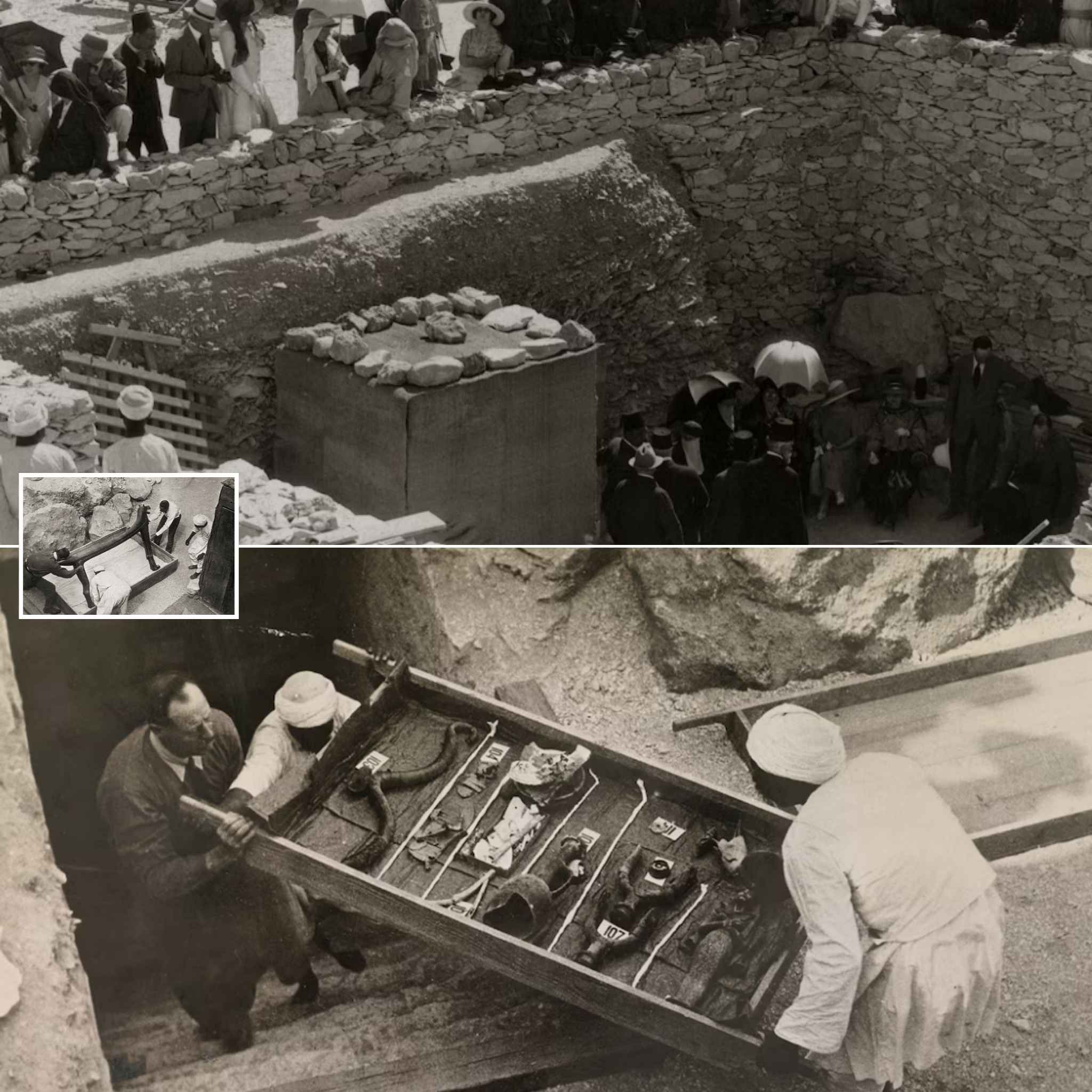
At the tomb entrance, a small white tent sheltered guards, correspondents, and photographers. Even in the bright sunlight, the air felt charged with secrecy. Rumors, speculation, and guarded whispers floated among the journalists, each trying to capture the first glimpse of treasures that had lain undisturbed for over three thousand years.
Inside, the preparation was meticulous. New boards and soft buffers protected the sarcophagus, while the inner chamber was illuminated by high-power electric lights, revealing a nearly life-size gilt statue of the king standing as an eternal guardian. Its dark skin contrasted sharply with the gold, and its stiff posture radiated both authority and uncanny stillness.
Williams marveled at the craftsmanship: the decorations on the sarcophagus gleamed with gold leaf, lapis lazuli, and faience enamel. Though only a corner of the tomb could be viewed, the precision of the art and the richness of the materials conveyed the majesty and care with which Tutankhamen had been laid to rest.
A Glimpse Into the Inner World
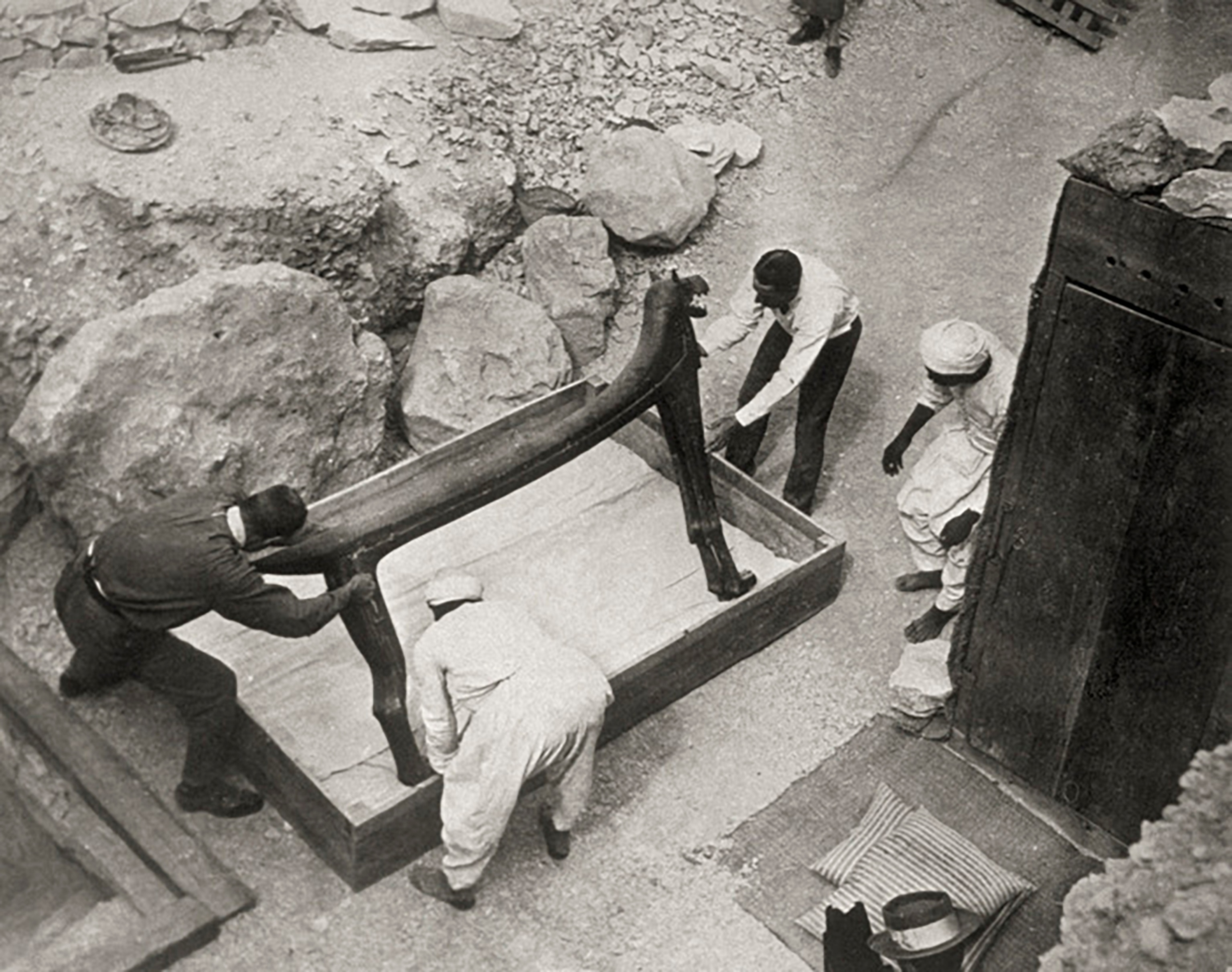
Beyond the guardian statues lay the inner chamber, still partially obscured by timbers. The treasures of Tutankhamen, though already being removed for preservation, hinted at the grandeur within: alabaster vases, small wooden figures, and golden ornaments suggested a world of ritual and luxury. Even the ordinary, like a pet goose figure, spoke volumes about life and belief in ancient Egypt.
The tomb was a blend of solemnity and human activity, where the careful handling of artifacts and the play of journalists’ curiosity created an atmosphere of both reverence and anticipation. Williams observed these moments, noting the care of those around him and the almost theatrical presence of royalty preparing to witness history.
Alone Among the Ancients
Later, venturing into other tombs in the valley, including Amenophis II and III, Williams experienced a striking contrast. These chambers, long exposed to light and vandalism, felt desolate and silent. The bats clinging to walls stirred only when touched by candlelight, reminding him of the living ecosystem that had quietly adapted to the tombs’ eternal stillness.
For a few moments, standing in the darkened recesses of the tomb, Williams felt the weight of history and mortality. The limestone above him, the broken floors, the faded murals—all spoke to the passage of centuries. Here, amidst the shadows, he could almost sense Tutankhamen himself, lying in wait, preserved yet hidden from the world outside.
Returning to Luxor: The World Awaits
Back in Luxor, the bustle of modern life resumed: sugar cane trains whistled, camels and donkeys moved through the streets, and tourists prepared to visit the tomb in the coming days. Yet Williams’ mind remained with the tomb, with the king whose life had been brief but whose afterlife now captivated the world.
As he stepped into a shop to leave his films, he overheard a tourist remark: “I do hope we can get a pass, because I’m just crazy over mummies, and they say this one will be the best of all.”
Indeed, Tutankhamen’s tomb had not yet fully revealed its secrets, but its presence, its treasures, and its history had already cast a spell over those fortunate enough to witness its opening. For Williams and the world, the young pharaoh’s silent gaze promised stories that would endure for generations.