 A remarkable archaeological discovery from Siberia is reshaping scientists’ understanding of Neanderthal intelligence and medical knowledge. Researchers studying a 60,000-year-old Neanderthal tooth from Chagyrskaya Cave in Russia’s Altai Mountains have found evidence suggesting the individual may have undergone a primitive form of dental treatment — potentially the oldest known example of intentional dentistry in human history.
The finding centers on a lower molar containing a deep, carefully formed cavity unlike damage typically caused by natural wear or decay alone. After years of analysis, scientists now believe the hole was deliberately created using sharpened stone tools to remove infected tissue and relieve severe tooth pain.
 Ancient Dental Procedure Discovered in Siberia
The tooth was originally unearthed during excavations at Chagyrskaya Cave in 2016, a site already famous for producing numerous Neanderthal remains and stone tools. At first, archaeologists could not determine whether the unusual concavity on the tooth had formed naturally or through human intervention.
Recent microtomographic imaging and experimental archaeology, however, provided stronger evidence that the marks were intentional. Researchers compared the ancient tooth to modern human teeth drilled with replicas of prehistoric stone tools and found nearly identical patterns of grooves and scraping.
According to the study team, the Neanderthal individual suffered from severe dental caries, commonly known as cavities. The tooth showed signs of two separate forms of manipulation:
- a deep drilled opening likely used to remove decayed material,
- and fine grooves near the gumline consistent with repeated tooth-picking behavior.
Together, the evidence suggests a sustained attempt to reduce pain and treat infection rather than accidental damage.

Stone Tools Used for Delicate Medical Work
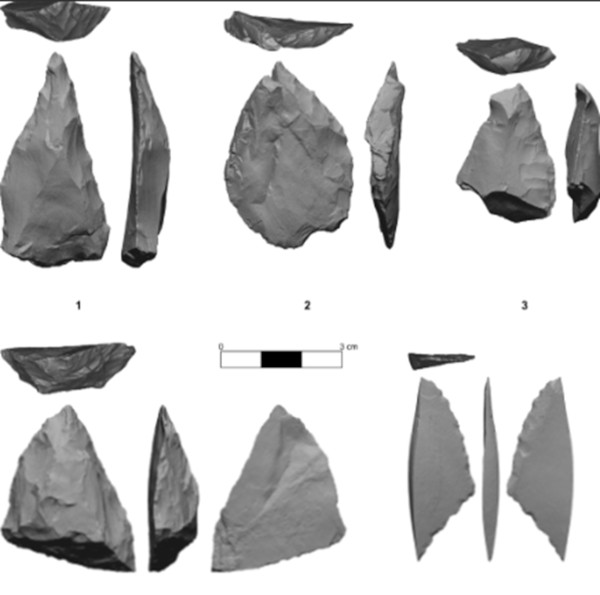
Archaeologists believe the procedure was carried out using small, pointed stone implements made from locally sourced jasper. Similar retouched tools and perforators have been discovered throughout the cave site, indicating Neanderthals already possessed instruments capable of precise manual work.
Experimental tests showed that rotating these pointed tools against teeth could reproduce the same microscopic wear traces found on the ancient molar.
Researchers emphasize that the tools were probably not invented specifically for dentistry. Instead, Neanderthals may have adapted existing hunting or crafting tools for medical purposes when faced with severe tooth pain.
Evidence of later chewing wear over the drilled area further suggests the patient survived the operation and continued using the tooth afterward.
Challenging Old Assumptions About Neanderthals
For decades, Neanderthals were often portrayed as intellectually primitive compared to Homo sapiens. But discoveries over the last two decades have steadily challenged that stereotype.
Scientists now know Neanderthals:
- buried their dead,
- cared for injured group members,
- used medicinal plants,
- created symbolic art,
- wore ornaments and jewelry,
- and produced sophisticated stone tools.
The newly analyzed tooth adds another important layer to that picture by suggesting they may also have understood basic surgical intervention and pain treatment.
If confirmed, the discovery would push back the timeline of intentional dentistry by roughly 45,000 years. Previously, the oldest widely accepted evidence of dental treatment came from Homo sapiens remains in Italy dating to around 14,000 years ago.
A Glimpse Into Neanderthal Medical Knowledge
Anthropologists involved in the research argue that the procedure required more than simple instinct. The individual — or the person performing the treatment — would have needed to:
- recognize the source of pain,
- understand that removing damaged tissue could help,
- and possess the motor control necessary to manipulate sharp tools inside the mouth.
That level of planning and anatomical awareness points to far more advanced cognitive abilities than Neanderthals were once credited with.
While researchers caution that additional study is still needed, the Chagyrskaya Cave tooth is increasingly viewed as one of the strongest pieces of evidence yet that Neanderthals practiced forms of invasive medical care long before modern civilization emerged.
The discovery not only rewrites part of the history of medicine, but also continues to narrow the perceived gap between Neanderthals and modern humans.


