 Archaeologists in Egypt have uncovered an extraordinary hidden section of ancient Alexandria buried beneath the modern Muharram Bek district, revealing remarkably preserved remains from the Hellenistic, Roman, and Byzantine eras.
The discovery, announced by Egypt’s Supreme Council of Antiquities, is being described as one of the most significant urban excavations in Alexandria in recent years. The archaeological mission uncovered layers of continuous settlement stretching back to the city’s earliest centuries after its founding by Alexander the Great in 331 BC.
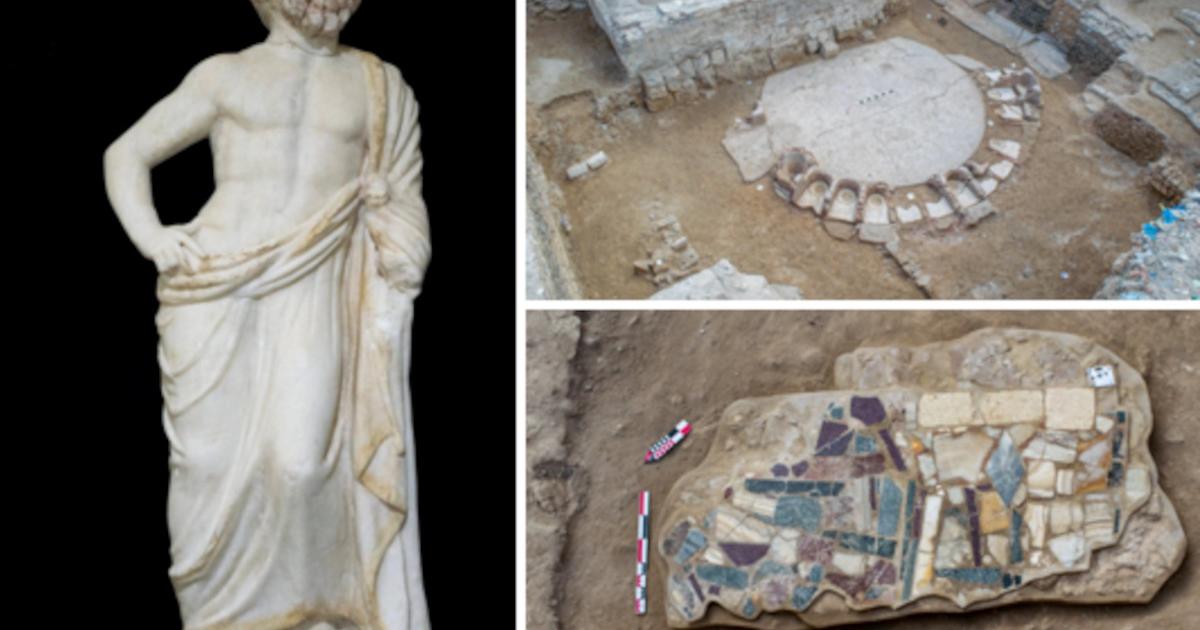
Among the discoveries are a circular public bathhouse from the Ptolemaic period, the remains of an elite Roman villa decorated with intricate mosaics, marble statues of classical deities, and evidence of extensive Mediterranean trade networks.
Experts say the excavation is reshaping modern understanding of how Alexandria developed and expanded through antiquity.
 A Hidden Classical City Beneath Modern Streets
The excavation began as part of a salvage archaeology project connected to urban development work in central Alexandria. What initially appeared to be routine groundwork quickly evolved into a major archaeological operation after researchers uncovered deeply buried architectural remains.
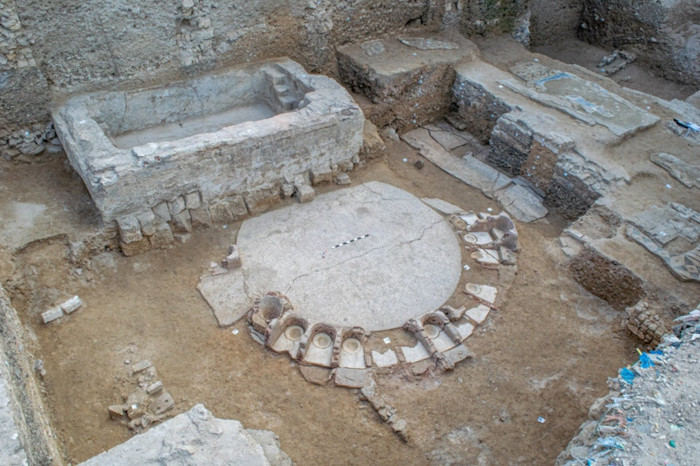
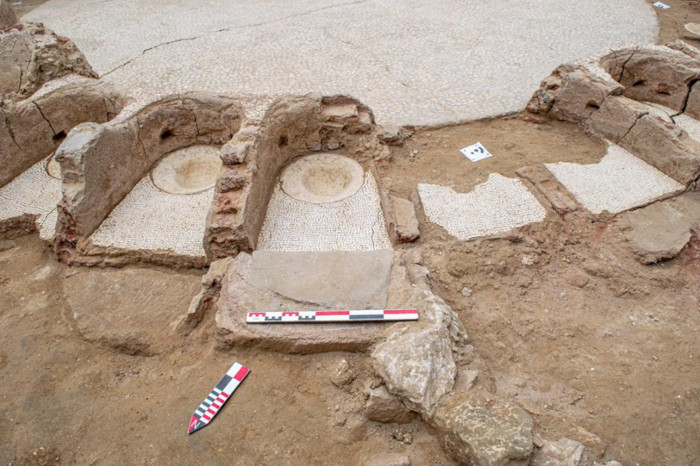
One of the most striking structures found at the site is a circular bathhouse, known in Greek architecture as a tholos. Dating to the late Ptolemaic period, the bath complex likely served both hygienic and therapeutic functions for residents of the ancient city.
Archaeologists believe additional connected rooms and structures may still remain underground.
Nearby, the team uncovered the ruins of a luxurious Roman-era villa believed to have belonged to a wealthy member of Alexandria’s elite society.
The residence contains highly sophisticated mosaic floors crafted using both Opus Tessellatum and Opus Sectile techniques — advanced decorative styles widely associated with affluent Roman architecture.
Researchers also discovered evidence of remarkably advanced water engineering systems, including pools, drainage channels, and water supply networks carefully integrated into the villa’s design.
 Statues of Ancient Gods and Evidence of Trade
The excavation also produced a large collection of artifacts tied to Alexandria’s Greco-Roman heritage.
Among the most important finds were marble statues depicting figures from classical mythology, including Asclepius, the Greek god associated with medicine and healing, and Dionysus, known to the Romans as Bacchus, the god of wine and celebration.
Archaeologists also uncovered a headless marble statue believed to represent either Athena or her Roman counterpart Minerva.
The presence of Asclepius has led some researchers to speculate that parts of the district may once have been associated with healing practices or medical activity.
Additional discoveries included coins, pottery fragments, and sealed amphorae once used to transport wine and olive oil throughout the Mediterranean world. These finds reinforce Alexandria’s role as one of antiquity’s greatest commercial and maritime hubs.
Rewriting Alexandria’s Ancient Map
According to Dr. Hisham Hussein, head of Egypt’s Central Department for Maritime Antiquities, the discoveries help fill a major gap in scholars’ understanding of Alexandria’s southeastern urban layout.
The findings are already prompting historians to reassess older reconstructions of the ancient city, including influential 19th-century maps created by Egyptian astronomer and engineer Mahmoud Bey El-Falaki, who pioneered efforts to chart the lost landscape of classical Alexandria.
Researchers now believe the Muharram Bek district remained within Alexandria’s active urban boundaries until the Byzantine era, before later shifts in the city’s structure gradually reduced its importance.
Preserving a Buried Legacy
Initial restoration and conservation work on the statues, mosaics, and architectural remains has already begun. Egyptian officials are currently evaluating which artifacts may eventually go on public display at the Greco-Roman Museum.
For archaeologists, the discovery represents a rare opportunity to study how one of the ancient world’s most famous cities evolved over nearly a thousand years.
Beneath the crowded streets of modern Alexandria, layers of forgotten history continue to emerge — offering a vivid reminder that much of the legendary city founded by Alexander the Great still remains hidden underground.