Why this find matters
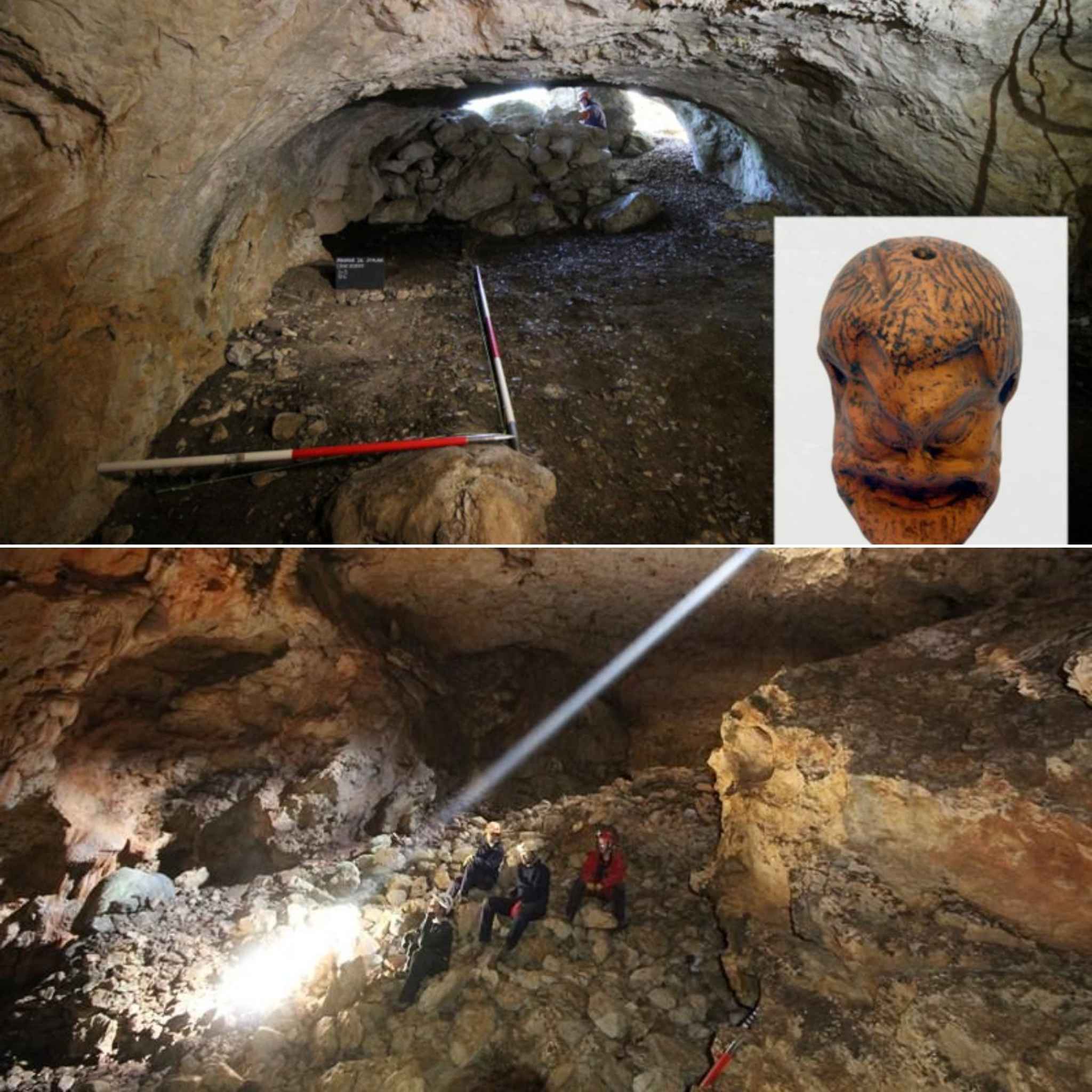
The terracotta mask dates to roughly the 4th or 3rd century B.C., a period when Greek influence was spreading along the Adriatic coast through trade and cultural contact. Archaeologists believe the cave later became an Illyrians sanctuary, where local communities blended their own beliefs with imported Greek religious practices.

The mask itself appears to depict a theatrical figure linked to the cult of Dionysus. In the Greek world, masks were not just stage props — they symbolized transformation, divine possession, and the crossing between ordinary life and sacred ritual.
Because the artifact still had a suspension hole and was found almost exactly where it had been placed over 2,000 years ago, archaeologists think it may once have hung inside the cave during ceremonies.
What archaeologists found
The cave contained:
- miniature Greek drinking vessels
- amphorae and bowls
- ritual offerings
- evidence of wine-related ceremonies
- earlier burials from the Bronze and Iron Ages
That combination suggests the cave changed functions over centuries:
- temporary refuge
- burial place (necropolis)
- sacred ritual sanctuary
Theater masks and wine vessels strongly hint at rituals connected to Dionysian worship, though researchers are careful not to overstate the evidence.
Why caves mattered in ancient religion
Across the ancient Mediterranean, caves were often viewed as liminal places — spaces between worlds:
- life and death
- humans and gods
- civilization and wilderness
For mystery cults and ecstatic religions, caves created an ideal atmosphere:
- darkness
- echoes
- torchlight
- isolation
- altered emotional states
A suspended mask illuminated by firelight inside a cave sanctuary would likely have produced an intense ritual effect.
The “frozen moment” aspect
One of the most important details is that the chamber had remained sealed and hidden for centuries. Archaeologists described the site as essentially a “frozen scene” from antiquity because later disturbances never scattered the ritual objects.
That is exceptionally rare. Many ancient sanctuaries were looted, reused, or destroyed over time.
Visual references
Greek theater masks and Dionysian imagery


Crno Jezero Cave and Illyrian sanctuary context


The discovery is especially important because it shows how local Illyrian communities were not simply copying Greek culture — they were adapting Greek religious symbols into their own sacred traditions along the Adriatic frontier.