The story of Mohenjo-daro is one of the most fascinating challenges to the traditional narrative of how ancient civilizations developed.
For decades, historians assumed a kind of historical “rule”:
- villages grow into cities
- cities create elites
- elites accumulate wealth
- inequality rises
That pattern appears in many ancient civilizations:
- pharaohs in Ancient Egypt
- palace elites in Minoan Crete
- kings and aristocrats in Mesopotamia
But the Indus Valley Civilization seems to have followed a radically different path.
What researchers found
Archaeologists studied house sizes across Mohenjo-daro, one of the largest cities of the Indus civilization, dating to around 2500–1900 B.C.
Normally, as cities become wealthier, you expect:
- mansions for elites
- slums for poorer residents
- increasingly unequal housing
Instead, researchers found:
- the gap between large and small homes actually shrank over time
- wealth distribution became more balanced
- city infrastructure benefited ordinary households broadly
That suggests the city may have become more egalitarian as it became more prosperous.
What makes Mohenjo-daro unusual
Unlike many ancient civilizations, Mohenjo-daro lacks obvious symbols of centralized royal power:
- no giant palaces
- no royal tombs
- no colossal king statues
- no pyramid-scale monuments
Instead, the city invested heavily in practical urban infrastructure.
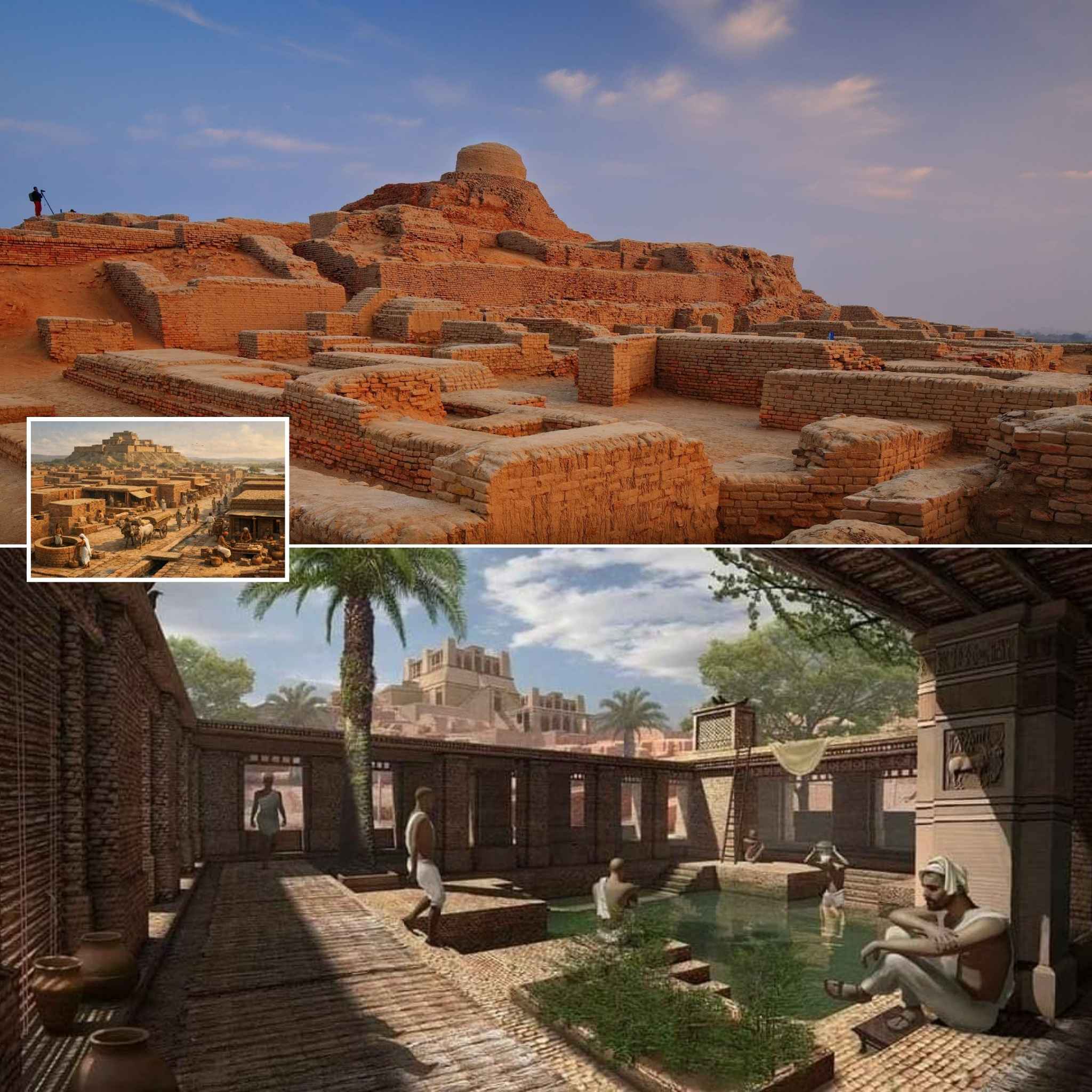
Mohenjo-daro ruins and urban planning


The city featured:
- standardized baked bricks
- advanced drainage systems
- organized street grids
- public sanitation
- water access distributed across neighborhoods
Some homes even had private bathing areas connected to drains — extremely advanced for the Bronze Age.
The importance of Indus seals
One particularly interesting detail involves Indus seals.
In many ancient societies, tools tied to administration and trade were concentrated in elite compounds or temples.
But at Mohenjo-daro:
- seals appeared in ordinary homes
- economic tools were broadly distributed
- no clear ruling palace controlled commerce
Indus seals and artifacts


Researchers think this may reflect a more decentralized economic system.
Why this changes historical thinking
The discovery challenges a very old assumption:
that inequality is an unavoidable price of civilization and economic growth.
The evidence from Mohenjo-daro suggests another possibility:
- strong urban organization
- high productivity
- advanced technology
- relative social equality
…all existing together.
That does not necessarily mean the city was perfectly equal or lacked hierarchy entirely. Archaeologists still debate:
- who governed the Indus cities
- whether merchants held power
- how authority was enforced
- why the civilization eventually declined
But the evidence increasingly suggests that the Indus world operated very differently from the highly centralized kingdoms around it.
A civilization still partly mysterious
One major reason the Indus civilization remains enigmatic is that its script has never been definitively deciphered.
Without readable texts, researchers must reconstruct society mostly through:
- architecture
- artifacts
- burial patterns
- trade evidence
- city planning
Indus Valley Civilization visuals


Even so, Mohenjo-daro increasingly looks like evidence that ancient urban life did not always revolve around kings, dynasties, and concentrated wealth.