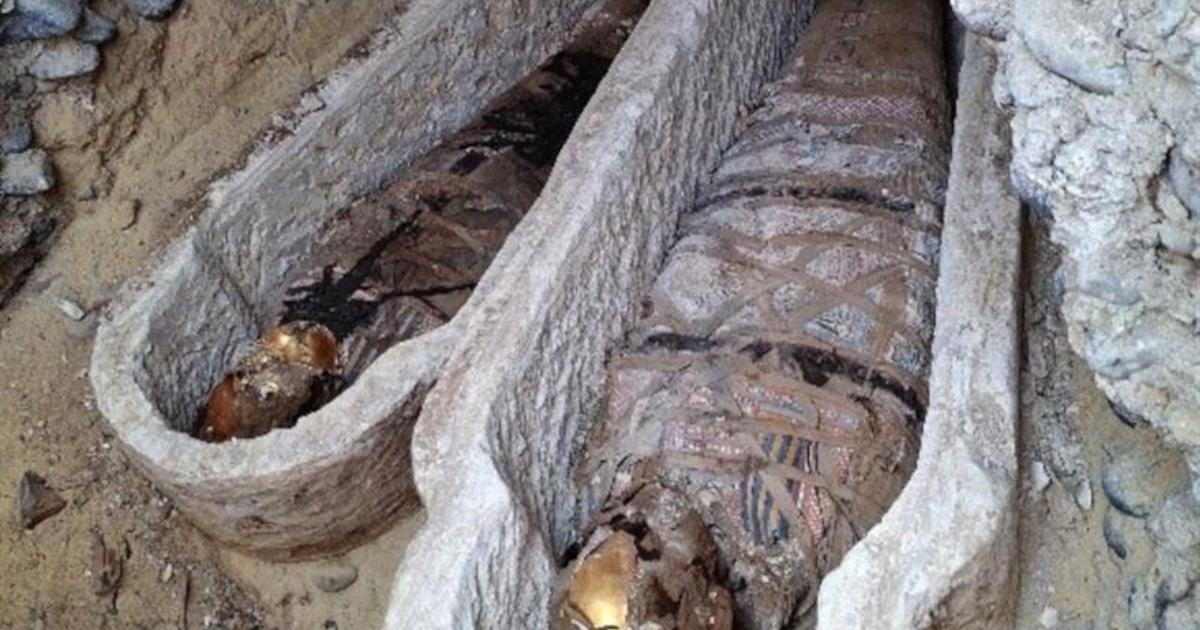
 Archaeologists working in Egypt have uncovered an extraordinary Roman-era tomb filled with gold-covered mummies, ritual artifacts, and what may be one of the most fascinating literary discoveries ever found inside a burial site.
The excavation took place at Al-Bahnasa — the ancient city once known as Oxyrhynchus — where researchers discovered several mummies featuring golden tongues placed inside their mouths, along with a rare papyrus containing a passage from The Iliad.
Egyptian officials say the discovery offers remarkable new insight into the blending of Egyptian, Greek, and Roman traditions during the Greco-Roman period.
A Tomb Filled With Gold and Ancient Rituals
The excavation was carried out by an Egyptian-Spanish archaeological mission led by researchers from University of Barcelona and the Institute of the Ancient Near East.
Inside the tomb, archaeologists uncovered several Roman-period mummies wrapped in finely decorated linen featuring geometric patterns and placed within wooden coffins.
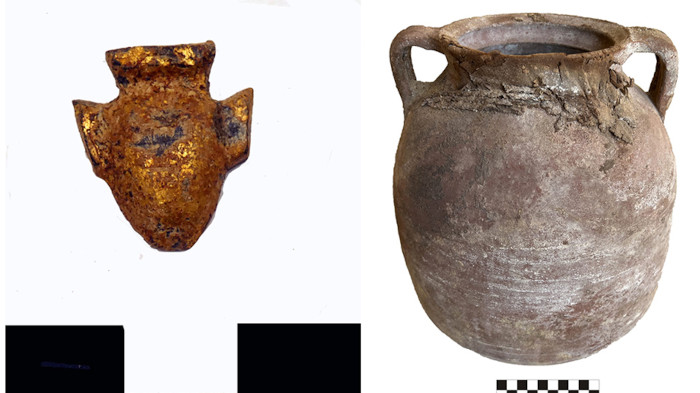
Among the most striking discoveries were three golden tongues and one copper tongue carefully positioned inside the mouths of the deceased.
Experts explain that these ritual objects were believed to help the dead speak in the afterlife, reflecting spiritual beliefs connected to the journey beyond death during the Roman era in Egypt.
Researchers also found traces of gold leaf applied directly onto some of the mummies, suggesting that elaborate funerary preparations were reserved for individuals of high status or special importance.
 A Rare Passage From Homer’s Iliad
Perhaps the most surprising discovery came from inside one of the mummies itself.
Archaeologists recovered a papyrus containing part of Book II of Homer’s Iliad — specifically the famous “Catalogue of Ships,” which lists the Greek forces said to have participated in the Trojan War.
The discovery highlights the strong Greek cultural influence that existed in Egypt during the Roman period and adds an extraordinary literary dimension to the burial site.
Scholars say finding a classical Greek literary text inside a mummy burial is exceptionally rare and may help researchers better understand the intellectual and cultural life of Oxyrhynchus during antiquity.
A City Famous for Ancient Texts
Al-Bahnasa, ancient Oxyrhynchus, is already considered one of the world’s most important archaeological sites for ancient manuscripts.
For decades, the area has produced thousands of papyri containing literature, official documents, personal letters, and historical records that transformed historians’ understanding of daily life in the ancient world.
The current excavation campaign, conducted between late 2025 and early 2026, marked the first time human remains were uncovered by the University of Barcelona’s mission at the site.
 More Discoveries Beneath the Surface
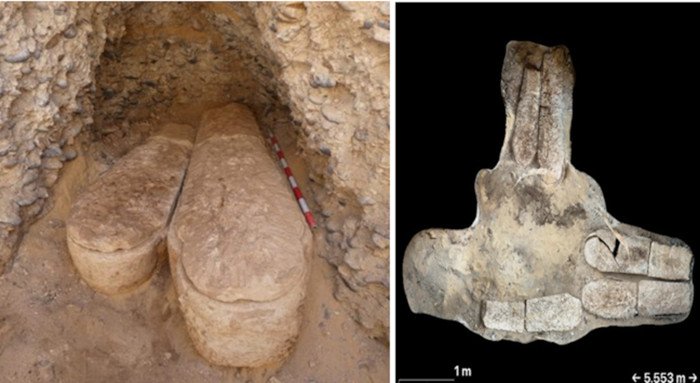
Further excavations revealed limestone burial chambers containing cremated human remains, infant bones, and feline remains wrapped carefully in textiles.
Archaeologists also discovered small terracotta and bronze figurines depicting Egyptian and Greco-Roman deities, including Harpocrates and Cupid, illustrating the cultural blending that defined Egypt during this period.
Another nearby burial chamber contained additional mummies, painted wooden coffins, and more golden tongues, although many artifacts showed signs of damage caused by ancient looting.
Despite this, researchers say the discoveries continue to provide valuable insight into the religious beliefs, burial customs, and multicultural identity of Roman Egypt.
Officials from Egypt’s Ministry of Tourism and Antiquities described the excavation as one of the region’s most important recent archaeological discoveries.