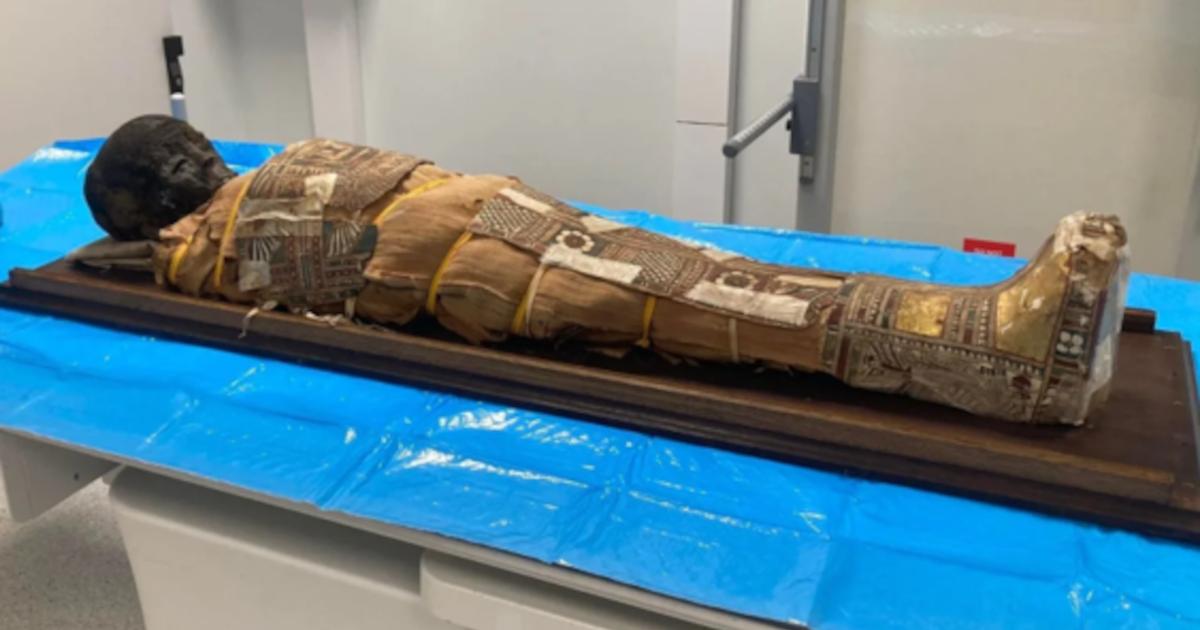
 A team of archaeologists in Poland has uncovered a mysterious hidden object placed on the chest of a 2,000-year-old Egyptian child mummy — a discovery that is now reshaping understanding of burial customs in ancient Egypt’s Ptolemaic period.
The mummy has been preserved since 1914 at the Archdiocesan Museum in Wrocław, and only recently underwent its first full scientific examination using modern imaging technology.
Researchers say the finding could provide rare insight into both the identity of the child and the ritual practices used to prepare individuals for the afterlife.
Advanced Scans Reveal a Hidden Burial Object
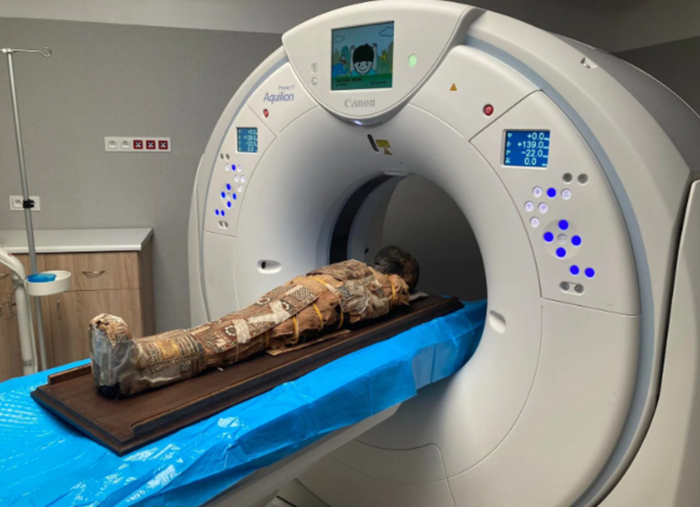
The study was led by Agata Kubala from the University of Wrocław, using non-invasive CT scans and X-ray imaging to examine the fragile remains without damaging them.
The results revealed an unidentified object carefully positioned on the boy’s chest.
Experts believe the object may be either:
- A papyrus scroll containing a personal name or inscription
- Or a protective amulet placed to guide the child in the afterlife
Because of the mummy’s delicate cartonnage casing, researchers have not yet been able to physically access or confirm the object.
 Who Was the Child?
CT imaging also provided new biological details about the mummy.
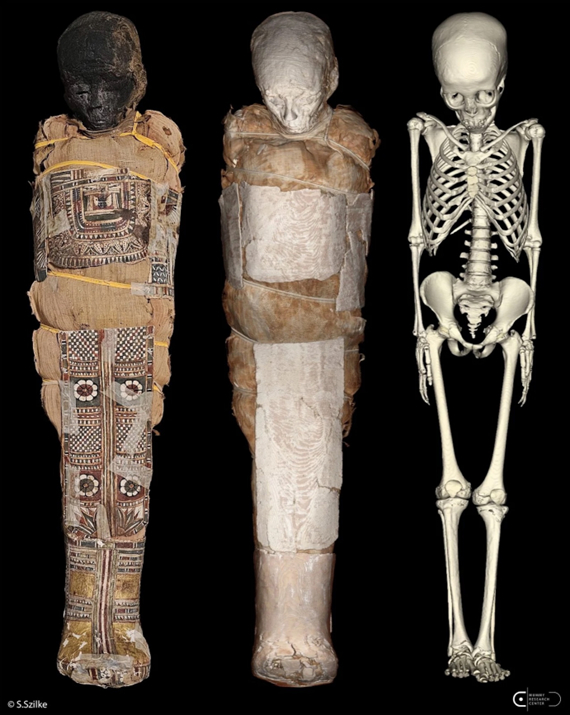
Scientists estimate the child was around eight years old at the time of death. The body, measuring about 123 cm, shows no obvious signs of trauma or fatal disease, leaving the cause of death unknown.
Researchers also identified key details of the mummification process:
- The brain was removed through the nasal cavity
- Internal organs were extracted using non-standard methods
- The body was filled with textile material
- Resin use appears relatively limited
These features suggest a careful but moderately resourced burial, likely belonging to a middle-class family during the Ptolemaic period in Egypt.
 Clues Hidden in the Coffin Decoration
Although the mummy’s original historical records were lost during World War II, scientists analyzed the decorative cartonnage covering the body.
The painted patterns — including lotus flowers, rosettes, and winged scarabs — suggest a possible origin in Upper Egypt, potentially near Kom Ombo or Aswan.
One striking image on the casing depicts a hybrid deity carrying a mummy, which researchers believe may be linked to Nehebkau.
This unusual iconography offers additional insight into regional religious beliefs and funerary symbolism of the time.
Modern Technology Unlocking Ancient Secrets
The investigation highlights how modern medical imaging is transforming archaeology.
Using CT scans, researchers created detailed 3D models of the mummy, allowing them to study bone structure, wrappings, and internal features layer by layer without disturbing the remains.
Experts say this approach is especially valuable for fragile artifacts that cannot be physically opened or studied directly.
As research continues, scientists hope to develop safe methods to examine the hidden chest object and potentially uncover the child’s identity.
For now, the mummy remains both a preserved individual and a developing scientific mystery — offering a rare glimpse into ancient Egyptian beliefs about life, death, and the journey beyond.